Many early derivative acariform mites (e.g., Endeostigmata;
Prostigmata, Eupodina) spin silksilk:
fine threads spun by acariform mites to form a molting chamber (cocoon), protect or attach eggs, or a loosely defined to finely woven web.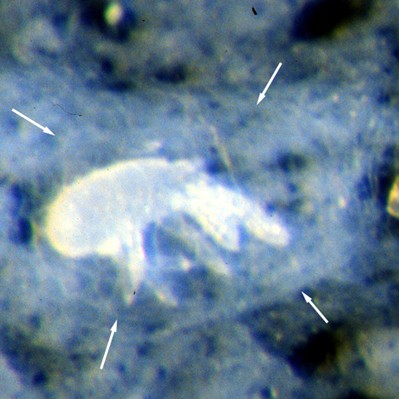 from the buccal opening and are able to
construct cocoons that protect them during molting. The use of silksilk:
from the buccal opening and are able to
construct cocoons that protect them during molting. The use of silksilk:
fine threads spun by acariform mites to form a molting chamber (cocoon), protect or attach eggs, or a loosely defined to finely woven web. is most
highly developed within a single tribe of spider mites, the Tetranychini
(Prostigmata, EleutherengonaEleutherengona:
(also Eleutherengonida, Eleutherengonina, Eleutherengonides) an infraorderwithin the Prostigmata consisting of the two hyporders Raphignathina and Heterostigmata. Eleutherengona includes many of the most important plant-parasitic mites, e.g., spider mites, broad mite, cyclamen mite.
, Raphignathina), that produce the webbing
associated with crop damage.
When using silksilk:
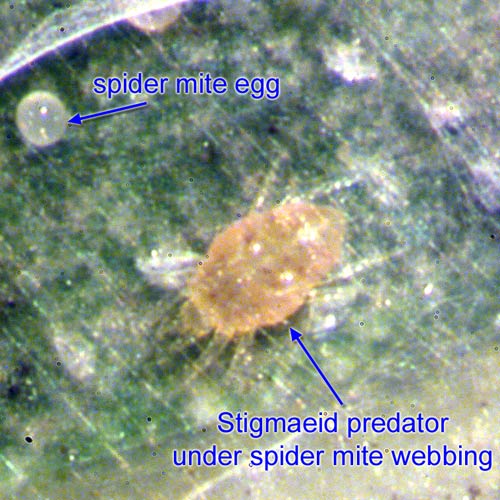
fine threads spun by acariform mites to form a molting chamber (cocoon), protect or attach eggs, or a loosely defined to finely woven web. as a character, it is important not to confuse
a visitor with the animal that produced the silksilk:
fine threads spun by acariform mites to form a molting chamber (cocoon), protect or attach eggs, or a loosely defined to finely woven web..
Author: David E. Walter
Content last updated Sept. 2006, unless indicated otherwise
Lucid key player updated Sept. 2025
idtools.org