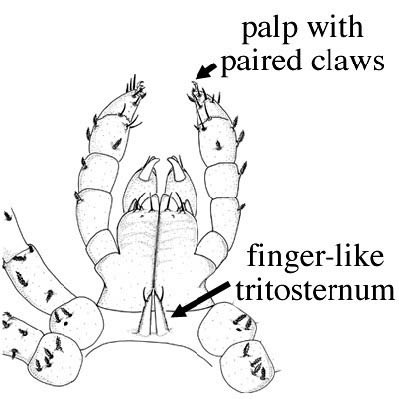
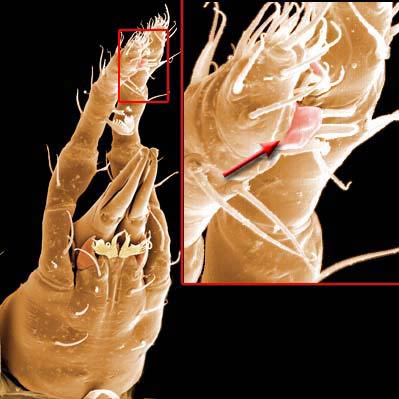
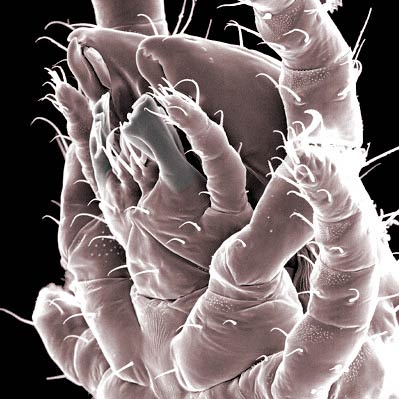
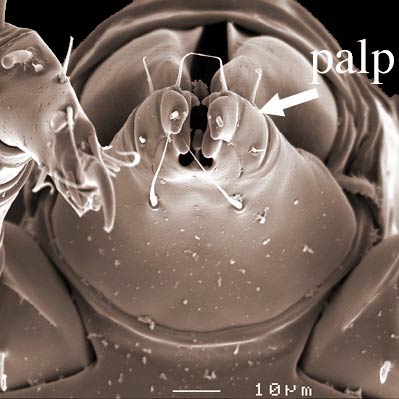
The capitulumgnathosoma:
(= capitulum) the anteriormost part of a mite or ricinuleid, composed of the cheliceral and pedipalpal segments and separated from the body (idiosoma) by a ring of soft cuticle.
of mites is comprised of two limb-bearing segments, the cheliceralcheliceral:
of or pertaining to the chelicera.
and the pedipalpal. Chelicerae have a maximum of three segments, but in the most primitive mites the palps retain up to six free segments (the basalbasal:
towards the base of a structure; on a limb, towards the insertion on the body.
segment, the palpcoxae, are always fused medially to form the subcapitulumsubcapitulum:
(also infracapitulum) the venter of the capitulum; the ventral faces of the fused palpcoxae; apparently formed independently in the two superorders of mites.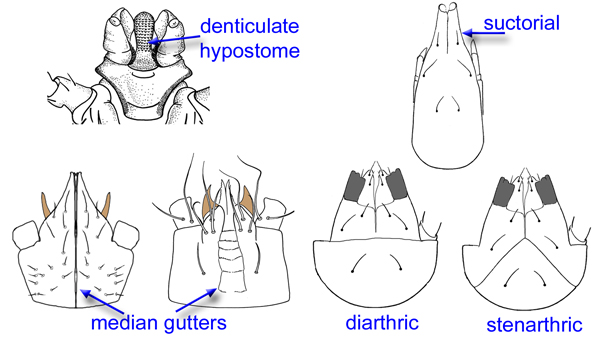 or, when united dorsally as well, the basis capitulumgnathosoma:
(= capitulum) the anteriormost part of a mite or ricinuleid, composed of the cheliceral and pedipalpal segments and separated from the body (idiosoma) by a ring of soft cuticle.
). The most distaldistal:
towards the free end of an appendage.
segment, the palppalp:
(= pedipalp) the second pair of limbs in arachnids, used in feeding and originating on either side of the chelicerae. In mites, the palps may be vestigial, with only a few segments, or have a maximum of 5 freely articulating segments (rarely the femur is subdivided) and a distal or subdistal apotele.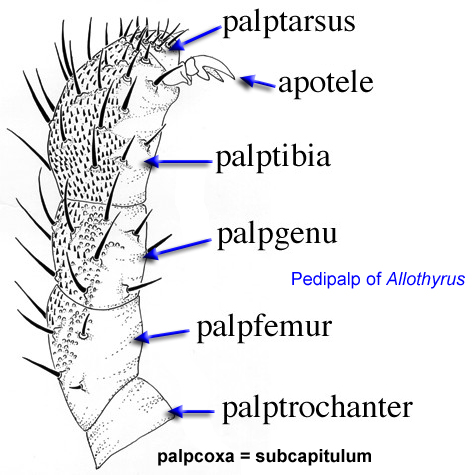 -apotele (or claws) is present only in Parasitiformes and clawclaw:
like - having a distal hook; resembling a claw.
-like only in Opilioacarida. In Holothyrida and Mesostigmata, the apoteleapotele:
(Greek apotelein = to complete)—the terminus of an appendage; the most distal leg segment, often consisting of an empodium and a pair of claws. The apotele of a leg is usually treated as equivalent to the pretarsus or some part thereof (e.g., the claws and empodium), but the palptarsal apotele in Mesostigmata is a tined structure originating at the base of the palptarsus and thought to be a remnant of the claws. The chelicerae are also an appendage and terminate in the movable digit.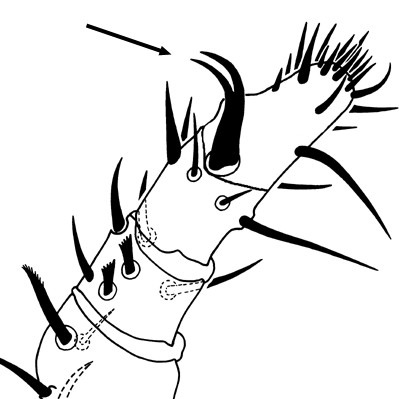 is expressed at the basebase:
the usually columnar basal part of the tritosternum; sometimes expanded and rectangular or otherwise modified; the most basal part of any structure.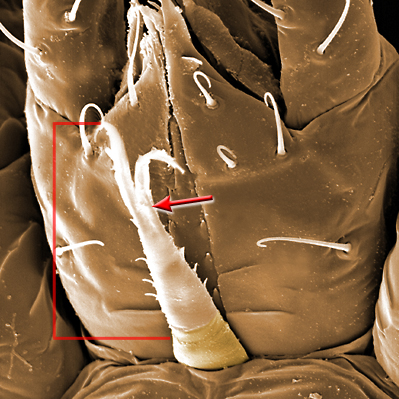 of the palptarsus as a 2–3 (rarely 4) tined structure. The palppalp:
(= pedipalp) the second pair of limbs in arachnids, used in feeding and originating on either side of the chelicerae. In mites, the palps may be vestigial, with only a few segments, or have a maximum of 5 freely articulating segments (rarely the femur is subdivided) and a distal or subdistal apotele.-apotele is absent in all Acariformes and in ticks (Ixodida).
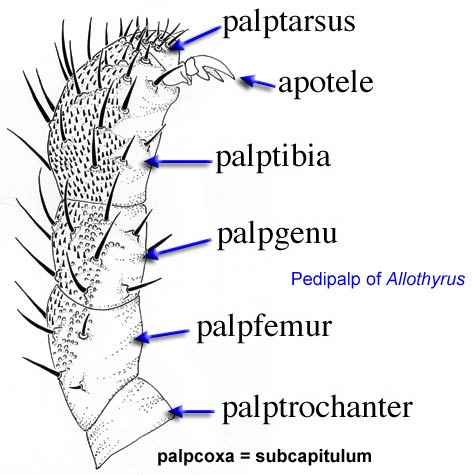
The various reductions in the number of free segments is useful in distinguishing various groups of mites. For example, most traditional oribatid mites have 5-free segments, but Astigmatina usually have only 2-free segments.
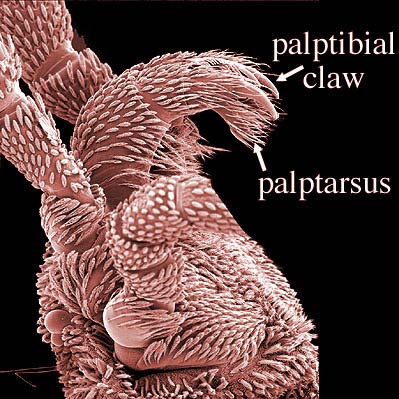
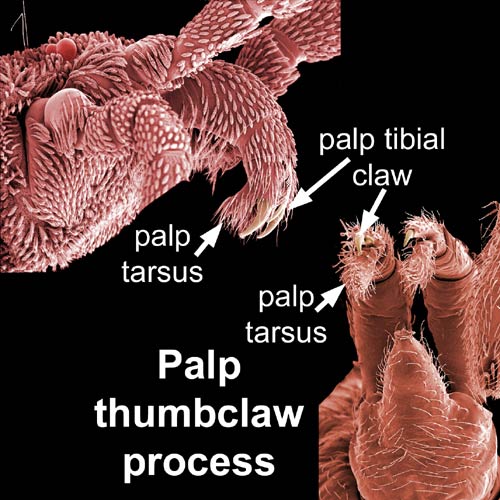
The thumb-claw process, i.e., a large distaldistal:
towards the free end of an appendage.
claw on the palptibia that is opposed to a thumb-like palptarsus and acts like a pincer, is present in many Prostigmata (and an analogous structure in a few oribatid mites).
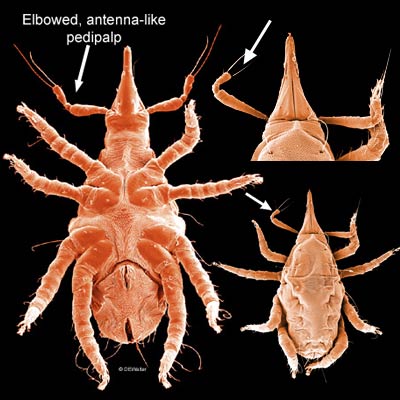
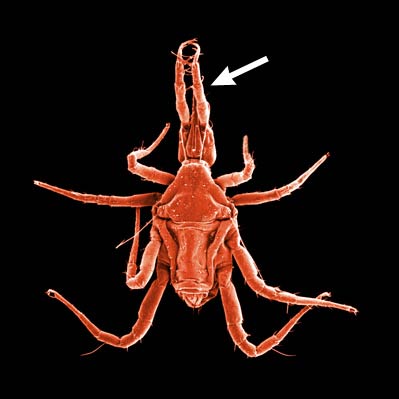
In some Eupodides (Bdelloidea) the palps are antenna-like and elbowed (geniculategeniculate:
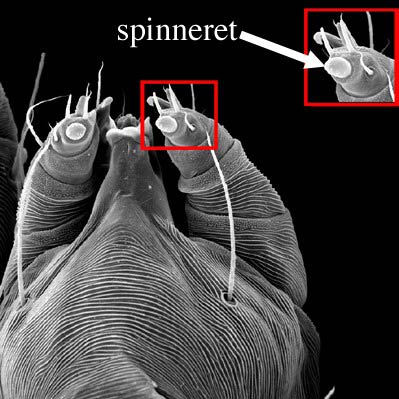
with an elbow- or knee-like bend.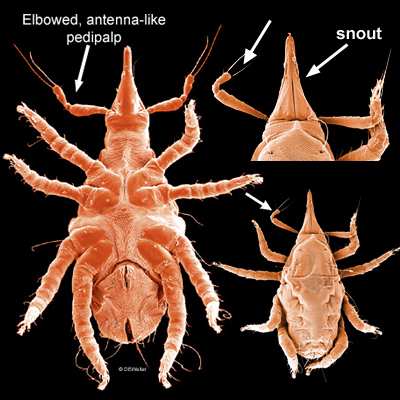 ) or raptorial (also in some water mites in the Anystides). And in spider mites the palps may bear a distinct spinneret.
Author: David E. Walter
Content last updated Sept. 2006, unless indicated otherwise
Lucid key player updated Sept. 2025
idtools.org