Primitively the Parasitiformes have an idiosomalidiosomal:
(idiosomatic) adjectival form of idiosoma.
process that projects under the gnathosomagnathosoma:
(= capitulum) the anteriormost part of a mite or ricinuleid, composed of the cheliceral and pedipalpal segments and separated from the body (idiosoma) by a ring of soft cuticle.
and is thought to represent the sternal portion of the third bodybody:
the idiosoma of mites.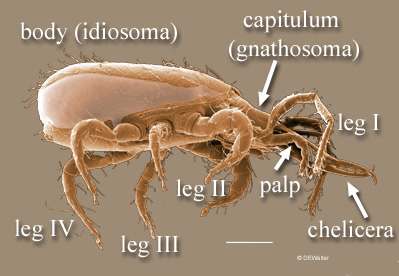 segment (and hence tritosternumtritosternum:
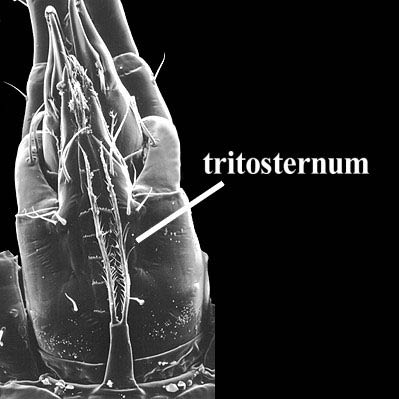
the sternum of the 3rd body segment (between legs I); produced as a biflagellate structure in Mesostigmata, although sometimes the flagellae (laciniae) are partially or completely fused. 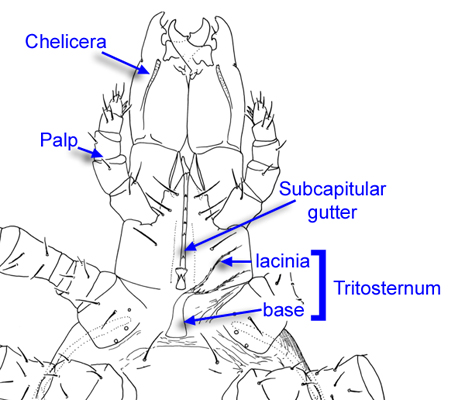 ). In the Opilioacarida, the tritosternumtritosternum:
the sternum of the 3rd body segment (between legs I); produced as a biflagellate structure in Mesostigmata, although sometimes the flagellae (laciniae) are partially or completely fused. is composed of two finger-like processes, but in the Mesostigmata (and some Holothyrida) the tritosternumtritosternum:
the sternum of the 3rd body segment (between legs I); produced as a biflagellate structure in Mesostigmata, although sometimes the flagellae (laciniae) are partially or completely fused. is composed of a stalk-like basebase:
the usually columnar basal part of the tritosternum; sometimes expanded and rectangular or otherwise modified; the most basal part of any structure.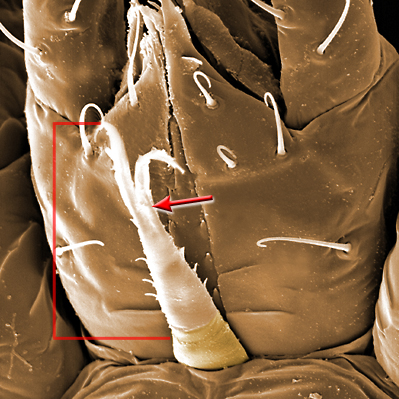 and two flagella, although often the flagella are fused and sometimes subdivided.
Author: David E. Walter
Content last updated Sept. 2006, unless indicated otherwise
Lucid key player updated Sept. 2025
idtools.org