Mites have no head, and the capitulumgnathosoma:
(= capitulum) the anteriormost part of a mite or ricinuleid, composed of the cheliceral and pedipalpal segments and separated from the body (idiosoma) by a ring of soft cuticle.
is composed of only the first two segments of the bodybody:
the idiosoma of mites.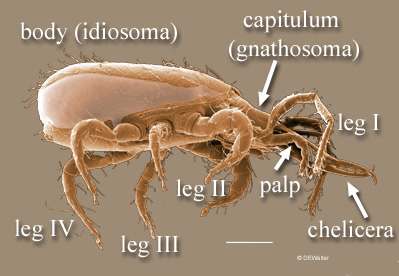 , so when they have eyes they are found on the idiosoma. The eyes are never compound (those are found only in insects, crustaceans, and horseshoe crabs). Instead, the eyes are composed of single ocelliocellus:
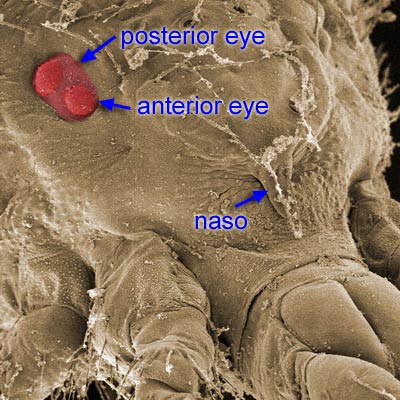
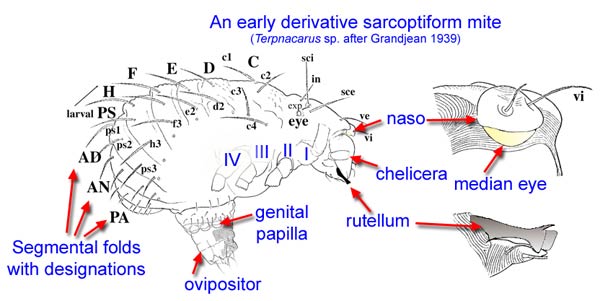
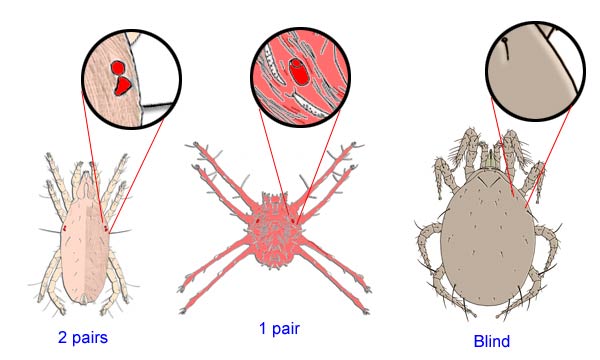
(pl. ocelli) a simple eye. Mites with eyes usually have one or two pairs of lateral ocelli, but some Opilioacarida have three pairs. Additionally, some acariform mites have one or two median ocelli on the underside of the naso.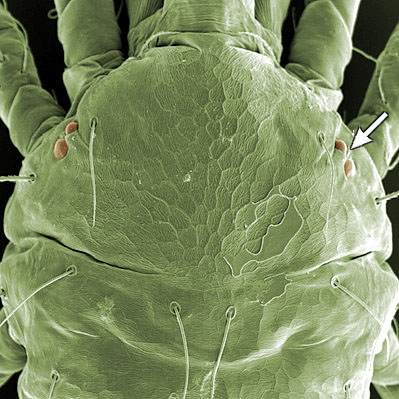 , typically 1–2 (rarely 3) pairs dorso-laterally (Fig. 1) on the idiosoma above the front legs, but rarely there is also a median eye (rarely 2 eyes) that is usually located under a naso (Fig 2).
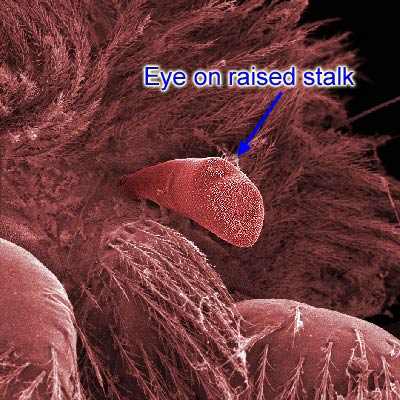
Eyes are common in the Prostigmata, Endeostigmata, and Opilioacarida, but absent in all Mesostigmata and in most oribatid mites, Astigmata, and ticks. In some Prostigmata (e.g., velvet mites with dense pelages of fur), the eyes may be raised on stalks (Fig. 3) and in many the posteriorposterior:
the back part of the body or towards that region in comparison, e.g., 'posterior to'.
pair of eyes is structurally different from the anterior pair and sometimes referred to as the postocular structure or pustulepustule:
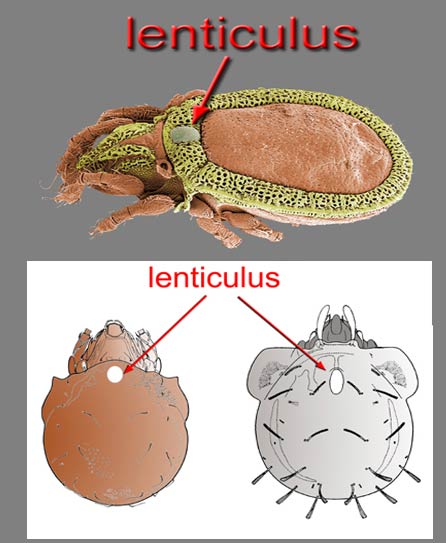
a raised mound-like structure.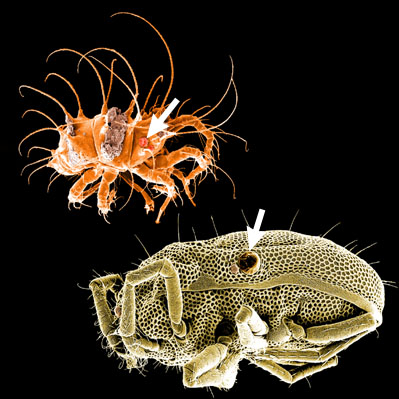 . In some oribatid mites, a new and unpaired light sensitive organ has been derived—the lenticulus (Fig. 4).
Author: David E. Walter
Content last updated Sept. 2006, unless indicated otherwise
Lucid key player updated Sept. 2025
idtools.org