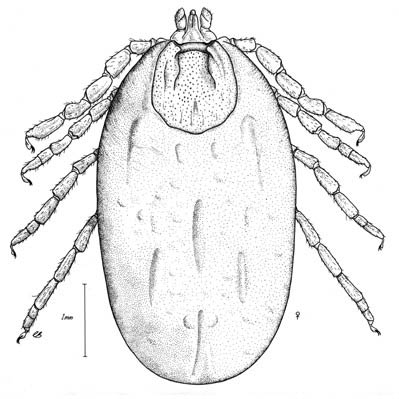
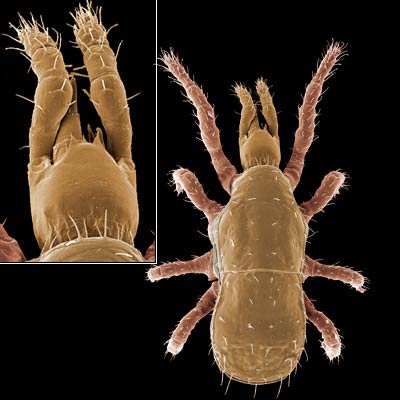
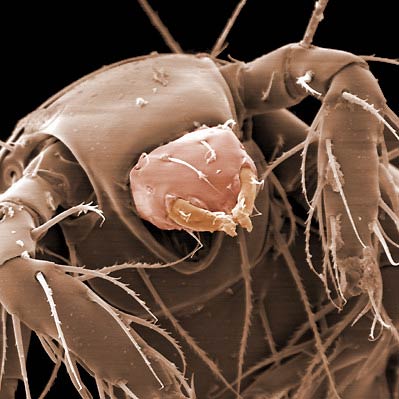
Ticks (Ixodida) (Fig. 1) and Mesostigmata (Fig. 2) have a capitulumgnathosoma:
(= capitulum) the anteriormost part of a mite or ricinuleid, composed of the cheliceral and pedipalpal segments and separated from the body (idiosoma) by a ring of soft cuticle.
that looks rather head-like because a band of sclerotized cuticle that connects the palps dorsally. This band is never present in acariform mites and the bases of their chelicerae are exposed, protected by a rostral tectumgnathotectum:
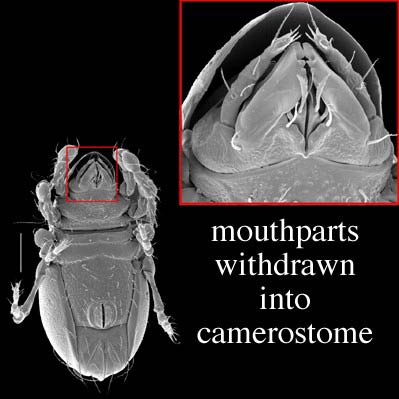
(= epistome, tectum) an often membranous dorsal projection of the anterior margin of the basis capitulum in Mesostigmata; often diagnostic at family-, genus- or species-levels; also often difficult to see without high magnification and good optics.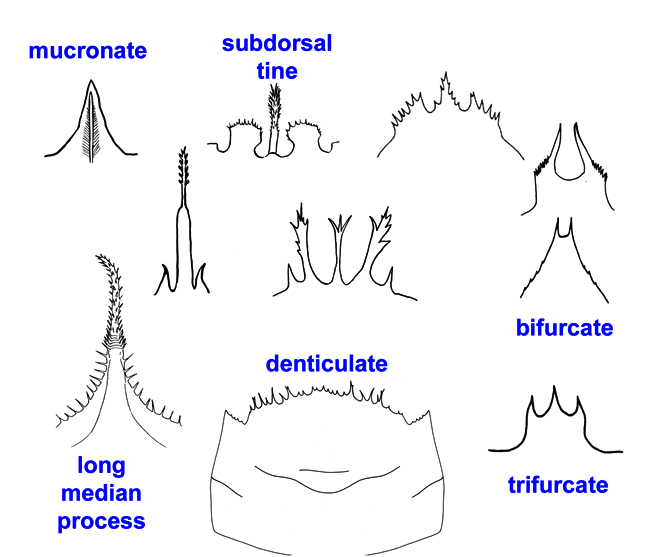 and camerostomecamerostome:
a recess under the rostral tectum that allows retraction of the chelicerae and palps of oribatid mites and that is sealed by the subcapitulum when retracted; a deep recess containing the gnathosoma in Uropodina.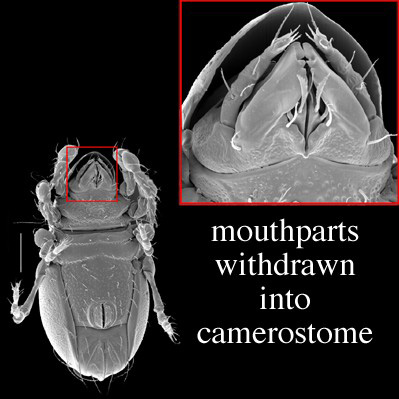 (Fig 3), or withdrawn into the bodybody:
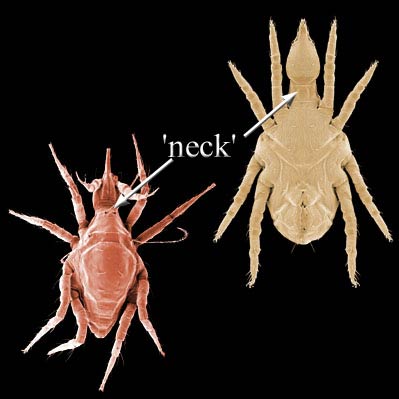
the idiosoma of mites.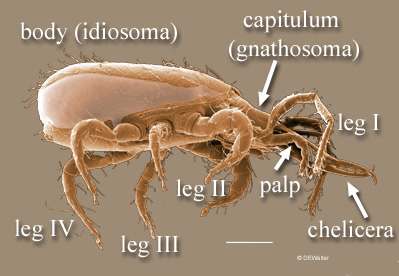 . However, some acariform mites have a distinct neckneck:
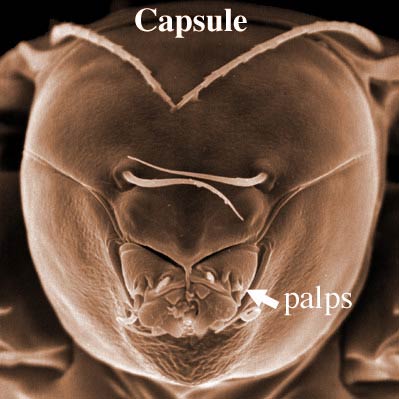
(neck-like) a narrow constricted region joining the capitulum to the idiosoma.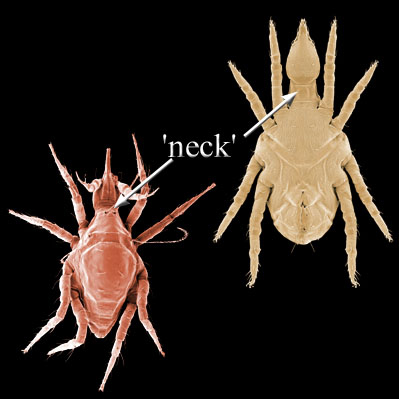 -like (Fig. 4) region that makes their capituli seem especially head-like (e.g., many Cunaxidae) or have a capitular (gnathosomal) capsulecapsule:
as in gnathosomal capsule, the fused chelicerae and subcapitulum characteristic of Tarsonemina and some other Prostigmata (e.g., Cheyletoidea, Myobioidea) (also tegmen, rostral shield).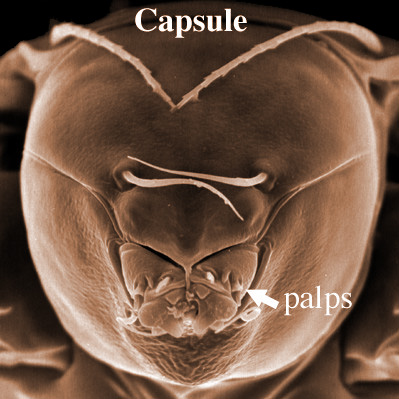 (Fig. 5) and the chelicerae are completely protected (Fig. 6).
Author: David E. Walter
Content last updated Sept. 2006, unless indicated otherwise
Lucid key player updated Sept. 2025
idtools.org