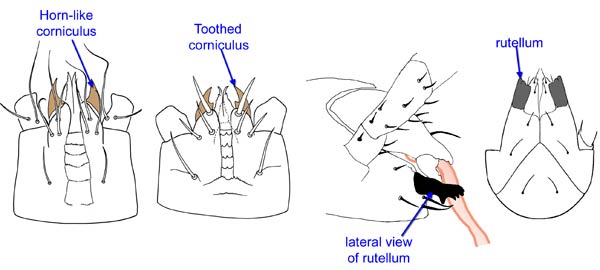
Primitively the Acariformes and Opilioacarida have a hypertrophied and toothed seta-like structure on the margin of the hypostome called the rutellumrutellum:
(pl. rutella) In Sarcoptiformes, the hypertrophied setae on the hypostome, often toothed; not to be confused with a corniculus (although possibly a homologue). In Astigmata, the rutellum may be referred to as a pseudorutellum, although it is the same structure. Various forms of rutella are recognized, including the atelebasic and pantelebasic.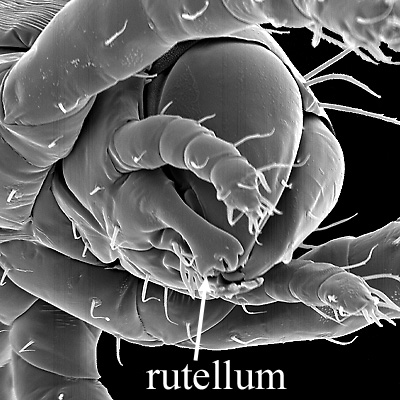 that they use to help cut pieces of food during eating (typically the chelicerae hold the food, pull it into the mouth, and the rutellarutellum:
(pl. rutella) In Sarcoptiformes, the hypertrophied setae on the hypostome, often toothed; not to be confused with a corniculus (although possibly a homologue). In Astigmata, the rutellum may be referred to as a pseudorutellum, although it is the same structure. Various forms of rutella are recognized, including the atelebasic and pantelebasic. clip off the piece on either side). In Mesostigmata and Holothyrida, a similar structure is present, but it is usually horn-like and used to support the salivary stylisalivary stylus:
(pl. styli) (also stylet) tube-like external ducts protected by the corniculi in Mesostigmata; usually dorsal to the corniculi and difficult to see and sometimes sitting in grooves in the corniculi.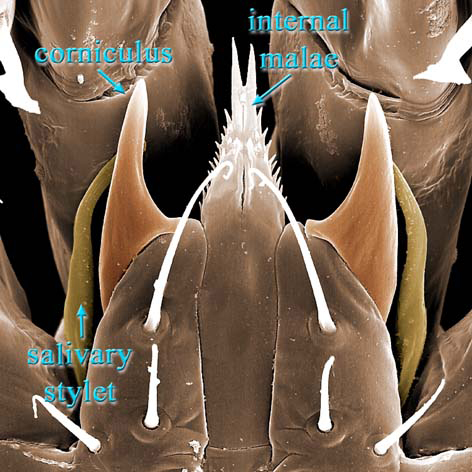 when they are introduced into a prey's bodybody:
the idiosoma of mites.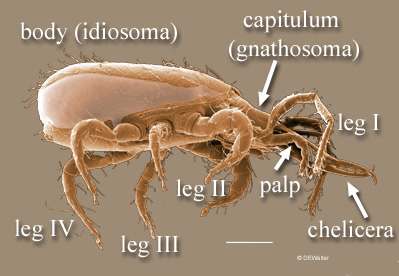 to discharge enzymes for external digestion. In some several lineages of Mesostigmata and Holothyrida, the corniculicorniculus:
(pl. corniculi) (also, external malae) a usually horn-like process (sometimes toothed, bifurcate, trifurcate, spine-like, spatulate, or membranous) on the subcapitulum of parasitiform mites that usually supports the salivary styli. A toothed corniculus could be confused with a rutellum, a possibly homologous structure in Acariformes and Opilioacarida. Phytoseiid image is spatulate corniculus.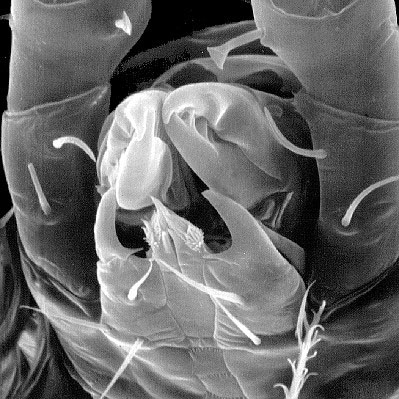 are toothed and look more like rutellarutellum:
(pl. rutella) In Sarcoptiformes, the hypertrophied setae on the hypostome, often toothed; not to be confused with a corniculus (although possibly a homologue). In Astigmata, the rutellum may be referred to as a pseudorutellum, although it is the same structure. Various forms of rutella are recognized, including the atelebasic and pantelebasic..
Author: David E. Walter
Content last updated Sept. 2006, unless indicated otherwise
Lucid key player updated Sept. 2025
idtools.org