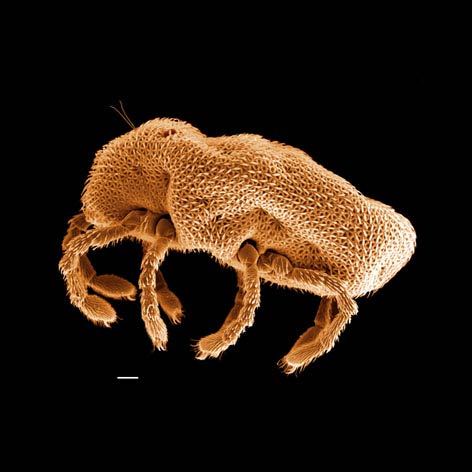
All mites have a small, head-like region, the capitulumgnathosoma:
(= capitulum) the anteriormost part of a mite or ricinuleid, composed of the cheliceral and pedipalpal segments and separated from the body (idiosoma) by a ring of soft cuticle.
(=gnathosoma), bearing the mouthparts (chelicerae and palps). But in many the capitulumgnathosoma:
(= capitulum) the anteriormost part of a mite or ricinuleid, composed of the cheliceral and pedipalpal segments and separated from the body (idiosoma) by a ring of soft cuticle.
is protected by a projection of the bodybody:
the idiosoma of mites.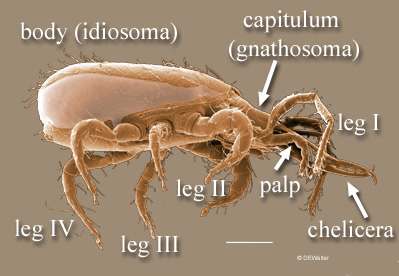 or may be withdrawn into the bodybody:
the idiosoma of mites..
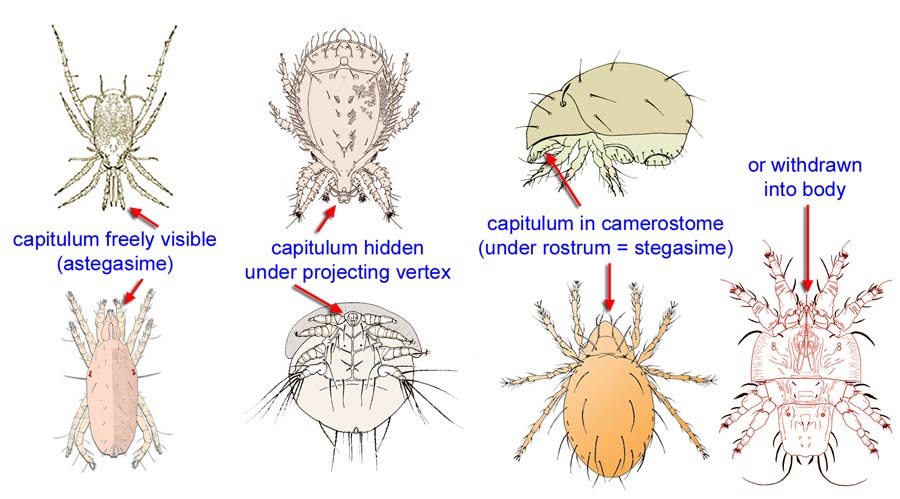
In the basic condition (called astegasimeastegasime:
having the chelicerae exposed dorsally: the rostral tectum is reduced or absent (see stegasime), as in many Prostigmata, Astigmata and some early derivative oribatids.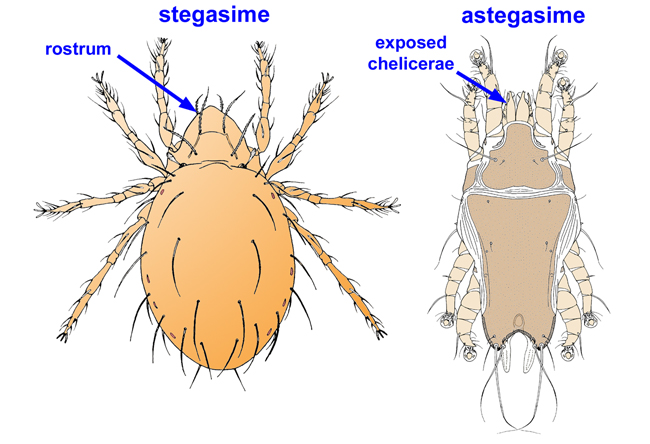 in acariform mites), the capitulumgnathosoma:
(= capitulum) the anteriormost part of a mite or ricinuleid, composed of the cheliceral and pedipalpal segments and separated from the body (idiosoma) by a ring of soft cuticle.
is fully exposed dorsally. This is also the basic condition in parasitiform mites.
In some Mesostigmata and Prostigmata the capitulumgnathosoma:
(= capitulum) the anteriormost part of a mite or ricinuleid, composed of the cheliceral and pedipalpal segments and separated from the body (idiosoma) by a ring of soft cuticle.
is hidden under a projection of the idiosome, often called a vertexvertex:
an anterior extension of the idiosoma that covers the capitulum in many uropodid mites.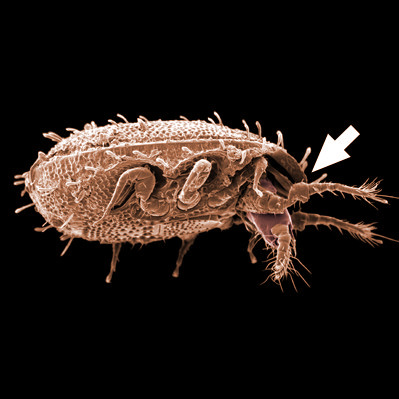 .
.
In many sarcoptiform mites, the prodorsal region is extended as a rostral tectumgnathotectum:
(= epistome, tectum) an often membranous dorsal projection of the anterior margin of the basis capitulum in Mesostigmata; often diagnostic at family-, genus- or species-levels; also often difficult to see without high magnification and good optics.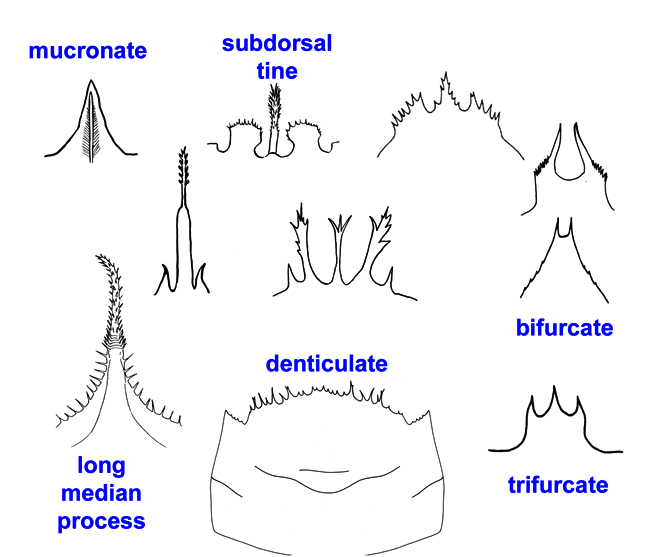 and the capitulumgnathosoma:
(= capitulum) the anteriormost part of a mite or ricinuleid, composed of the cheliceral and pedipalpal segments and separated from the body (idiosoma) by a ring of soft cuticle.
is withdrawn into a cavity called a camerostomecamerostome:
a recess under the rostral tectum that allows retraction of the chelicerae and palps of oribatid mites and that is sealed by the subcapitulum when retracted; a deep recess containing the gnathosoma in Uropodina.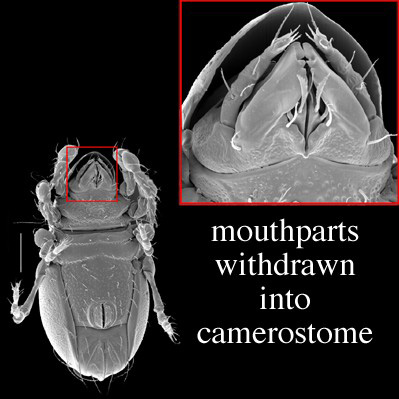 .
.
In some Prostigmata, e.g., the Calyptostomatidae (see image at right) and Tetranychoidea, the capitulumgnathosoma:
(= capitulum) the anteriormost part of a mite or ricinuleid, composed of the cheliceral and pedipalpal segments and separated from the body (idiosoma) by a ring of soft cuticle.
may be sucked completely inside the bodybody:
the idiosoma of mites..
Author: David E. Walter
Content last updated Sept. 2006, unless indicated otherwise
Lucid key player updated Sept. 2025
idtools.org