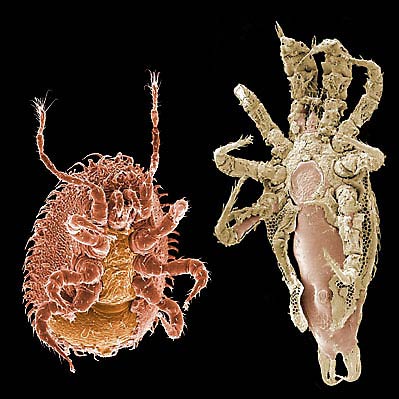
A few groups of mites have distinctive secretions, accumulations, or pelages (coverings of hairhair:
usually referring to a seta; considered an imprecise and misleading term for seta.
) that reliably differentiate them. For example, although all mites secrete a thin waxy layer on the outside of their cuticle, some sejid and monogynaspidmonogynaspine:
(monogynaspid) representative of the mesostigmatan suborder Monogynaspida, characterized by having a single genital shield in the adult female that usually bears one pair of setae (st5) or may be nude.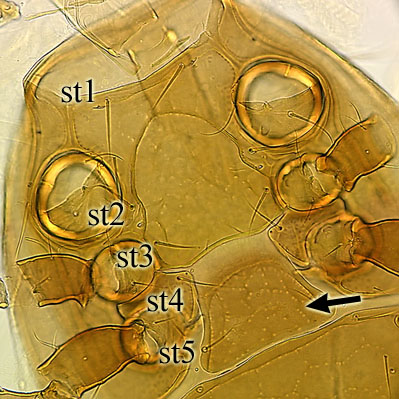 Mesostigmata (especially Uropodina) secrete a thick, often ornamented covering on the bodybody:
the idiosoma of mites.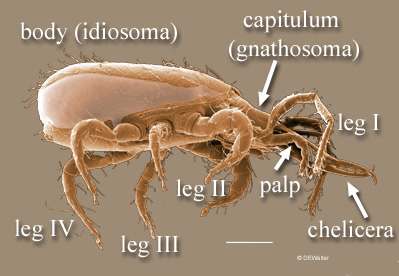 and legs called a cerotegument. Similarly, many oribatid mites produce a thick, ornamented cerotegumentcerotegument:
the outer layers of the epicuticle, including the wax and cement layers; often thin and inconspicuous, but sometimes very thick, ornamented, and obscuring the underlying cuticle; thick ceroteguments often can be peeled off to expose a very different-looking mite.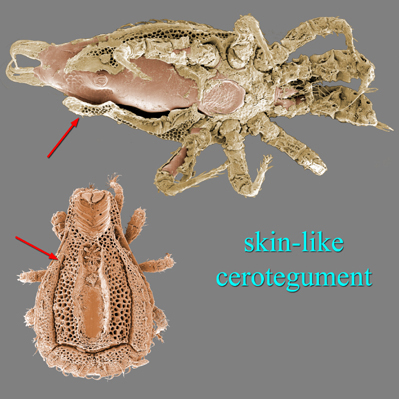 that fits their bodybody:
the idiosoma of mites. like a glove. Others (Brachypylina) carry the dorsaldorsal:
relating to the upper or back side; opposed to ventral.
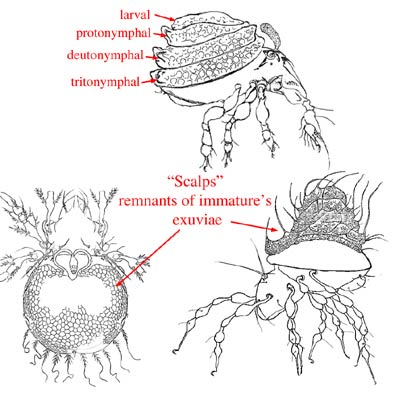
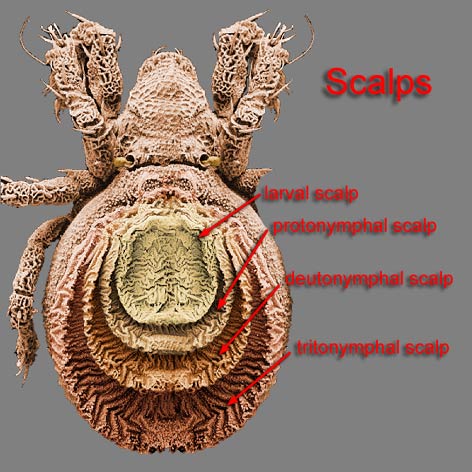
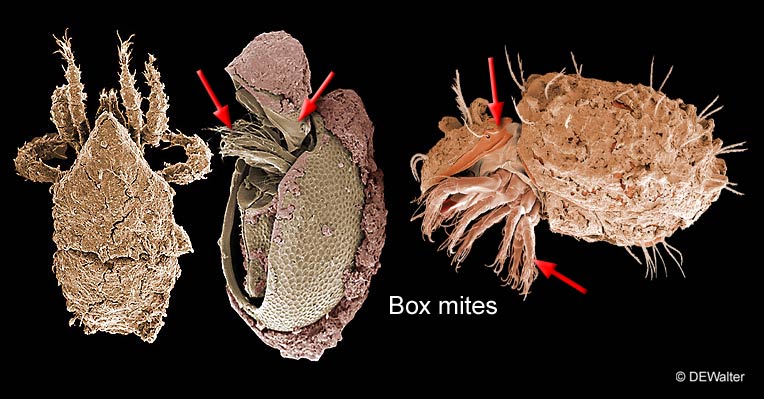
notogasteral remnants of the cuticle of previous instars as a single or multiple 'scalps' piled on their backs.
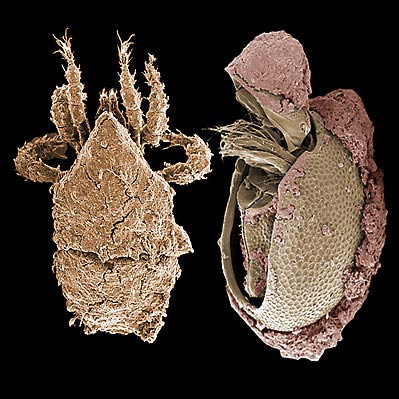
A few Mesostigmata (Monogynaspida) and oribatid mites (Mixonomata) secrete a cement layercement layer:
the outermost layer of the cerotegument; often produced in an ornamental pattern.
to which bits of soil and detritus may adhere as a kind of additional layer of armor (or perhaps tactile or visual camouflage). A similar, although less dense adherent layer of pollen, fungal spores and the like may be found on species of Fungitarsonemus (Prostigmata, EleutherengonaEleutherengona:
(also Eleutherengonida, Eleutherengonina, Eleutherengonides) an infraorderwithin the Prostigmata consisting of the two hyporders Raphignathina and Heterostigmata. Eleutherengona includes many of the most important plant-parasitic mites, e.g., spider mites, broad mite, cyclamen mite.
), common inhabitants of leaves in tropical climates.
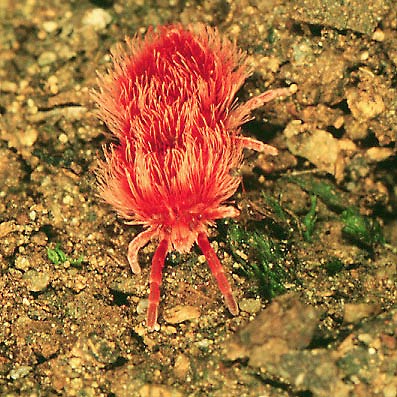
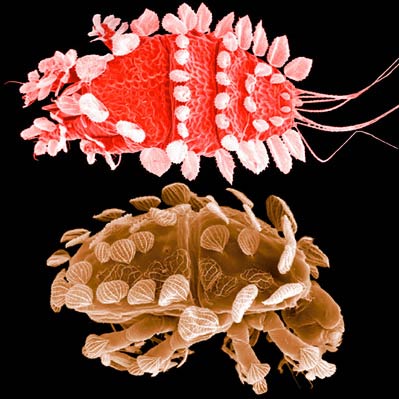
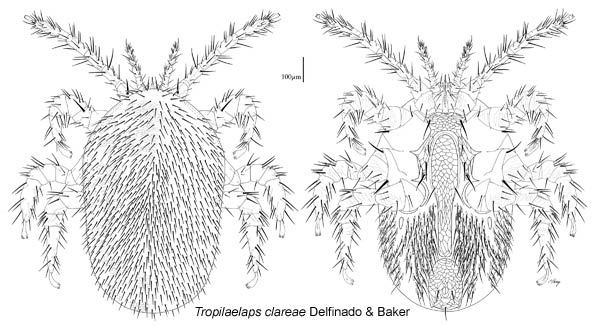
Finally, most mites have a fairly sparse array of setae (mechanoreceptors) on their bodies. However, some have a dense, furry pelage (e.g., some Endeostigmata and Anystina) or a covering of large leaf-like or plate-like setae (e.g., some Endeostigmata, Enarthronotides, Brachypylina, and Eleutherengonides). Some important parasites of bees (e.g., Tropilaelaps spp. in Monogynaspida) also have a dense covering of setae.
Author: David E. Walter
Content last updated Sept. 2006, unless indicated otherwise
Lucid key player updated Sept. 2025
idtools.org