Many acariform mites have 1–2 pairs of well developed bothridial sensillasensillum:
(pl. sensilla) (also sensillae; 'sensillus' is incorrect) a sensory structure; sensilla is often used for the bothridial seta in Acariformes.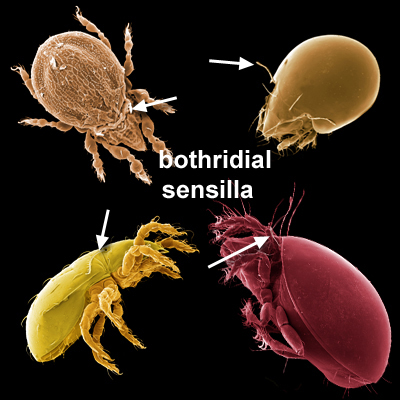 on the prodorsumprodorsum:
the dorsal surface of the propodosoma.
. The cup-like bases (bothridia) of these structures resemble a stigmatal opening and were once thought to be respiratory organs, but their primary function appears to be sensing air currents. The sensillasensillum:
(pl. sensilla) (also sensillae; 'sensillus' is incorrect) a sensory structure; sensilla is often used for the bothridial seta in Acariformes. come in various shapes from setiform to pectinatepectinate:
a seta or other process having comb-like teeth on one side (see bipectinate).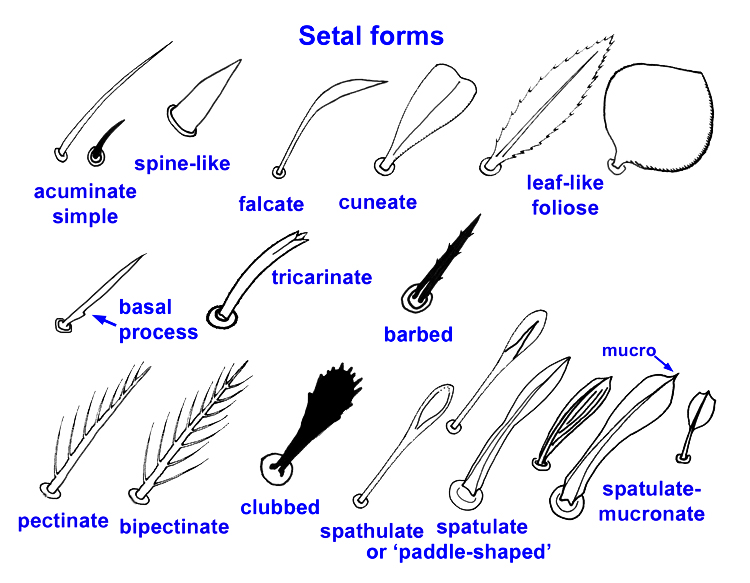 to plumose to club-shaped. They are variously called pseudostigmatic organs, trichobothriatrichobothrium:
(pl. trichobothria) (= bothridial sensillum) an often elaborately modified seta set in a cup-like base; forms include filiform, ciliate, pectinate or variously thickened or clubbed (bat-like to globose or capitate).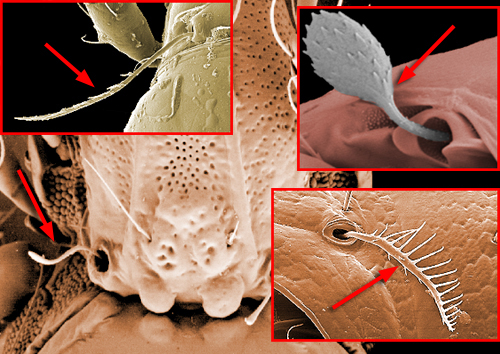 , or bothridial sensillasensillum:
(pl. sensilla) (also sensillae; 'sensillus' is incorrect) a sensory structure; sensilla is often used for the bothridial seta in Acariformes..
Author: David E. Walter
Content last updated Sept. 2006, unless indicated otherwise
Lucid key player updated Sept. 2025
idtools.org