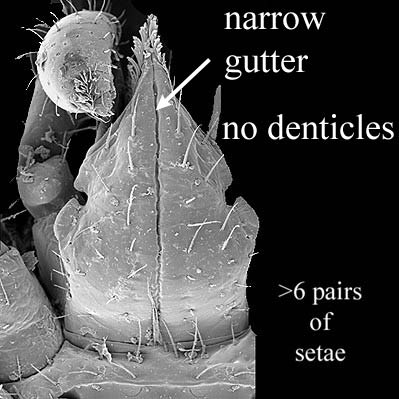
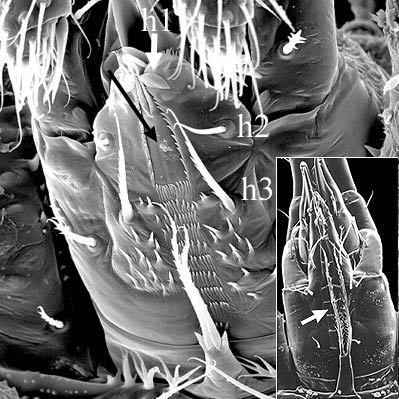
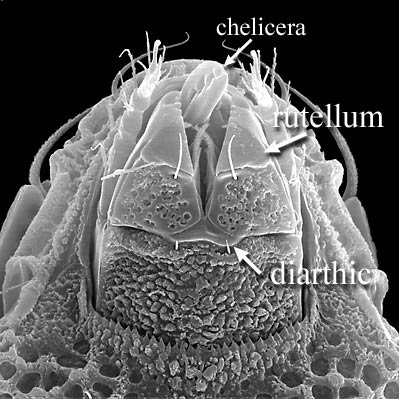
In all mites the endites of the palpcoxae are fused medially to form a subcapitulumsubcapitulum:
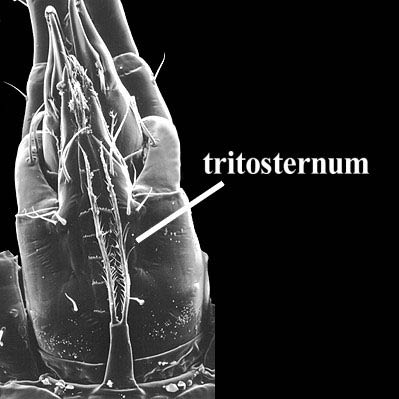
(also infracapitulum) the venter of the capitulum; the ventral faces of the fused palpcoxae; apparently formed independently in the two superorders of mites.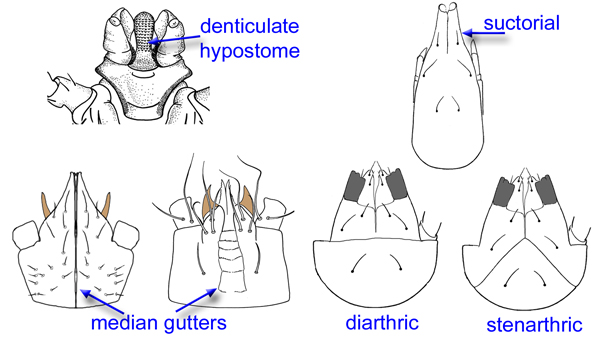 . In Parasitiformes, the line of fusion is visible as a narrow longitudinal gutter or a broader depression that usually bears rows of small teeth (denticlesdenticles:
small tooth-like processes, e.g., on the subcapitula of ticks and many mesostigmatans.
) and receives the tritosternum. The gutter, denticlesdenticles:
small tooth-like processes, e.g., on the subcapitula of ticks and many mesostigmatans.
, and tritosternumtritosternum:
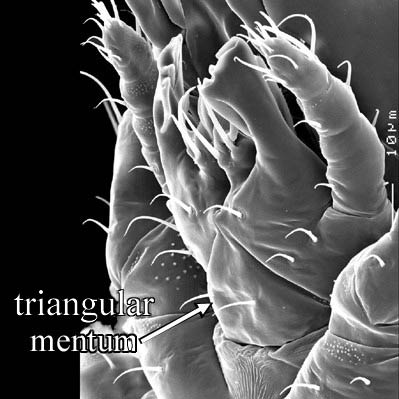
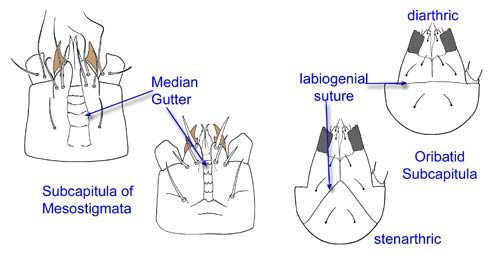
the sternum of the 3rd body segment (between legs I); produced as a biflagellate structure in Mesostigmata, although sometimes the flagellae (laciniae) are partially or completely fused. 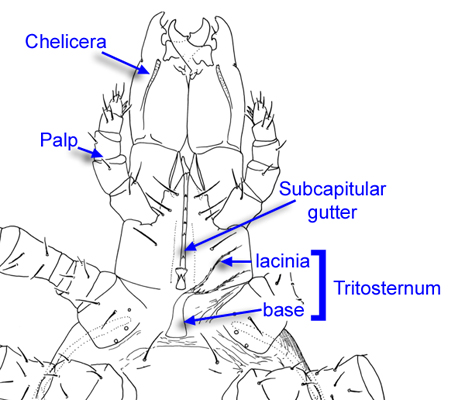 serve to redirect fluids (digested prey, hemolymph, salivary secretions) during feeding. Acariformes lack this median gutter, apparently because their subcapitulumsubcapitulum:
(also infracapitulum) the venter of the capitulum; the ventral faces of the fused palpcoxae; apparently formed independently in the two superorders of mites. is formed from the fusion of a labium with the endites of the palpcoxae (see stenarthric, diarthric).
Author: David E. Walter
Content last updated Sept. 2006, unless indicated otherwise
Lucid key player updated Sept. 2025
idtools.org