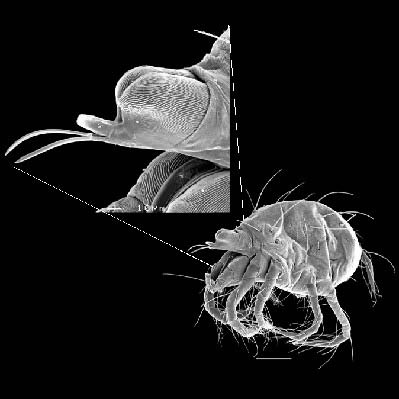
The primitive cheliceralcheliceral:
of or pertaining to the chelicera.
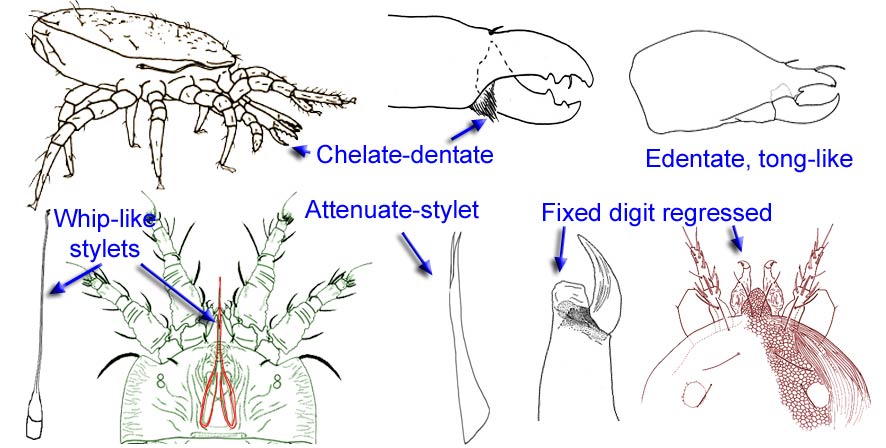
condition in all of the acarine orders is chelate-dentatechelate-dentate:
pincer-like chelicerae with teeth.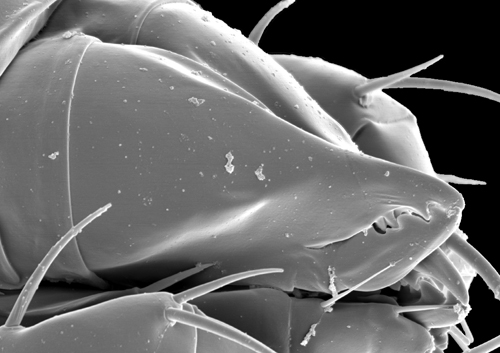 , but chelicerae became highly modified in many derivative lineages. The simplest change is to lose the teeth on both digits, resulting in grasping chelicerae that somewhat resemble ice tongs as happens in the Rhagidiidae (Prostigmata) and some Phytoseiidae (Euseius spp.) (Mesostigmata). In most Prostigmata, the fixed digitfixed digit:
the distal extension of the middle article of the chelicera; usually bearing teeth and a distal hook and opposed to the movable digit in chelate-dentate forms, but often regressed; in Mesostigmata the fixed digit may bear the pilus dentilis.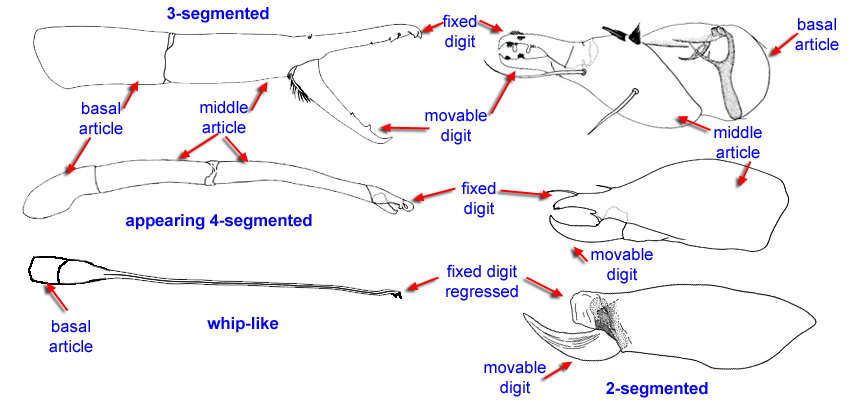 has regressedregressed:
reduce from normal as, for example, the capitulum of astigmatan deutonymphs or the fixed digit of the chelicerae in varroa.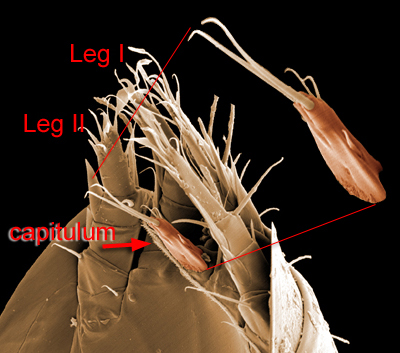 to a lobe or membranous sheath for the movable digit, and in spider mites (Fig. 1) and their relatives (Tetranychoidea), gall mites and their relatives (Eriophyopidea), and a few other groups (e.g., some parasitic Mesostigmata, suctorialsuctorial:
in reference to mouthparts that appear to be used to suck-up fluids, although in most cases this has not been demonstrated and may not be true. Typically the chelicerae are stylet-like and the subcapitulum is modified anteriorly into a tube that supports the stylets, e.g., in the endeostigmatan genus Bimichaelia and the oribatid superfamily Suctobelboidea.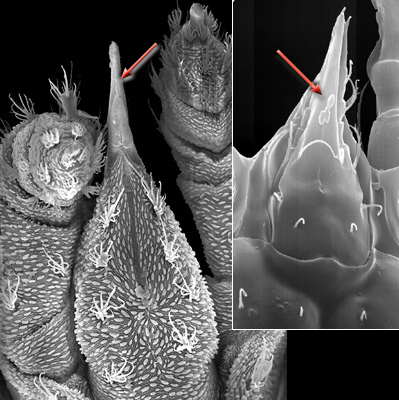 Endeostigmata and Oribatida, bacterial feeding histiostomatid Astigmata) the chelicerae are modified into attentuate stylet-likestylet-like:
referring to chelicerae or movable digits that are slender, elongate, and usually acuminate. Stylet-like chelicerae may be composed of the entire chelicera (as in some parasitic Dermanyssoidea or the endeostigmatan genus Bimichaelia) or only the movable digits (as in many Prostigmata). If the cheliceral stylets are especially elongate, they may be called whip-like stylets (e.g., in spider mites and their relatives).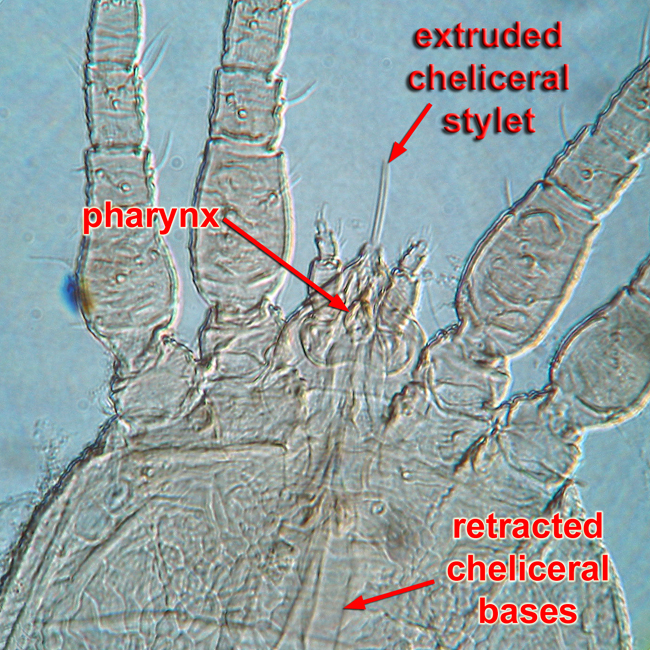 structures, needle-like stylets, or whip-likewhip-like:
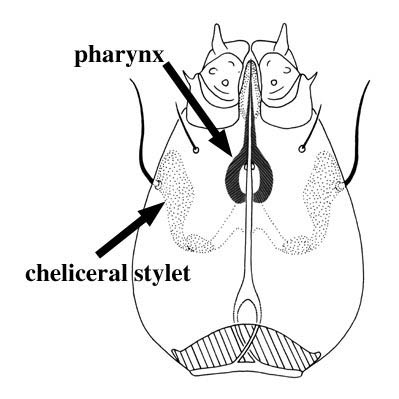
long, slender and sinuous as in the posterior setae of some phytoseiid mites (Mesostigmata) or the stylets of spider mites and their relatives (Prostigmata: Tetranychoidea).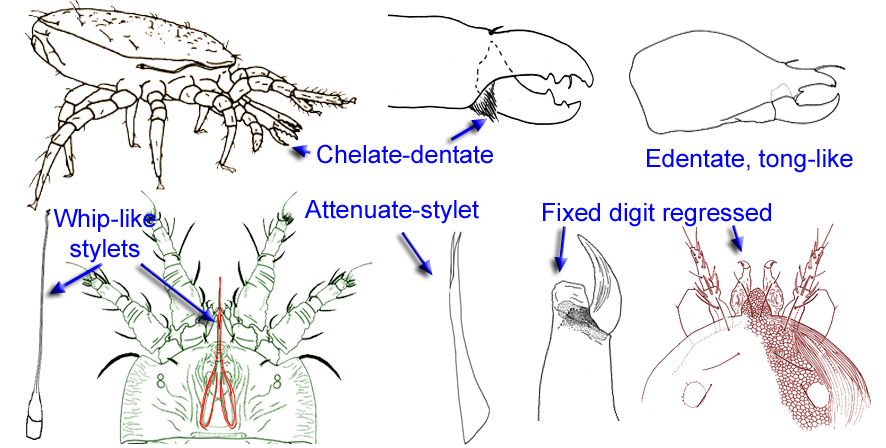 stylets. In heterostigmatine Prostigmata, the chelicerae are stylet-likestylet-like:
referring to chelicerae or movable digits that are slender, elongate, and usually acuminate. Stylet-like chelicerae may be composed of the entire chelicera (as in some parasitic Dermanyssoidea or the endeostigmatan genus Bimichaelia) or only the movable digits (as in many Prostigmata). If the cheliceral stylets are especially elongate, they may be called whip-like stylets (e.g., in spider mites and their relatives). (Fig. 2), but hidden within a gnathosomal capsulegnathosomal capsule:
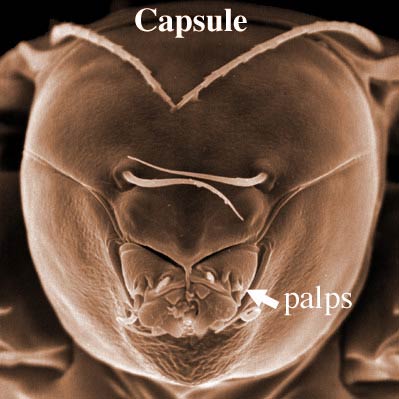
a fusion of the gnathosomal elements (chelicerae and subcapitulum) into a single structure, as seen in protigmatans such as Heterostigmata, Myobiidae, and Cheyletoidea (also tegmen).
(Fig. 3).
Author: David E. Walter
Content last updated Sept. 2006, unless indicated otherwise
Lucid key player updated Sept. 2025
idtools.org