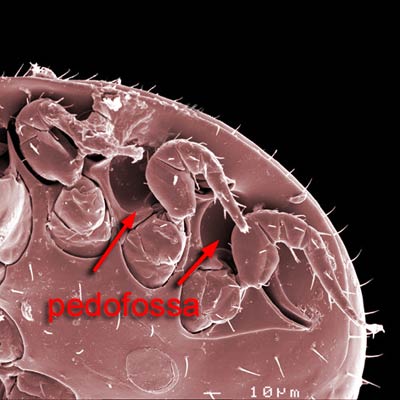
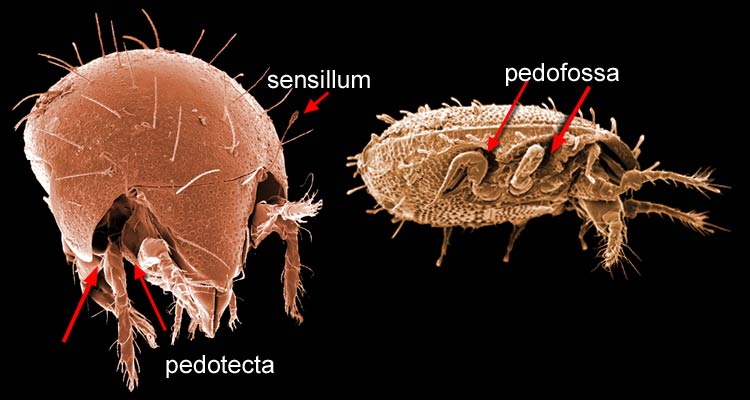
Even in the most heavily armored mites, the legs remain a weak point that is susceptible to attack by predators. Consequently, some armored mites have developed protected areas into which they can withdraw their legs when attacked. In the Monogynaspida (Uropodina), the ventral plateventral plate:
a sclerotized plate covering the ventral region of the opisthosoma in brachypyline oribatid mites and separated from the notogaster by the circumgastric scissure; also any plate in the ventral region.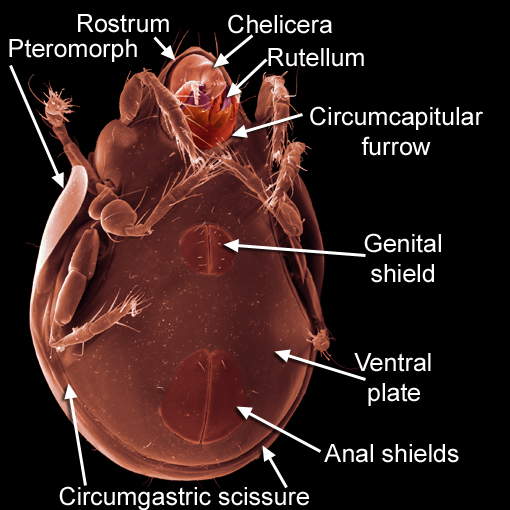 may have excavated areas to receive legs I–IV are called pedofossae (or sometimes fossae pedalespedofossa:
(pl. pedofossae) (= fossae pedales, fovae pedales) recesses into which the legs can be withdrawn.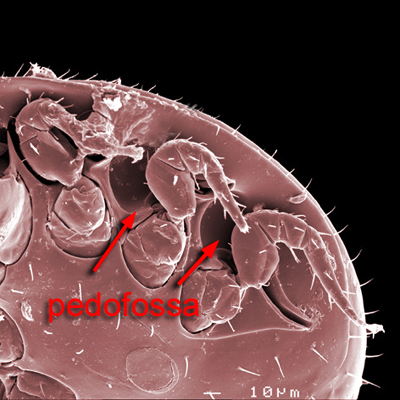 ). In Brachypylinebrachypyline:
having separate genital and anal plates surrounded by a large ventral plate (composed of aggenital and adanal elements); usage usually restricted to traditional oribatid mites (see macropyline). oribatid mites, scale-like tectatectum:
(pl. tecta) any shelf-like projection of the cuticle. In Mesostigmata the leading dorsal edge of the basis capitulum is referred to as the tectum, gnathotectum, or epistome.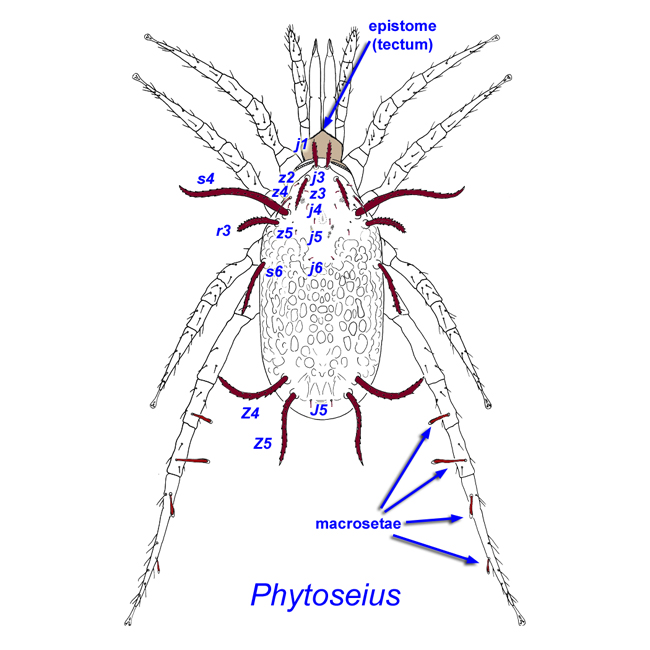 that arise around the bases of legs I and II are called pedotectapedotectum:
(pl. pedotecta) a scale-like tectum arising around the insertion of legs I or II in some armored oribatid mites that covers the insertion of the leg and sometimes forms a protected space into which the legs can be withdrawn; not to be confused with the pedofossae in the venter of some uropodid mites (Mesostigmata) into which legs may be withdrawn. (Also tectopedium). 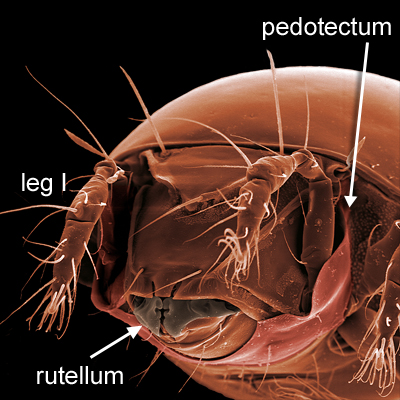 .
.
Author: David E. Walter
Content last updated Sept. 2006, unless indicated otherwise
Lucid key player updated Sept. 2025
idtools.org