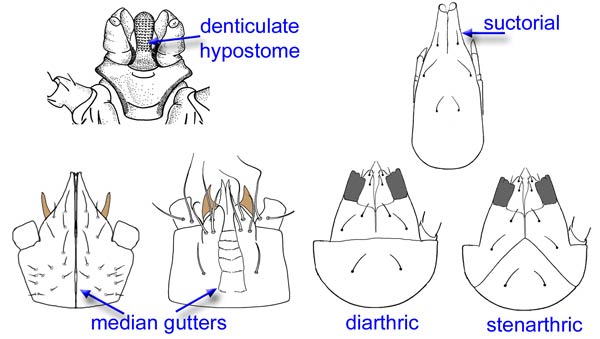
Various features on the underside of the capitulumgnathosoma:
(= capitulum) the anteriormost part of a mite or ricinuleid, composed of the cheliceral and pedipalpal segments and separated from the body (idiosoma) by a ring of soft cuticle.
are diagnostic for some taxa of mites. For example, the denticulatedenticulate:
bearing small, sharp processes, e.g., the hypostome of ticks.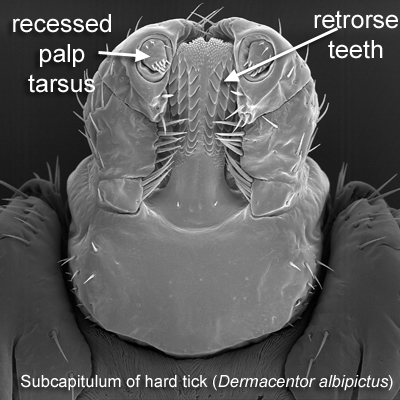 hypostome is present only in ticks (Ixodida) and a median subcapitular gutter is present only in Mesostigmata and Holothyrida. Only some Endeostigmata and traditional Oribatida retain a labiogenial suturesuture:
an inflexible juncture between two body parts; line of fusion between two formerly separate body parts or regions. This term is often misused for flexible articulations.
(i.e., are diarthricdiarthric:
a subcapitulum with a more or less transverse articulation that reaches the lateral margin at the base of the palp.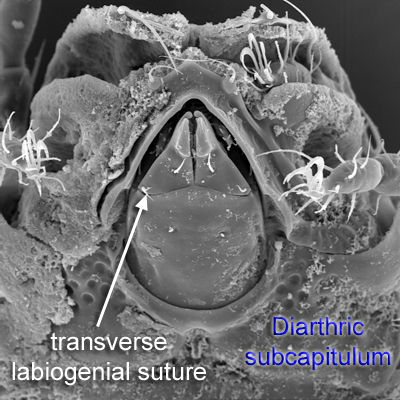 or stenarthricstenarthric:
a subcapitulum with a triangular mentum and oblique labiogenal sutures; probable primitive condition in Acariformes. ): Prostigmata are always anarthric. Several lineages of Oribatida, Endeostigmata, and a few Prostigmata (Eriophyoidea, some larval water mites) have developed suctorialsuctorial:
in reference to mouthparts that appear to be used to suck-up fluids, although in most cases this has not been demonstrated and may not be true. Typically the chelicerae are stylet-like and the subcapitulum is modified anteriorly into a tube that supports the stylets, e.g., in the endeostigmatan genus Bimichaelia and the oribatid superfamily Suctobelboidea.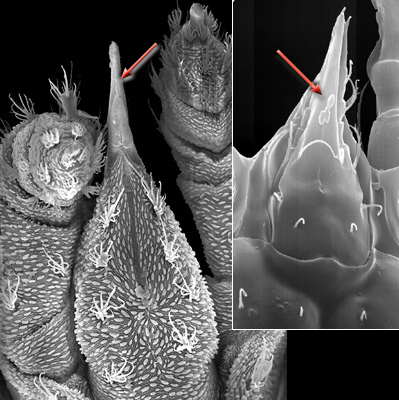 mouthparts, i.e., the hypostome is elongated and curled around the chelicerae (typically stylets) and presumably used to suck up fluids.
Author: David E. Walter
Content last updated Sept. 2006, unless indicated otherwise
Lucid key player updated Sept. 2025
idtools.org