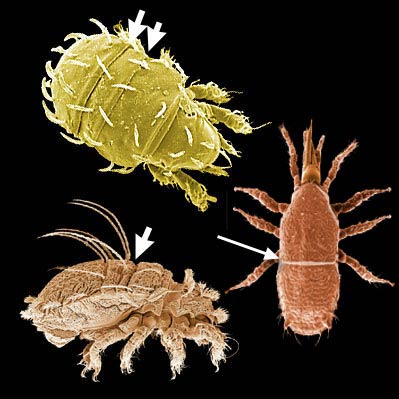
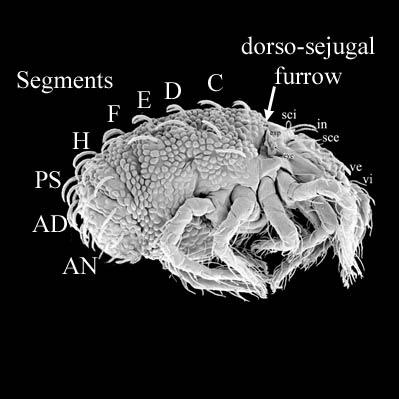
In theory, the acarine bodybody:
the idiosoma of mites.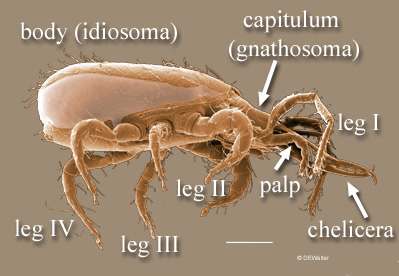 has only two divisions: the capitulumgnathosoma:
(= capitulum) the anteriormost part of a mite or ricinuleid, composed of the cheliceral and pedipalpal segments and separated from the body (idiosoma) by a ring of soft cuticle.
(gnathosomagnathosoma:
(= capitulum) the anteriormost part of a mite or ricinuleid, composed of the cheliceral and pedipalpal segments and separated from the body (idiosoma) by a ring of soft cuticle.
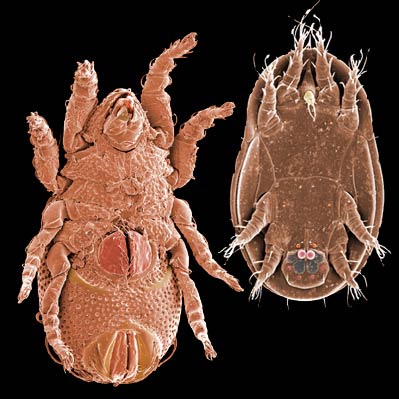
) and the idiosoma. In practice, however, several kinds of mites have more or less subdivided idiosomas. Most mites are holoid; they do not have a flexible articulationarticulation:
a region of differentiated cuticle joining two parts of an exoskeleton; a joint, scissure or furrow.
of the idiosoma between legs II–III that extends dorsally through the sejugal furrow. The coxae of legs II and III may be approximateapproximate:
close together, near, adjacent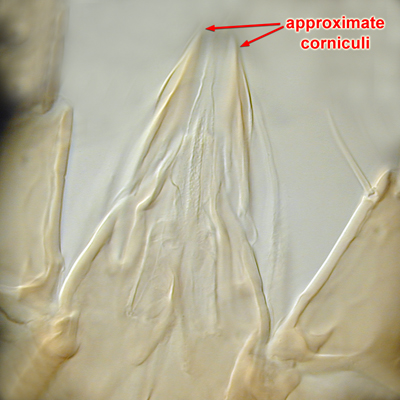 or distant in a holoidholoid:
lacking flexible cuticle between legs II-III.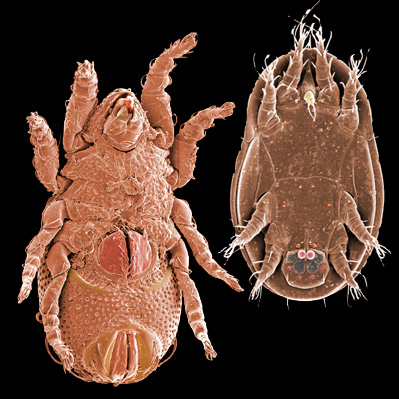 mite, and the dorsaldorsal:
relating to the upper or back side; opposed to ventral.
shield may be entireentire:
a shield or sclerite with a continuous margin without incisions.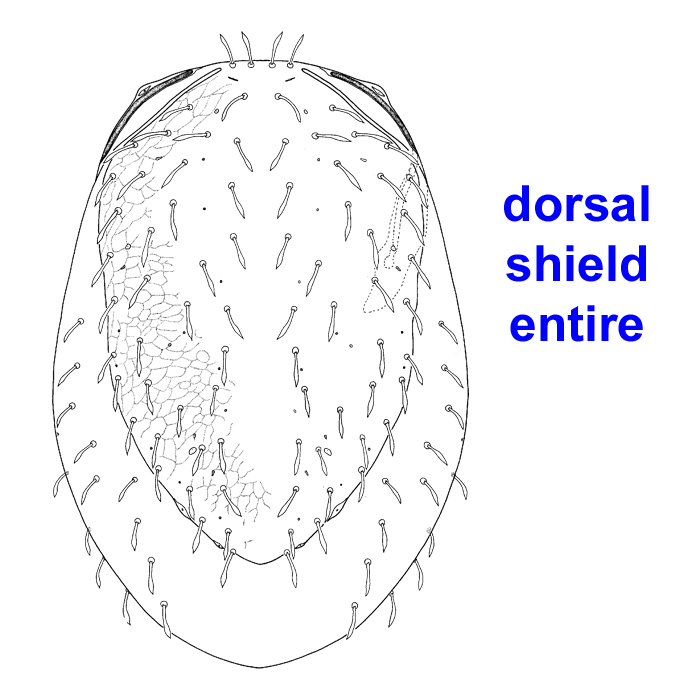 , divided, or fragmentedfragmented:
broken up, composed of several discrete parts rather than of a single unit.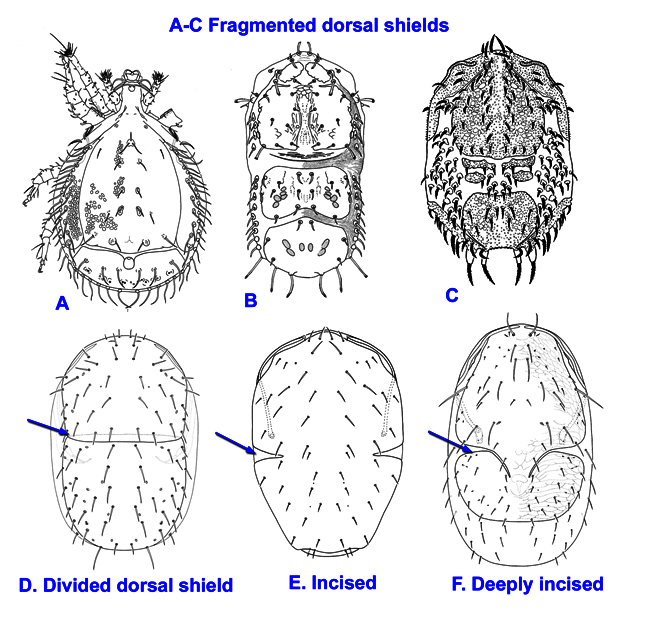 : the critical feature is the band of flexible cuticle completely encircling the idiosoma.
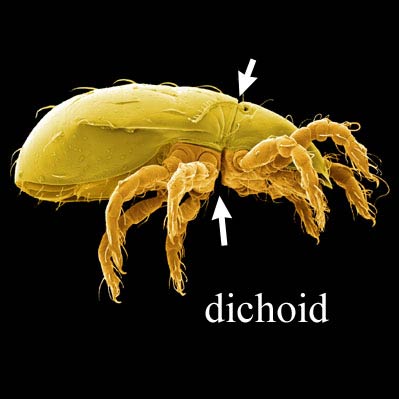
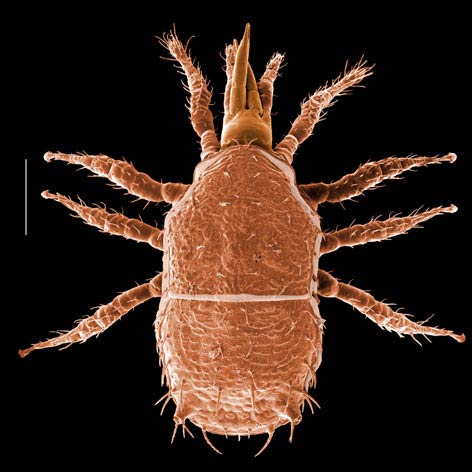
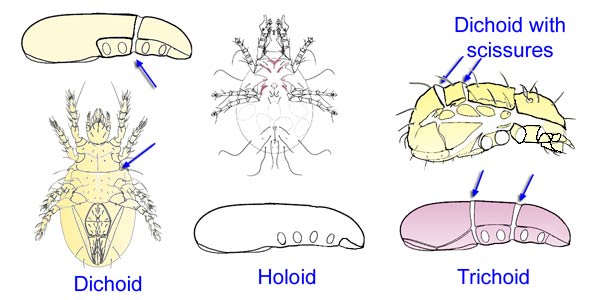
However, some Sarcoptiformes are dichoid; they have a band of flexible cuticle encircling the bodybody:
the idiosoma of mites. and running between legs II–III, and a few are trichoid, i.e., they have a second articulationarticulation:
a region of differentiated cuticle joining two parts of an exoskeleton; a joint, scissure or furrow.
of the idiosoma behind legs IV, or are tripartite and have two flexible bands on the opisthosomaopisthosoma:
(= abdomen) the posterior body division in arachnids; usually not distinct in mites because of the fusion of the opisthosoma with part of the prosoma to form the idiosoma.
(some Endeostigmata and Prostigmata). Additionally, some dichoiddichoid:
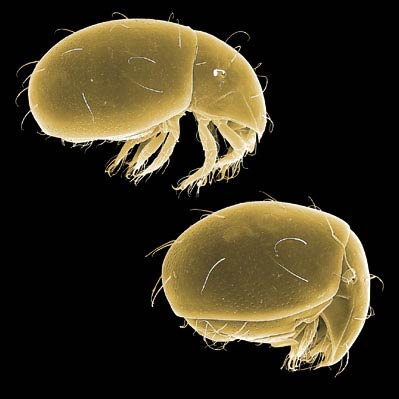
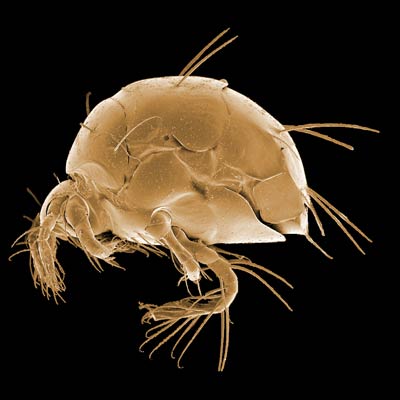
a body appearing to be divided between legs II-III by a flexible sejugal furrow (Acariformes).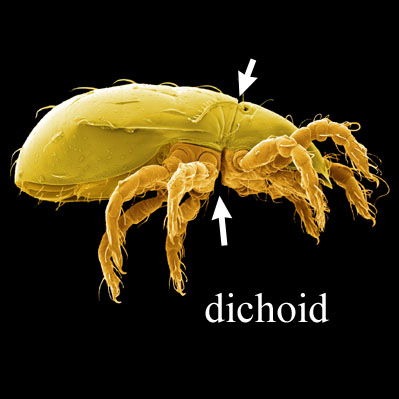 mites have the ability to fold in their legs and mouthparts and close-up to resemble a seed, an ability called ptychoidy or jacknifing.
Some mites have incomplete divisions of a sclerotized idiosoma, i.e., plates separated by flexible cuticle, but the articulations do not extend ventrally. Such dorsaldorsal:
relating to the upper or back side; opposed to ventral.
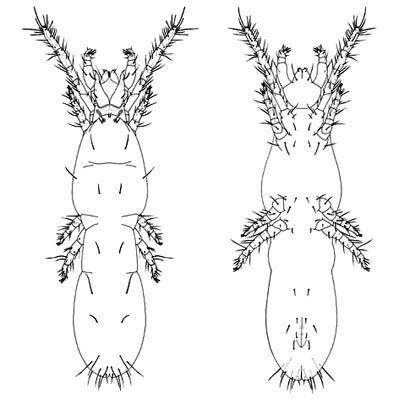
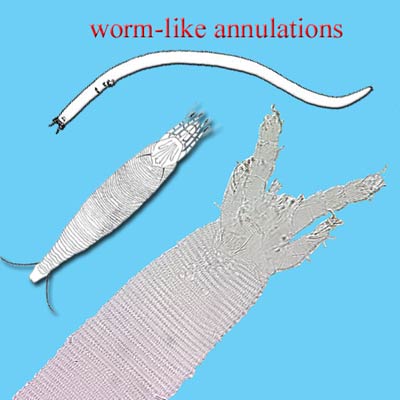
divisions of the plates are called scissures, and 1–2 are commonly present in certain kinds of oribatid mites (e.g., Enarthronotides); many Mesostigmata have divided dorsal shields. If several separate plates are present, the mites may seem to be segmented; however, true segmental folds are present only in some Endeostigmata. In contrast, the important plant-parasites in the Eriophyoidea have worm-like bodies with a series of annulations, a condition also found in others in the Endeostigmata.
Author: David E. Walter
Content last updated Sept. 2006, unless indicated otherwise
Lucid key player updated Sept. 2025
idtools.org