In many early derivative Mesostigmata, the sternal region either:
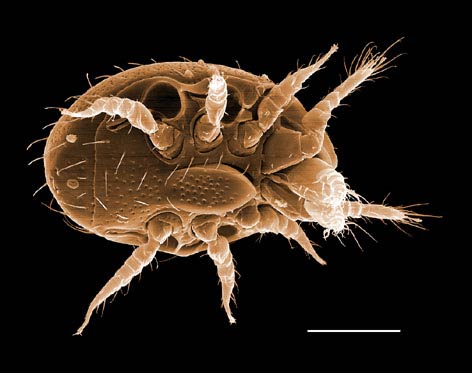
Is expanded and surrounds a nude (i.e., without setae) genital shield (typically a very large shield that intrudes well into the sternal region)—the typical case in the Uropodina.
Or appears fragmentedfragmented:
broken up, composed of several discrete parts rather than of a single unit.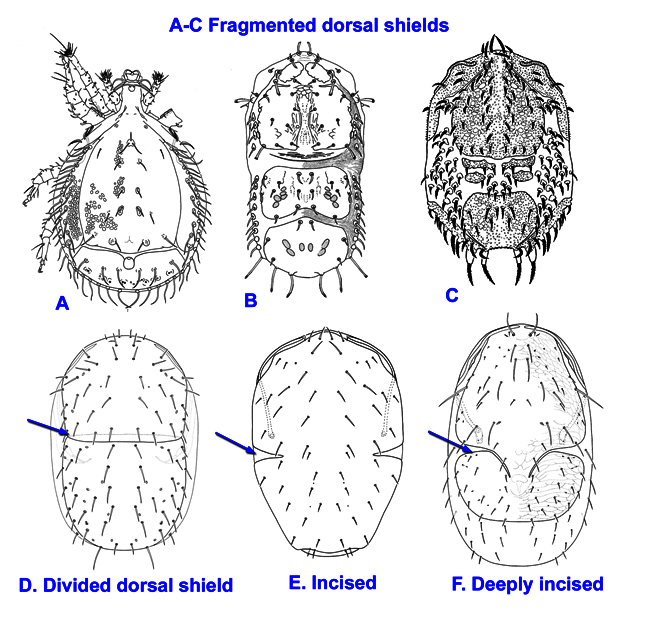 , with the first pair of sternal setaesternal setae:
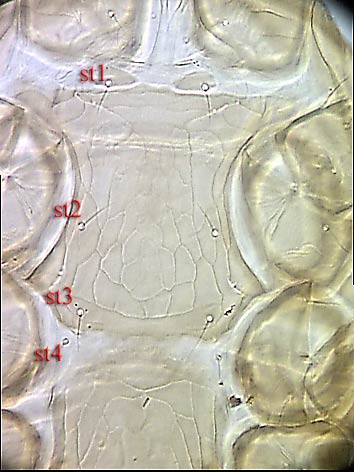
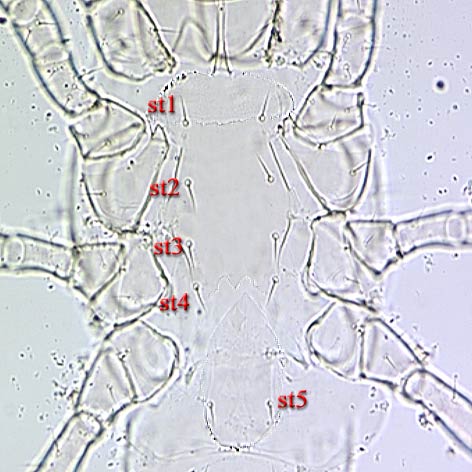
in Mesostigmata, the five pairs of setae in the intercoxal region designated st1-5; st1-3 are present in the larva and usually are borne on a sternal shield in the adult female; st4, the metasternal setae, are added in the deutonymph, often are borne on metasternal platelets, and sometimes on the sternal shield; st5, the genital setae, are added in the protonymph and usually borne on or are inserted laterad the epigynal shield in the adult female.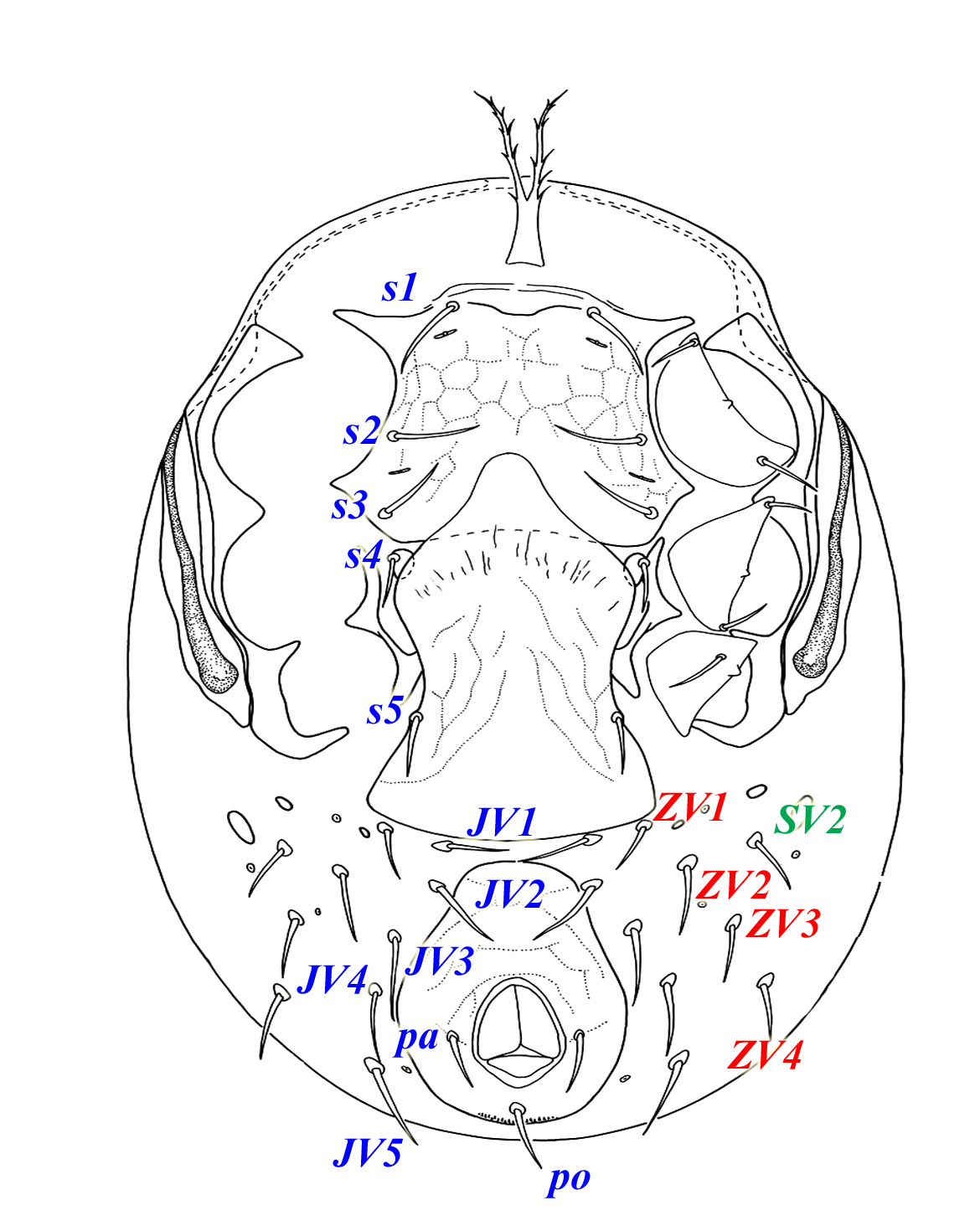 (st1) separate from any other sternal setaesternal setae:
in Mesostigmata, the five pairs of setae in the intercoxal region designated st1-5; st1-3 are present in the larva and usually are borne on a sternal shield in the adult female; st4, the metasternal setae, are added in the deutonymph, often are borne on metasternal platelets, and sometimes on the sternal shield; st5, the genital setae, are added in the protonymph and usually borne on or are inserted laterad the epigynal shield in the adult female., either in soft cuticle or on small platelets (jugulariajugularia:
(singular jugularium) in Mesostigmata, a pair of presternal shields bearing setae st1 and /or pores stp1. If fused, this shield is often called a tetartosternum.
) or joined on a bar-like plate (tetrartosternum).
This condition is rare in the Monogynaspida, but occurs in some early lineages and st1 in Neojordensia (Ascidae) are on small platelets (jugulariajugularia:
(singular jugularium) in Mesostigmata, a pair of presternal shields bearing setae st1 and /or pores stp1. If fused, this shield is often called a tetartosternum.
).
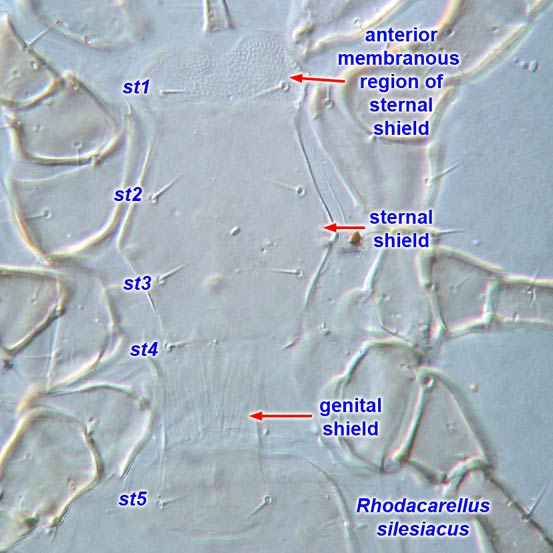
In some Rhodacaridae and Digamasellidae the anterior portion of the sternal shieldsternal shield:
a shield in the anterior intercoxal region of parasitiform mites that bears one or more pairs of sternal setae.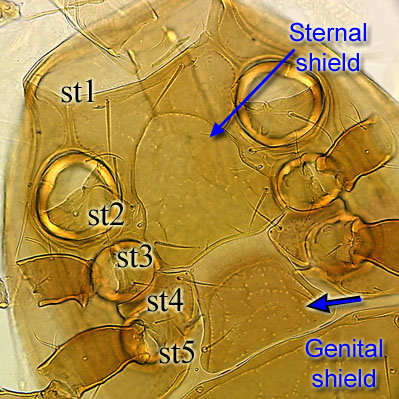 is membranous and setae st1 appear to be inserted on the anterior margin of the shield or in the soft cuticle.
In most Monogynaspida, however, the adult female has a distinct and entire sternal shieldsternal shield:
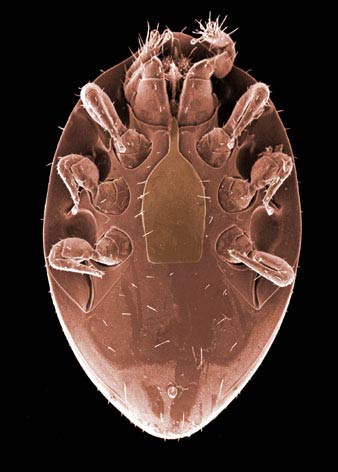
a shield in the anterior intercoxal region of parasitiform mites that bears one or more pairs of sternal setae. that bears 2, 3 or 4 pairs of setae (very rarely only 1 pair).
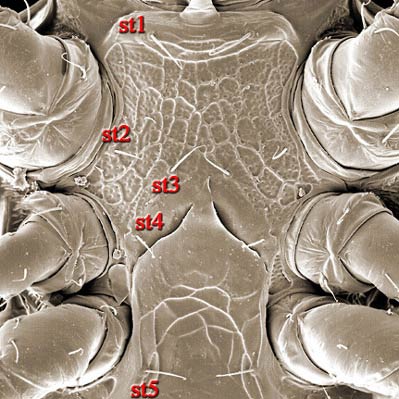
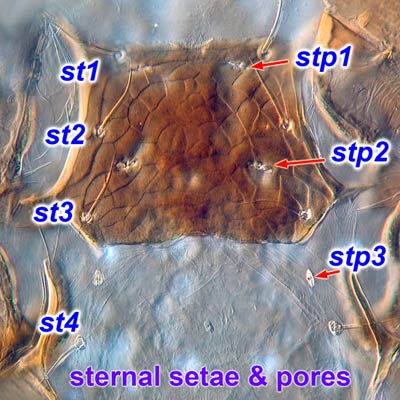
Some Phytoseiidae, Ameroseiidae and Macronyssidae have only 2 pairs of sternal setaesternal setae:
in Mesostigmata, the five pairs of setae in the intercoxal region designated st1-5; st1-3 are present in the larva and usually are borne on a sternal shield in the adult female; st4, the metasternal setae, are added in the deutonymph, often are borne on metasternal platelets, and sometimes on the sternal shield; st5, the genital setae, are added in the protonymph and usually borne on or are inserted laterad the epigynal shield in the adult female. (st1–2). St3 may be in the soft cuticle or on small platelets.
In most Halolaelapidae, some Ascidae (e.g., some Arctoseius), and rarely in a few other families of DermanyssinaDermanyssina:
an alternative name for the hyporder Dermanyssiae, a lineage of Mesostigmata.
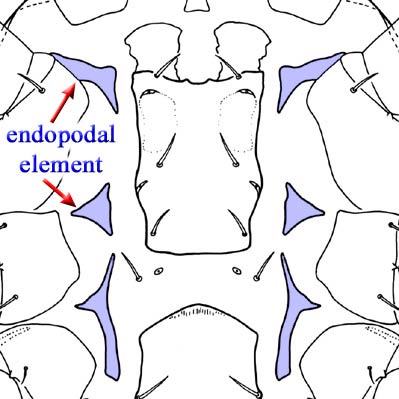
, the sternal shieldsternal shield:
a shield in the anterior intercoxal region of parasitiform mites that bears one or more pairs of sternal setae. is completely free from the endopodal elements and has a strap-like to rectangular shape.
Author: David E. Walter
Content last updated Sept. 2006, unless indicated otherwise
Lucid key player updated Sept. 2025
idtools.org