The corniculi
(external malaeexternal malae:
the corniculi.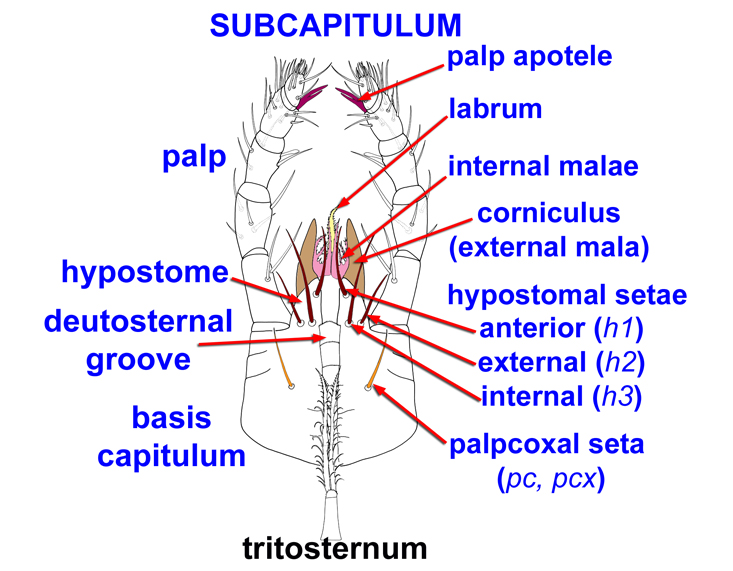 ) are usually horn-like processes that originate dorso-laterally
on the margin of the subcapitulumsubcapitulum:
) are usually horn-like processes that originate dorso-laterally
on the margin of the subcapitulumsubcapitulum:
(also infracapitulum) the venter of the capitulum; the ventral faces of the fused palpcoxae; apparently formed independently in the two superorders of mites.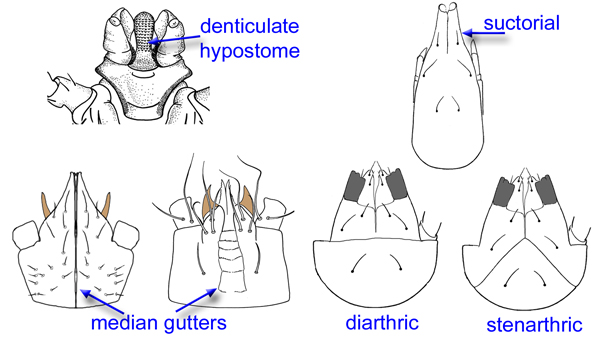 between the palppalp:
(= pedipalp) the second pair of limbs in arachnids, used in feeding and originating on either side of the chelicerae. In mites, the palps may be vestigial, with only a few segments, or have a maximum of 5 freely articulating segments (rarely the femur is subdivided) and a distal or subdistal apotele.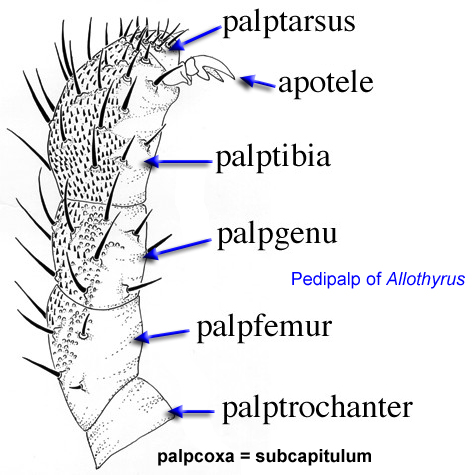 trochanters and internal
malae. In many Phytoseioidea the corniculicorniculus:
trochanters and internal
malae. In many Phytoseioidea the corniculicorniculus:
(pl. corniculi) (also, external malae) a usually horn-like process (sometimes toothed, bifurcate, trifurcate, spine-like, spatulate, or membranous) on the subcapitulum of parasitiform mites that usually supports the salivary styli. A toothed corniculus could be confused with a rutellum, a possibly homologous structure in Acariformes and Opilioacarida. Phytoseiid image is spatulate corniculus.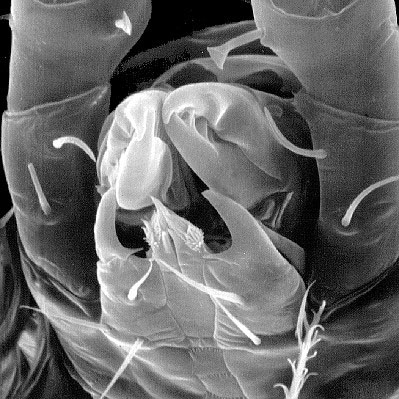 are approximateapproximate:
close together, near, adjacent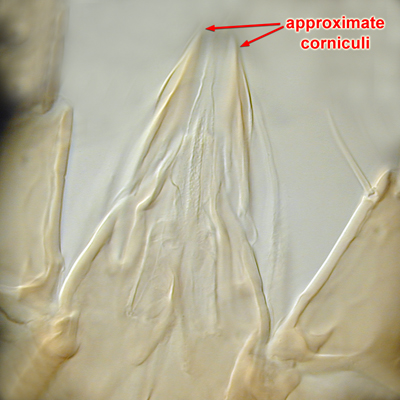 and somewhat
flattened and spatula-like. In several groups, the corniculicorniculus:
and somewhat
flattened and spatula-like. In several groups, the corniculicorniculus:
(pl. corniculi) (also, external malae) a usually horn-like process (sometimes toothed, bifurcate, trifurcate, spine-like, spatulate, or membranous) on the subcapitulum of parasitiform mites that usually supports the salivary styli. A toothed corniculus could be confused with a rutellum, a possibly homologous structure in Acariformes and Opilioacarida. Phytoseiid image is spatulate corniculus. have a mesal
tooth or notchnotch:
a subrectagular to v-shape incision or similar form on the margin of a sclerite.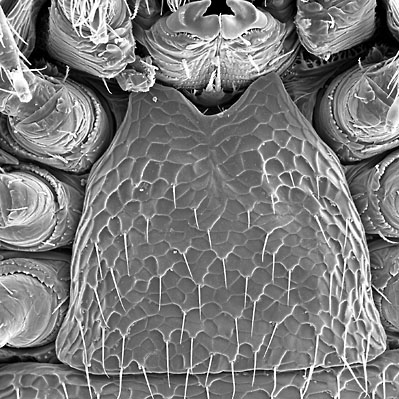 that seems to be related to feeding on fungi or other particulate
matter.
that seems to be related to feeding on fungi or other particulate
matter.
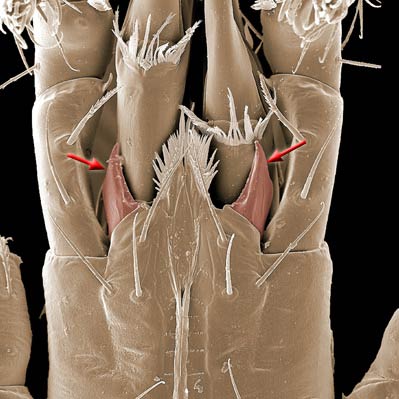
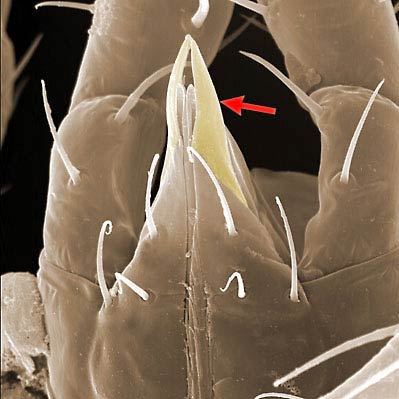
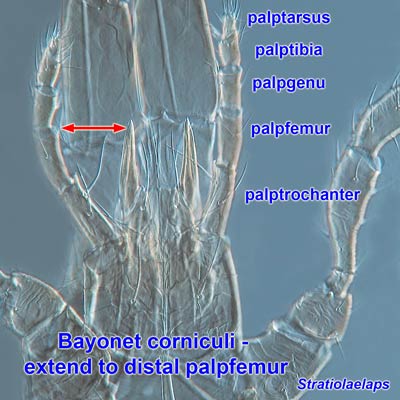
When the corniculicorniculus:
(pl. corniculi) (also, external malae) a usually horn-like process (sometimes toothed, bifurcate, trifurcate, spine-like, spatulate, or membranous) on the subcapitulum of parasitiform mites that usually supports the salivary styli. A toothed corniculus could be confused with a rutellum, a possibly homologous structure in Acariformes and Opilioacarida. Phytoseiid image is spatulate corniculus. are very long (i.e., well past the edge of the palp
trochanter) and sword-like, e.g., in Polyaspis, Stratiolaelaps
(Laelapidae), and many Parholaspididae, they are referred to as bayonet-likebayonet-like:
resembling a long, sharp blade used for stabbing, as in some corniculi; sword-like.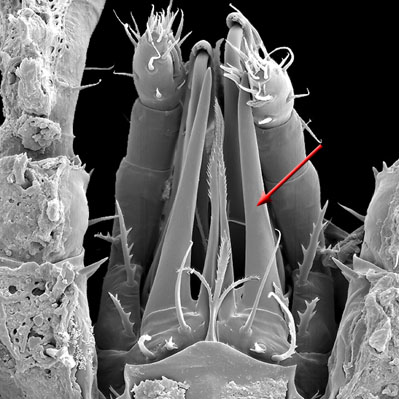 .
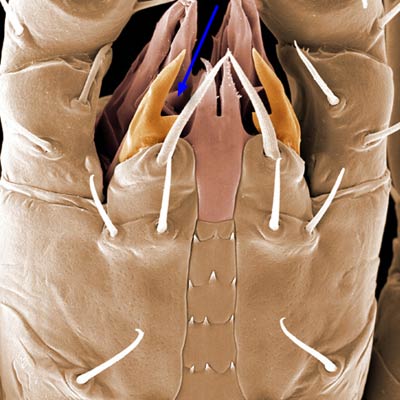
In some parasites and other symbiotes, however, the corniculicorniculus:
.
In some parasites and other symbiotes, however, the corniculicorniculus:
(pl. corniculi) (also, external malae) a usually horn-like process (sometimes toothed, bifurcate, trifurcate, spine-like, spatulate, or membranous) on the subcapitulum of parasitiform mites that usually supports the salivary styli. A toothed corniculus could be confused with a rutellum, a possibly homologous structure in Acariformes and Opilioacarida. Phytoseiid image is spatulate corniculus. are
membranous, often expanded, and difficult to recognize as corniculicorniculus:
(pl. corniculi) (also, external malae) a usually horn-like process (sometimes toothed, bifurcate, trifurcate, spine-like, spatulate, or membranous) on the subcapitulum of parasitiform mites that usually supports the salivary styli. A toothed corniculus could be confused with a rutellum, a possibly homologous structure in Acariformes and Opilioacarida. Phytoseiid image is spatulate corniculus..
Author: David E. Walter
Content last updated Sept. 2006, unless indicated otherwise
Lucid key player updated Sept. 2025
idtools.org