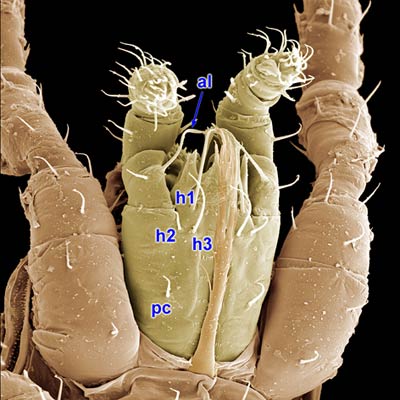
The hypostomal setae in most Gamasina are arranged in a more or less triangular array and the palpcoxal setapalpcoxal seta:
the pair of palpcoxal setae (pc or pcx), the most basal setae on the subcapitulum of mesostigmatans and not to be confused with the more anterior hypostomal setae.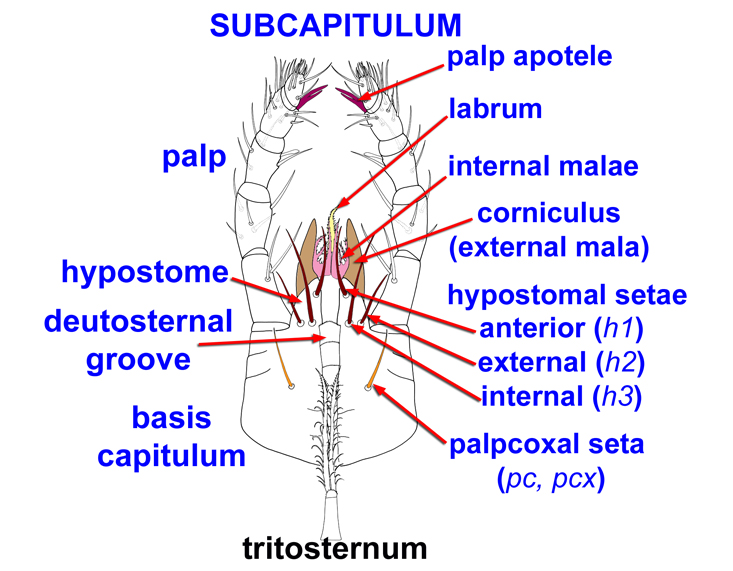 (pc) displaced well posteriadposteriad:
to the rear (do not use with the preposition 'to' since this is part of the meaning of the word), e.g., 'setae le are usually inserted posteriad setae ro'.
the triangle. In the Uropodina and a few Gamasina, however, the hypostomal setae, and usually the palpcoxal setapalpcoxal seta:
the pair of palpcoxal setae (pc or pcx), the most basal setae on the subcapitulum of mesostigmatans and not to be confused with the more anterior hypostomal setae., are arranged in a linear array along the length of the subcapitulumsubcapitulum:
(also infracapitulum) the venter of the capitulum; the ventral faces of the fused palpcoxae; apparently formed independently in the two superorders of mites.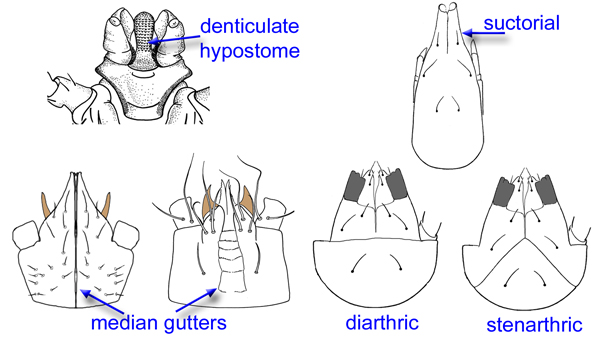 with the palpcoxal setapalpcoxal seta:
the pair of palpcoxal setae (pc or pcx), the most basal setae on the subcapitulum of mesostigmatans and not to be confused with the more anterior hypostomal setae. about as far from the hypostomal setae as they are from each other.
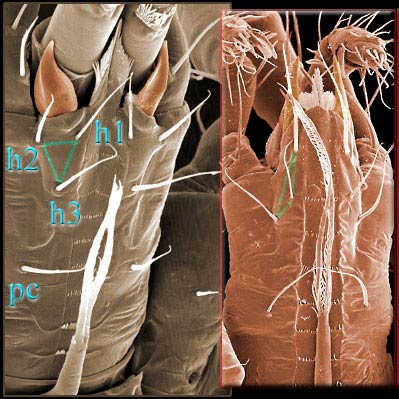
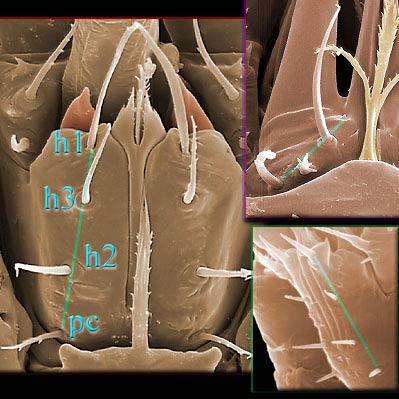
In Platyseiidae and some Arctoseiinae (Ascidae), both the internal palptrochanteral seta (al) and the anterior hypostomatal seta (h1) are elongate, curled and whip-likewhip-like:
long, slender and sinuous as in the posterior setae of some phytoseiid mites (Mesostigmata) or the stylets of spider mites and their relatives (Prostigmata: Tetranychoidea).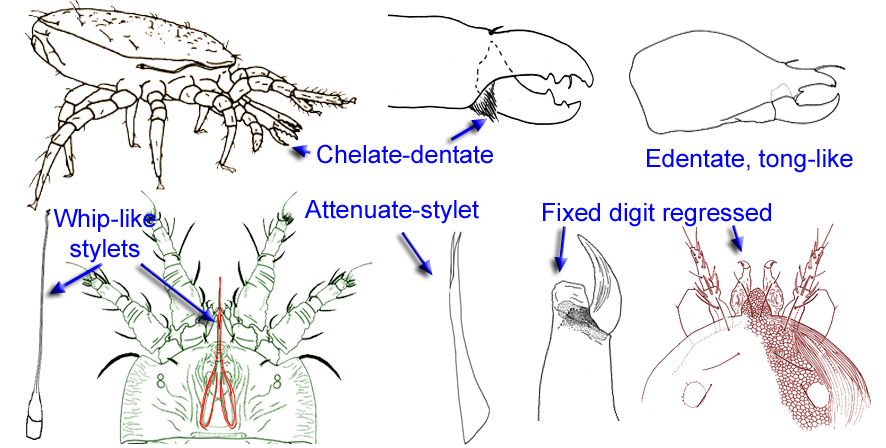 .
.
Author: David E. Walter
Content last updated Sept. 2006, unless indicated otherwise
Lucid key player updated Sept. 2025
idtools.org