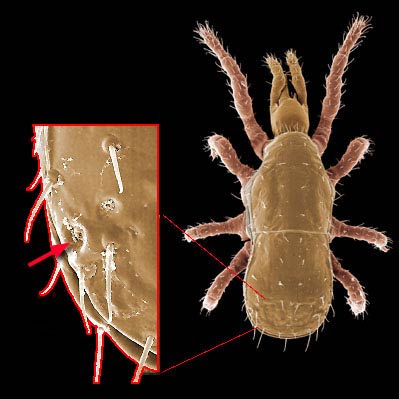
Many monogynaspids have glandgland:
usually referring to a glandular opening in the cuticle such as the lateral opisthonotal glands in the Sarcoptiformes or the idionotal glands in the Mesostigmata (see gdj etc. above), including hypertrophied openings that produce defensive secretions.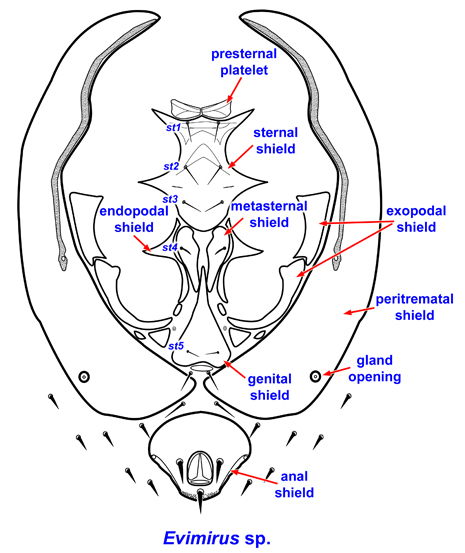 openings on their dorsaldorsal:
relating to the upper or back side; opposed to ventral.
or dorso-lateral aspects, but these are usually minute and difficult to distinguish from other 'pores' and proprioreceptors or are obscured by heavy ornamentation (e.g., Zerconidae) or cerotegumentcerotegument:
the outer layers of the epicuticle, including the wax and cement layers; often thin and inconspicuous, but sometimes very thick, ornamented, and obscuring the underlying cuticle; thick ceroteguments often can be peeled off to expose a very different-looking mite.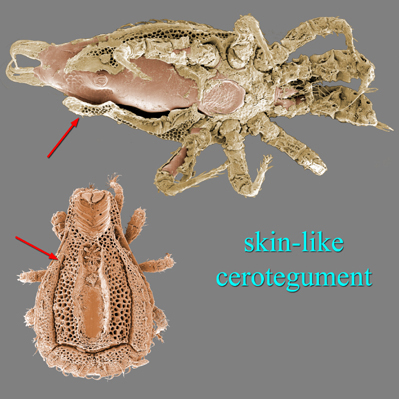 (Uropodina). In some Dermanyssiae, however, 1–2 pairs of glands in the postero-lateral corner of the dorsaldorsal:
relating to the upper or back side; opposed to ventral.
or opisthonotal shieldopisthonotal shield:
the posterior shield in mesostigmatans with divided dorsal shields.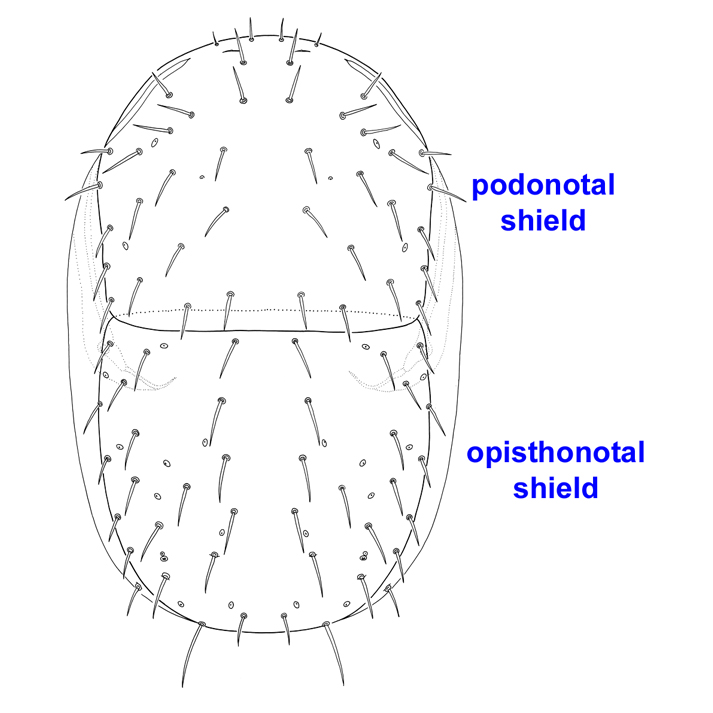 have well developed acetabulagenital acetabulum:
(pl. acetabula) an invagination containing the genitalia; also sometimes used for the genital papillae, especially in the Hydrachnida.
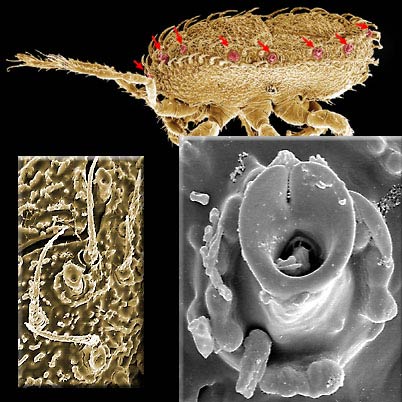
. In the unusual genus Heatherella 8–9 pairs of large, spout-like glandgland:
usually referring to a glandular opening in the cuticle such as the lateral opisthonotal glands in the Sarcoptiformes or the idionotal glands in the Mesostigmata (see gdj etc. above), including hypertrophied openings that produce defensive secretions. openings ring the bodybody:
the idiosoma of mites.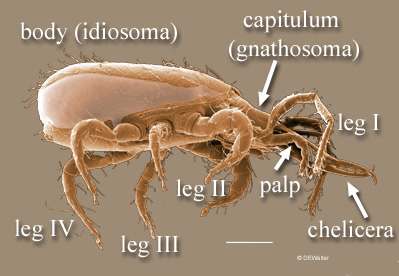 .
.
Author: David E. Walter
Content last updated Sept. 2006, unless indicated otherwise
Lucid key player updated Sept. 2025
idtools.org