Chaetotaxychaetotaxy:
the use of setal position and form in taxonomy; see Lindquist-Evans system, Grandjean system, Rostral-lamellar system, etc.
, the study of the form and placement of setae, is the key to understanding the monogynaspidmonogynaspine:
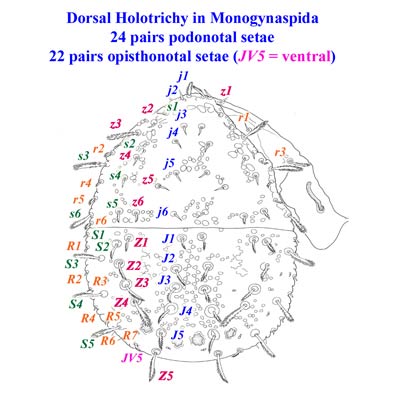
(monogynaspid) representative of the mesostigmatan suborder Monogynaspida, characterized by having a single genital shield in the adult female that usually bears one pair of setae (st5) or may be nude.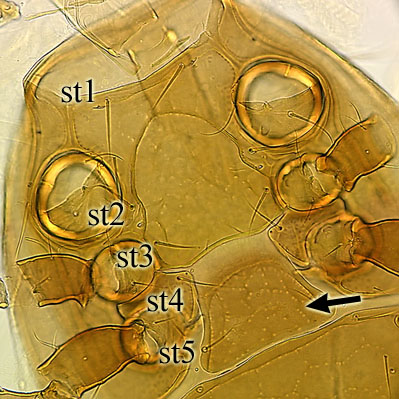 Mesostigmata. Primitively, about 46 pairs of setae are present on the dorsumdorsum:
the upper or back side; opposed to venter.
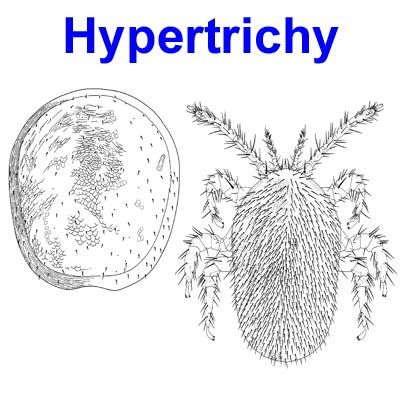
(on the shield(s) or in the soft cuticle), but most species have somewhere between 22–43 pairs. However, extra setae (hypertichy) occurs in several groups and is especially common in parasites of vertebrates and of arthropods (e.g., Varroa, Tropilaelaps).
In contrast, the most common mesostigmatans associated with vegetation, including fruits and flowers, are highly deficientdeficient:
in relation to setae, reduced from a presumed holotrichous number.
in dorsaldorsal:
relating to the upper or back side; opposed to ventral.
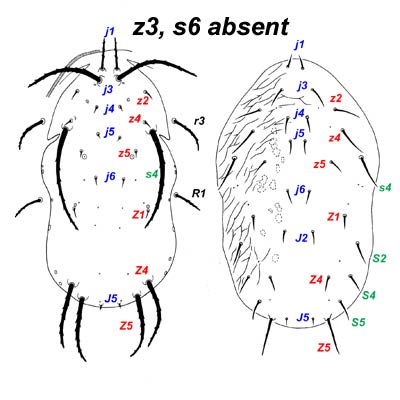
setae (i.e., hypotrichous). This is especially true of the family Phytoseiidae, most species of which have 20 or fewer pairs of setae on their dorsaldorsal:
relating to the upper or back side; opposed to ventral.
shield.
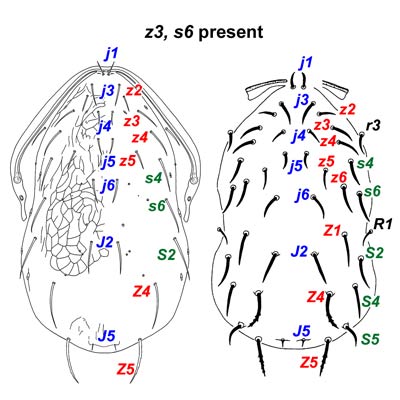
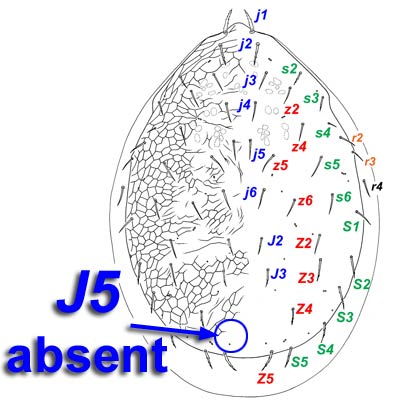
Even the absence of a single seta may be of critical taxonomic importance. For example, members of the Ameroseiidae can be identified through their loss of the clunal seta J5 near the posteriorposterior:
the back part of the body or towards that region in comparison, e.g., 'posterior to'.
median margin of the dorsaldorsal:
relating to the upper or back side; opposed to ventral.
shield.
Author: David E. Walter
Content last updated Sept. 2006, unless indicated otherwise
Lucid key player updated Sept. 2025
idtools.org