In most cases identification of Mesostigmata to
family or lower can be accomplished only if the specimen is an adult
female. The easiest way to determine the stagestage:
a distinct developmental form, e.g., the egg, larval, nymphal and adult stages. Since mite instars are usually morphologically distinct, they are also stages (and see stase). Some authors, however, insist that instar should be apolysis to apolysis and stage ecdysis to ecdysis. Since apolysis can be a discontinuous process and, in any case, is difficult to determine, in practice the difference between a stage and an instar is abstract and of importance only if you have a contentious referee.
and sex of your specimen is
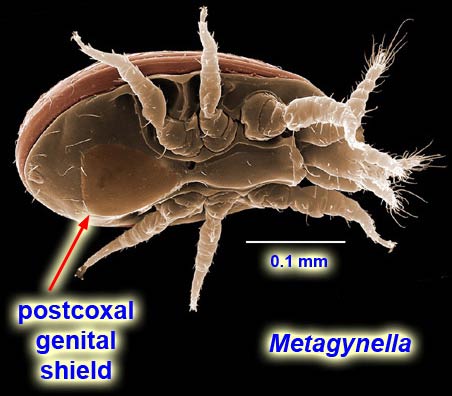
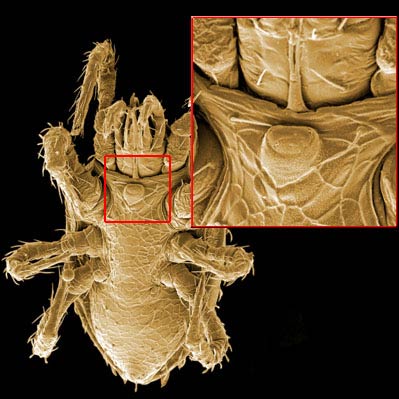
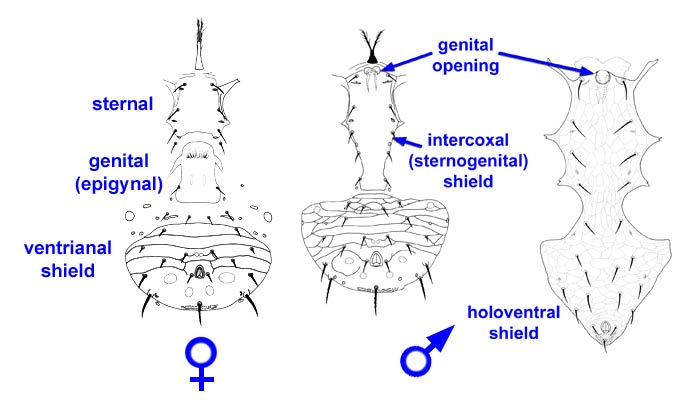
to look at the intercoxal region. Adult females have a genital opening
that is almost invariably in the intercoxal region (species of Metagynella are exceptions) and covered
by a sclerotized shield which may be truncate posteriorly or continue onto the
ventral region. Adult males and immature stages of both sexes have a
continuous intercoxal shield that may be truncate or continue onto the ventralventral:
relating to the lower or under side; opposed to dorsal.
region or even incorporate the entire ventral regionventral region:
in Mesostigmata, the area between the genital and anal regions.
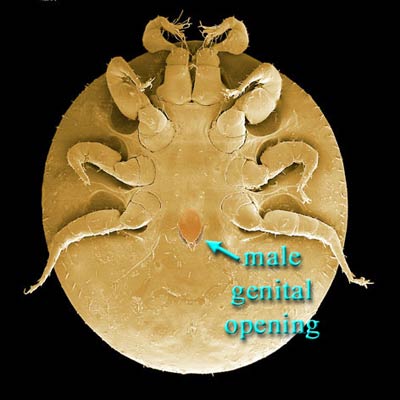
. Adult males have a
subcircular opening in the intercoxal shield (sometimes called a sternogenital
or sternitogenital shieldsternogenitalshield:
(also sternitogenital, sternitigenital) in male Mesostigmata, a shield covering the intercoxal region and bearing the genital opening.
) somewhere between the posteriorposterior:
the back part of the body or towards that region in comparison, e.g., 'posterior to'.
margins of
coxae IV and the basebase:
the usually columnar basal part of the tritosternum; sometimes expanded and rectangular or otherwise modified; the most basal part of any structure.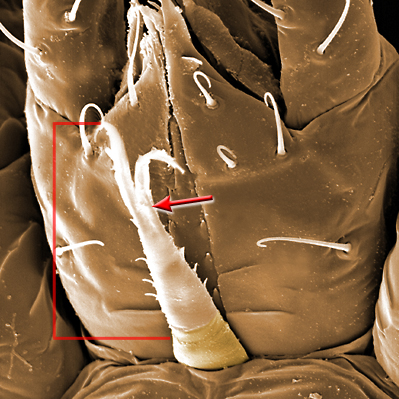 of the
tritosternum. Immature stages (larva,
protonymph, deutonymphdeutonymph:
of the
tritosternum. Immature stages (larva,
protonymph, deutonymphdeutonymph:
(also deuteronymph) the second nymphal stage or instar.
) of Mesostigmata have no genital opening.
Author: David E. Walter
Content last updated Sept. 2006, unless indicated otherwise
Lucid key player updated Sept. 2025
idtools.org