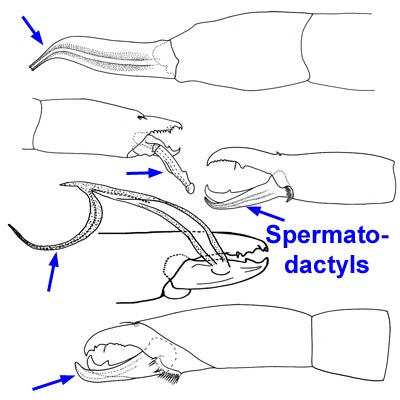
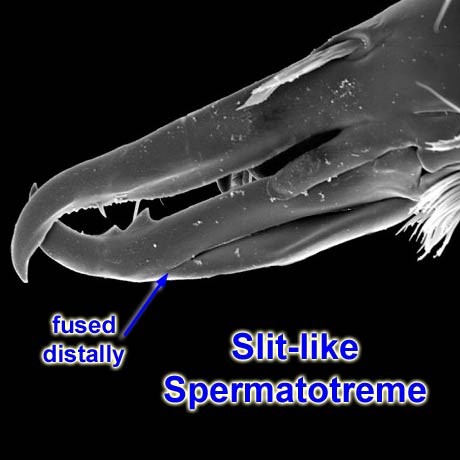
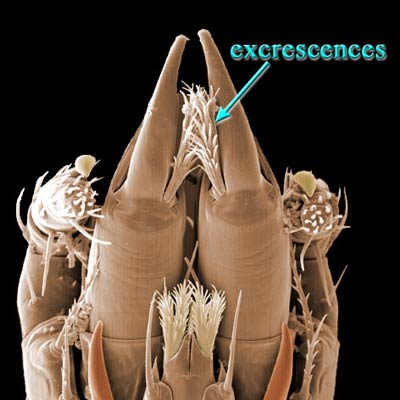
Chelicerae should be one of the first structures viewed when trying to identify a mite, especially since if a spermatodactyl or spermatotreme is present your specimen is a male and will be difficult to identify any further.
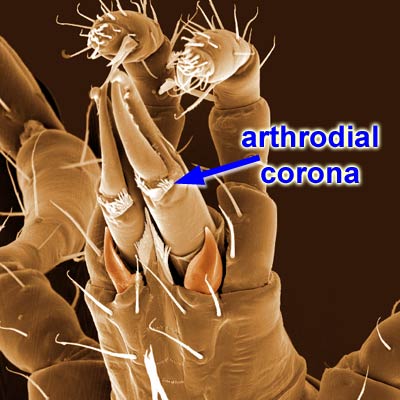
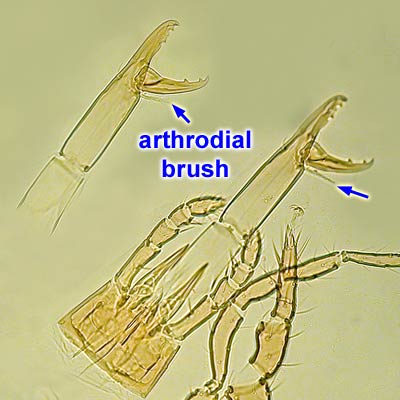
Also, processes on the chelicerae of adult females often have taxonomic value, although they may be difficult to discern, especially if they are membranous. The arthrodial membranearthrodial membrane:
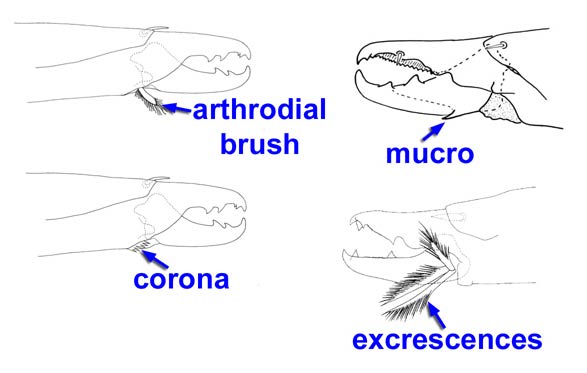
the soft cuticle at any articulation, but often specifically used for the juncture of the movable and fixed digits in Mesostigmata. The membrane may have a crown-like corona of fine processes or be extended into a brush-like structure.
between the movable and fixed digits in most mongynaspids has a small crown of filaments called an arthrodial corona. If this process is produced into an elongate, brush-like structure it is called an arthrodial brush. In a few cases (Nothogynus, Microgynium) 1–3 brush like excrescences are produced from an opening on the movable digit (not from the arthrodial membranearthrodial membrane:
the soft cuticle at any articulation, but often specifically used for the juncture of the movable and fixed digits in Mesostigmata. The membrane may have a crown-like corona of fine processes or be extended into a brush-like structure.
, although often from near the base of the movable digit). A ventralventral:
relating to the lower or under side; opposed to dorsal.
spine-like process is called a mucro.
Author: David E. Walter
Content last updated Sept. 2006, unless indicated otherwise
Lucid key player updated Sept. 2025
idtools.org