Pseudoscorpions and some insects, sarcoptiform (Endeostigmata) and trombidiform mites (Prostigmata) produce fine silken threads from their mouthparts. The silksilk:
fine threads spun by acariform mites to form a molting chamber (cocoon), protect or attach eggs, or a loosely defined to finely woven web.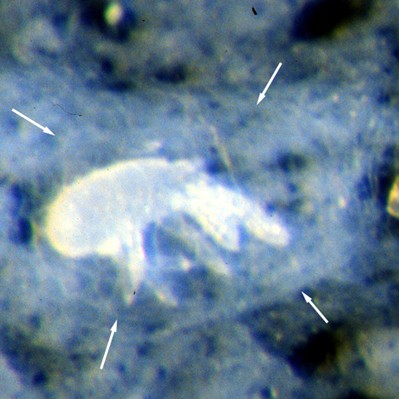 can be woven into cocoons for moulting (as in this larval Alicorhagia).
Spider mites have a short, blunt spinneretspinneret:
a structure that produces silken fibers. In spider mites, the spinneret is in the form of a short, blunt seta-like structure on the palp tarsus.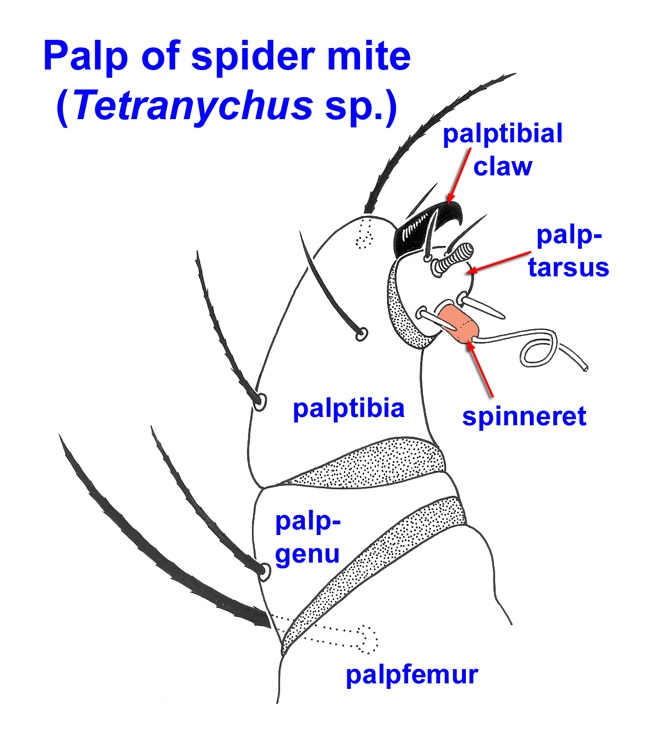 on their palps.
Symphylans spin silksilk:
fine threads spun by acariform mites to form a molting chamber (cocoon), protect or attach eggs, or a loosely defined to finely woven web. from their spinneretspinneret:
a structure that produces silken fibers. In spider mites, the spinneret is in the form of a short, blunt seta-like structure on the palp tarsus. cerci and centipedes from their last pair of legs.
Spiders produce silksilk:
fine threads spun by acariform mites to form a molting chamber (cocoon), protect or attach eggs, or a loosely defined to finely woven web. from abdominal spinnerets for both prey capture and for protection (webs, egg sacs).
Author: David E. Walter
Content last updated Sept. 2006, unless indicated otherwise
Lucid key player updated Sept. 2025
idtools.org