In arthropods, a head is the anterior bodybody:
the idiosoma of mites.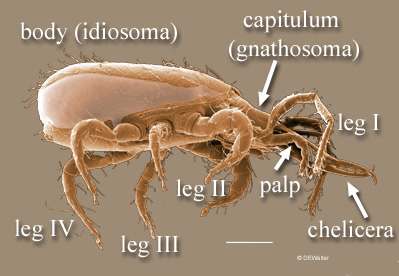 region specialized for sensing and feeding. Insects, myriapods, and crustaceans have heads, but arachnids (mites, whipscorpions, spiders, and their relatives) do not. Except for proturans and some insect larvae, all microarthropods with heads will also have antennae (although they may be small) and they will usually have eyes or ocelliocellus:
(pl. ocelli) a simple eye. Mites with eyes usually have one or two pairs of lateral ocelli, but some Opilioacarida have three pairs. Additionally, some acariform mites have one or two median ocelli on the underside of the naso.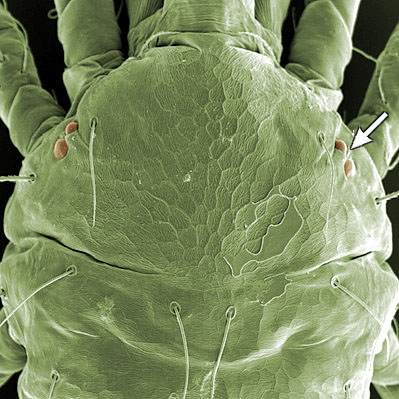 near the bases of the antennae.
In some mites, the two anteriormost segments are head-like (the capitulumgnathosoma:
(= capitulum) the anteriormost part of a mite or ricinuleid, composed of the cheliceral and pedipalpal segments and separated from the body (idiosoma) by a ring of soft cuticle.
or gnathosomagnathosoma:
(= capitulum) the anteriormost part of a mite or ricinuleid, composed of the cheliceral and pedipalpal segments and separated from the body (idiosoma) by a ring of soft cuticle.
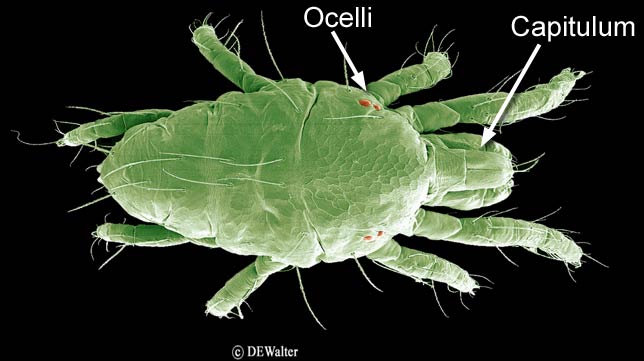
), but antennae are never present. When mites have eyes, they are 1–2 (rarely 3) simple ocelliocellus:
(pl. ocelli) a simple eye. Mites with eyes usually have one or two pairs of lateral ocelli, but some Opilioacarida have three pairs. Additionally, some acariform mites have one or two median ocelli on the underside of the naso. located on the 'shoulders' of the bodybody:
the idiosoma of mites. above the coxae of the anterior legs.
Misinterpretations allowed: The pseudoculi of proturans could be confused with eyes. (You can choose to disable "Allow misinterpretations" in the Preferences (gear icon) options.)
Protura are the only microarthropods with heads that lack antennae as adults. However, the antennae of some insect larvae are minute or seemingly absent.
Misinterpretation possible: Ostracods have well developed antennae, but these may be confused with legs. (You can choose to disable "Allow misinterpretations" in the Preferences (gear icon) options.)
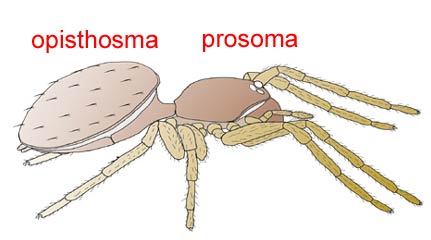
Most arachnids have an anterior bodybody:
the idiosoma of mites. region that combines the functions of sensing, feeding, and walking and is often covered with a carapace—the prosomaprosoma:
(= cephalothorax) the anterior body region in arachnids; usually not distinct in mites.
.
Misinterpretations allowed: The exceptions are the mites and ticks (Acari
Factsheet for:Acari
Glossary:Opilioacariformes:
an obsolescent supraordinal term used for the Opilioacarida.
), which have a gnathosomagnathosoma:
(= capitulum) the anteriormost part of a mite or ricinuleid, composed of the cheliceral and pedipalpal segments and separated from the body (idiosoma) by a ring of soft cuticle.
(capitulumgnathosoma:
(= capitulum) the anteriormost part of a mite or ricinuleid, composed of the cheliceral and pedipalpal segments and separated from the body (idiosoma) by a ring of soft cuticle.
) and have lost a clear distinction between prosomaprosoma:
(= cephalothorax) the anterior body region in arachnids; usually not distinct in mites.
and opisthosomaopisthosoma:
(= abdomen) the posterior body division in arachnids; usually not distinct in mites because of the fusion of the opisthosoma with part of the prosoma to form the idiosoma.
, but those with a dorso-sejugal suturesejugal suture:
(or plane) a division cutting the acariform mite idiosoma between legs II-III.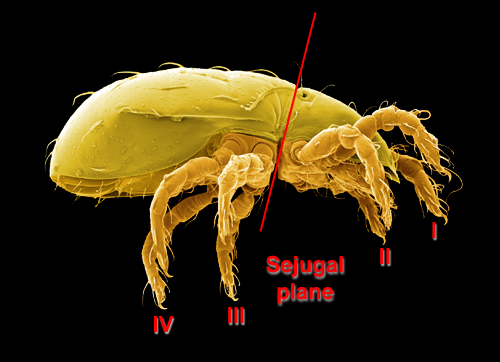 may be confusing. (You can choose to disable "Allow misinterpretations" in the Preferences (gear icon) options.)
Only mites and ticks (a kind of mite) have a head-like capitulumgnathosoma:
(= capitulum) the anteriormost part of a mite or ricinuleid, composed of the cheliceral and pedipalpal segments and separated from the body (idiosoma) by a ring of soft cuticle.
(=gnathosoma). Ricinuleids also have a gnathosomagnathosoma:
(= capitulum) the anteriormost part of a mite or ricinuleid, composed of the cheliceral and pedipalpal segments and separated from the body (idiosoma) by a ring of soft cuticle.
protected by a cuculus dorsally.
The presence of a head with antennae is a simplesimple:
unadorned; simple setae are needle-like and without hairs or pectins.
and effective way to distinguish small insects, hexapods and myriapods from mites. However, in some larval insects, highly modified adults (e.g., scale insects), and some parasitic mites, the head is absent or difficult to distinguish.
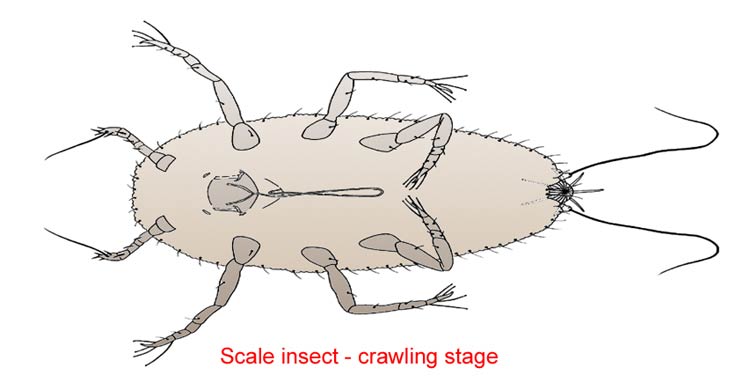
Misinterpretations allowed: The head of ostracods and many copepods are obscure, less so for cladocerans. (You can choose to disable "Allow misinterpretations" in the Preferences (gear icon) options.)
Author: David E. Walter
Content last updated Sept. 2006, unless indicated otherwise
Lucid key player updated Sept. 2025
idtools.org