Myriapods (Symphyla, Chilopoda, Diplopoda, Pauropoda) and most terrestrial crustaceans (Isopoda, Amphipoda) generally have more than 6 pairs of legs in adults. Fewer legs are present in some immatures, e.g., first instarinstar:
(Latin = form) an immature mite or other arthropod between molts (or from apolysis to apolysis for some authors), or between egg hatching and the first molt. Mites mostly have determinate growth and do not molt after reaching the adult stage; therefore, the adult is not considered an instar.
millipedes are hexapodhexapod:
with three pairs of legs (i.e. 6 legs), as in the larvae of mites or the larviform stages of others.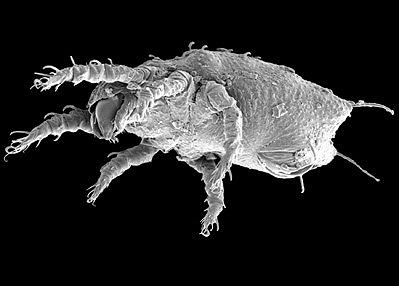 and first instarinstar:
(Latin = form) an immature mite or other arthropod between molts (or from apolysis to apolysis for some authors), or between egg hatching and the first molt. Mites mostly have determinate growth and do not molt after reaching the adult stage; therefore, the adult is not considered an instar.
symphylans have only 5 pairs of legs.
Arachnids, including mites, have a maximum of 4 pairs of walking legs; however, the pedipalps are sometimes leg-like so that they appear to have 5 pairs of legs.
Some immature myriapods (e.g., young symphylans) have a trunk with 5 pairs of legs, but it is easy to mistake the leg-like pedipalps of some arachnids for legs, so these groups are included in this feature state choice.
Most arachnids have four pairs of leg-like limbs used for walking and/or sensing. Exceptions occur in immature mites (larvae are hexapodhexapod:
with three pairs of legs (i.e. 6 legs), as in the larvae of mites or the larviform stages of others.) and in some highly modified groups that have only 2–3 pairs of legs as adults. Tardigrades and some small myriapods also have 4 pairs of legs.
Misinterpretations allowed: It is possible to confuse the furcula of springtails with a pair of limbs, so Collembola are not excluded when you choose this feature state. You can choose to disable "Allow misinterpretations" in the Preferences (gear icon) options.
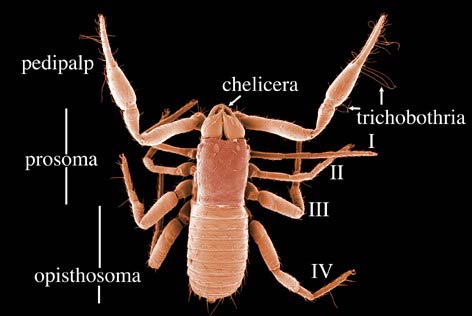
Pseudoscorpions (Pseudoscorpionida) and scorpions (Scorpionida) both have 4 pairs of walking legs and a pair of pedipalps that end in pincer-like chelae.
NB—These arachnids also have short, pincer-like mouthparts, the chelicerae.
Hexapods, first instarinstar:
(Latin = form) an immature mite or other arthropod between molts (or from apolysis to apolysis for some authors), or between egg hatching and the first molt. Mites mostly have determinate growth and do not molt after reaching the adult stage; therefore, the adult is not considered an instar.
millipedes, and larval mites are all hexapodhexapod:
with three pairs of legs (i.e. 6 legs), as in the larvae of mites or the larviform stages of others., i.e., they have three pairs of walking legs.
Eriophyoideriophyid:
(eriophyoid) of or relating to a member of the family Eriophyidae (superfamily Eriophyoidea) which contains minute, worm-like and quadripod mites that cause galls, erinea, and other damage to plants.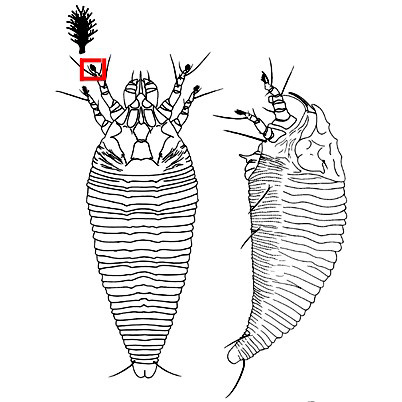 mites (Acariformes: Endeostigmata) have only two pairs of legs. These minute, rather worm-likeworm-like:
elongate, with reduced legs as in some Nematalycidae (Endeostigmata).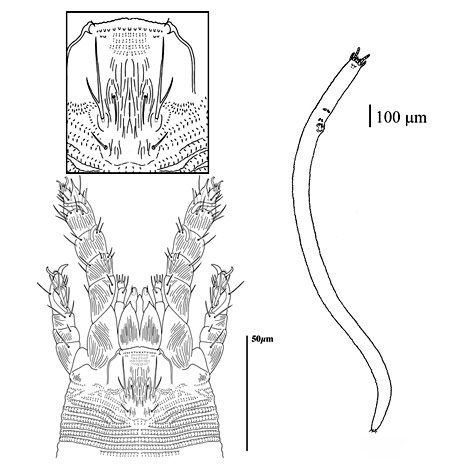 plant parasites include both leaf vagrants and gall formers and are among the smallest of all mites (mostly 0.080–0.200 mm).
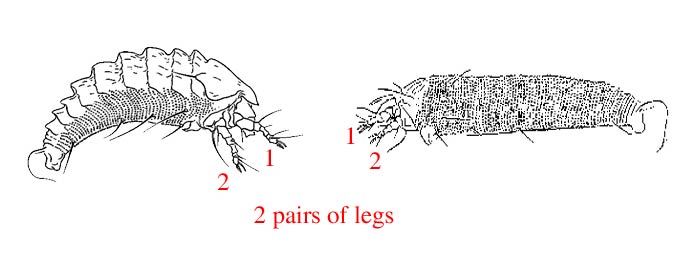
Misinterpretations allowed: The legs of the minute crustaceans in the Ostracoda and Copepoda are often difficult to see. (You can choose to disable "Allow misinterpretations" in the Preferences (gear icon) options.)
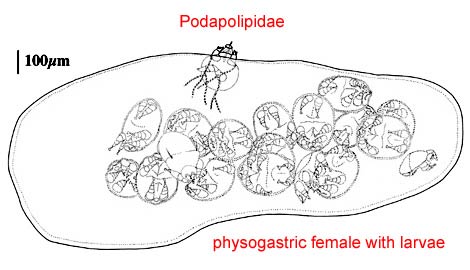
Some larval insects (e.g., maggots) lack legs. Some mites become greatly swollen and formless when gravid (physogastery) (e.g., some Podapolipidae) and may seem to lack legs.
Misinterpretations allowed: The legs of tardigrades, and rarely of some mites, are not always apparent. (You can choose to disable "Allow misinterpretations" in the Preferences (gear icon) options.)
Author: David E. Walter
Content last updated Sept. 2006, unless indicated otherwise
Lucid key player updated Sept. 2025
idtools.org