Pseudoscorpions have a pectinatepectinate:
a seta or other process having comb-like teeth on one side (see bipectinate).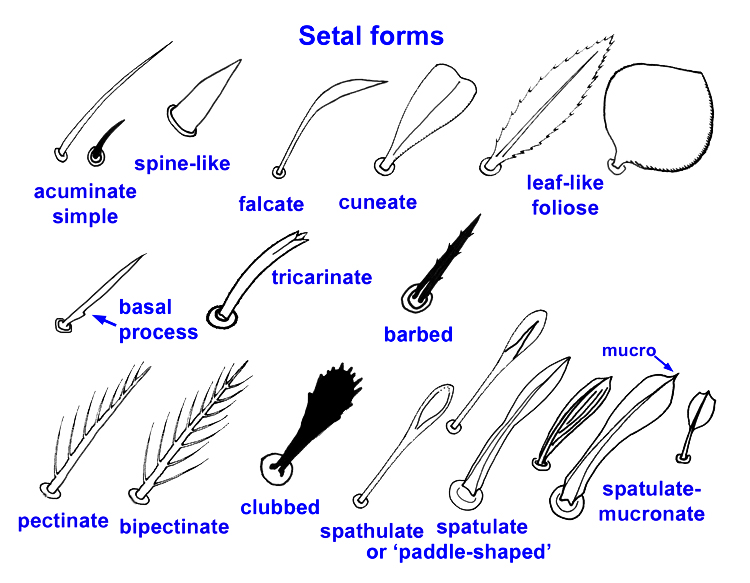 (i.e., with comb-like teeth) serrula on their chelicerae. Comb-like structures (pectinate lamellaelamella:
(pl. lamellae) a longitudinal projection on the prodorsum of many oribatid mites that protects legs I when they are retracted; lamellae usually arise near the base of the bothridia and terminate with a projecting lamellar seta (often on a free cusp). Lamellae may be connected by a translamella.
) are found on the primary mouthparts of some centipedes, diplurans, and insects. Springtails have a grinding molar area of the mandibles that may appear comb-like and is accepted as such here.
Insects sometimes have pectinatepectinate:
a seta or other process having comb-like teeth on one side (see bipectinate). antennae, a condition not known in other hexapods.
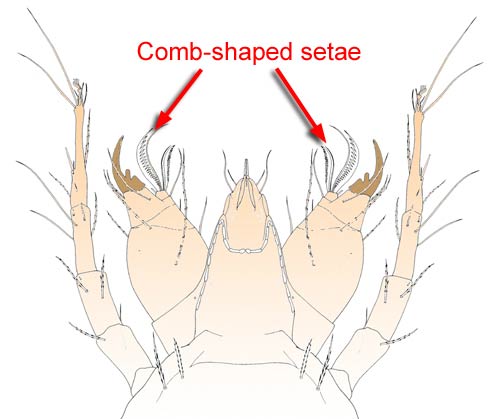
Chelytid mites (Prostigmata, Chelytidae) often have one or more pairs of comb-shaped (pectinatepectinate:
a seta or other process having comb-like teeth on one side (see bipectinate).) setae on their palps, as do some velvet mites.
Scorpions have a pair of ventralventral:
relating to the lower or under side; opposed to dorsal.
, comb-like processes called pectines. These are better developed in males than in females and may function in mate location and other sensory behaviors.
Some mites and insects have pectinatepectinate:
a seta or other process having comb-like teeth on one side (see bipectinate). tarsal claws or empodiaempodium:
(pl. empodia) an unpaired structure arising between the tarsal claws, ranging from pad-like to claw-like and often bearing structures such as tenent hairs, dense setulae, or taking the form of a featherclaw (Eriophyoidea)..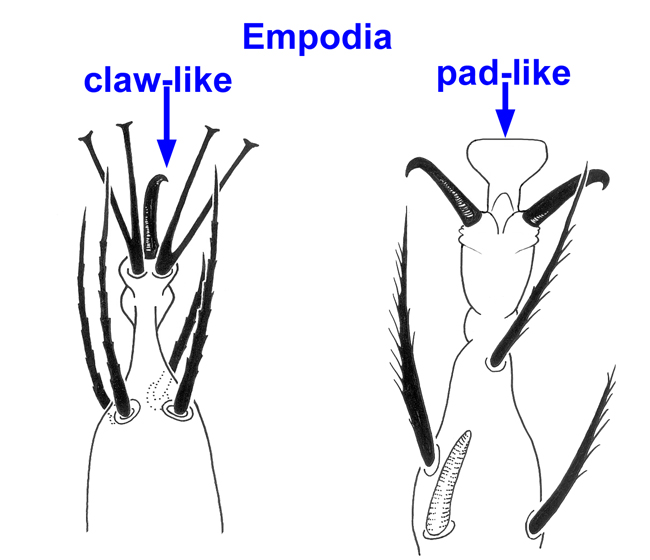 , and often have pectinatepectinate:
a seta or other process having comb-like teeth on one side (see bipectinate). setae on their legs.
The trichobothriumtrichobothrium:
(pl. trichobothria) (= bothridial sensillum) an often elaborately modified seta set in a cup-like base; forms include filiform, ciliate, pectinate or variously thickened or clubbed (bat-like to globose or capitate).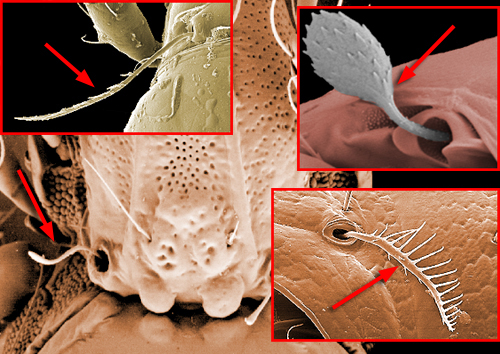 (bothridial sensillumbothridial sensillum:
(= trichobothrium) an often elaborately modified seta set in a cup-like base; forms include filiform, ciliate, pectinate or variously thickened or clubbed (bat-like to globose to capitate).) on the prodorsumprodorsum:
the dorsal surface of the propodosoma.
of some acariform mites may be branched to pectinatepectinate:
a seta or other process having comb-like teeth on one side (see bipectinate)..
Author: David E. Walter
Content last updated Sept. 2006, unless indicated otherwise
Lucid key player updated Sept. 2025
idtools.org