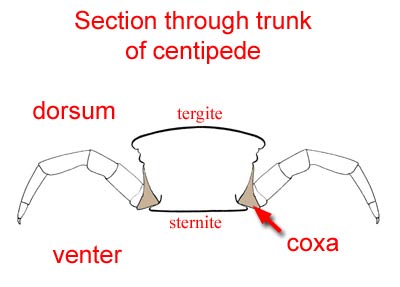
In hexapods, myriapods, and crustaceans the coxae of the legs articulate with the bodybody:
the idiosoma of mites.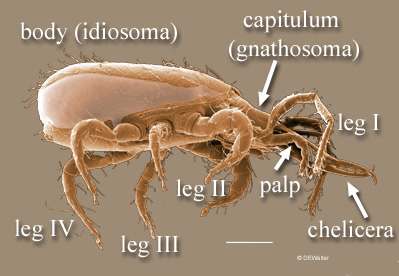 (rarely the hind coxae may fuse to the thorax of some insects), typically on either side of a sternite, i.e., a ventralventral:
relating to the lower or under side; opposed to dorsal.
segmental shield.
In arachnids, things are a bit different. In spiders and whipscorpions, a single median sternal plate is more or less well developed and the leg bases (coxae) are inserted around the sternal plate. Some mites (Parasitiformes) also have a more or less well developed sternal plate.
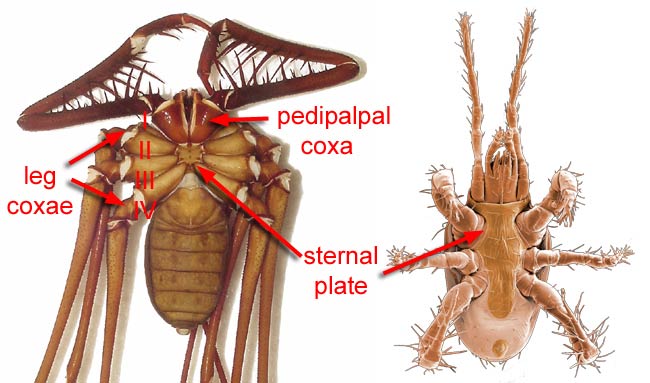
In acariform mites, pseudoscorpions, opilionids, ricinuleids, and solfugids, however, the leg coxae are fused to the bodybody:
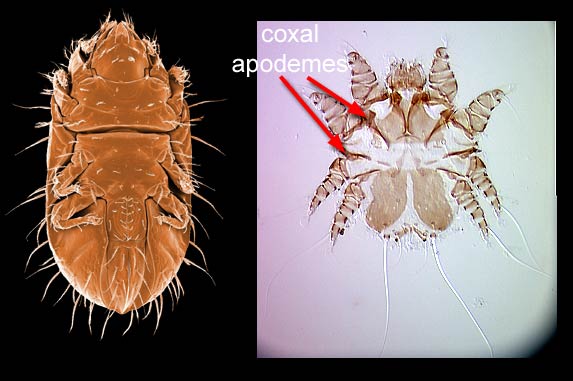
the idiosoma of mites. wall and there is no sign of a sternal plate. This condition is taken one step further in some mites, when the coxae become indistinguishable from the venterventer:
the lower or under side; opposed to dorsum.
and remain only as internal thickening to which muscles attach (apodemes).
Author: David E. Walter
Content last updated Sept. 2006, unless indicated otherwise
Lucid key player updated Sept. 2025
idtools.org