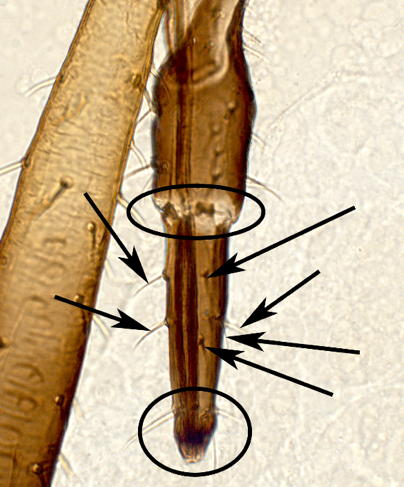
The aphid rostrumrostrum:
A jointed sheath, extending beyond the clypeus, enclosing the stylets, composed of five segments, used for feeding.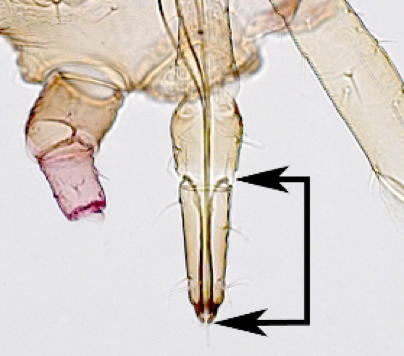 is the feeding appendage used to access and feed on plant phloem
The rostrumrostrum:
A jointed sheath, extending beyond the clypeus, enclosing the stylets, composed of five segments, used for feeding. is composed of five segments. It contains a sclerotizedsclerotized:
Descriptive of the state of being hardened. Usually refers to a structure with thickened and darkened cuticle.
groove in which the styletsstylet:
Paired threadlike mouthparts used for piercing and transport of liquid nutrients into the body. When not in use, they lie partly within the sheath of the rostrum and partly coiled within the head. The coiled stylets of embryos are sometimes conspicuous within the parent abdomen.
sit and extend back and forth as they access the phloem. This sclerotizedsclerotized:
Descriptive of the state of being hardened. Usually refers to a structure with thickened and darkened cuticle.
groove is in most of the second rostralrostral:
of or pertaining to the rostrum.
segment and all of segments three, four, and five. In many aphid species, the fifth segment is hard to distinguish from the fourth, so they are often treated together as the 'ultimate rostralrostral:
of or pertaining to the rostrum.
segments', or simply URSURS:
Abbreviation for ultimate rostral segment.
. URSURS:
Abbreviation for ultimate rostral segment.
is usually used in the singular.
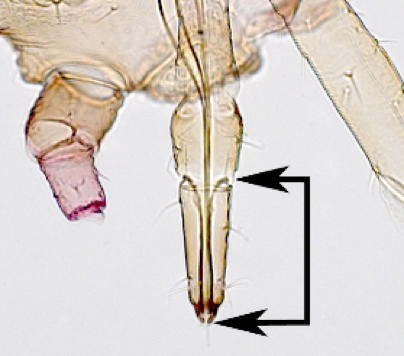
The ultimate rostral segmentsultimate rostral segment:
The fourth and fifth rostral segments together. In many cases, the fifth segment is hard to distinguish, thus they are often measured together. Abbreviated URS. are the fourth and fifth segments treated together.
The length of the URSURS:
Abbreviation for ultimate rostral segment.
is measured from the basalbasal:
Of or pertaining to the base, as in the first, or basal segment of an appendage. Opposite of terminal and apical. See also proximal.
end of the fourth segment to the distaldistal:
Of or pertaining to a position further away, as in towards the apex of an appendage. Opposite of proximal. See also terminal and ultimate.
end of the fifth. Here the fifth segment is diminutive and hard to distinguish from the fourth.
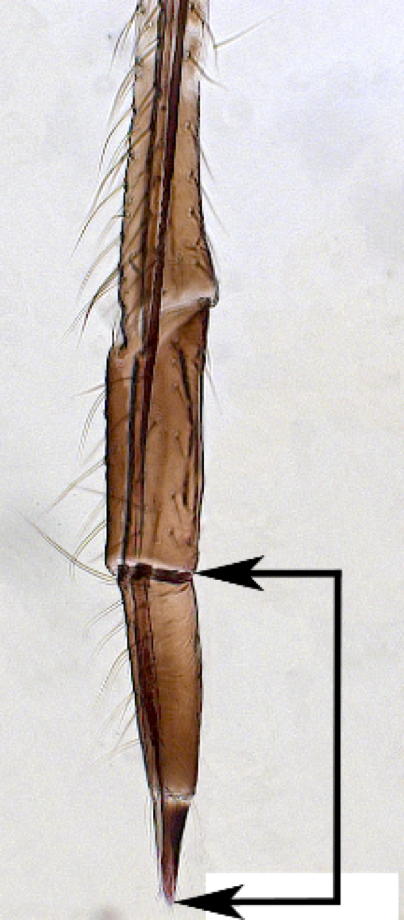
In some cases the fifth and fourth segments are easily distinguished.
Even when the two segments are easily distinguished, the URSURS:
Abbreviation for ultimate rostral segment.
sill encompasses both.
The URSURS:
Abbreviation for ultimate rostral segment.
comes in many shapes and sizes that are often correlated with host preference. For example a short, stubby URSURS:
Abbreviation for ultimate rostral segment.
is often the sign of a grass-feeding aphid.
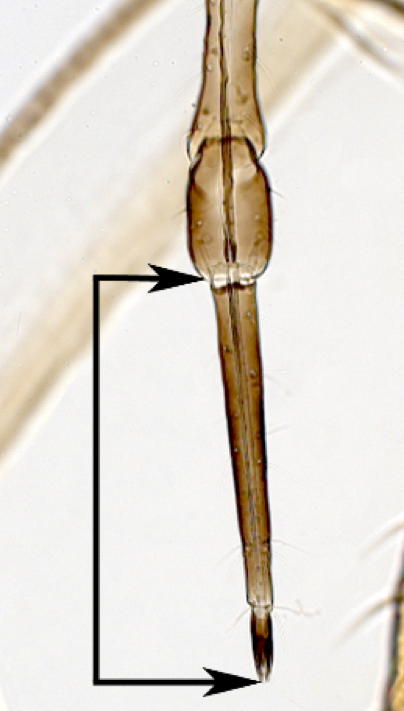
This thin and elongate URSURS:
Abbreviation for ultimate rostral segment.
belongs to Greenidea psidii.
The URSURS:
Abbreviation for ultimate rostral segment.
often, but not always, carries large accessory setaeaccessory seta:
Seta between the basal and apical primary setae on the fourth rostral segment. Also known as secondary setae.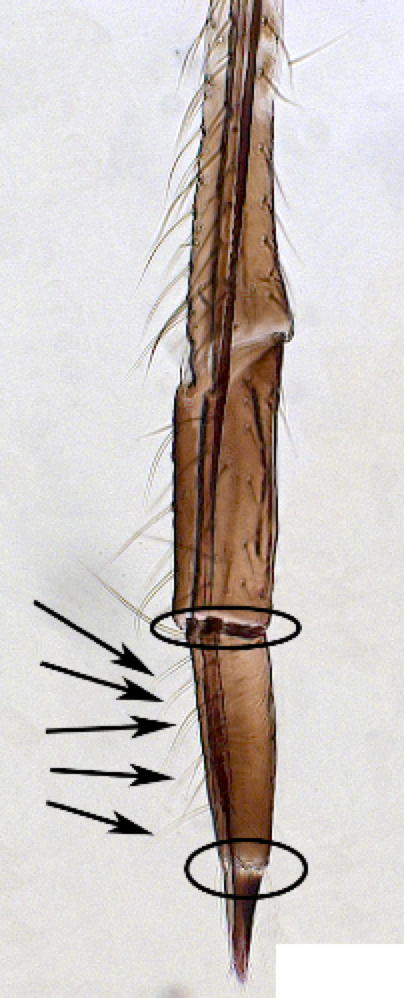 along the length of the fourth rostralrostral:
of or pertaining to the rostrum.
segment. The URSURS:
Abbreviation for ultimate rostral segment.
also has primary setaeprimary seta:
Collectively, the basal and preapical pairs of setae on the fourth rostral segment.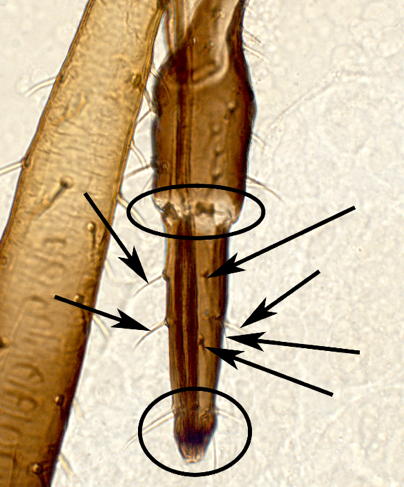 at the basalbasal:
Of or pertaining to the base, as in the first, or basal segment of an appendage. Opposite of terminal and apical. See also proximal.
end which are hard to see except under high magnification. It also carries primary setaeprimary seta:
Collectively, the basal and preapical pairs of setae on the fourth rostral segment. at the distaldistal:
Of or pertaining to a position further away, as in towards the apex of an appendage. Opposite of proximal. See also terminal and ultimate.
end of the fourth rostralrostral:
of or pertaining to the rostrum.
segment. Because the number of primary setaeprimary seta:
Collectively, the basal and preapical pairs of setae on the fourth rostral segment. is invariant, only the count of accessory setaeaccessory seta:
Seta between the basal and apical primary setae on the fourth rostral segment. Also known as secondary setae. is used to identify aphids.
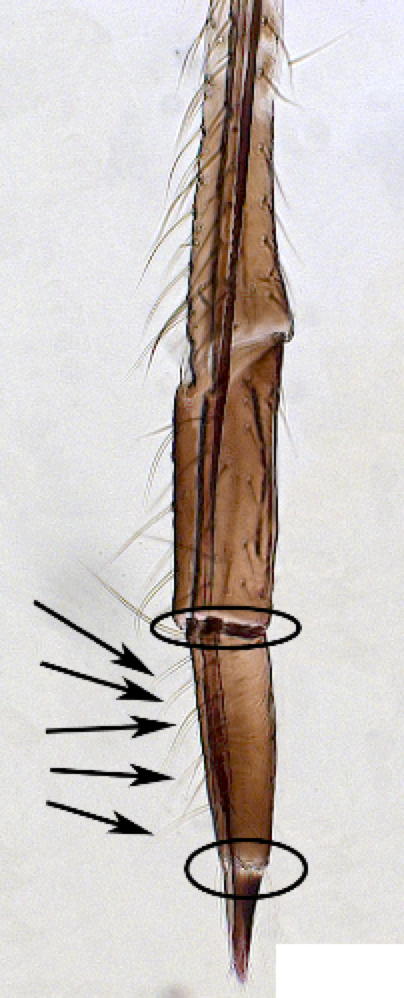
Some of the accessory setaeaccessory seta:
Seta between the basal and apical primary setae on the fourth rostral segment. Also known as secondary setae. are highlighted with arrows. The primary setaeprimary seta:
Collectively, the basal and preapical pairs of setae on the fourth rostral segment., some of which are not visible, are within the ovals.
Some of the accessory setaeaccessory seta:
Seta between the basal and apical primary setae on the fourth rostral segment. Also known as secondary setae. are highlighted with arrows. The primary setaeprimary seta:
Collectively, the basal and preapical pairs of setae on the fourth rostral segment., some of which are not visible, are within the ovals.
Authors: Favret and Miller
Content updated March 2014; nomenclature updated February 2026
idtools.org