Aphids are one of the most important agricultural insect pests. Members of the family Aphididae (Sternorrhyncha, Hemiptera), aphids are sap-sucking insects that are most common in the temperate zones of the world. They cause direct feeding damage to the plant and serve as vectors of plant viruses. In addition, aphid honeydewhoneydew:
Aphid excrement made sweet by the concentration of sugars in plant phloem. Honeydew is implicated in the growth of molds that can harm plants. It attracts ants, which often form mutualistic symbioses with aphids, whereby the ants milk the aphids for their honeydew, and in return defend the aphids from predators.
promotes the growth of sooty mold and attracts nuisance ants. Many economically important aphid species have a worldwide distribution but some remain outside the USA. The establishment of these aphid species would present dire consequences to US agriculture, as happened recently with the advent of the soybean aphid. In order to make informed decisions about the importation of agricultural products, it is critical that intercepted aphids be accurately identified. AphID is the latest tool in the USDA's means to identify potential aphid pests.
AphID is intended to help U.S. port identifiers, quarantine officers, and anyone seeking a preliminary but relatively simple way to identify aphids. A total of 66 aphid species are treated. AphID includes the 38 polyphagous aphid species in the three seminal works by Roger Blackman and Victor Eastop (1994, 2000, 2006). The remaining aphids represent the 28 species most frequently intercepted at U.S. ports of entry that are not already represented on the Blackman & Eastop list.
The key has 132 end points, one for each alataalata:
An aphid with wings, except in aberrant cases always an adult.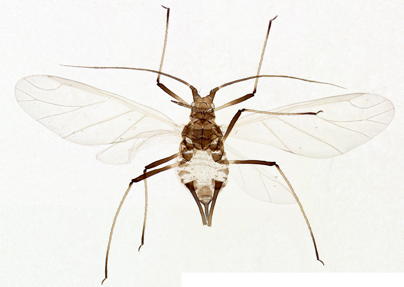 (winged female) and apteraaptera:
An adult without wings.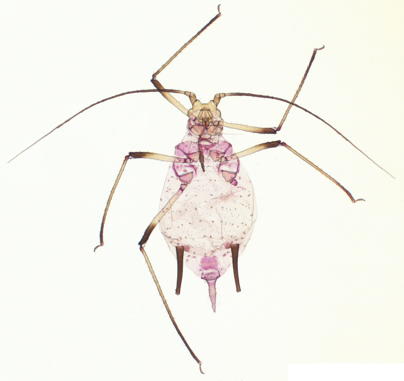 (wingless female) of each of 66 species. The key will work for slide-mounted winged and wingless adult live-bearing females only. The key does not include males, oviparaeovipara:
A female adult capable of producing eggs. Contrasts with vivipara.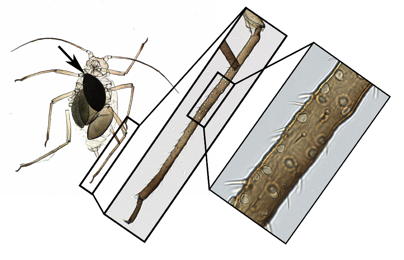 (egg-laying females), or immaturesimmature:
An individual younger than adult. An embryo or nymph.
. It may not work for all fundatricesfundatrix:
The viviparous aphid that hatches from an egg and founds a new aphid colony.
(foundress from the first egg) or alatae and apteraeaptera:
An adult without wings. from primary hosts (for those species with host alternation).
The content for this tool has significant limitations! Please read the information below carefully in order to understand exactly how the key is constructed and to avoid misidentification.
The number of aphid species addressed in this tool is only a small percentage of the world aphid fauna which consists of several thousand species. Therefore, there is a chance that your aphid specimen may key to a species that is not the correct match. For example, Anoecia setariae apteraeaptera:
An adult without wings. (not included in the key) could be mistakenly identified as Cinara confinis depending on the characters selected. All identifications should be compared to the species pages and an authoritatively identified reference specimen for further assessment.
Aphids come in a great variety of morphs. Some species are known to have over a dozen morphs, and the vast majority have at least five: fundatrixfundatrix:
The viviparous aphid that hatches from an egg and founds a new aphid colony.
, aptera viviparavivipara:
A female adult capable of giving birth to nymphs through live birth. Contrasts with ovipara.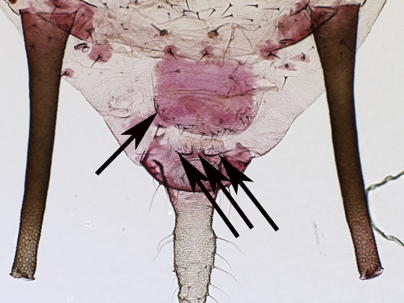 , alata viviparavivipara:
A female adult capable of giving birth to nymphs through live birth. Contrasts with ovipara., oviparaovipara:
A female adult capable of producing eggs. Contrasts with vivipara., and male. Certain morphs of many species are not well studied. Additionally, aphid nymphsnymph:
An individual developmentally between the embryo state and adulthood. See also immature.
are also not well characterized and are often exceptionally hard to identify. The identification key is only useable for adult aptera viviparavivipara:
A female adult capable of giving birth to nymphs through live birth. Contrasts with ovipara. and adult alata viviparavivipara:
A female adult capable of giving birth to nymphs through live birth. Contrasts with ovipara. specimens. In some cases, a fundatrixfundatrix:
The viviparous aphid that hatches from an egg and founds a new aphid colony.
(a special form of viviparavivipara:
A female adult capable of giving birth to nymphs through live birth. Contrasts with ovipara.) will also key correctly. However, any other morphs or developmental stages are unidentifiable with this key. It is critical that you first confirm that your specimen is an adult viviparavivipara:
A female adult capable of giving birth to nymphs through live birth. Contrasts with ovipara. before using this key.
Aphid species identification uses many continuous characters and ratios and as such this key will require you to make many measurements. Also, aphid individuals of any given species come in a wide range of sizes and proportionality. The identification key includes many continuous characters, all of which include two ranges: one estimates the maximum and minimum possible lengths, counts, or ratios for a species; the other estimates the most likely lengths, counts, or ratios. The accuracy of these character range estimates is limited by the number of specimens that were measured in preparing the key. Ideally, specimens of all possible sizes and proportions would be measured. As this ideal is unrealistic, please be aware that the specimen you are examining may be unusual in size or proportion and thus cannot be identified correctly.
Authors: Favret and Miller
Content updated March 2014; nomenclature updated February 2026
idtools.org