t
Blattisocius Keegan
Superorder Parasitiformes » Order Mesostigmata » Suborder Monogynaspida » Infraorder Gamasina » Hyporder Dermanyssiae » Superfamily Phytoseioidea » Family Blattisociidae » Genus Blattisocius
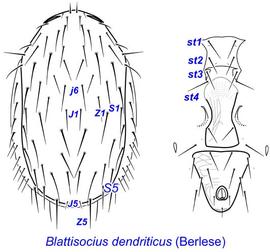
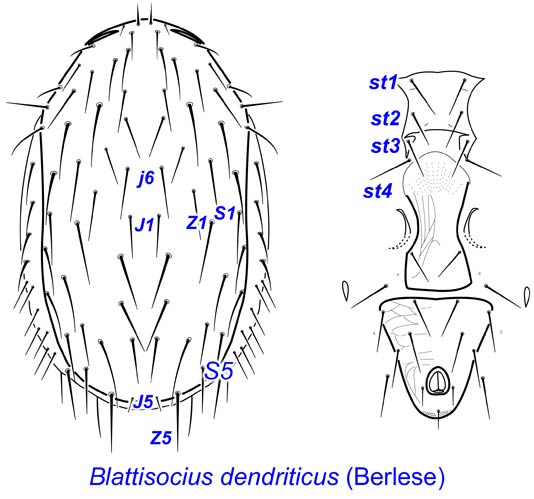
 (J1–5, Z1–5, S1–5) (r3) usually on soft cuticle beside dorsaldorsal:
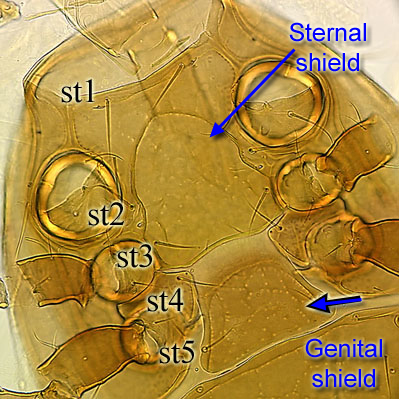 with 3 pairs of setaeseta: or st3 on partially separate platelets; st4 in soft cuticle
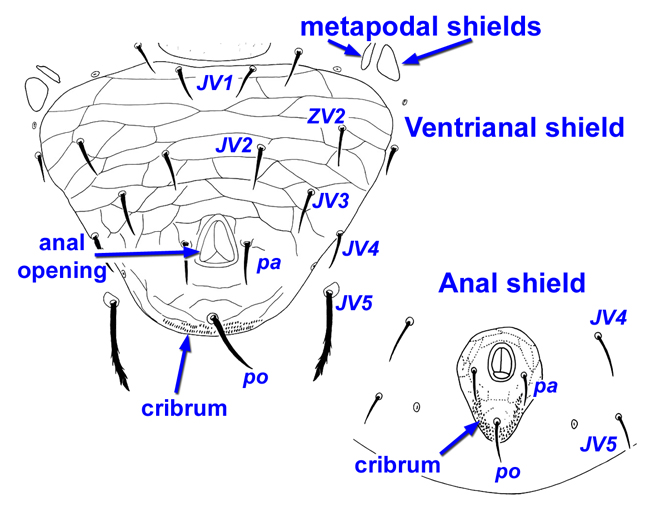 subtriangular to bullet-shaped and usually bearing 2–7 pairs of ventral setaeseta: in addition to circumanal setaeseta:
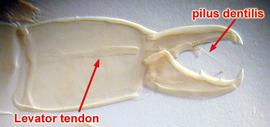
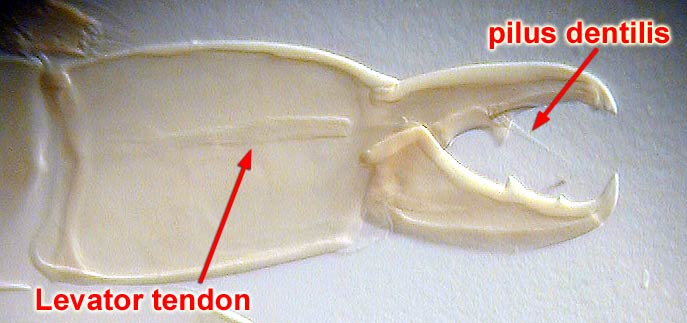
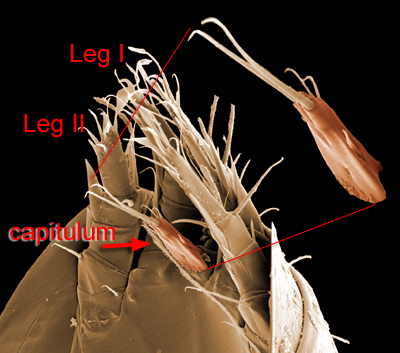 , pilus dentilispilus dentilis:
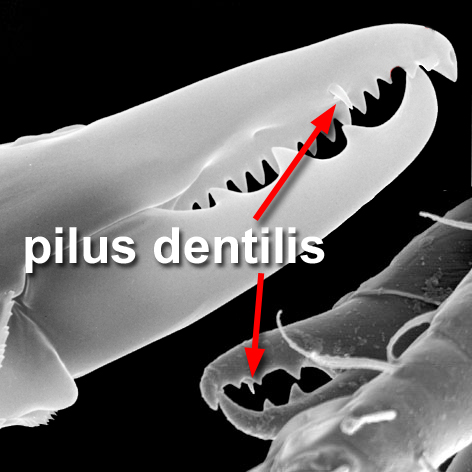 setiform
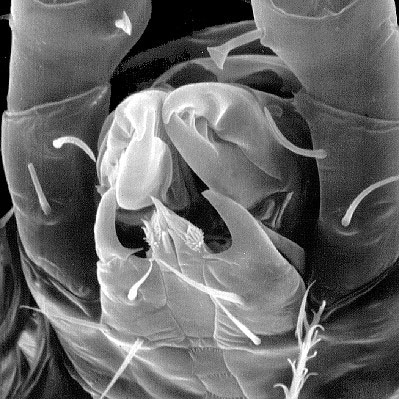 narrowly separated, slender
 convex
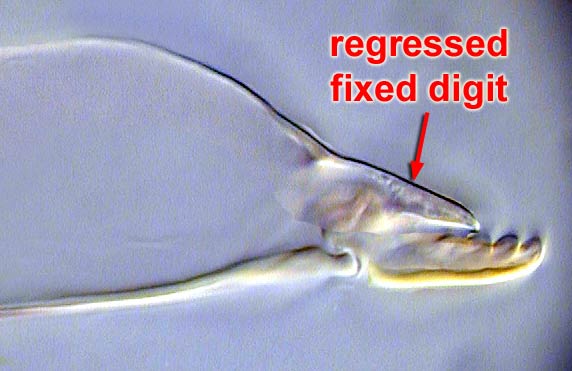
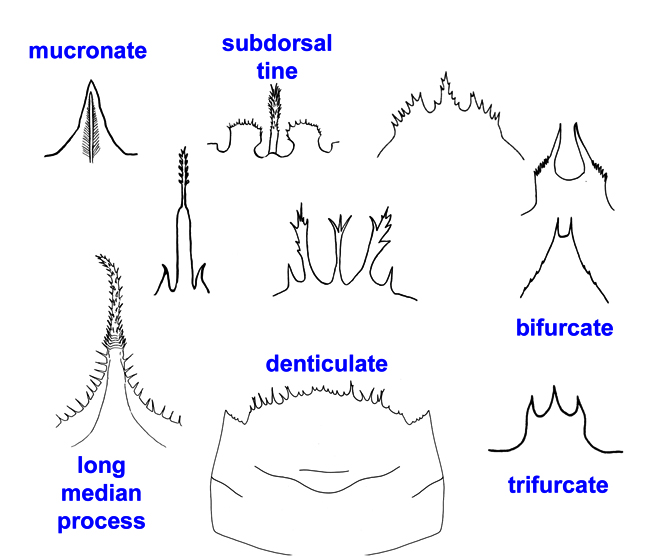
 2-tined
More about Blattisocius on Bee Mite ID
Species of Lasioseius have serrateserrate:
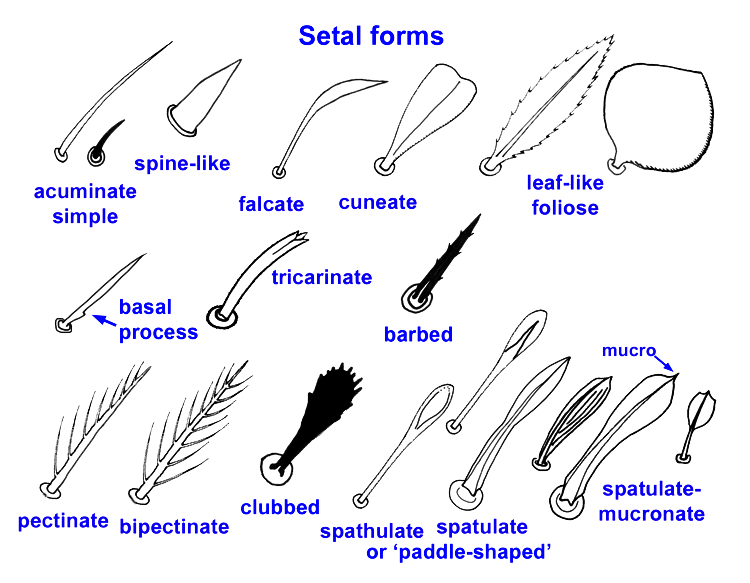
with closely set teeth that resemble the cutting edge of a saw.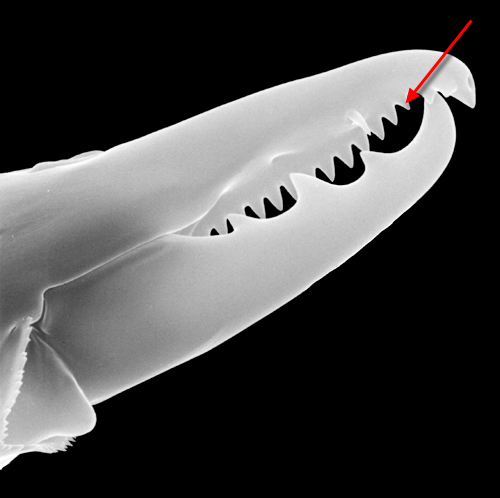 fixed digits, mostly tricarinatetricarinate:
having three longitudinal ridges as in the dorsal shield setae of most Lasioseius. dorsal shield setae, and well-spaced corniculicorniculus:
(pl. corniculi) (also, external malae) a usually horn-like process (sometimes toothed, bifurcate, trifurcate, spine-like, spatulate, or membranous) on the subcapitulum of parasitiform mites that usually supports the salivary styli. A toothed corniculus could be confused with a rutellum, a possibly homologous structure in Acariformes and Opilioacarida. Phytoseiid image is spatulate corniculus.. Ologamasidae have sternal shields with 4 pairs of setae. Laelapidae usually have an anal shield and a flask-, tongue-, dagger-shaped or otherwise highly modified genital or opisthogenital shield. Ameroseiidae lack setae J5. Most Phytoseiidae have 21 or fewer pairs of dorsaldorsal:
relating to the upper or back side; opposed to ventral.
shield setae. Podocinidae have long, whip-likewhip-like:
long, slender and sinuous as in the posterior setae of some phytoseiid mites (Mesostigmata) or the stylets of spider mites and their relatives (Prostigmata: Tetranychoidea).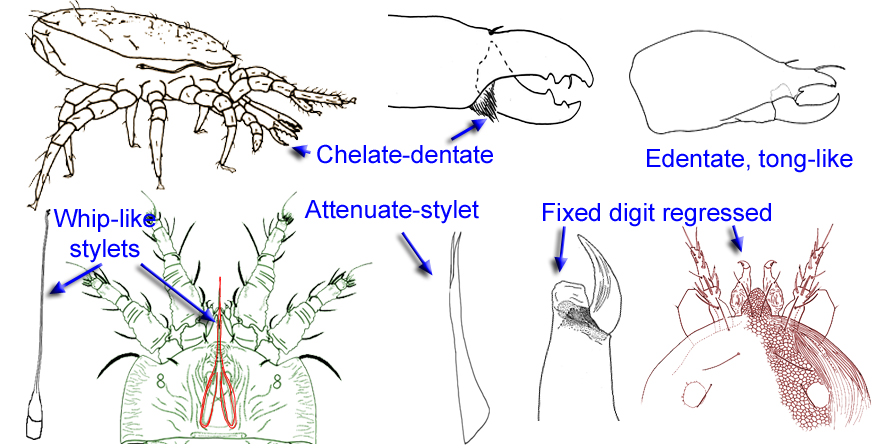 legs I. Macrochelidae usually have recurvedrecurved:
a curved suture or line of dehiscence that arches posteriorly; opposed to procurved.
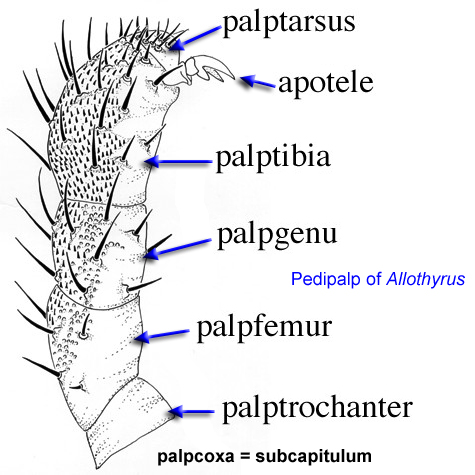
peritremes. Halolaelapidae have a 3-tined palp apotelepalptarsal apotele:
(= palp apotele, palptarsal claw) the most distal segment of the palp; absent in Acariformes, claw-like in Opilioacarida, and a subdistal, tined structure in the Mesostigmata.. Species Zygoseius (Pachylaelapidae) have the metasternal shield fused to endopodal elements.
Leg II of female often thickened, with strong, opposable spine-likespine-like:
a seta or other structure that resembles a thorn or spine; spiniform. setae on ventralventral:
relating to the lower or under side; opposed to dorsal.
surface on femurfemur:
(pl. femora) major leg segment between trochanter and genu; often subdivided into a basifemur and a telofemur.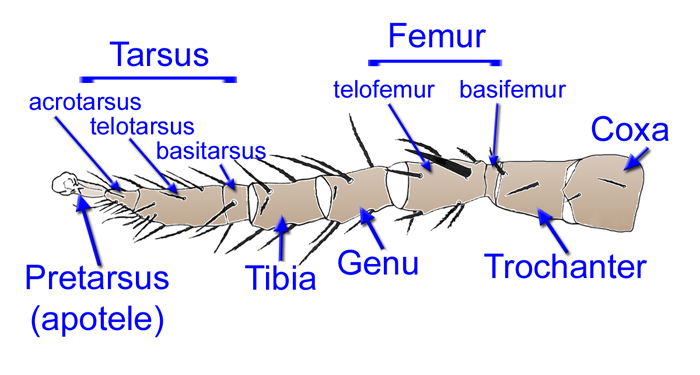 , genugenu:
(pl. genua) (= patella) the 4th leg segment, between the femur and tibia.
, tibiatibia:
(pl. tibiae) the leg segment between the genu and the tarsus., and tarsustarsus:
(pl. tarsi) the subdistal leg segment between the tibia and the pretarsus (apotele).
; fixed chelachela:
a pincer, as in a pseudoscorpion's distal pedipalpal segments.
multidentate, its distaldistal:
towards the free end of an appendage.
extremity usually with enlarged rounded margin bearing a row of small rasping teeth; trochantertrochanter:
the leg segment between the coxa and the femur. I with 4 or 5 setae (av1 absent); genugenu:
(pl. genua) (= patella) the 4th leg segment, between the femur and tibia.
and tibiatibia:
(pl. tibiae) the leg segment between the genu and the tarsus. I each with maximum of 11 setae (pd3, av2 absent).............................. Hoploseius
- Leg II of female not thickened, without spine-like ventral setaeventral setae:
in the Lindquist-Evans system used in the Mesostigmata, the ventral region has up to three longitudinal rows (Jv, Zv, Lv) with 1-5 transverse row designations.
; fixed chelachela:
a pincer, as in a pseudoscorpion's distal pedipalpal segments.
with few to many teeth, its distaldistal:
towards the free end of an appendage.
extremity not enlarged, without row of small teeth; trochantertrochanter:
the leg segment between the coxa and the femur. I with 6 setae (av1 present); genugenu:
(pl. genua) (= patella) the 4th leg segment, between the femur and tibia.
and tibiatibia:
(pl. tibiae) the leg segment between the genu and the tarsus. I each with 13 (rarely 12) setae (pd3 and usually av2 present).............................. 2
Corniculicorniculus:
(pl. corniculi) (also, external malae) a usually horn-like process (sometimes toothed, bifurcate, trifurcate, spine-like, spatulate, or membranous) on the subcapitulum of parasitiform mites that usually supports the salivary styli. A toothed corniculus could be confused with a rutellum, a possibly homologous structure in Acariformes and Opilioacarida. Phytoseiid image is spatulate corniculus. narrowly separated, usually slender; epistomegnathotectum:
(= epistome, tectum) an often membranous dorsal projection of the anterior margin of the basis capitulum in Mesostigmata; often diagnostic at family-, genus- or species-levels; also often difficult to see without high magnification and good optics. convex, smooth; fixed chelachela:
a pincer, as in a pseudoscorpion's distal pedipalpal segments.
with few or no teeth; peritrematalperitrematal:
(peritrematic) of or referring to the peritreme; adjectival form of peritreme.
shield slender, barely wider than stigmastigma:
the opening to the tracheal system.
at level of stigmastigma:
the opening to the tracheal system.
; female with humeral seta (r3) usually on soft cuticle beside dorsaldorsal:
relating to the upper or back side; opposed to ventral.
shield; protonymphprotonymph:
the first nymphal stage or instar, usually octopod.
with 2 setae on palp trochantertrochanter:
the leg segment between the coxa and the femur............................... 3
- Corniculicorniculus:
(pl. corniculi) (also, external malae) a usually horn-like process (sometimes toothed, bifurcate, trifurcate, spine-like, spatulate, or membranous) on the subcapitulum of parasitiform mites that usually supports the salivary styli. A toothed corniculus could be confused with a rutellum, a possibly homologous structure in Acariformes and Opilioacarida. Phytoseiid image is spatulate corniculus. well separated, stout; epistomegnathotectum:
(= epistome, tectum) an often membranous dorsal projection of the anterior margin of the basis capitulum in Mesostigmata; often diagnostic at family-, genus- or species-levels; also often difficult to see without high magnification and good optics. convex or triramous, smooth or denticulatedenticulate:
bearing small, sharp processes, e.g., the hypostome of ticks.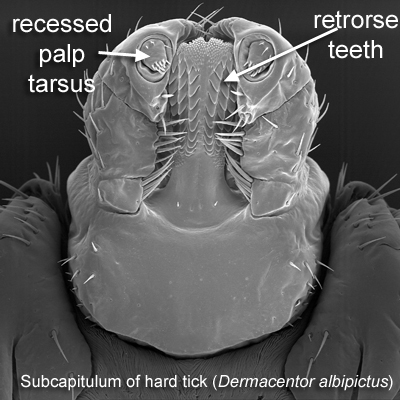 ; fixed chelachela:
a pincer, as in a pseudoscorpion's distal pedipalpal segments.
usually with many teeth; peritrematalperitrematal:
(peritrematic) of or referring to the peritreme; adjectival form of peritreme.
shield clearly wider than diameter of stigmastigma:
the opening to the tracheal system.
at level of stigmastigma:
the opening to the tracheal system.
; female with humeral setae on dorsaldorsal:
relating to the upper or back side; opposed to ventral.
shield; protonymphprotonymph:
the first nymphal stage or instar, usually octopod.
with 1 seta on palp trochantertrochanter:
the leg segment between the coxa and the femur............................... 4
Dorsaldorsal:
relating to the upper or back side; opposed to ventral.
shield without midlateral incisions; opisthonotalopisthonotal:
dorsal opisthosoma.
region of dorsaldorsal:
relating to the upper or back side; opposed to ventral.
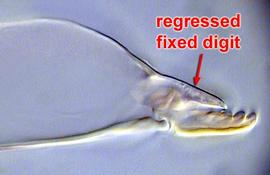
shield holotrichous, with 15 pairs of setae; fixed chelachela:
a pincer, as in a pseudoscorpion's distal pedipalpal segments.
well developed or reduced; female without isolated metasternal plates; male leg IV without enlarged, spine-likespine-like:
a seta or other structure that resembles a thorn or spine; spiniform. setae.............................. Blattisocius
- Dorsaldorsal:
relating to the upper or back side; opposed to ventral.
shield with midlateral incisions; opisthonotalopisthonotal:
dorsal opisthosoma.
region of dorsaldorsal:
relating to the upper or back side; opposed to ventral.
shield hypotrichous, with 12 pairs of setae (lacking a pair in each of J, Z, S series); fixed chelachela:
a pincer, as in a pseudoscorpion's distal pedipalpal segments.
well developed; female with isolated metasternal plates; male leg IV with several enlarged spine-likespine-like:
a seta or other structure that resembles a thorn or spine; spiniform. setae.............................. Adhaerenseius
Female and male with all marginal r–R setae on edge of dorsaldorsal:
relating to the upper or back side; opposed to ventral.
shield, opisthonotalopisthonotal:
dorsal opisthosoma.
region of shield with 20 pairs of setae; rows of deutosternal denticlesdeutosternal denticles:
rows of small teeth-like projections (often irregular and sometimes reduced to a single tooth) running transversely across the deutosternal groove and sometimes onto the lateral faces of the subcapitulum.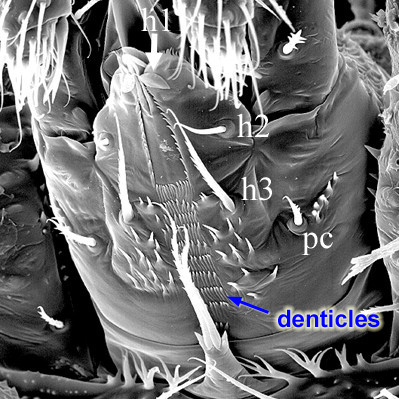 narrow, each with 2–4 denticlesdenticles:
small tooth-like processes, e.g., on the subcapitula of ticks and many mesostigmatans.
; movable chelachela:
a pincer, as in a pseudoscorpion's distal pedipalpal segments.
with ridge extending from para-axial surface to 1–2 denticlesdenticles:
small tooth-like processes, e.g., on the subcapitula of ticks and many mesostigmatans.
on proximo-ventralventral:
relating to the lower or under side; opposed to dorsal.
surface.............................. Orthadenella
- Female and male with 1–9 pairs of marginal r–R setae on soft cuticle beside dorsaldorsal:
relating to the upper or back side; opposed to ventral.
shield, opisthonotalopisthonotal:
dorsal opisthosoma.
region of shield with maximum of 15 pairs of setae in female, 17 in male; rows of deutosternal denticlesdeutosternal denticles:
rows of small teeth-like projections (often irregular and sometimes reduced to a single tooth) running transversely across the deutosternal groove and sometimes onto the lateral faces of the subcapitulum. moderately wide, each with 5 to many denticlesdenticles:
small tooth-like processes, e.g., on the subcapitula of ticks and many mesostigmatans.
; movable chelachela:
a pincer, as in a pseudoscorpion's distal pedipalpal segments.
lacking ridge or denticlesdenticles:
small tooth-like processes, e.g., on the subcapitula of ticks and many mesostigmatans.
on paraxialparaxial:
against the axis of the body (also adaxial), e.g., the inner face of the chelicera.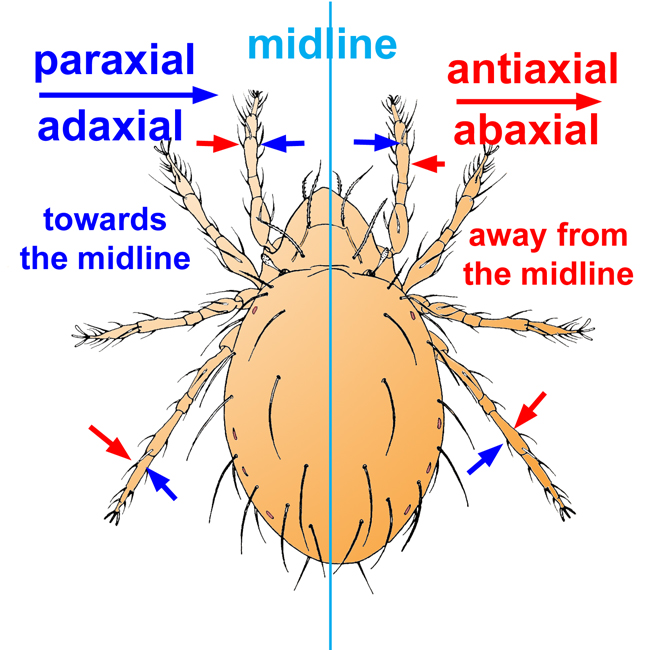 and ventralventral:
relating to the lower or under side; opposed to dorsal.
surface.............................. 5
Adults with 1 pair of marginal setae (R1) on soft lateral cuticle; female metapodal platesmetapodal shields:
(also metapodal plates, metapodal platelets, metapodal sclerites) in Mesostigmata, a pair (sometimes fused) of small sclerites posteriad coxae IV in the ventral region that probably reflect muscle attachments. incorporated into ventrianal or peritrematalperitrematal:
(peritrematic) of or referring to the peritreme; adjectival form of peritreme.
plates, and ventrianal shieldventrianal shield:
in Mesostigmata, a ventral shield bearing the anal opening, circum anal setae, and one or more pairs of ventral setae or pores (lyrifissures) [see anal shield]; maybe rather narrow or very broad and covering most of the gaster. with 7 pairs of setae in addition to circumanals; male with holoventral shield.............................. 6
- Adults with 3–9 pairs of marginal setae (r–R) on soft lateral cuticle; female metapodal platesmetapodal shields:
(also metapodal plates, metapodal platelets, metapodal sclerites) in Mesostigmata, a pair (sometimes fused) of small sclerites posteriad coxae IV in the ventral region that probably reflect muscle attachments. free on soft cuticle, and ventrianal shieldventrianal shield:
in Mesostigmata, a ventral shield bearing the anal opening, circum anal setae, and one or more pairs of ventral setae or pores (lyrifissures) [see anal shield]; maybe rather narrow or very broad and covering most of the gaster. with 6 or fewer pairs of setae in addition to circumanals; male usually with separate sternogenital, ventrianal and peritrematalperitrematal:
(peritrematic) of or referring to the peritreme; adjectival form of peritreme.
-exopodal shields.............................. 7
Podonotalpodonotal:
relating to the dorsal podosoma, the region of the idiosoma over the legs.
region of adult dorsaldorsal:
relating to the upper or back side; opposed to ventral.
shield lacking setae z1, s1, s2; female with metapodal platesmetapodal shields:
(also metapodal plates, metapodal platelets, metapodal sclerites) in Mesostigmata, a pair (sometimes fused) of small sclerites posteriad coxae IV in the ventral region that probably reflect muscle attachments. incorporated into ventrianal shieldventrianal shield:
in Mesostigmata, a ventral shield bearing the anal opening, circum anal setae, and one or more pairs of ventral setae or pores (lyrifissures) [see anal shield]; maybe rather narrow or very broad and covering most of the gaster.; female ventrianal shieldventrianal shield:
in Mesostigmata, a ventral shield bearing the anal opening, circum anal setae, and one or more pairs of ventral setae or pores (lyrifissures) [see anal shield]; maybe rather narrow or very broad and covering most of the gaster. lacking setae ZV1 but with JV5 on its posterolateral margins; genugenu:
(pl. genua) (= patella) the 4th leg segment, between the femur and tibia.
III with 10, tibiaetibia:
(pl. tibiae) the leg segment between the genu and the tarsus. III and IV with 9 and 10 setae, respectively (pl–2 present on each of these segments).............................. Zercoseius
- Podonotalpodonotal:
relating to the dorsal podosoma, the region of the idiosoma over the legs.
region of adult dorsaldorsal:
relating to the upper or back side; opposed to ventral.
shield holotrichous; female with metapodal platesmetapodal shields:
(also metapodal plates, metapodal platelets, metapodal sclerites) in Mesostigmata, a pair (sometimes fused) of small sclerites posteriad coxae IV in the ventral region that probably reflect muscle attachments. incorporated into posteriorposterior:
the back part of the body or towards that region in comparison, e.g., 'posterior to'.
margins of peritrematalperitrematal:
(peritrematic) of or referring to the peritreme; adjectival form of peritreme.
shields; female ventrianal shieldventrianal shield:
in Mesostigmata, a ventral shield bearing the anal opening, circum anal setae, and one or more pairs of ventral setae or pores (lyrifissures) [see anal shield]; maybe rather narrow or very broad and covering most of the gaster. with setae ZV1 but with JV5 inserted on soft cuticle behind its posterolateral margins; genugenu:
(pl. genua) (= patella) the 4th leg segment, between the femur and tibia.
III with 9, tibiaetibia:
(pl. tibiae) the leg segment between the genu and the tarsus. III and IV with 8 and 9 setae, respectively (pl–2 absent from each of these segments).............................. Arrhenoseius
Female with 11 pairs of setae on podonotalpodonotal:
relating to the dorsal podosoma, the region of the idiosoma over the legs.
region of dorsaldorsal:
relating to the upper or back side; opposed to ventral.
shield (s5 absent) and 7–10 pairs of setae on opisthonotalopisthonotal:
dorsal opisthosoma.
region (Z1, J2 absent); epigynialepigynal:
(also epigynial) of or relating to the female genital opening or a shield protecting it.
shield rounded posteriorly; ventral setaeventral setae:
in the Lindquist-Evans system used in the Mesostigmata, the ventral region has up to three longitudinal rows (Jv, Zv, Lv) with 1-5 transverse row designations.
ZV1, JV5 absent; cervixcervix:
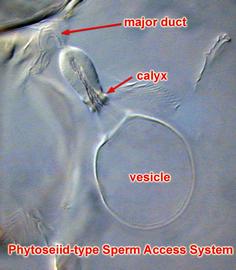
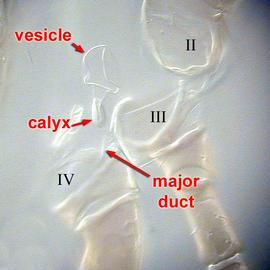
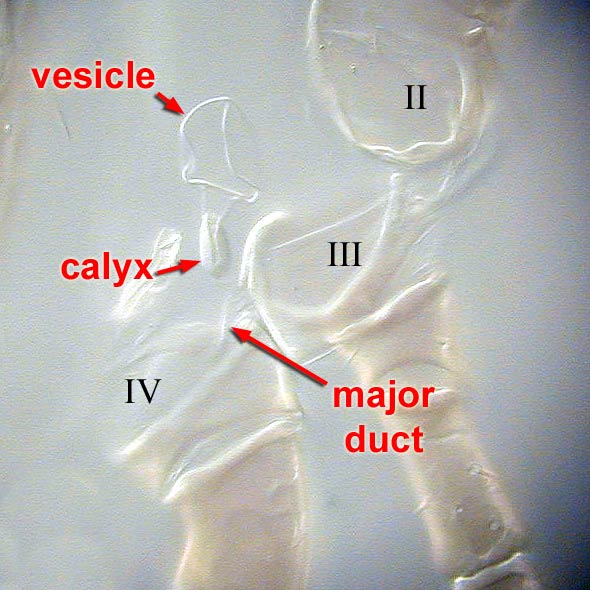
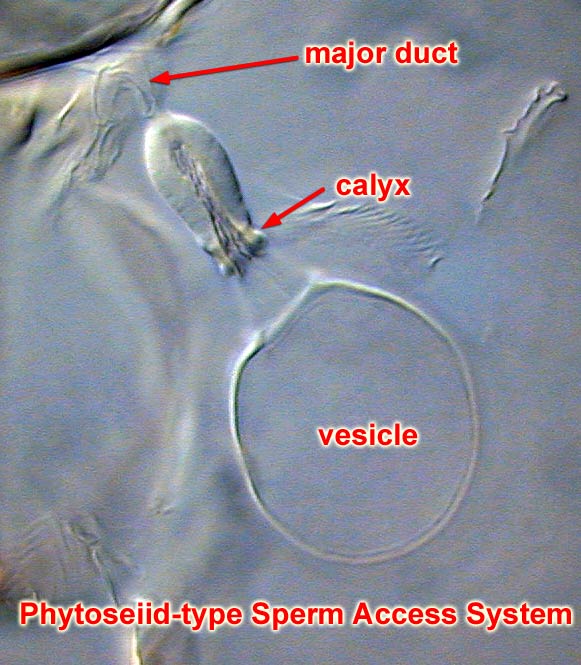
(= calyx) in phytoseioid Mesostigmata (Phytoseiidae, Blattisociidae, Otopheidomenidae, Podocinidae), a collar-like structure of the sperm access system which surrounds the base of the vesicle.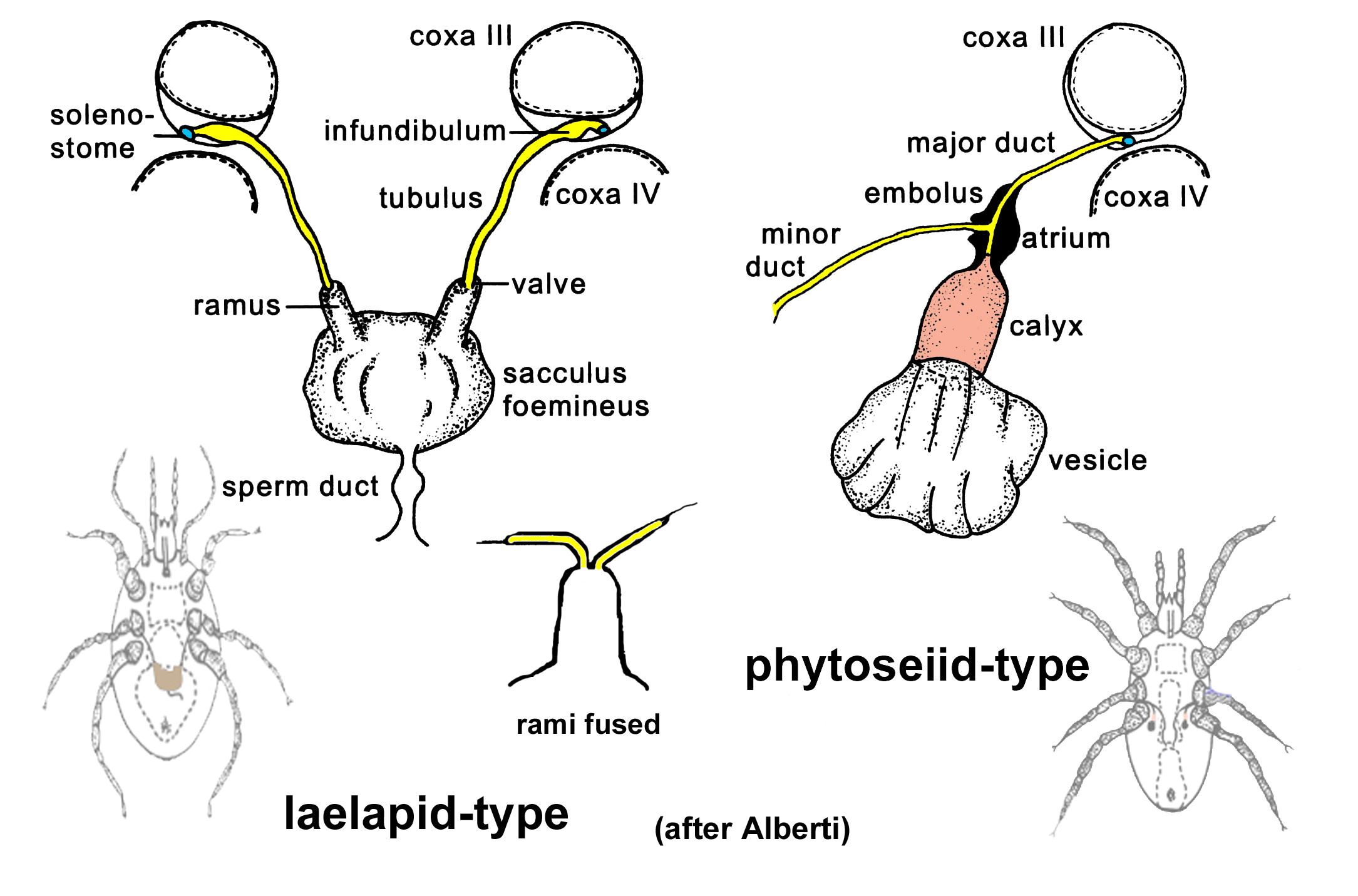 of spermathecaspermatheca:
a structure in the female for storing sperm, typically sac-like.
not sclerotized; movable chelachela:
a pincer, as in a pseudoscorpion's distal pedipalpal segments.
with 4 teeth; genuagenu:
(pl. genua) (= patella) the 4th leg segment, between the femur and tibia.
II and III with 10 and 8 setae respectively (pv1 absent).............................. Aceodromus
- Female with 12–23 pairs of setae on podonotalpodonotal:
relating to the dorsal podosoma, the region of the idiosoma over the legs.
region of dorsaldorsal:
relating to the upper or back side; opposed to ventral.
shield (s5 present) and 10–15 pairs of setae on opisthonotalopisthonotal:
dorsal opisthosoma.
region (Z1, J2 present); epigynialepigynal:
(also epigynial) of or relating to the female genital opening or a shield protecting it.
shield usually truncate posteriorly; ventral setaeventral setae:
in the Lindquist-Evans system used in the Mesostigmata, the ventral region has up to three longitudinal rows (Jv, Zv, Lv) with 1-5 transverse row designations.
ZV1, JV5 present; cervixcervix:
(= calyx) in phytoseioid Mesostigmata (Phytoseiidae, Blattisociidae, Otopheidomenidae, Podocinidae), a collar-like structure of the sperm access system which surrounds the base of the vesicle. of spermathecaspermatheca:
a structure in the female for storing sperm, typically sac-like.
well sclerotised; movable chelachela:
a pincer, as in a pseudoscorpion's distal pedipalpal segments.
with 3 teeth (rarely 4); genuagenu:
(pl. genua) (= patella) the 4th leg segment, between the femur and tibia.
II and III usually with 11 and 9 setae respectively (pv1 usually present).............................. Lasioseius
About a dozen species of Blattisocius are known as widespread predators in soil, insect cultures, stored food, and on plants, and one species, B. patagiorum Treat, is parasitic on adult noctuid moths.
Author: David E. Walter
Content last updated Sept. 2006, unless indicated otherwise
Lucid key player updated Sept. 2025
idtools.org