t
Laelapidae Berlese, 1892
Superorder Parasitiformes » Order Mesostigmata » Suborder Monogynaspida » Infraorder Gamasina » Hyporder Dermanyssiae » Superfamily Dermanyssoidea » Family Laelapidae
Subfamily Hypoaspidinae Vitzthum
Tribe Pseudoparasitini Vitzthum
Alloparasitus Berlese, Oloopictus Karg, Euandrolaelaps Bregatova
Tribe Hypoaspidini Vitzthum
Coleolaelaps Berlese, Dyscinetonyssus Moss & Funk, Blaberolaelaps Costa, Gromphadorholaleaps Till, Hypoaspis (s.s.) Canestrini, Laelaspis Berlese
Subfamily Laelapinae Trägårdh
Echinolaelaps Ewing, Laelaps C.L.Koch, Eulaelaps Berlese
[Haemogamasidae Oudemans] Haemogamasus Berlese
Genera keyed separately: Pseudoparasitini: Gaeolaelaps (=Geolaelaps, =Hypoaspis s.l.) Trägårdh, Cosmolaelaps Berlese, Stratiolaelaps Berlese, Pseudoparasitus Berlese, Ololaelaps Berlese; Hypoaspidini: Androlaelaps Berlese
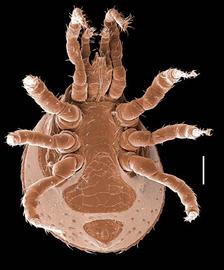
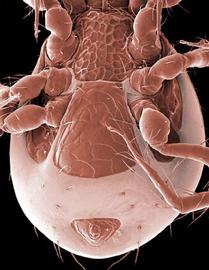
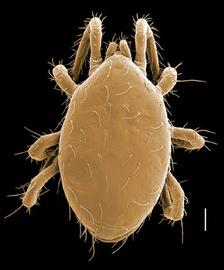
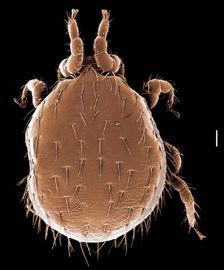
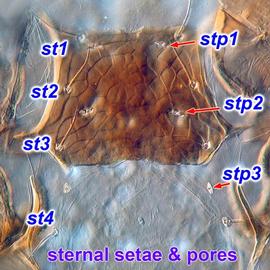
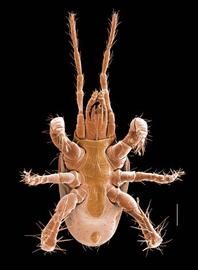
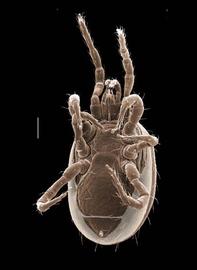
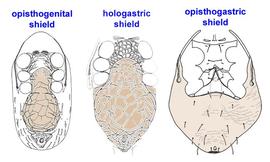
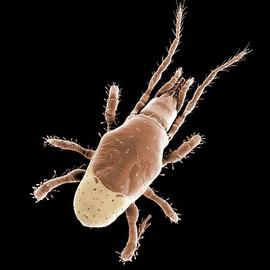
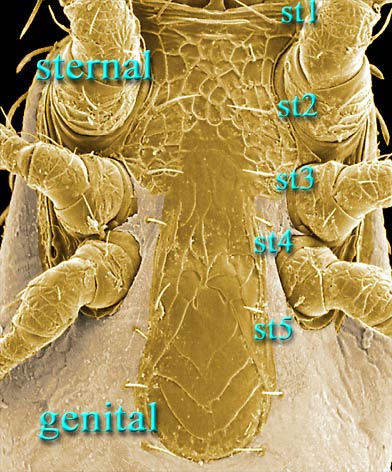
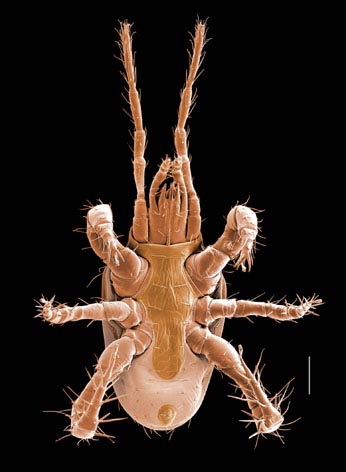
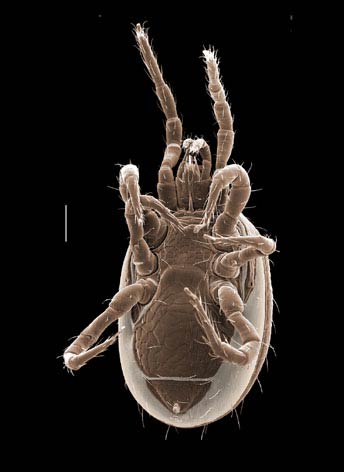
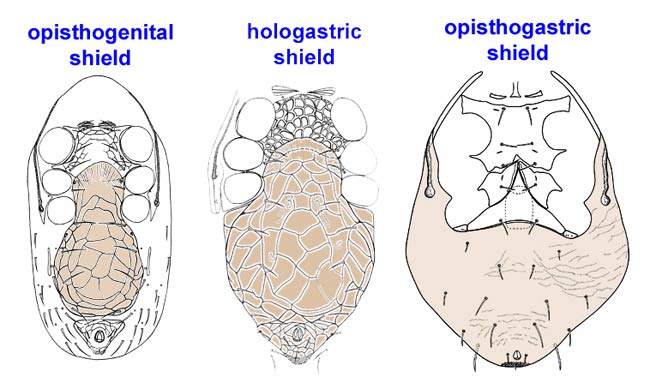
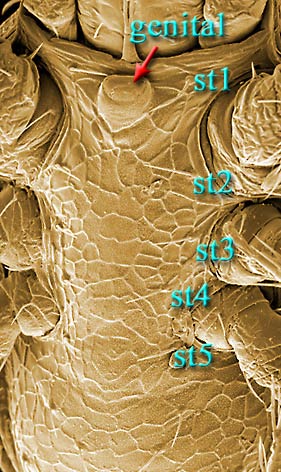
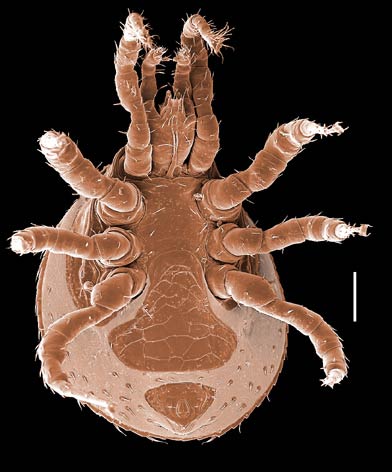
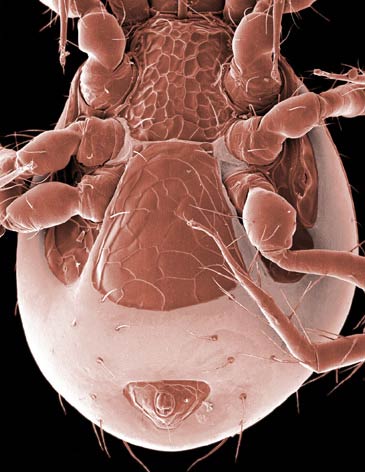
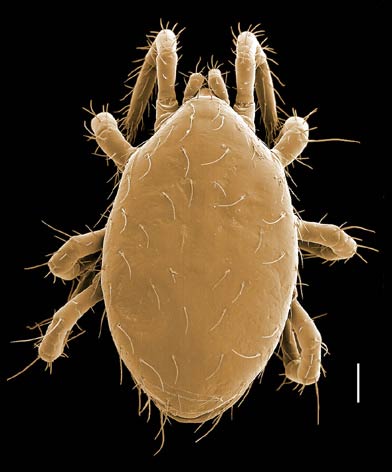
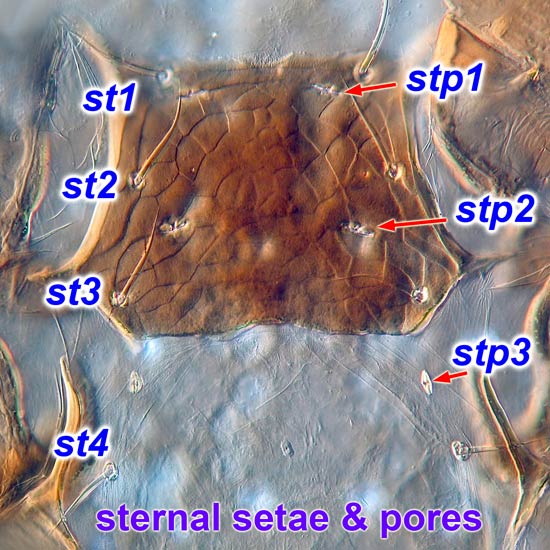
Free-living soil mesostigmatans with a holodorsal shield; an entire sternal shield bearing 3 pairs of setae; a tongue-, axe head-, or flask-shaped genital shield with 1 or more (rarely none) pairs of setae; and a small anal shield with 3 circumanal setae are usually Laelapidae. Eviphidid, ameroseiids, and phytoseiid mites may have similar anal shields, but typically have a posteriorly truncate genital shield and a highly reduced leg and dorsal shield chaetome. Arctacarid mites are not known to occur in Australia but are superficially similar to laelapids. Arctacarids can be distinguished by their truncate dorsal shield, 3-tined palp apotele, and bifurcate pilus dentilis. Ololaelaps species have a large opisthogenital shield and may be confused with some Parholaspididae or Ologamasidae; however, they lack an arthrodial brush and have only 3 pairs of sternal setae. Pseudoparasitus species have a flask-shaped opisthogenital shield that abuts an inversely triangular anal shield, similar to some Pachylaelapidae, but again have only 3 pairs of sternal setae.
As well as the free-living soil mites that resemble free-living laelapids, a host of nest-, fur- and feather-inhabiting symbiotic Dermanyssoidea may be confused with Laelapidae. Whenever samples are from burrows, nests, tree hollows, soil near nests, carrion, or from other areas likely to contain parasites, a tentative identification of a laelapid mite should be checked against a key to parasitic Mesostigmata (e.g., Domrow 1988Domrow 1988:
Domrow R. 1988. Acari Mesostigmata parasitic on Australian vertebrates: An annotated checklist, keys and bibliography. Invertebrate Taxonomy 1: 817–948.) or taxa known to be associated with insects, spiders and myriapods.
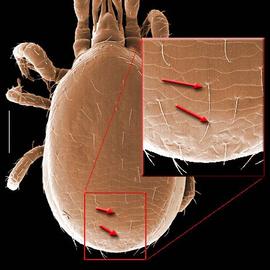
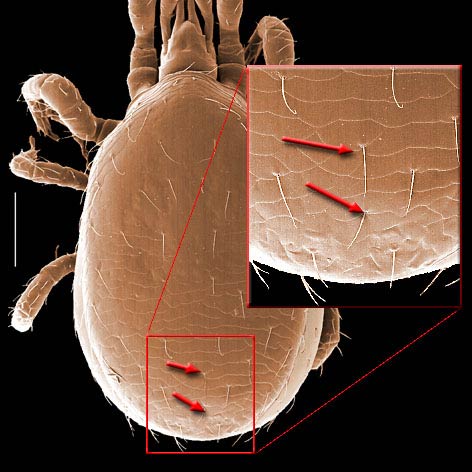
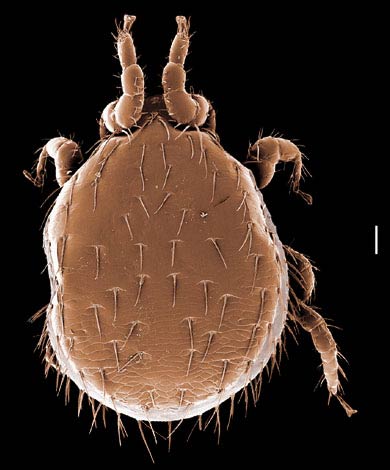
Dorsal shield setae spatulate to spatulate-mucronate or paddle-shaped.............................. 2
- Dorsal shield setae acuminate, not expanded distally .............................. 3
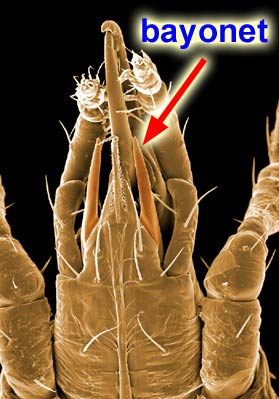
Digits of chelicerae and corniculi elongate, the latter reaching palp femur.............................. Stratiolaelaps
- Chelicerae and corniculi not elongate .............................. Cosmolaelaps (pars)
With hologastric shield; sternal shield usually with 4 pairs of setae.............................. Ololaelaps
- With genital or opisthogenital shields not fused to anal shield; 3 pairs of sternal shield setae.............................. 4
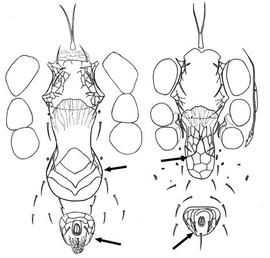
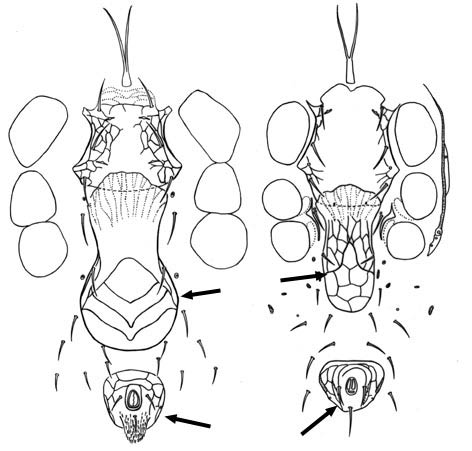
With opisthogenital shield expanded to cover much of venterand abutting anal shield.............................. 5
- With genital shield, usually more or less tongue-shaped and separated from anal shield.............................. 6
All ventral setae captured by opisthogenital shield on margin; dorsal shield setae often whip-like; associated with ants.............................. Laelaspis
- Usually 2 pairs of ventral setae removed from margin of opisthogenital shield; dorsal shield setae simple; free-living, on wood with bark beetles, or rarely with ants............................... Pseudoparasitus
Dorsal shield setae scimitar-like or curved and tapering from swollen base.............................. Cosmolaelaps (pars)
- Dorsal shield setae simple .............................. 7
Pilus dentilis elongate and inflated basally; genus IV with 9 setae.............................. Androlaelaps
- Pilus dentilis setiform, not inflated basally; genu IV with 10 setae.............................. 8
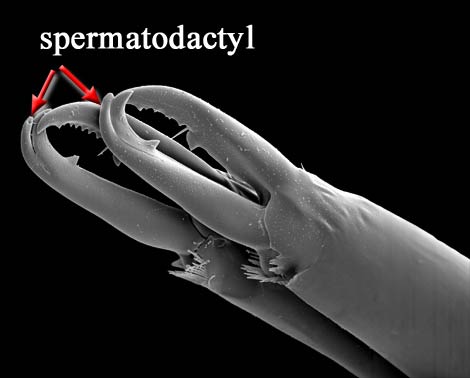
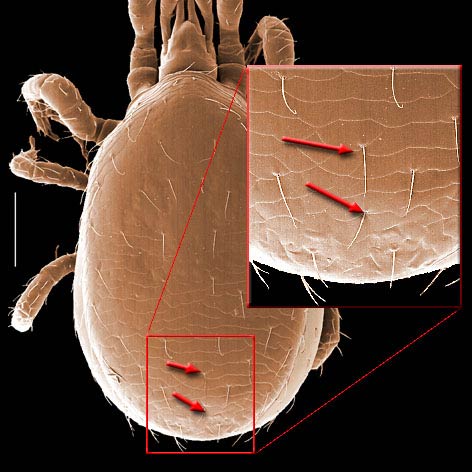
Fixed digit of chelicera with arched row of serrations; dorsal shield tapering posteriorly to expose much of opisthosoma, at least when female is well fed or gravid.............................. Gaeolaelaps
- Fixed digit without arched row of serrations; dorsal shield usually broadly covering opisthsoma.............................. 9
Genital shield expanded posteriorly, nearly reaching anal shield; setae JV1 on margin of shield or closely flanking shield.............................. "Hypoaspis" oblonga (Halbert) group
- Genital shield not expanded, well removed from anal shield; setae JV1 in soft cuticle.............................. "Hypoaspis" s.l.
The Dermanyssoidea contains a diverse array of symbiotes (mostly parasites) of both insects and of vertebrates that have been variously distributed among about 17 different families. Free-living predators, however, occur in only one family, the Laelapidae. Unfortunately, this probable basal family in the Dermanyssoidea has the least clear taxonomic framework. Herein I follow the only recent analysis that has emphasized the free-living members of the Laelapidae, Casanueva (1993)Casanueva (1993):
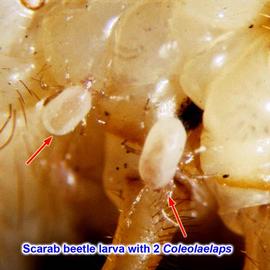
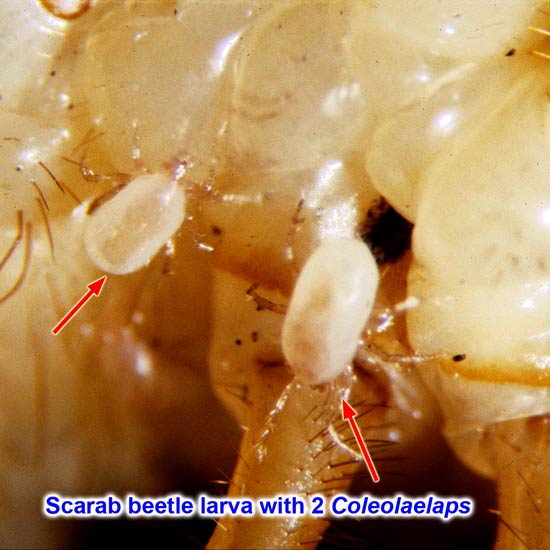
Casanueva ME. 1993. Phylogenetic studies of the free-living arthropod associated Laelapidae (Acari: Mesostigmata). Gayana Zoologica 57: 21–46.. The Pseudoparasitini (including species of Hypoaspis in the broad sense) are mostly free-living general predators of arthropods and worms, but include some taxa that are closely associated with ant colonies (e.g., some Cosmolaelaps). After Uropodoidea and Ologamasidae, pseudoparasitines are often the most common and diverse mesostigmatans in Australian soils. Hypoaspidines include the vertebrate nest associated species of Androlaelaps, insect and spider associated Hypoaspis, and species of Coleolaelaps associated with scarabaeine beetles. Species of Laelaspis are ant associates.
Author: David E. Walter
Content last updated Sept. 2006, unless indicated otherwise
Lucid key player updated Sept. 2025
idtools.org