t
Pachylaelapidae Berlese, 1913
Superorder Parasitiformes » Order Mesostigmata » Suborder Monogynaspida » Infraorder Gamasina » Hyporder Dermanyssiae » Superfamily Eviphidoidea » Family Pachylaelapidae
Beaurieuia Oudemans, Brachylaelaps Berlese, Elaphrolaelaps Berlese, Megalolaelaps Berlese [Megalolaelapidae?], Meliponapachys Turk, Olopachys Berlese, Onchodellus Berlese, Neoparasitus Oudemans, Pachylaella Berlese, Pachylaelaps Berlese, Pachyseiulus Moraza & Johnston, Paralaelaps Trägårdh, Platylaelaps Berlese, Pseudolaelaps Berlese (?), Pseudopachys Berlese, Pseudopachyseiulus Moraza & Johnston, Sphaerolaelaps Berlese, (Pachyseius Berlese, Zygoseius Berlese keyed separately)
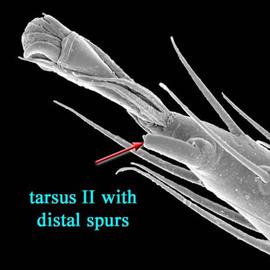
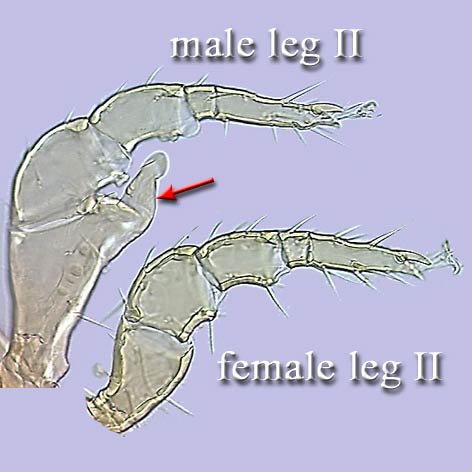
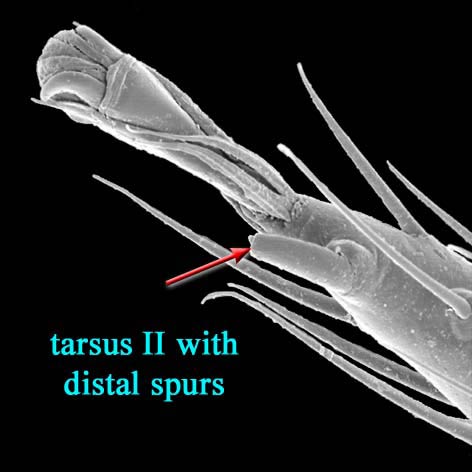
Females (and usually males) with spur-like distal setae on tarsus II.............................. 3
- Spur-like setae on tarsus II absent.............................. 2
Female with subcordate ventrianal shield with 13 setae (ZV1–2, JV1–3 + circumanals); genital shield truncate posteriorly and bearing 1 pair of setae; sternal shield with 3 pairs of setae and convex posterior margin; metasternal setae on metasternal-endopodal shield; free-living or on dung beetles.............................. Zygoseius
- Female with anal shield (rarely capturing 1–2 ventral setae); opisthogenital shield spreading laterally, with 2 pairs of setae and recurved posterior margin; associated with ants.............................. Sphaerolaelaps
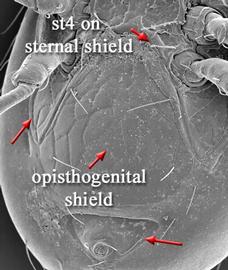
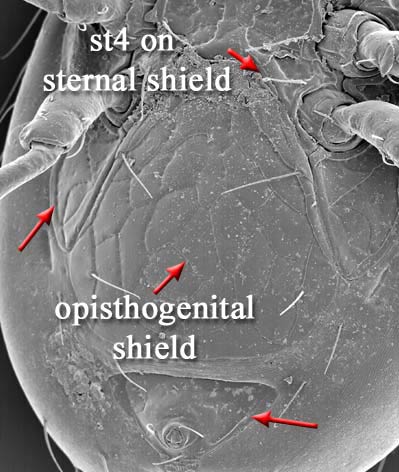
Female sternal shield bearing 4 pairs of setae, opisthogenital shield with 2 or more pairs of setae, and anal shield with 3 circumanal setae.............................. 4
- Female sternal shield bearing 3 pairs of setae (st4 on small metasternal shield or in soft cuticle), genital shield with 1 pair of seta, and ventrianal shield with 7–10 setae.............................. Pachyseius
Tibia I with 5 dorsal setae; palp apotele 3-tined.............................. 5
- Tibia I with 6 dorsal setae; palp apotele 2-tined.............................. 6
Genu I with 5 dorsal setae.............................. Onchodellus
- Genu I with 6 dorsal setae.............................. Pachylaelaps
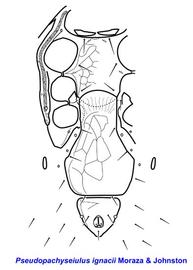
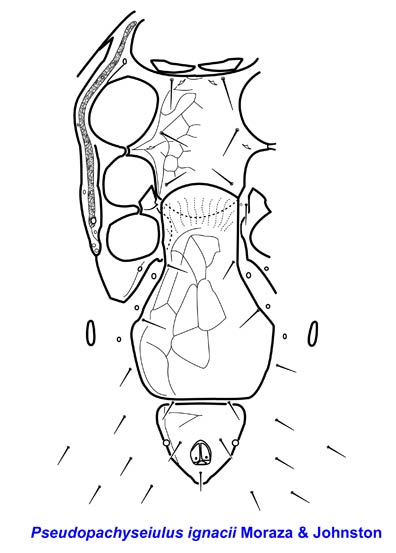
Seta st4 on small metasternal plate; dorsal shield with 37 pairs of setae.............................. Pachyseiulus
- Seta st4 on in soft cuticle; dorsal shield with 35 pairs of setae.............................. Pseudopachyseiulus
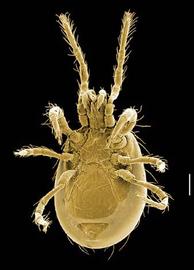
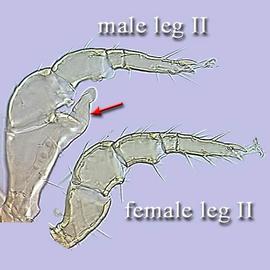
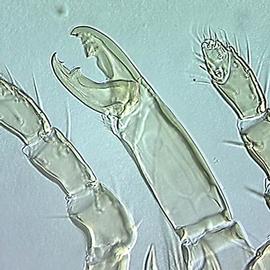
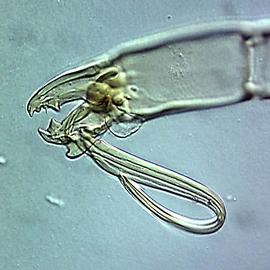
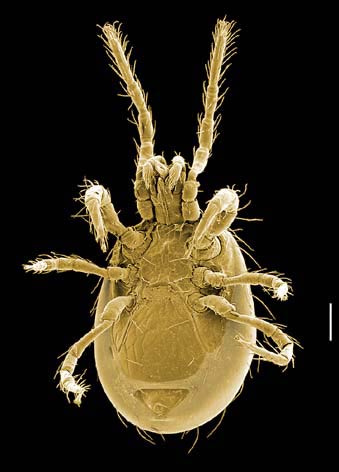
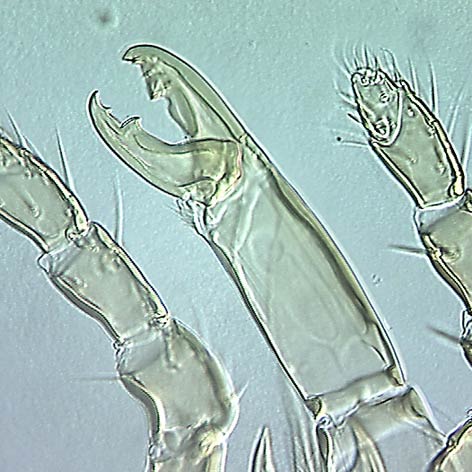
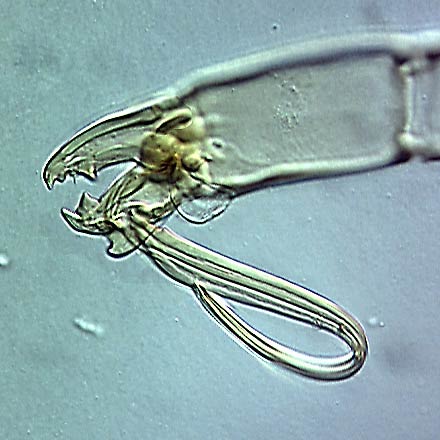
Yellow to brown dermanyssine mesostigmatans with holodorsal shields. Peritremes generally well developed, peritrematal-exopodal shields often produced posteriorly. Sternal shield often fused to posterior endopodal elements and bearing 3 or 4 pairs of setae (st1–3, +/- 4) and 2–3 pairs of lyrifissures; metasternal seta st4 in soft cuticle (e.g., Pseudopachyseiulus), on a metasternal shield, (e.g., Pachyseius), on sternal shield (e.g., Pachylaelaps, Pachyseiulus), or on endopodal-metasternal shield (e.g., Zygoseius; genital shield usually trapezoidal, subrectangular to oval-tongue-shaped; recurved to truncate posteriorly; and bearing 1–2 (rarely more) pair of setae; ventrianal shield broad with several pairs of ventral setae to small, triangular and bearing only 3 circumanal setae. Tarsus I with claws; trochanter I with 6 setae; tibia and genu I each with 5–6/3 dorsal/ ventral setae; genu IV with 8–9 setae, 4–5/1 dorsal/ ventral; leg II usually enlarged and tarsus II sometimes with spine-like distal setae. Chelicerae chelate-dentate; movable digit without excrescences, arthrodial corona not produced in a brush. Palp genu with 6 setae, palp apotele 2 or 3-tined; corniculi horn-like, often phytoseioid. Tritosternum biflagellate with columnar base. Tectum U-shaped with laterally denticulate tines. Female sperm induction pores near bases of coxae III–IV. Males with genital opening at base of tritosternum in sternogenital shield; spermatodactyl usually well developed.
Many pachylaelapids have sternal shields with 4 pairs of setae, as in the Rhodacaroidea and in some Parholaspididae, but these mites usually have ventrianal rather than anal shields. Species of Zygoseius are superficially similar to ascid mites in the genus Lasioseius, but the latter never have st4 on metasternal-endopodal plates, a characteristic of the former. Some members of the Leptolaelapidae Karg may belong to the Pachylaelapidae.
Author: David E. Walter
Content last updated Sept. 2006, unless indicated otherwise
Lucid key player updated Sept. 2025
idtools.org