t
Halolaelapidae Karg, 1965
Superorder Parasitiformes » Order Mesostigmata » Suborder Monogynaspida » Infraorder Gamasina » Hyporder Dermanyssiae » Superfamily Rhodacaroidea » Family Halolaelapidae
Halodarcia Karg, Halolaelaps Berlese & Trouessart (NB—various subgenera recognized), Halozercon Wisniewski, Karg & Hirschmann, Leitneria Evans, Saintdidieria Oudemans, Saprosecans Karg, Saprolaelaps Leitner
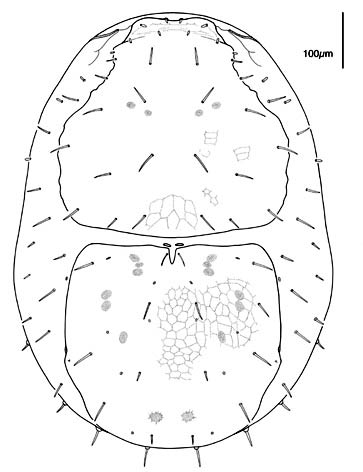
Adult female with holodorsal or divided dorsal shield; without posterior horn-like processes.............................. 2
- Opisthonotal shield fragmented into mesonotal and pygidial elements; posterior of idiosoma with horn-like projections.............................. Saprosecans
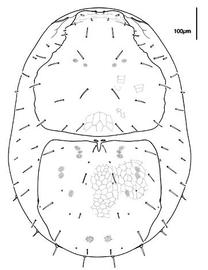
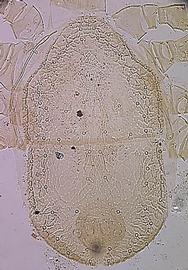
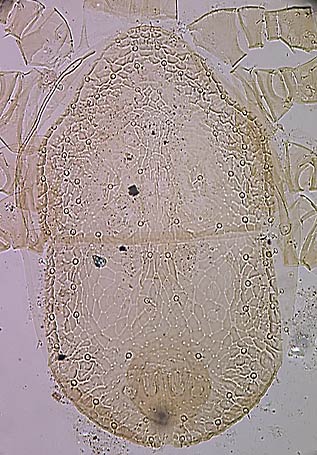
Dorsal shield divided into 2 subequal shields............................... 3
- Dorsal shield entire.............................. Halodarcia
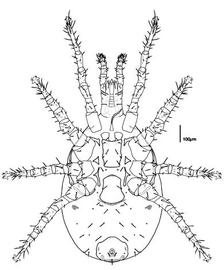
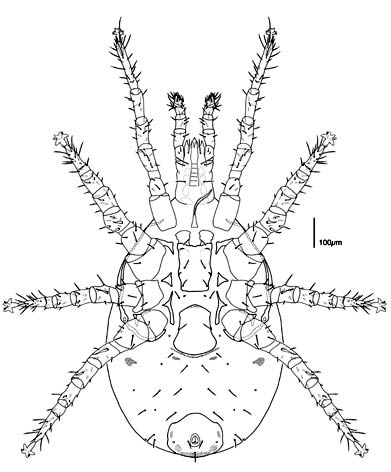
Sternal shield subrectangular, without endopodal elements; peritreme not expanded posteriorly.............................. 4
- Sternal shield angular, with fused endopodal elements; peritreme expanded posteriorly.............................. Leitneria
Genu III with 9 setae; coxa II without spine.............................. 5
- Genu III with 8 setae; coxa II with anterior spine.............................. Saprolaelaps
Genu IV with 9 setae; female with ventrianal shield.............................. Halolaelaps
- Genu IV with 10 setae; female with anal shield.............................. Saintdidieria
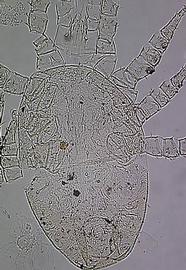
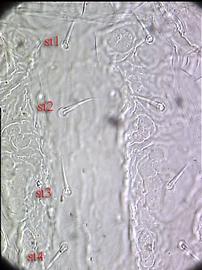
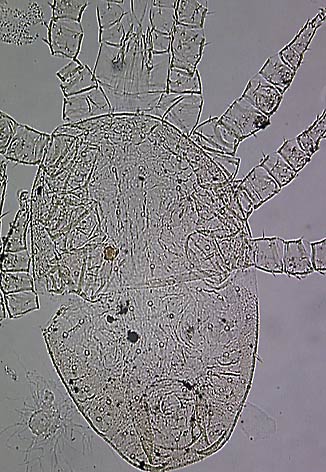
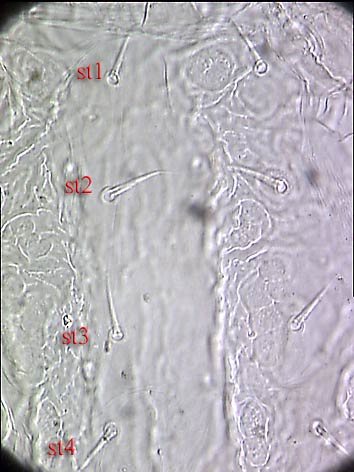
Pale to yellow or brown dermanyssine mesostigmatans mostly with subequal podonotal and opisthonotal shields, rarely holodorsal (Halodarcia) or with mesonotal and pygidial shields (Saprosecans). Peritremes short or long on narrow to broad shields. Sternal shield rectangular, without endopodal elements (except in Leitneria) bearing 3 pairs of setae (st1–3) and 2 pairs of lyrifissures (stp1–2); metasternal shields absent or present and bearing st4, stp3; genital shield usually trapezoidal to subrectangular and bearing 1 pair of setae; ventrianal shield broad, bearing 3–4 pairs of ventral setae or reduced to anal shield with 3 circumanal setae. Tarsus I with claws; trochanter I with 6 setae; tibia and genu I each with 5/3 dorsal/ ventral setae; genu IV with 9–10 setae, 5/1 dorsal/ ventral; coxae II sometimes with spine (Saprolaelaps). Chelicerae chelate-dentate; movable digit without excrescences. Palp genu with 6 setae, palp apotele 3-tined; corniculi horn-like. Tritosternum biflagellate with columnar base. Tectum with long median prong, evenly trifurcate, or denticulate. Female sperm induction pores at base of coxae IV. Males with genital opening at base of tritosternum in sternogenital shield; spermatodactyl usually simple.
Halolaelapids are most likely to be confused with Ascidae, but have 3-tined palp apoteles. Also, ascids with 5 dorsal setae on tibia I usually have holodorsal or schizodorsal shields: halolaelapids typically have 2 subequal dorsal shields.
Author: David E. Walter
Content last updated Sept. 2006, unless indicated otherwise
Lucid key player updated Sept. 2025
idtools.org