Many acariform mites (especially Oribatida) have a pair of well developed bothridial sensillasensillum:
(pl. sensilla) (also sensillae; 'sensillus' is incorrect) a sensory structure; sensilla is often used for the bothridial seta in Acariformes.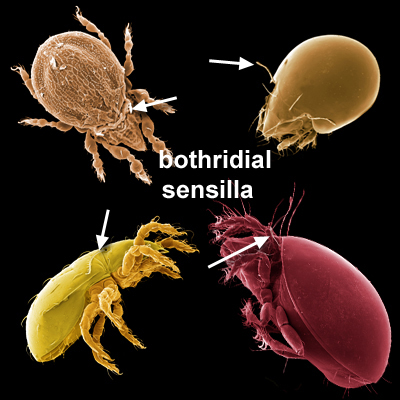 (see Character 26d) on the prodorsumprodorsum:
the dorsal surface of the propodosoma.
. The cup-like bases (bothridia) of these structures resemble a stigmatal opening and were once thought to be respiratory organs, but apparently this is rarely true, and their primary function appears to be sensing air currents. The sensillasensillum:
(pl. sensilla) (also sensillae; 'sensillus' is incorrect) a sensory structure; sensilla is often used for the bothridial seta in Acariformes. come in various shapes, from setiform to pectinatepectinate:
a seta or other process having comb-like teeth on one side (see bipectinate).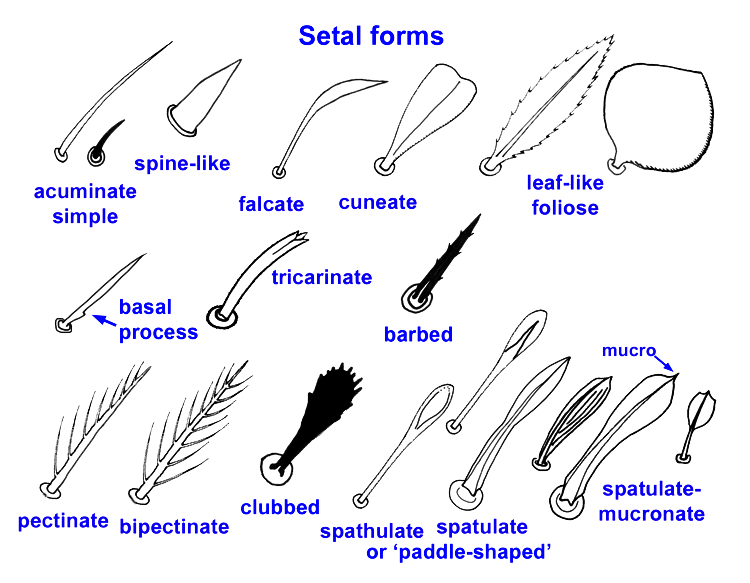 to plumose to club-shaped. They are variously called pseudostigmatic organs, trichobothriatrichobothrium:
(pl. trichobothria) (= bothridial sensillum) an often elaborately modified seta set in a cup-like base; forms include filiform, ciliate, pectinate or variously thickened or clubbed (bat-like to globose or capitate).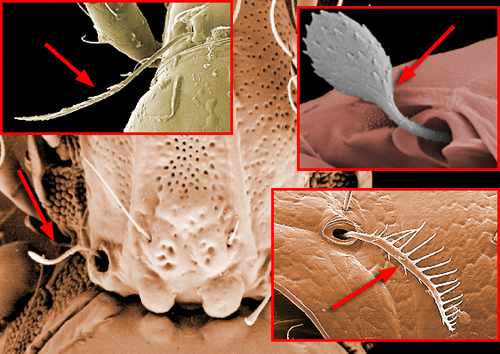 , or bothridial sensillasensillum:
(pl. sensilla) (also sensillae; 'sensillus' is incorrect) a sensory structure; sensilla is often used for the bothridial seta in Acariformes..
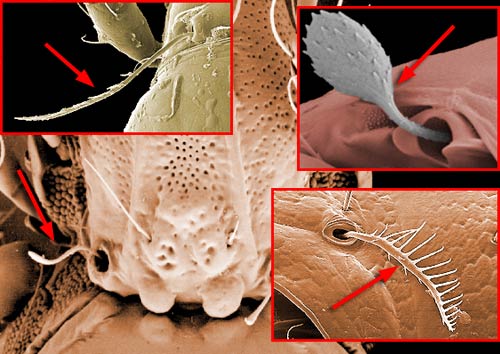
Two pairs of often long and plumose trichobothriatrichobothrium:
(pl. trichobothria) (= bothridial sensillum) an often elaborately modified seta set in a cup-like base; forms include filiform, ciliate, pectinate or variously thickened or clubbed (bat-like to globose or capitate). can be found on the prodorsa of some prostigmatans, and rarely the second pair is found on the rear end of the hysterosoma.
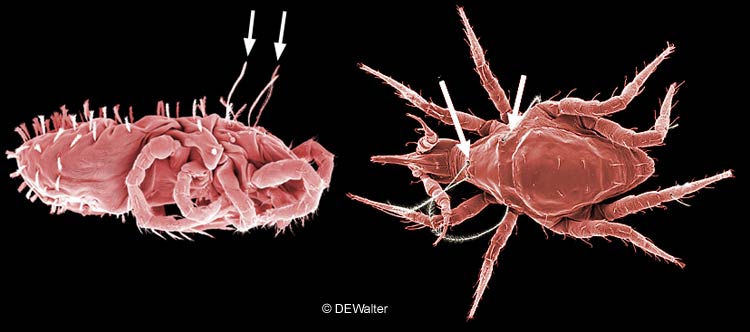
Only mites have trichobothriatrichobothrium:
(pl. trichobothria) (= bothridial sensillum) an often elaborately modified seta set in a cup-like base; forms include filiform, ciliate, pectinate or variously thickened or clubbed (bat-like to globose or capitate). on the prodorsumprodorsum:
the dorsal surface of the propodosoma.
. In other arthropods the sensillasensillum:
(pl. sensilla) (also sensillae; 'sensillus' is incorrect) a sensory structure; sensilla is often used for the bothridial seta in Acariformes. are on the legs, pedipalps, rarely on the head (e.g., polyxenid millipedes), or arranged serially on the trunk.
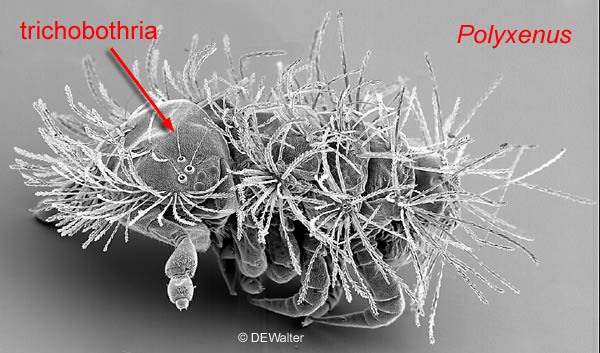
Mites sometimes have trichobothriatrichobothrium:
(pl. trichobothria) (= bothridial sensillum) an often elaborately modified seta set in a cup-like base; forms include filiform, ciliate, pectinate or variously thickened or clubbed (bat-like to globose or capitate). on the legs (usually tibiaetibia:
(pl. tibiae) the leg segment between the genu and the tarsus.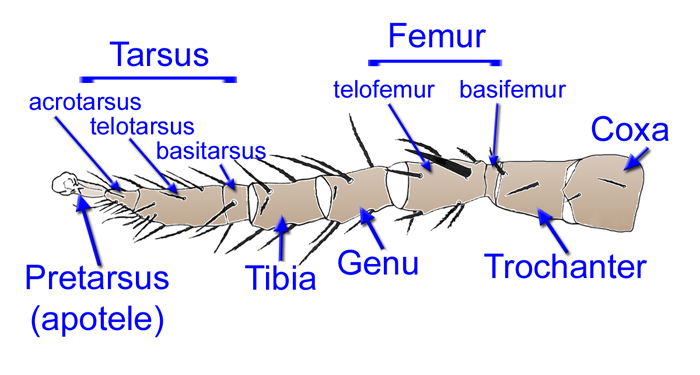 I and/or IV), and more often have 1–2 pairs on the bodybody:
the idiosoma of mites.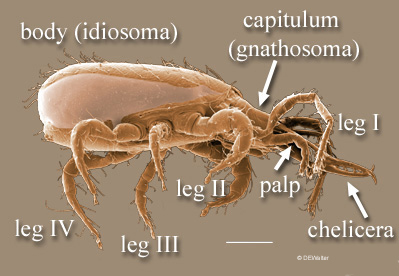 (usually the prodorsumprodorsum:
the dorsal surface of the propodosoma.
). In some myriapods (pauropods, symphylans) the trichobothriatrichobothrium:
(pl. trichobothria) (= bothridial sensillum) an often elaborately modified seta set in a cup-like base; forms include filiform, ciliate, pectinate or variously thickened or clubbed (bat-like to globose or capitate). are present as segmental pairs (usually only one pair in symphylans).
Author: David E. Walter
Content last updated Sept. 2006, unless indicated otherwise
Lucid key player updated Sept. 2025
idtools.org