Any arthropod with true wings or wing buds is an insect. he typical insect wing is a membranous network of veins, but wings are modified into various forms. For example, forewings are converted to shell-like elytra in beetles and earwigs (Character 2b), and are leathery in most orthopteroids; the hind wings are club-shaped or scale-like halteres in flies. Thrips, and some minute wasps and beetles, have distinctive wings composed of a median rod-like process fringed with long setae (bristle wings: Character 2c). Some oribatid and tarsonemidtarsonemid:
a mite belonging to the family Tarsonemidae including many economically important species (e.g., species of Acarapis, Tarsonemus, Polyphagotarsonemus, Phytonemus).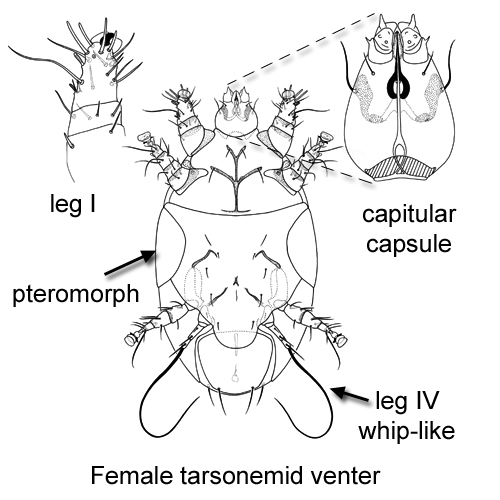 mites have wing-likewing-like:
projecting from the body or other structures like the wings of insects.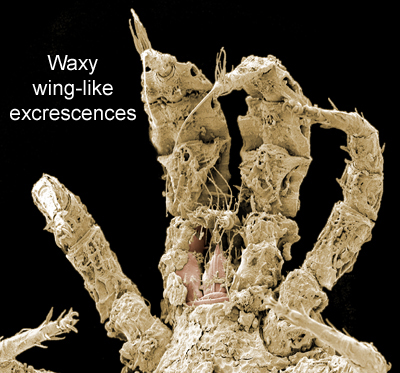 lateral processes that protect the legs (pteromorphs: Character 2d)
The typical insect wing is a membranous network of veins, but forewings are often serve a protective function for the hindwings and are smaller and more heavily sclerotized. For example, forewings are converted to shell-like elytra in beetles and earwigs (Character 2b), and are leathery in most orthopteroids. Some oribatid and tarsonemidtarsonemid:
a mite belonging to the family Tarsonemidae including many economically important species (e.g., species of Acarapis, Tarsonemus, Polyphagotarsonemus, Phytonemus). mites have wing-likewing-like:
projecting from the body or other structures like the wings of insects. lateral processes that protect the legs (pteromorphs: Character 2d).
Thrips, and some minute wasps and beetles, have wings composed of a median rod-like process fringed with long setae. These are called bristle wings or feather wings.
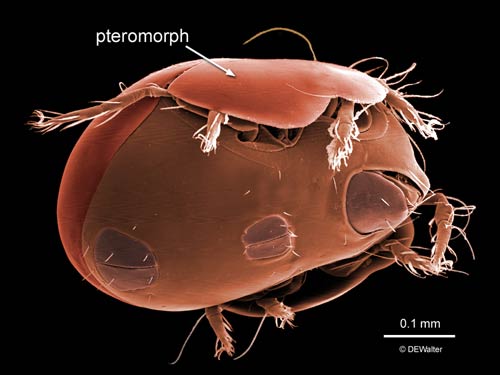
Some oribatid mites and a few prostigmatans (Tarsonemidae) have wing-likewing-like:
projecting from the body or other structures like the wings of insects. lateral processes called pteromorphs that protect the legs. These pteromorphs can be fixed and immovable or pulled down against the legs and bodybody:
the idiosoma of mites.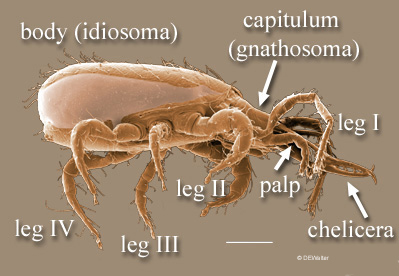 wall, resulting in a featureless, seed-like mite.
Author: David E. Walter
Content last updated Sept. 2006, unless indicated otherwise
Lucid key player updated Sept. 2025
idtools.org