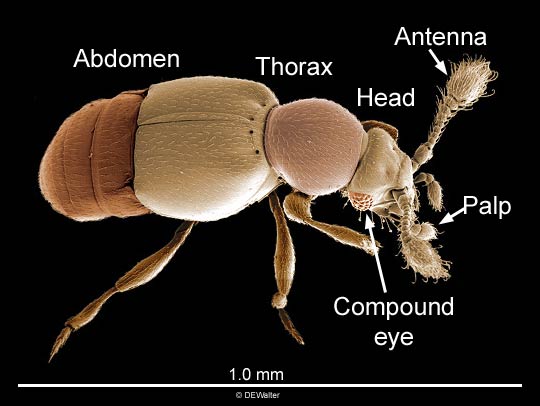
A bodybody:
the idiosoma of mites.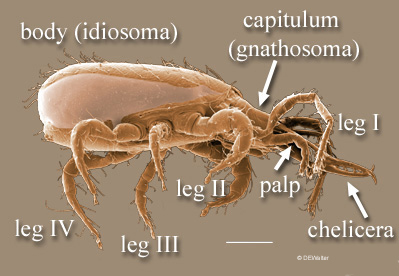 length of 2 cm is well above average for modern terrestrial arthropods. Among mites, only a large and fully engorged ticktick:
any member of the parasitiform suborder Ixodida.
would even approach this length. The largest known non-ticktick:
any member of the parasitiform suborder Ixodida.
acarines are some red velvet mites that reach about 16 mm in bodybody:
the idiosoma of mites. length. Most mites encountered in quarantine will be less than 1 mm in length.
The only acarines in the 5 mm–2 cm bodybody:
the idiosoma of mites. length range are some ticks and red velvet mites.
Most of the major groups of terrestrial arthropods have most of their diversity concentrated in the under 5 mm bodybody:
the idiosoma of mites. length range. Only some of the very large arachnid orders (whipscorpions, scorpions, sun scorpions) lack species in this size category.
Arthropods less than a millimeter in bodybody:
the idiosoma of mites. length are properly considered microarthropods and include many of the animals that could be confused with mites. This is especially true of tiny spiders, opilionids, and a few insect groups such as scale insect crawlers that have a superficially mite-like appearance. Most of the arthropods that you encounter in this size category are likely to be hexapods, mites, or other non-acarine arachnids (e.g., pseudoscorpions, opilionids, or palpigrades).
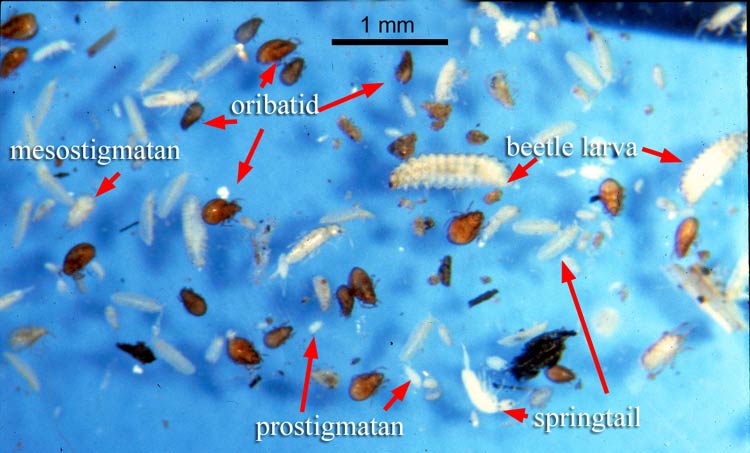
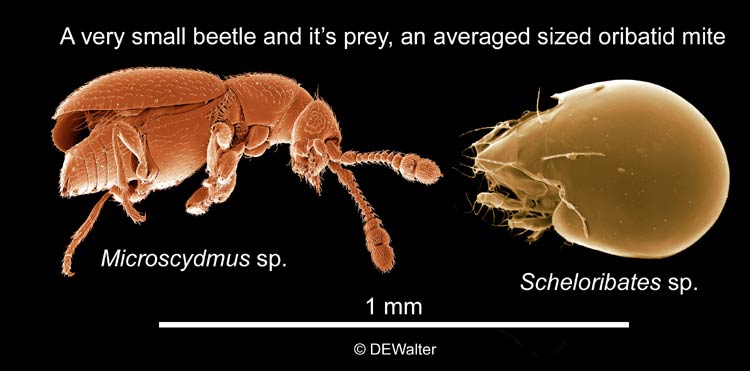
The average mite has a bodybody:
the idiosoma of mites. length of less than 0.5 mm, but several groups of soil microarthropods also have species in this extreme size range, including insects, springtails, proturans, copepods, palpigrades, pseudoscorpions and spiders.
Author: David E. Walter
Content last updated Sept. 2006, unless indicated otherwise
Lucid key player updated Sept. 2025
idtools.org