

test
Oribatida van der Hammen, 1968Hammen, 1968:
Hammen L van der. 1968. Studies on Opilioacarida (Arachnida). II. Redescription of Paracarus hexophthalmus (Redikorzev). Zoölogische Mededelingen 43: 57-76.
Superorder Acariformes » Order Sarcoptiformes » Suborder Oribatida
infraorders: Palaeosomata, Enarthronota, Parhyposomata, Mixonomata, Desmonomata
oribatid mites, moss mites, armored mites, cryptostigmatans, astigmatids, acarids
very high
High, but almost entirely because of the hyporder Astigmata. Most traditional oribatid mites are of little interest to quarantine: most are fungivores or detritivores, only a few are minor pests of plants and none are significant parasites of animals. Some oribatids, however, may disperse fungal spores and other microbial propagules. In contrast, the hyporder Astigmata contains many important parasites of people, livestock, pets, wildlife and insects, as well as many fungivores and scavengers that are pests in stored products and homes.
Small (0.100 mm long) to medium (2.0 mm) mites without typical stigmatal openings (some have secondarily derived brachytracheae), rarely with expansive plastron-like structures in aquatic species; gnathosoma with the bases of the chelicerae exposed, but often withdrawn into a camerostome; palps with 2–5 free segments, without a palp apotele; subcapitulum without a median groove or transverse rows of denticles; toothed to quadrate rutella usually present; flagellate tritosternum absent; coxae fused to body wall, usually plate-like or completely assimilated into the body wall (epimeres); chelicerae 2-segmented (rarely with additional remnant basal segment); prodorsum with 0–1 pair of trichobothria; intercoxal region without sternal or genital shield elements, genital opening postcoxal; development: +/- hexapod prelarva, hexapod larva and 2–3 octopod nymphal stages (protonymph, +/- deutonymph, tritonymph); genital opening develops gradually and usually associated with 1–3 pairs of genital papillae; larva usually with urstigmata; males sometimes with an aedeagus, never with modified chelicerae; female sperm receiving structures primary or secondary.
Immature Oribatida: prodorsum with 1 pair of variously formed trichobothria and usually 5 pairs of setae; naso and/ or eyes rarely present, legs ending in a single claw without rays, opisthonotal gland often present.
Some adult Mesostigmata and Prostigmata are heavily sclerotized and might be confused with oribatid mites. However, heavily sclerotized oribatid mites usually have rutella and lack stigmatal openings. Additionally, heavily sclerotized Mesostigmata usually have well developed tritosterna and horn-like corniculi.
The immature stages of some oribatid mites may be confused with Endeostigmata.
Cosmopolitan. Although most species are free-living fungivores, many astigmatid lineages are parasitic on vertebrates and arthropods. Many Astigmata are phoretic on insects as heteromorphic deutonymphs (hypopi). Most oribatids are particulate-feeders, but some feed on fluids or very fine particulate matter.
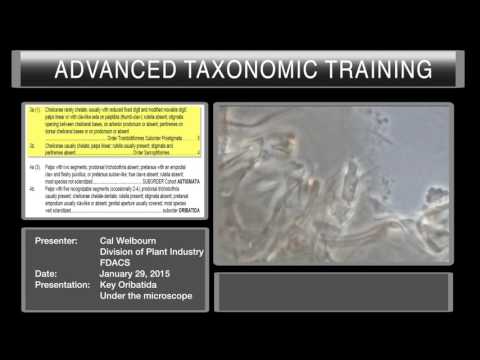
Using a dichotomous key to identify a mite specimen as Oribatida
Author: David E. Walter
Content last updated Sept. 2006, unless indicated otherwise
Lucid key player updated Sept. 2025
idtools.org
