The ability to produce silksilk:
fine threads spun by acariform mites to form a molting chamber (cocoon), protect or attach eggs, or a loosely defined to finely woven web.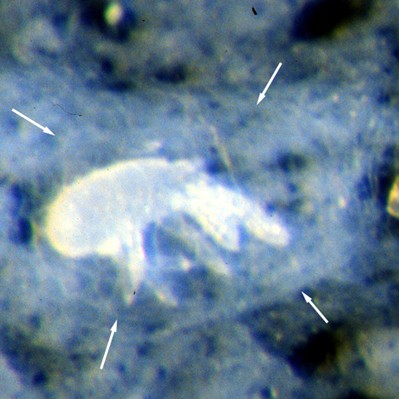 is a primitive character in the Acariformes, but in most cases only fine strands of silksilk:
fine threads spun by acariform mites to form a molting chamber (cocoon), protect or attach eggs, or a loosely defined to finely woven web., small silken webs for sperm deposition or egg covers, or molting cocoons are produced. Among the Tetranychinae, however, elaborate webs of densely woven silksilk:
fine threads spun by acariform mites to form a molting chamber (cocoon), protect or attach eggs, or a loosely defined to finely woven web. may be formed and filled with mites, eggs, and exuviaeexuviae:
(pl. exuviae) the outer layer of skin not recycled during a molt; empty exuviae are a sign of previous mite development on a substrate; some oribatid mites retain the dorsal notogastral portion of exuviae as a pagoda-like pile of scalps. (NB: the use of 'exuvia' as a singular makes no more sense than 'cloth' for 'clothes'.)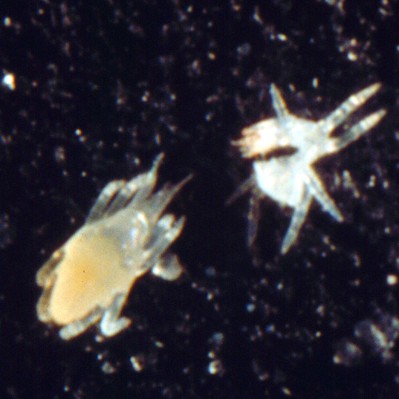 . Some Eriophyidae also produce silksilk:
fine threads spun by acariform mites to form a molting chamber (cocoon), protect or attach eggs, or a loosely defined to finely woven web.-like structures under which they hide.
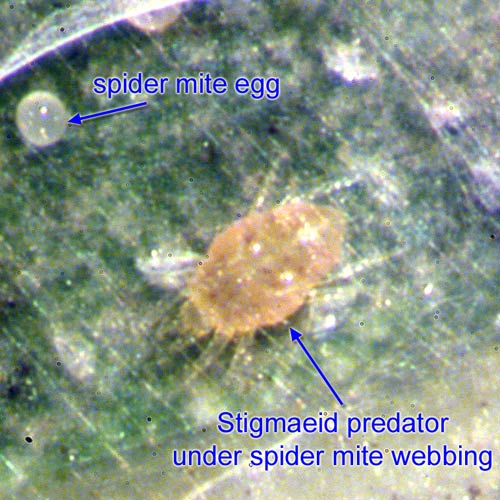
NB - predatory mites are often attracted to spider mitespider mite:
a member of the family Tetranychidae (Prostigmata).
webbing and stigmaeid mites can be confused with spider mites.
Some male Penthaleidae (Eupodoidea) produce silken strands to carry their sperm and attract females.
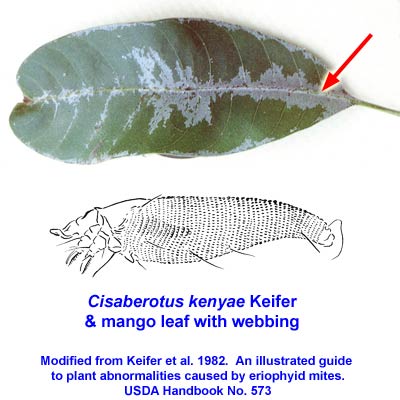
Some Eriophyidae produce silksilk:
fine threads spun by acariform mites to form a molting chamber (cocoon), protect or attach eggs, or a loosely defined to finely woven web.-like webbing under which they hide.
Members of the Tetranychoidea usually do not produce webbing, but members of the spider mitespider mite:
a member of the family Tetranychidae (Prostigmata).
subfamily Tetranychinae have a spinneretspinneret:
a structure that produces silken fibers. In spider mites, the spinneret is in the form of a short, blunt seta-like structure on the palp tarsus.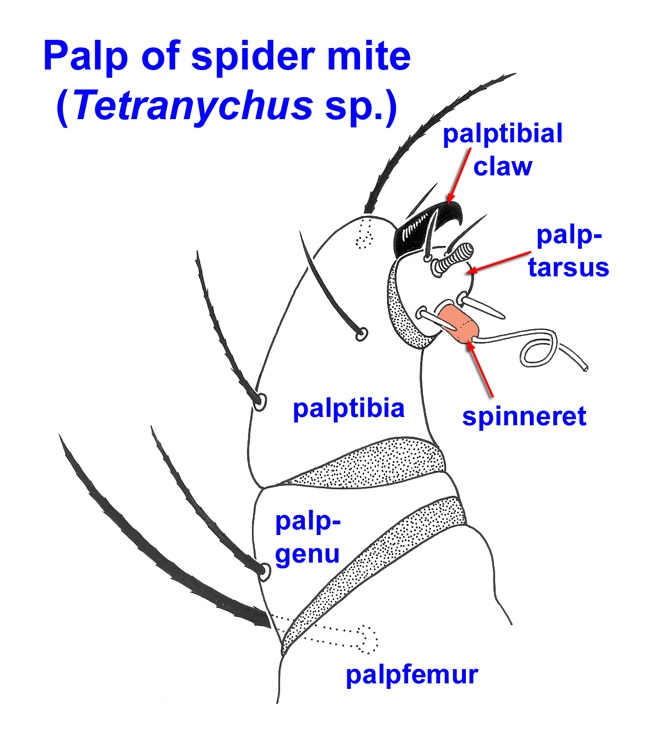 on the palp tarsustarsus:
(pl. tarsi) the subdistal leg segment between the tibia and the pretarsus (apotele).
and use silksilk:
fine threads spun by acariform mites to form a molting chamber (cocoon), protect or attach eggs, or a loosely defined to finely woven web. for protecting eggs and often for constructing conspicuous webs.
Tarsonemidae (TarsonemoideaTarsonemoidea:
(also Tarsonemina) a superfamily within Prostigmata > infraorder Eleutherengona > hyporder Heterostigmata consisting of two families: Tarsonemidae and Podapolipidae.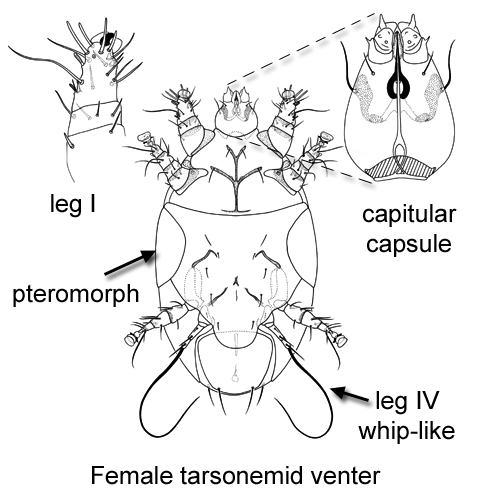 ) do not produce silksilk:
fine threads spun by acariform mites to form a molting chamber (cocoon), protect or attach eggs, or a loosely defined to finely woven web..
Author: David E. Walter
Content last updated Sept. 2006, unless indicated otherwise
Lucid key player updated Sept. 2025
idtools.org