Most adult female mites have 4 pairs of legs (octopod), as do the nymphal stages, and only the larva (or prelarvaprelarva:
(also deutovum, prolarva) the first instar in acariform mites having a complete ontogenetic sequence, but absent in derived Prostigmata and Parasitiformes (except Opilioacarida); incompletely formed, without functional mouthparts, often retained within the egg shell or just extruding from it, and usually inactive; hexapod or apodous.
when present) have 3 pairs of legs (hexapodhexapod:
with three pairs of legs (i.e. 6 legs), as in the larvae of mites or the larviform stages of others.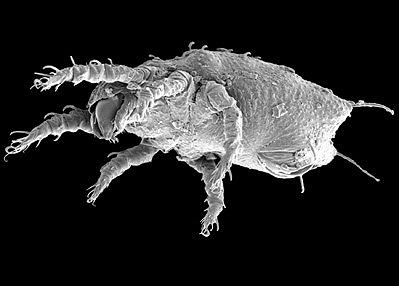 ). Exceptions do occur, especially among the plant-parasitic mites.
The Penthaleidae (Eupodoidea) always have 4 pairs of legs in nymphs and adults.
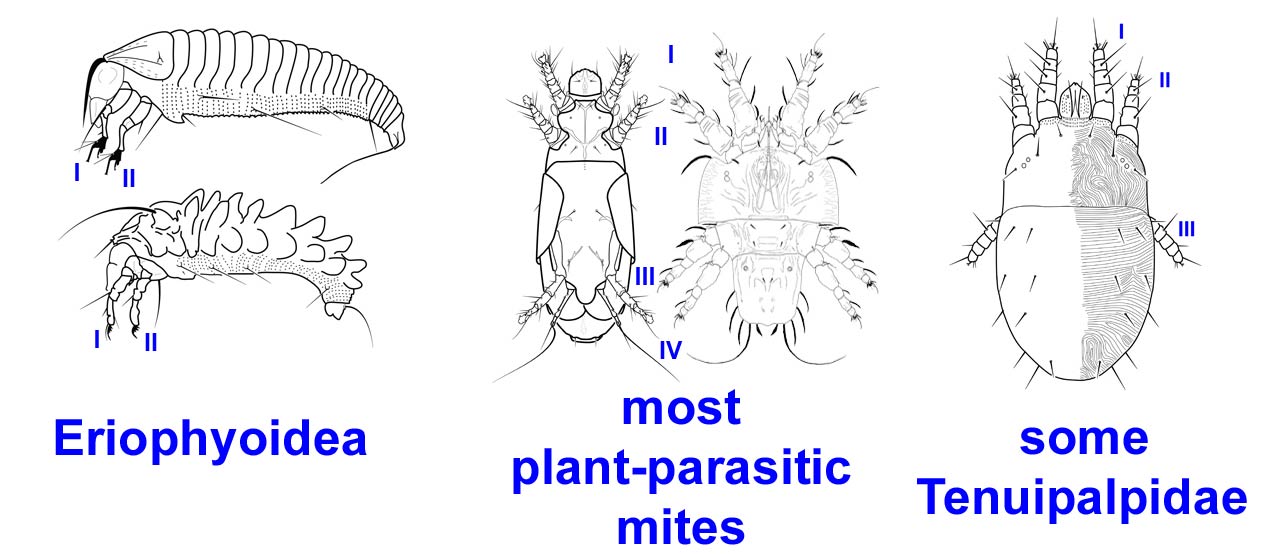
The Eriophyoidea always have 2 pairs of legs in all active stages from larva to adult. These are the only mites know to have only 2 pairs of legs, although some insect parasitoid TarsonemoideaTarsonemoidea:
(also Tarsonemina) a superfamily within Prostigmata > infraorder Eleutherengona > hyporder Heterostigmata consisting of two families: Tarsonemidae and Podapolipidae.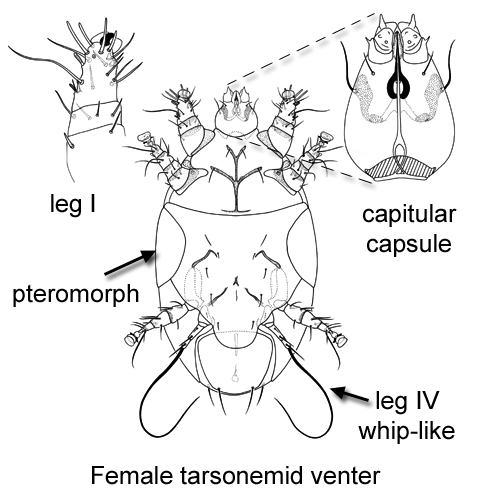 have physogastricphysogastry:
swelling of the opisthosoma to accommodate massive numbers of eggs or developing young. Physogastry is common only in certain heterostigmtans including Pyemotidae, Pygmephoridae, and Podapolipidae.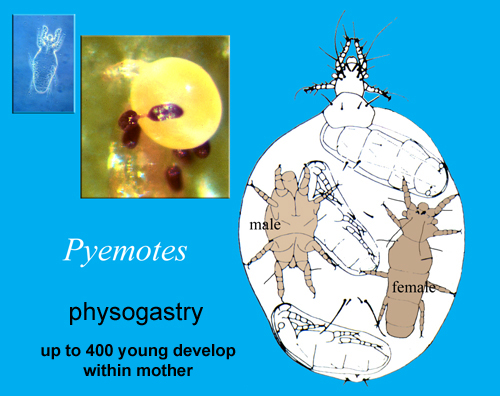 females with legs reduced to a single pair of hookhook:
(as in cheliceral hook) the distal hook-like tips of chelicerae in the Mesostigmata, as opposed to cheliceral teeth.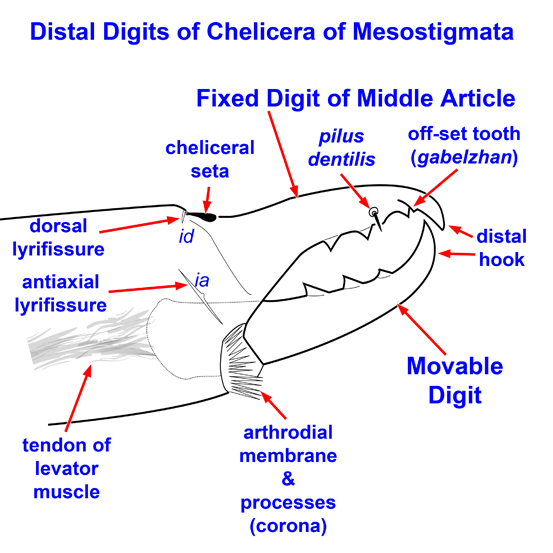 -like appendages.
The Tetranychoidea usually have 4 pairs of legs in the nymphs and adults; however, legs IV are not expressed by species in several genera of Tenuipalpidae including: Larvacarus, Raoiellana, and Phytoptipalpus.
The Tarsonemidae (TarsonemoideaTarsonemoidea:
(also Tarsonemina) a superfamily within Prostigmata > infraorder Eleutherengona > hyporder Heterostigmata consisting of two families: Tarsonemidae and Podapolipidae.) always have 4 pairs of legs in the adults, although those of the adult female are reduced and end in a long seta. Immature stages are hexapodhexapod:
with three pairs of legs (i.e. 6 legs), as in the larvae of mites or the larviform stages of others.. Some insect parasitoid TarsonemoideaTarsonemoidea:
(also Tarsonemina) a superfamily within Prostigmata > infraorder Eleutherengona > hyporder Heterostigmata consisting of two families: Tarsonemidae and Podapolipidae., however, may be hexapodhexapod:
with three pairs of legs (i.e. 6 legs), as in the larvae of mites or the larviform stages of others. as adults.
Author: David E. Walter
Content last updated Sept. 2006, unless indicated otherwise
Lucid key player updated Sept. 2025
idtools.org