Most adult female mites have 4 pairs of legs (octopod), as do the nymphal stages, and only the larva (or prelarvaprelarva:
(also deutovum, prolarva) the first instar in acariform mites having a complete ontogenetic sequence, but absent in derived Prostigmata and Parasitiformes (except Opilioacarida); incompletely formed, without functional mouthparts, often retained within the egg shell or just extruding from it, and usually inactive; hexapod or apodous.
when present) have 3 pairs of legs (hexapodhexapod:
with three pairs of legs (i.e. 6 legs), as in the larvae of mites or the larviform stages of others.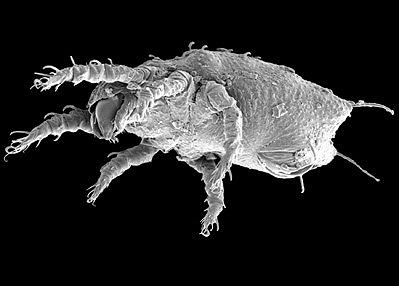 ). Exceptions do occur, especially among the plant-parasitic mites.
The Penthaleidae (Eupodoidea) have a prodorsumprodorsum:
the dorsal surface of the propodosoma.
with 4 pairs of setae (sometimes with extra setae), including one pair formed as filiformfiliform:
thread-like; long and narrow.
or ciliated trichobothriatrichobothrium:
(pl. trichobothria) (= bothridial sensillum) an often elaborately modified seta set in a cup-like base; forms include filiform, ciliate, pectinate or variously thickened or clubbed (bat-like to globose or capitate).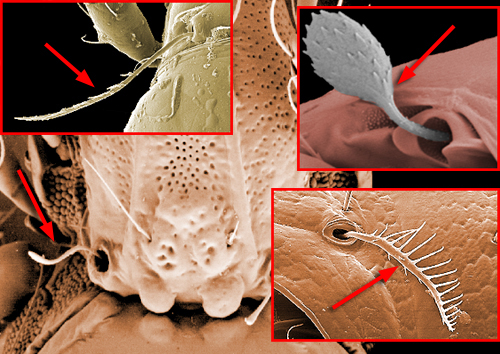 (the internal scapular setaescapular seta:
2 pairs of setae (sci, sce) on the prodorsum of Prostigmata, often inserted on either side of the eyes; see Vertical-scapular system.
, sci) and a lobe over the capitulumgnathosoma:
(= capitulum) the anteriormost part of a mite or ricinuleid, composed of the cheliceral and pedipalpal segments and separated from the body (idiosoma) by a ring of soft cuticle.
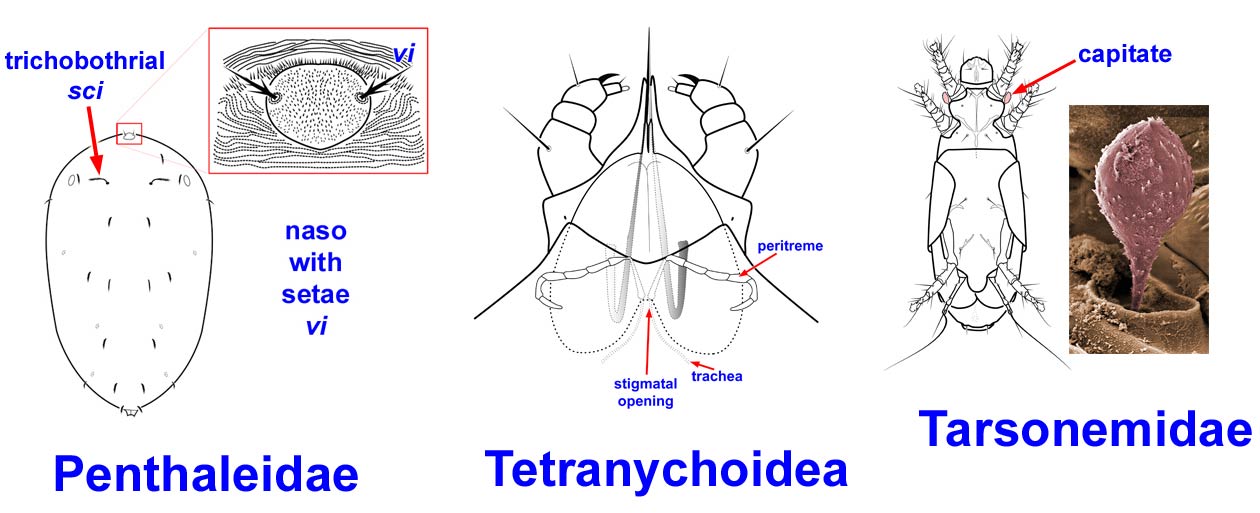
called a naso that bears the internal vertical setae, vi.
The Eriophyoidea lack a naso and only rarely have a single, median and unpaired seta vi.
The Tetranychoidea never have a naso, but do have peritremes, a pair of segmented gutters that lead to the stigmatal openings between the chelicerae. The peritremes may be difficult to see when the stylophorestylophore:
chelicerae formed of fused cheliceral bases bearing stylet-like movable digits as in Raphignathae (Prostigmata), e.g., the plant parasitic spider mites and their relatives (Tetranychoidea). In predatory and parasitic Cheyletoidea and parasitic Myobiidae, the stylophore and subcapitulum are fused into a gnathosomal capsule.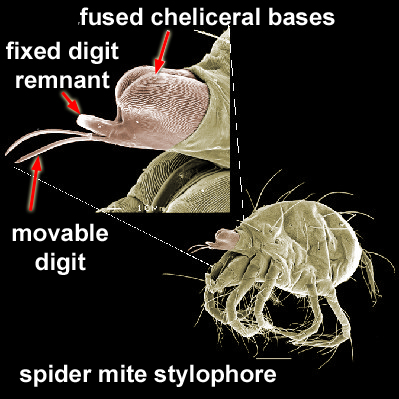 has been retracted and they may stick out above the bodybody:
the idiosoma of mites.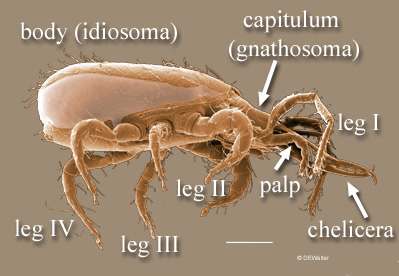 (exerted).
The Tarsonemidae (TarsonemoideaTarsonemoidea:
(also Tarsonemina) a superfamily within Prostigmata > infraorder Eleutherengona > hyporder Heterostigmata consisting of two families: Tarsonemidae and Podapolipidae.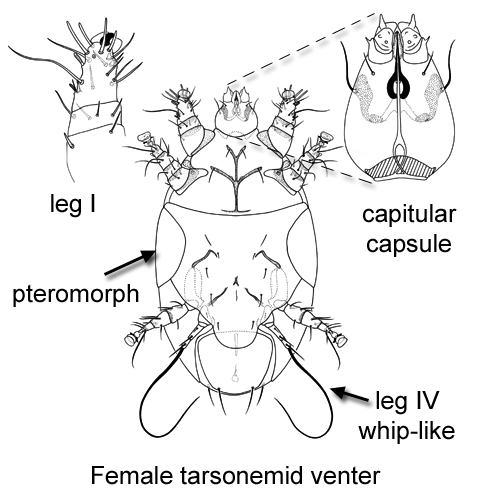 ) have trichobothridial setae that are swollen at the tip (capitiate).
Author: David E. Walter
Content last updated Sept. 2006, unless indicated otherwise
Lucid key player updated Sept. 2025
idtools.org