t
Proctogastrolaelaps McGraw & Farrier
Superorder Parasitiformes » Order Mesostigmata » Suborder Monogynaspida » Infraorder Gamasina » Hyporder Dermanyssiae » Superfamily Ascoidea » Family Ascidae » Subfamily Melicharinae » Genus Proctogastrolaelaps
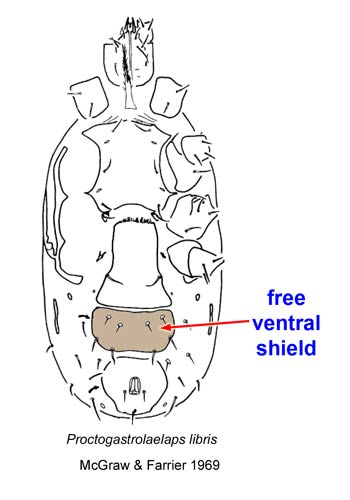
Melicharinae with a free ventral plate in the adult female
Proctogastrolaelaps appear to be intermediate between Proctolaelaps (anal shield, no ventral shieldventral shield:
in Mesostigmata, any shield or shields in the ventral region; often fused with the anal shield to form a ventrianal shield. [Back to Top]
) and Paraproctolaelaps (anal and ventralventral:
relating to the lower or under side; opposed to dorsal.
shields fused into a ventrianal shieldventrianal shield:
in Mesostigmata, a ventral shield bearing the anal opening, circum anal setae, and one or more pairs of ventral setae or pores (lyrifissures) [see anal shield]; maybe rather narrow or very broad and covering most of the gaster.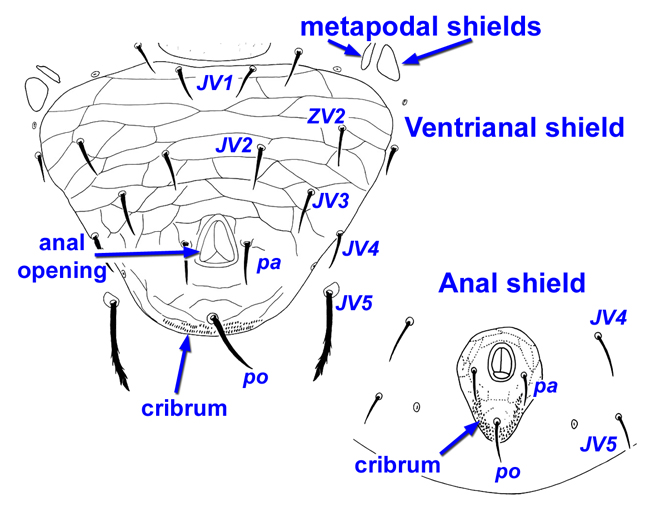 ). Free ventralventral:
relating to the lower or under side; opposed to dorsal.
plates are very rare in the Monogynaspida, but do occur in the unusual phytoseiidphytoseiid:
a member of the Phytoseiidae, including over 2000 described species, some of which are important biocontrol agents. 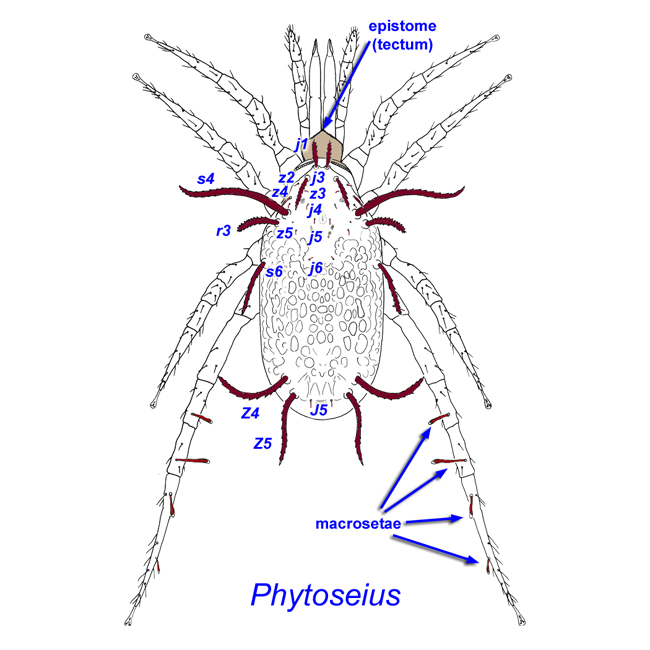 genus Iphiseius (with the strongly reduced dorsaldorsal:
relating to the upper or back side; opposed to ventral.
shield chaetomechaetome:
a complement of setae; the setal array present on a stage or body part.
characteristic of Phytoseiidae and a phytoseiidphytoseiid:
a member of the Phytoseiidae, including over 2000 described species, some of which are important biocontrol agents. -type of sperm access systemsperm access system:
a term used for a complex secondary insemination system in in female mites; implies more than simple sperm storage is occurring. In the dermanyssine Mesostigmata, two basic types of sperm access systems are known - the laelapid type and the phytoseiid type.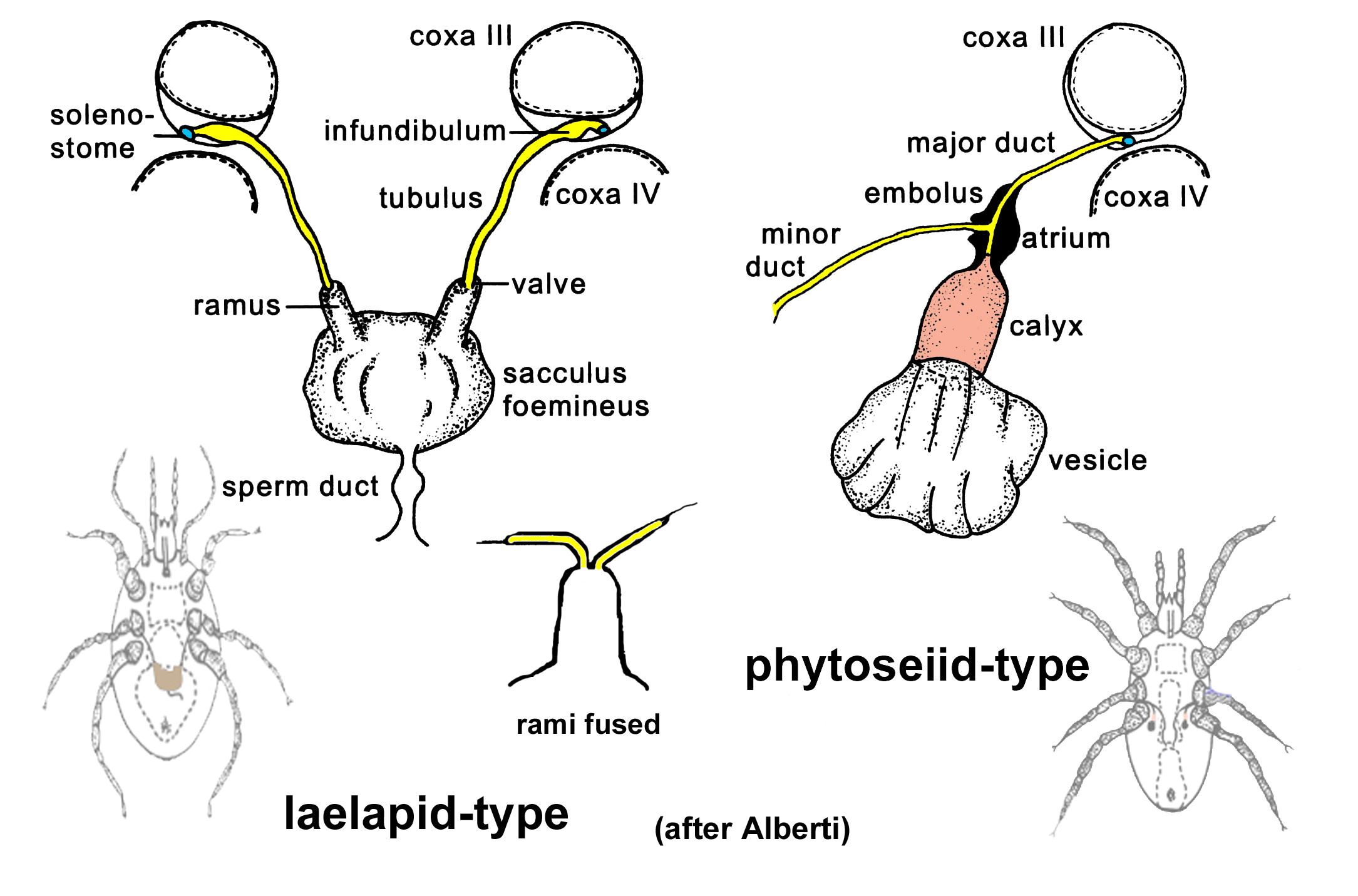 ) and in some Veigaiidae (palp apotelepalptarsal apotele:
(= palp apotele, palptarsal claw) the most distal segment of the palp; absent in Acariformes, claw-like in Opilioacarida, and a subdistal, tined structure in the Mesostigmata.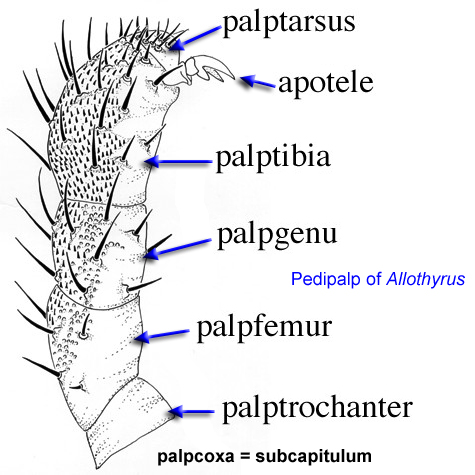 3–4 tines and with scale-like process).
Idiosoma narrow, dorsaldorsal:
relating to the upper or back side; opposed to ventral.
shield greater than twice as long as wide; leg setation strongly neotenous, genuagenu:
(pl. genua) (= patella) the 4th leg segment, between the femur and tibia.
I–II–III–IV with 12–7–6–7 setae, tibiaetibia:
(pl. tibiae) the leg segment between the genu and the tarsus.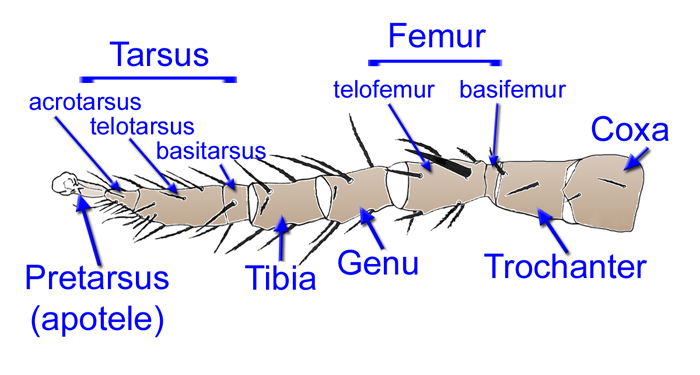 with 11–7–6–6 setae; female lacking metasternal plates and with ventri-anal shield bearing 1–3 pairs of ventral setaeventral setae:
in the Lindquist-Evans system used in the Mesostigmata, the ventral region has up to three longitudinal rows (Jv, Zv, Lv) with 1-5 transverse row designations.
in addition to circumanal setaecircumanal setae:
in Mesostigmata, the three setae (postanal and pair of peranal) setae surrounding the anal opening............................... Mycolaelaps
- Idiosoma broader, legs not strongly neotenous, metasternal plates present or absent, only anal shield or separate anal and ventralventral:
relating to the lower or under side; opposed to dorsal.
shields.............................. 2
Female with separate ventral shieldventral shield:
in Mesostigmata, any shield or shields in the ventral region; often fused with the anal shield to form a ventrianal shield. [Back to Top]
bearing 4 pairs of setae between genital and anal shields; posteriorposterior:
the back part of the body or towards that region in comparison, e.g., 'posterior to'.
connection of peritrematalperitrematal:
(peritrematic) of or referring to the peritreme; adjectival form of peritreme.
shield to exopodal plate beside coxacoxa:
the basal segment of the leg, articulating with (Parasitiformes) or fused to (Acariformes) the body wall. IV broad (subequal to width of stigmastigma:
the opening to the tracheal system.
); corniculicorniculus:
(pl. corniculi) (also, external malae) a usually horn-like process (sometimes toothed, bifurcate, trifurcate, spine-like, spatulate, or membranous) on the subcapitulum of parasitiform mites that usually supports the salivary styli. A toothed corniculus could be confused with a rutellum, a possibly homologous structure in Acariformes and Opilioacarida. Phytoseiid image is spatulate corniculus.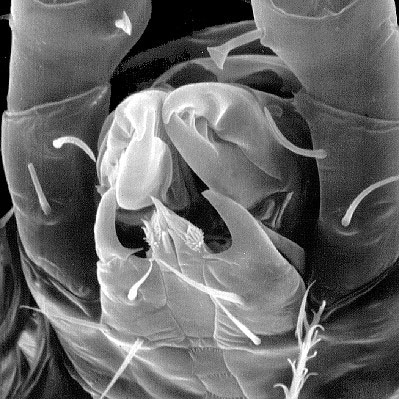 slender, acute; rows of deutosternal denticlesdeutosternal denticles:
rows of small teeth-like projections (often irregular and sometimes reduced to a single tooth) running transversely across the deutosternal groove and sometimes onto the lateral faces of the subcapitulum.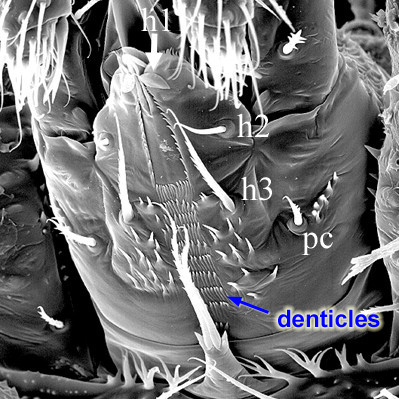 narrow, in deep trough; epistomegnathotectum:
(= epistome, tectum) an often membranous dorsal projection of the anterior margin of the basis capitulum in Mesostigmata; often diagnostic at family-, genus- or species-levels; also often difficult to see without high magnification and good optics.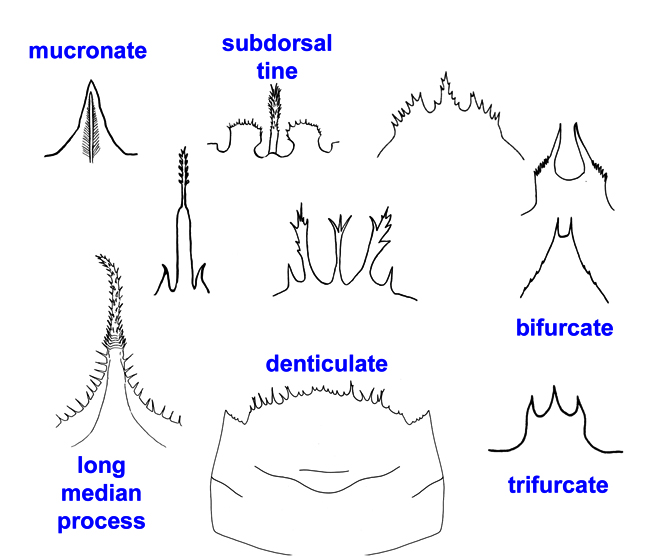 convex, smooth; movable chelachela:
a pincer, as in a pseudoscorpion's distal pedipalpal segments.
of female unidentate.............................. Proctogastrolaelaps
- Ventralventral:
relating to the lower or under side; opposed to dorsal.
area not sclerotized, only small anal shield with 3 circumanal setaecircumanal setae:
in Mesostigmata, the three setae (postanal and pair of peranal) setae surrounding the anal opening. present.............................. 3
Fixed chelachela:
a pincer, as in a pseudoscorpion's distal pedipalpal segments.
of female and nymphs with pointed or rounded flange-like projection distally; leg IV with 1 or 2 erect macrosetae on telotarsustelotarsus:
(= acrotarsus, apicotarsus) a distal division of the tarsus. (pd2, +/- ad2); 3rd pair of sternal poressternal pores:
(designations = stp or iv) in Mesostigmata, the lyrifissures in the intercoxal region; stp1-2 often occur on the sternal shield and stp3 is associated with the metasternal setae on a combined sternal-metasternal shield, on a separate sternal platelet, or in soft cuticle.
absent.............................. Mucroseius
- Fixed chelachela:
a pincer, as in a pseudoscorpion's distal pedipalpal segments.
without distaldistal:
towards the free end of an appendage.
flange-like projection; leg IV usually without macrosetae; 3rd pair of sternal poressternal pores:
(designations = stp or iv) in Mesostigmata, the lyrifissures in the intercoxal region; stp1-2 often occur on the sternal shield and stp3 is associated with the metasternal setae on a combined sternal-metasternal shield, on a separate sternal platelet, or in soft cuticle.
usually present.............................. 4
Dorsaldorsal:
relating to the upper or back side; opposed to ventral.
shield of adults with pair of deep midlateral incisions, lacking setae z3 on podonotalpodonotal:
relating to the dorsal podosoma, the region of the idiosoma over the legs.
region; movable chelachela:
a pincer, as in a pseudoscorpion's distal pedipalpal segments.
with 0 or 1 tooth; female without metasternal plates.............................. 6
- Dorsaldorsal:
relating to the upper or back side; opposed to ventral.
shield of adults entireentire:
a shield or sclerite with a continuous margin without incisions.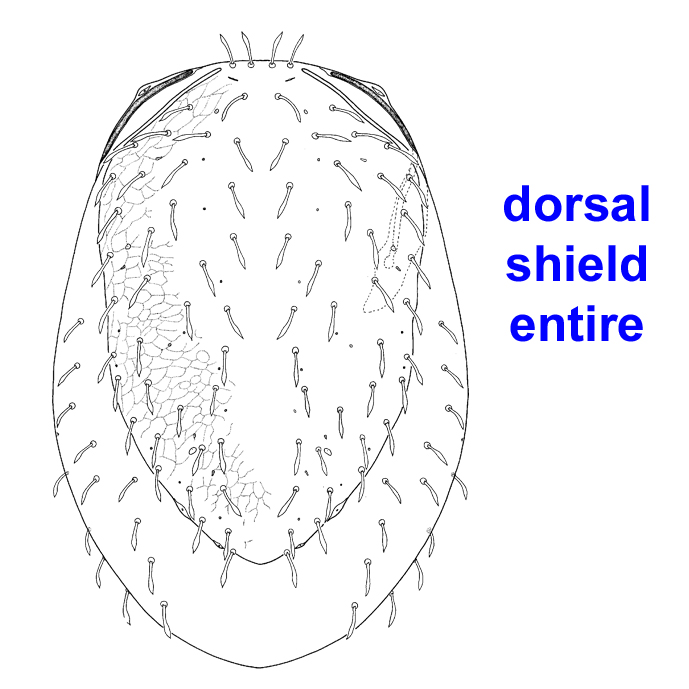 , usually with setae z3 on podonotalpodonotal:
relating to the dorsal podosoma, the region of the idiosoma over the legs.
region; movable chelachela:
a pincer, as in a pseudoscorpion's distal pedipalpal segments.
with 3 teeth; with or without metasternal plates.............................. 5
Adults with 7–13 pairs of marginal (r–R) setae on soft lateral cuticle (rarely fewer if some r–R setae lacking); female with 14–15 pairs of setae on opisthonotalopisthonotal:
dorsal opisthosoma.
region of dorsaldorsal:
relating to the upper or back side; opposed to ventral.
shield and lacking metasternal plates (except in Orolaelaps).............................. Melichares
- Adults with 1–4 pairs of posteriorposterior:
the back part of the body or towards that region in comparison, e.g., 'posterior to'.
marginal (R) setae on soft ventro-lateral cuticle, all others on edge of dorsaldorsal:
relating to the upper or back side; opposed to ventral.
shield; female with 18–22 pairs of setae on opisthonotalopisthonotal:
dorsal opisthosoma.
region of dorsaldorsal:
relating to the upper or back side; opposed to ventral.
shield; female usually with metasternal plates.............................. Proctolaelaps
Movable chelachela:
a pincer, as in a pseudoscorpion's distal pedipalpal segments.
unidentate; female with 1st pair of sternal setaesternal setae:
in Mesostigmata, the five pairs of setae in the intercoxal region designated st1-5; st1-3 are present in the larva and usually are borne on a sternal shield in the adult female; st4, the metasternal setae, are added in the deutonymph, often are borne on metasternal platelets, and sometimes on the sternal shield; st5, the genital setae, are added in the protonymph and usually borne on or are inserted laterad the epigynal shield in the adult female.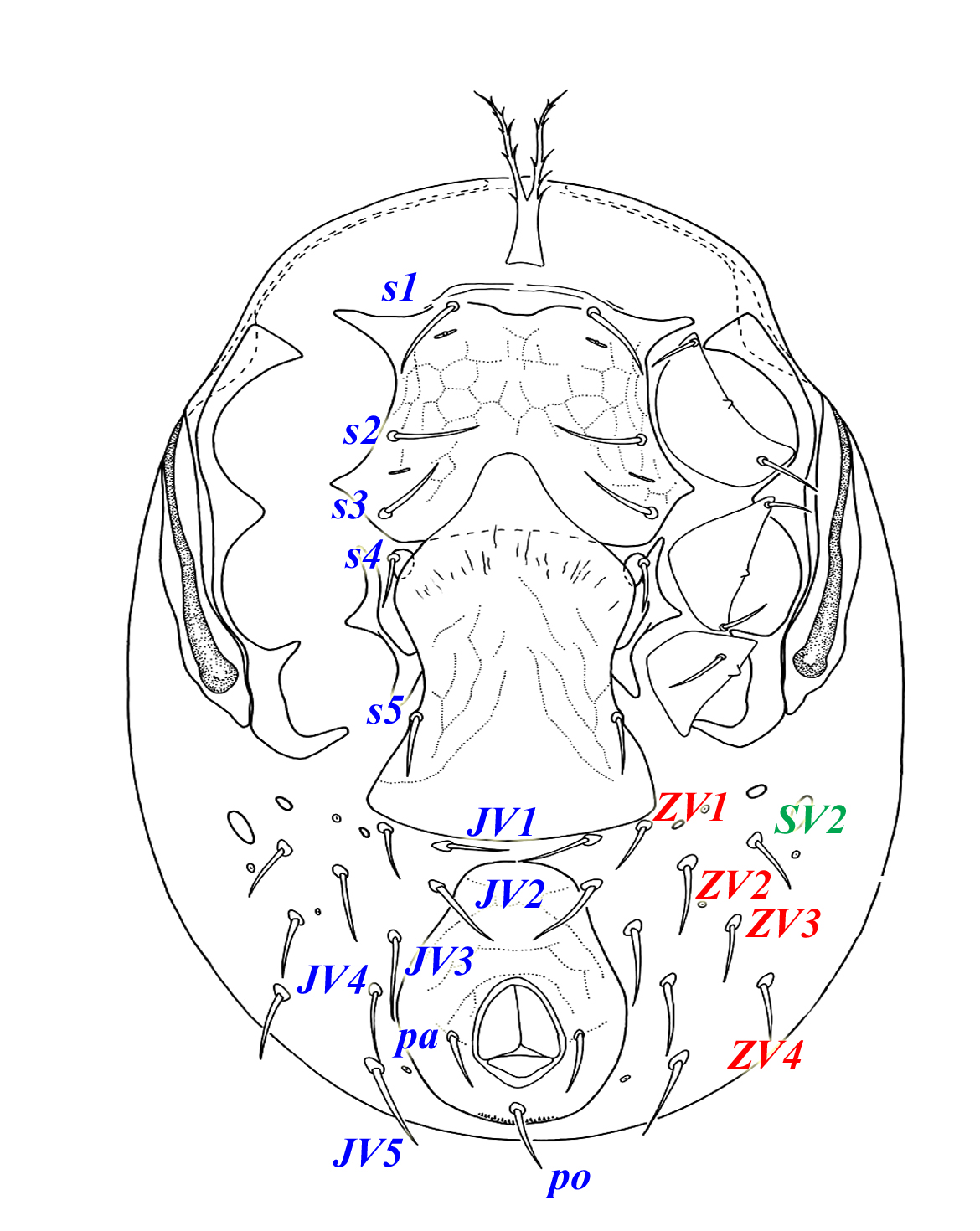 on soft cuticle in front of sternal shieldsternal shield:
a shield in the anterior intercoxal region of parasitiform mites that bears one or more pairs of sternal setae.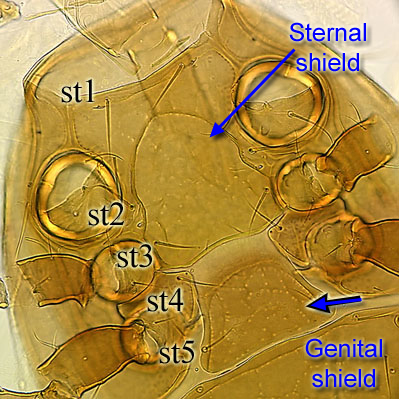 ; male with separate ventralventral:
relating to the lower or under side; opposed to dorsal.
& anal shields; male leg II with tarsal seta pv1 unmodified.............................. Xanthippe
- Movable chela edentateedentate:
with out teeth; usually referring to chelicerae.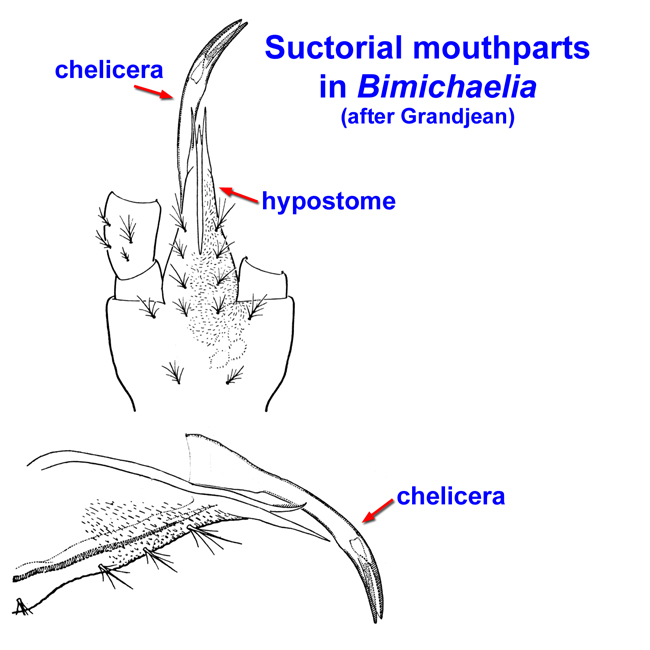 ; female with first pair of sternal setaesternal setae:
in Mesostigmata, the five pairs of setae in the intercoxal region designated st1-5; st1-3 are present in the larva and usually are borne on a sternal shield in the adult female; st4, the metasternal setae, are added in the deutonymph, often are borne on metasternal platelets, and sometimes on the sternal shield; st5, the genital setae, are added in the protonymph and usually borne on or are inserted laterad the epigynal shield in the adult female. on sternal shieldsternal shield:
a shield in the anterior intercoxal region of parasitiform mites that bears one or more pairs of sternal setae.; male usually with consolidated ventrianal shieldventrianal shield:
in Mesostigmata, a ventral shield bearing the anal opening, circum anal setae, and one or more pairs of ventral setae or pores (lyrifissures) [see anal shield]; maybe rather narrow or very broad and covering most of the gaster.; male leg II with apicalapical:
at the tip of a structure
tarsal seta pv–1 slightly to conspicuously thickened.............................. 7
Tibiaetibia:
(pl. tibiae) the leg segment between the genu and the tarsus. III and IV with 9 and 10 setae respectively (pl2 present); dorsaldorsal:
relating to the upper or back side; opposed to ventral.
shield with setae s6; female with hyaline anterior margin of epigynialepigynal:
(also epigynial) of or relating to the female genital opening or a shield protecting it.
shield rounded, and with genital setae on lateral edges of this shield; male tarsustarsus:
(pl. tarsi) the subdistal leg segment between the tibia and the pretarsus (apotele).
II with seta pv–1 knob- or spine-likespine-like:
a seta or other structure that resembles a thorn or spine; spiniform.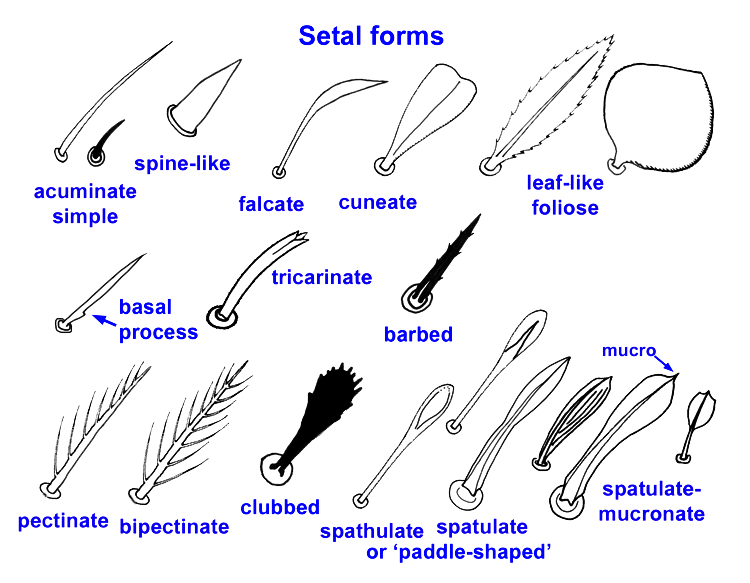 , and tarsustarsus:
(pl. tarsi) the subdistal leg segment between the tibia and the pretarsus (apotele).
III with 1–3 setae (always av2) knob-like; male spermatodactylspermatodactyl:
(also spermadactyl) the 'sperm finger' on the chelicerae of male dermanyssine Mesostigmata used to transfer sperm to the secondary sperm system in the female; spermatodactyls take various forms, from simple finger-like processes to very long, contorted structures. 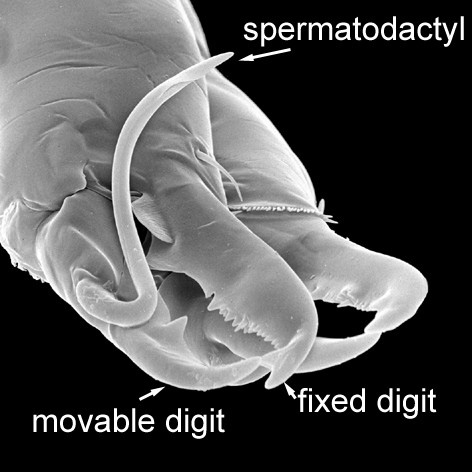 directed anteriorly.............................. Tropicoseius
- Tibiaetibia:
(pl. tibiae) the leg segment between the genu and the tarsus. III and IV with 8 and 9 setae respectively (pl2 absent); dorsaldorsal:
relating to the upper or back side; opposed to ventral.
shield lacking setae s6; female with hyaline anterior margin of epigynialepigynal:
(also epigynial) of or relating to the female genital opening or a shield protecting it.
shield usually truncated or emarginated, and with genital setae on soft cuticle flanking this shield; male tarsustarsus:
(pl. tarsi) the subdistal leg segment between the tibia and the pretarsus (apotele).
II with seta pv1 but slightly thickened, and tarsustarsus:
(pl. tarsi) the subdistal leg segment between the tibia and the pretarsus (apotele).
III without modified setae; male spermatodactylspermatodactyl:
(also spermadactyl) the 'sperm finger' on the chelicerae of male dermanyssine Mesostigmata used to transfer sperm to the secondary sperm system in the female; spermatodactyls take various forms, from simple finger-like processes to very long, contorted structures. directed posteroventrally.............................. Rhinoseius
Author: David E. Walter
Content last updated Sept. 2006, unless indicated otherwise
Lucid key player updated Sept. 2025
idtools.org