t
Iphiseius Berlese
Superorder Parasitiformes » Order Mesostigmata » Suborder Monogynaspida » Infraorder Gamasina » Hyporder Dermanyssiae » Superfamily Phytoseioidea » Family Phytoseiidae » Subfamily Amblyseiinae » Genus Iphiseius
Monotypicmonotypic:
(=monobasic) a taxon based on a single representative or type, e.g., a genus with only one known species.
= I. degenerans Berlese (= martigellus El-Badry)
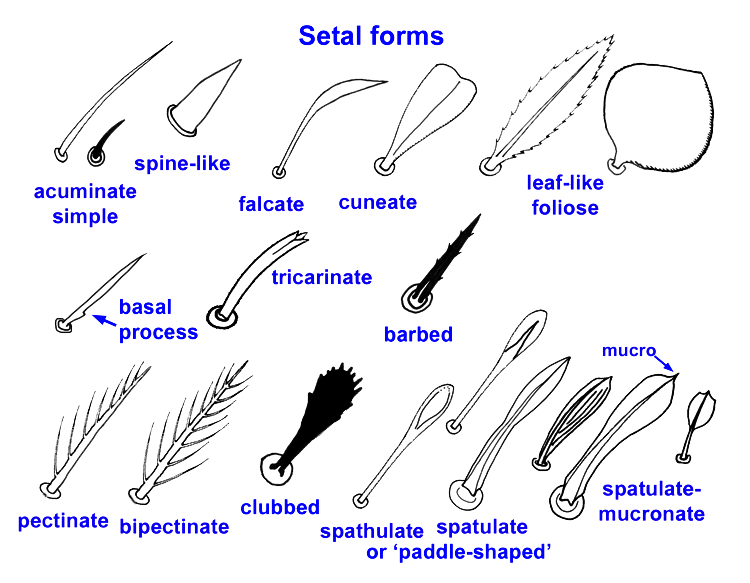 , including r3 and R1
Phytoseiinae and Typhlodrominae have either or both of setaeseta:
(pl. setae, from L. = bristle) cuticular process composed of a hollow shaft (sometimes filled with a refractive material) produced from a membranous socket (the alveolus); the hair-like, spine-like, branched or variously expanded structures on the surfaces of the legs and body. Most setae function as mechanoreceptors, but others (e.g., solenidia) are chemoreceptors or have unknown or ambiguous functions. z3 and s6. The most similar Amblyseiinae are members of the genus Euseius, but they are not as heavily sclerotized and brown in color and they have an entireentire:
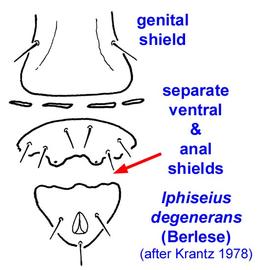
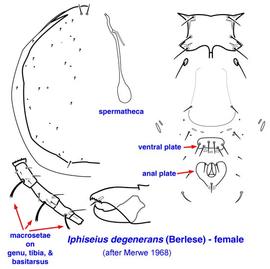
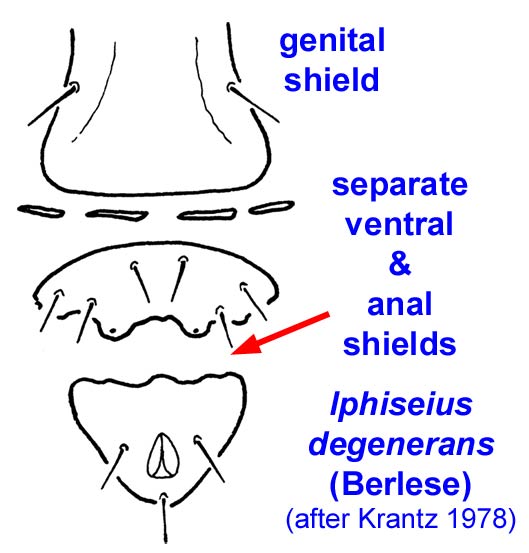
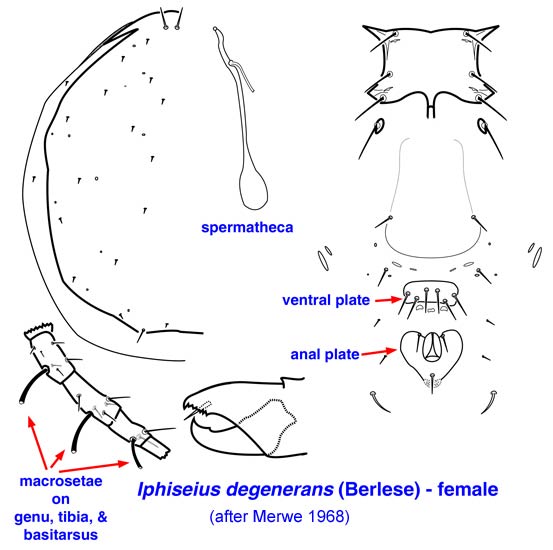
a shield or sclerite with a continuous margin without incisions.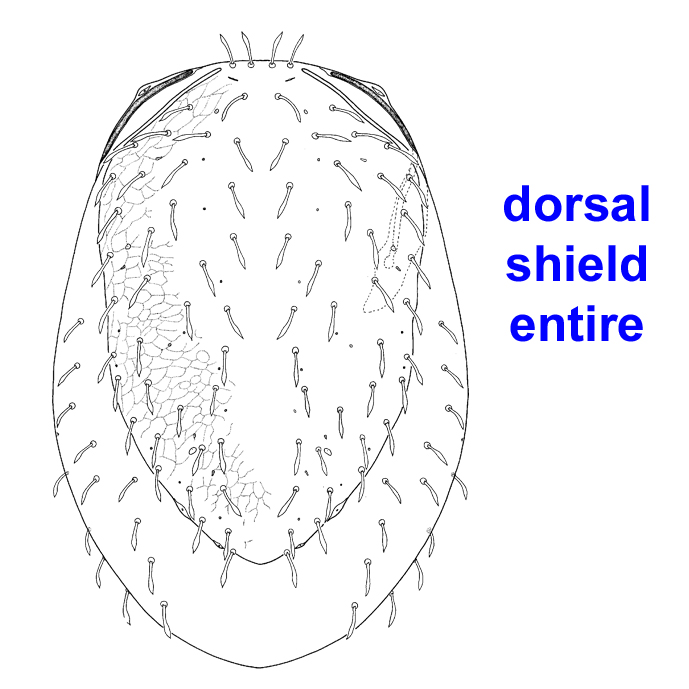 (typically vase-shaped) ventrianal shieldventrianal shield:
in Mesostigmata, a ventral shield bearing the anal opening, circum anal setae, and one or more pairs of ventral setae or pores (lyrifissures) [see anal shield]; maybe rather narrow or very broad and covering most of the gaster.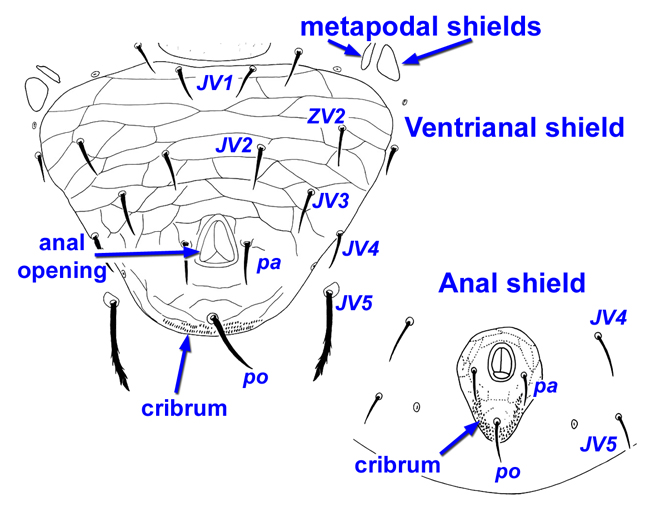 . Some individuals of Ricoseius loxocheles De Leon have a narrowly divided ventrianal shieldventrianal shield:
in Mesostigmata, a ventral shield bearing the anal opening, circum anal setae, and one or more pairs of ventral setae or pores (lyrifissures) [see anal shield]; maybe rather narrow or very broad and covering most of the gaster., but they also have mostly very long setaeseta:
(pl. setae, from L. = bristle) cuticular process composed of a hollow shaft (sometimes filled with a refractive material) produced from a membranous socket (the alveolus); the hair-like, spine-like, branched or variously expanded structures on the surfaces of the legs and body. Most setae function as mechanoreceptors, but others (e.g., solenidia) are chemoreceptors or have unknown or ambiguous functions. and 3 pairs of r–R (r3, r5, R1) setaeseta:
(pl. setae, from L. = bristle) cuticular process composed of a hollow shaft (sometimes filled with a refractive material) produced from a membranous socket (the alveolus); the hair-like, spine-like, branched or variously expanded structures on the surfaces of the legs and body. Most setae function as mechanoreceptors, but others (e.g., solenidia) are chemoreceptors or have unknown or ambiguous functions. in the soft cuticle alongside the shield.
Iphiseius degenerans may have originated in Africa but is used in biological control and is now found in many parts of the world.
Author: David E. Walter
Content last updated Sept. 2006, unless indicated otherwise
Lucid key player updated Sept. 2025
idtools.org