test
Nothrina van der Hammen, 1982
Superorder Acariformes » Order Sarcoptiformes » Suborder Oribatida » Infraorder Desmonomata » Hyporder Nothrina
superfamily: Crotonioidea
nothroid oribatid mites
low
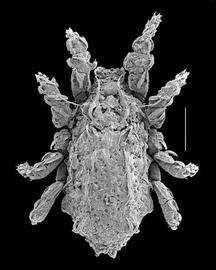
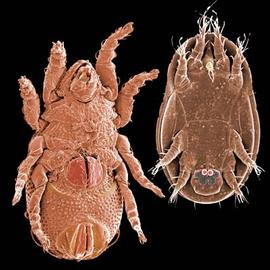
Members of the Cohort Nothrina are not of great quarantine importance. Some species are aquatic or subaquatic and may be found in aquaria, sphagnum, and similar products. Others are common in wet forest litter, mosses, and in lichens and other epiphytes on trees and shrubs.
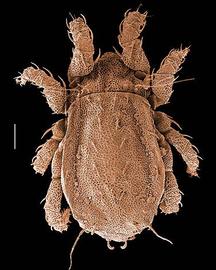
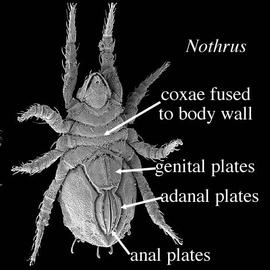
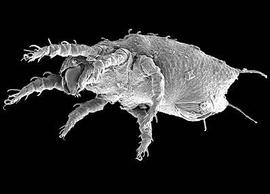
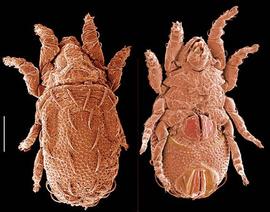
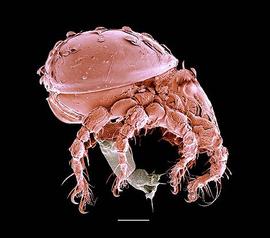
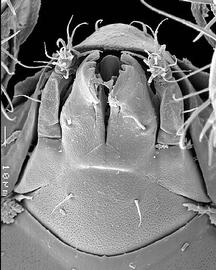
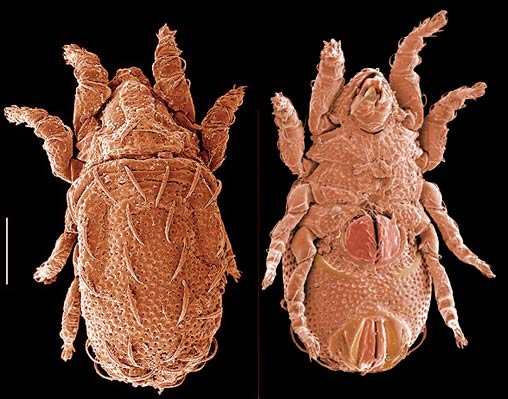
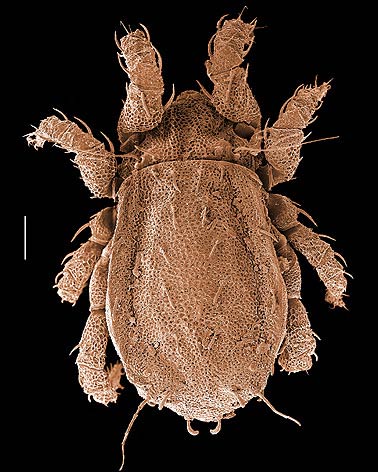
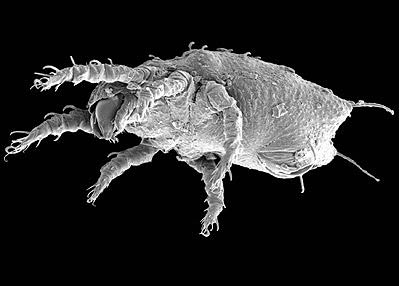
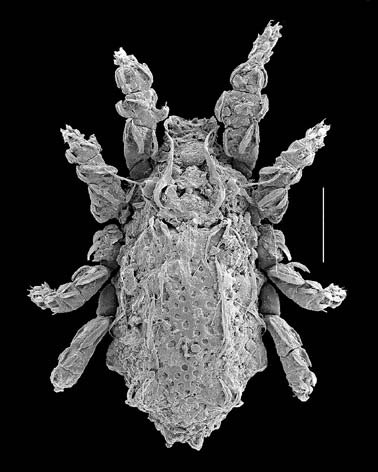
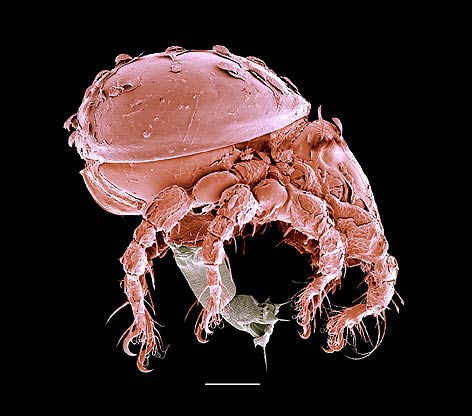
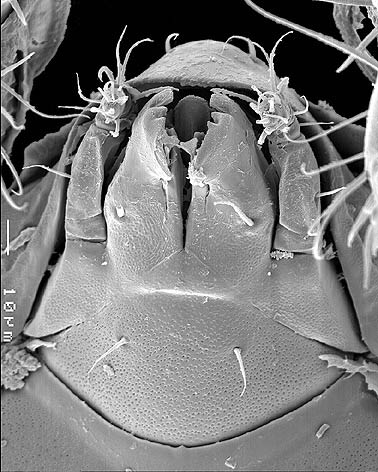
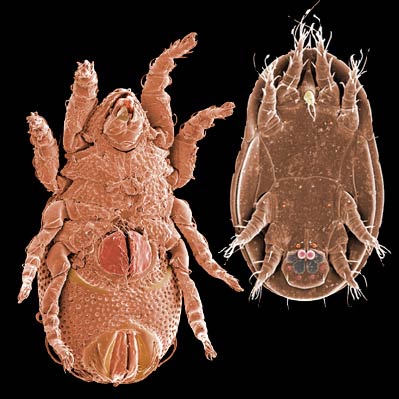
Black, brown, reddish, beige, yellowish to pale holoid oribatid mites with the capitulumgnathosoma:
(= capitulum) the anteriormost part of a mite or ricinuleid, composed of the cheliceral and pedipalpal segments and separated from the body (idiosoma) by a ring of soft cuticle.
withdrawn within a camerostomecamerostome:
a recess under the rostral tectum that allows retraction of the chelicerae and palps of oribatid mites and that is sealed by the subcapitulum when retracted; a deep recess containing the gnathosoma in Uropodina.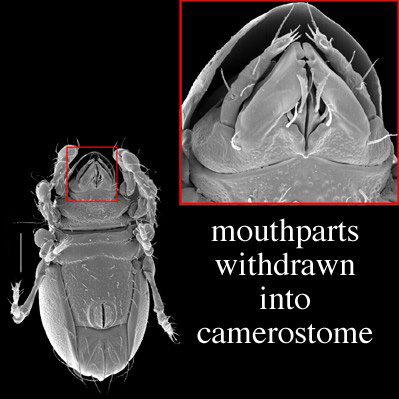 . Ventral plateventral plate:
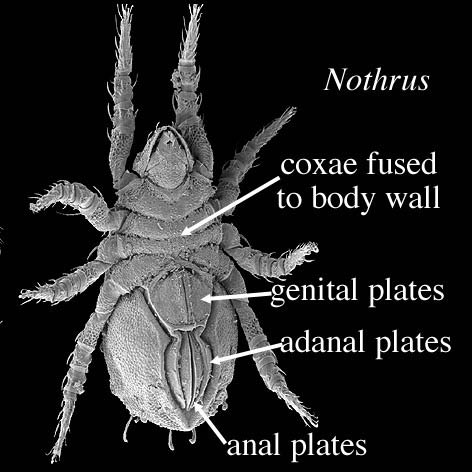
a sclerotized plate covering the ventral region of the opisthosoma in brachypyline oribatid mites and separated from the notogaster by the circumgastric scissure; also any plate in the ventral region.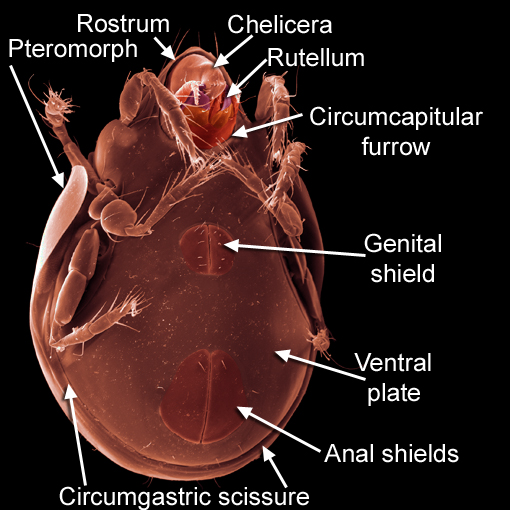 sometimes incised (Nanhermanniidae); discrete aggenital and adanal plates sometimes present; 3 pairs of genital papillaegenital papillae:
1-3 pairs of extrusible finger-like to button-like projections, usually retracted into in the genital vestibule of acariform mites; sometimes formed as sessile disks around the genital opening; thought to be osmoregulatory structures; modified or multiplied and dispersed over the body in many freshwater mites. Genital papillae are absent in the larva, but may be added ontogenetically: protonymphs have one pair, deutonymphs two pairs, and tritonymphs (and adults) three pairs. The tritonymphal pair of papillae is often lost. The serially homologous Claparède's organ is usually present in the larvae (and prelarvae) of mites exhibiting genital papillae in nymphs and adults (Oudeman's Rule).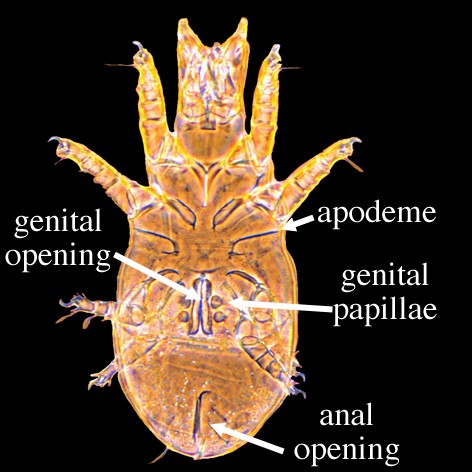 . Palps with 2–5 free segments. Opisthosomal glandsopisthosomal glands:
see oil glands.
present. Prodorsal trichobothriatrichobothrium:
(pl. trichobothria) (= bothridial sensillum) an often elaborately modified seta set in a cup-like base; forms include filiform, ciliate, pectinate or variously thickened or clubbed (bat-like to globose or capitate).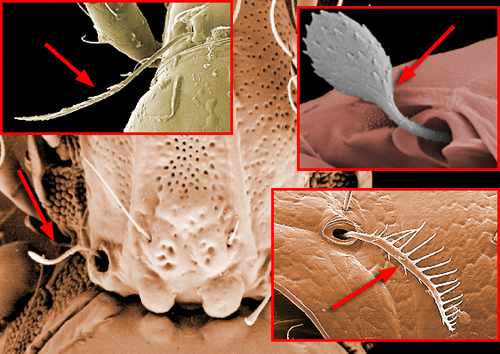 lost in some aquatic forms.
see Mixonomatides
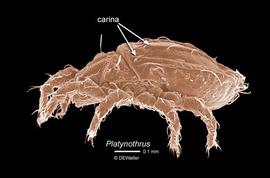
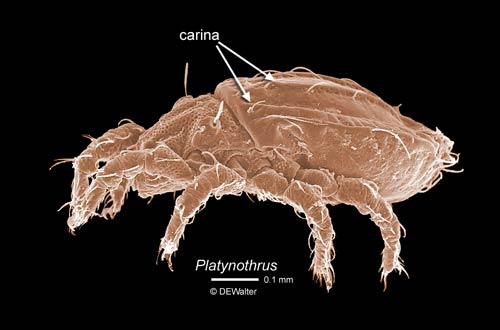
Nothrids, nanhermanniids, and some camisiids (Platynothrus) are characteristic of fairly mesic to wet forest litter, mosses, and bogs. Other camisiids (Camisia) and crotonioids are more characteristic of dry litter, bark and other arboreal habitats. Tryhypochthoniids can be found in dry (Tryhypochthonius, Archegozetes) or wet litter, and in fully aquatic habitats (Mucronothrus). Malaconothrids tend to be found in wet litter, moss and streams. Except in the Crotoniidae and Hermanniidae, most desmonomates are all female parthenogens. Hermanniids should probably be considered early derivative Brachypylina.
Author: David E. Walter
Content last updated Sept. 2006, unless indicated otherwise
Lucid key player updated Sept. 2025
idtools.org