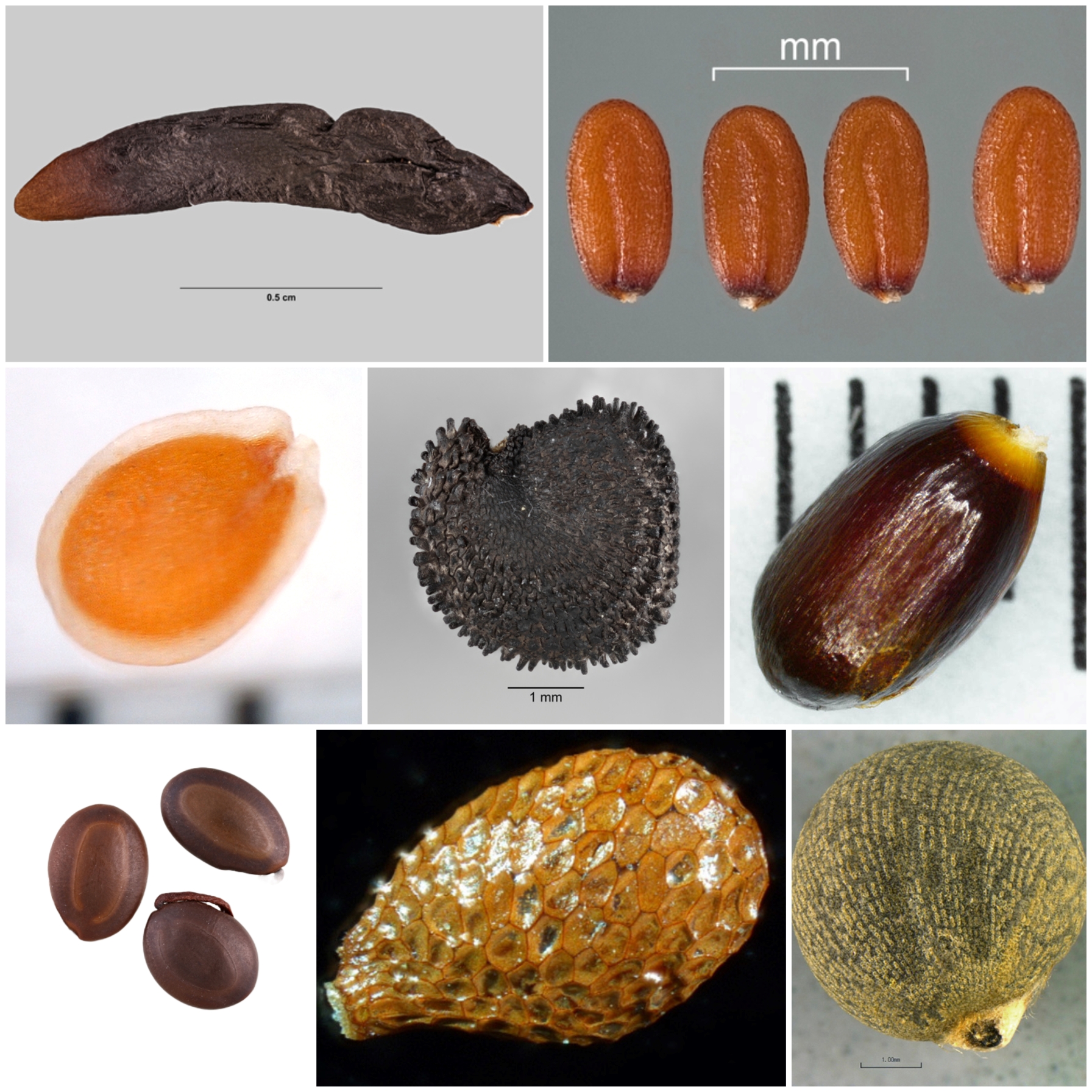
FruitsFruit:
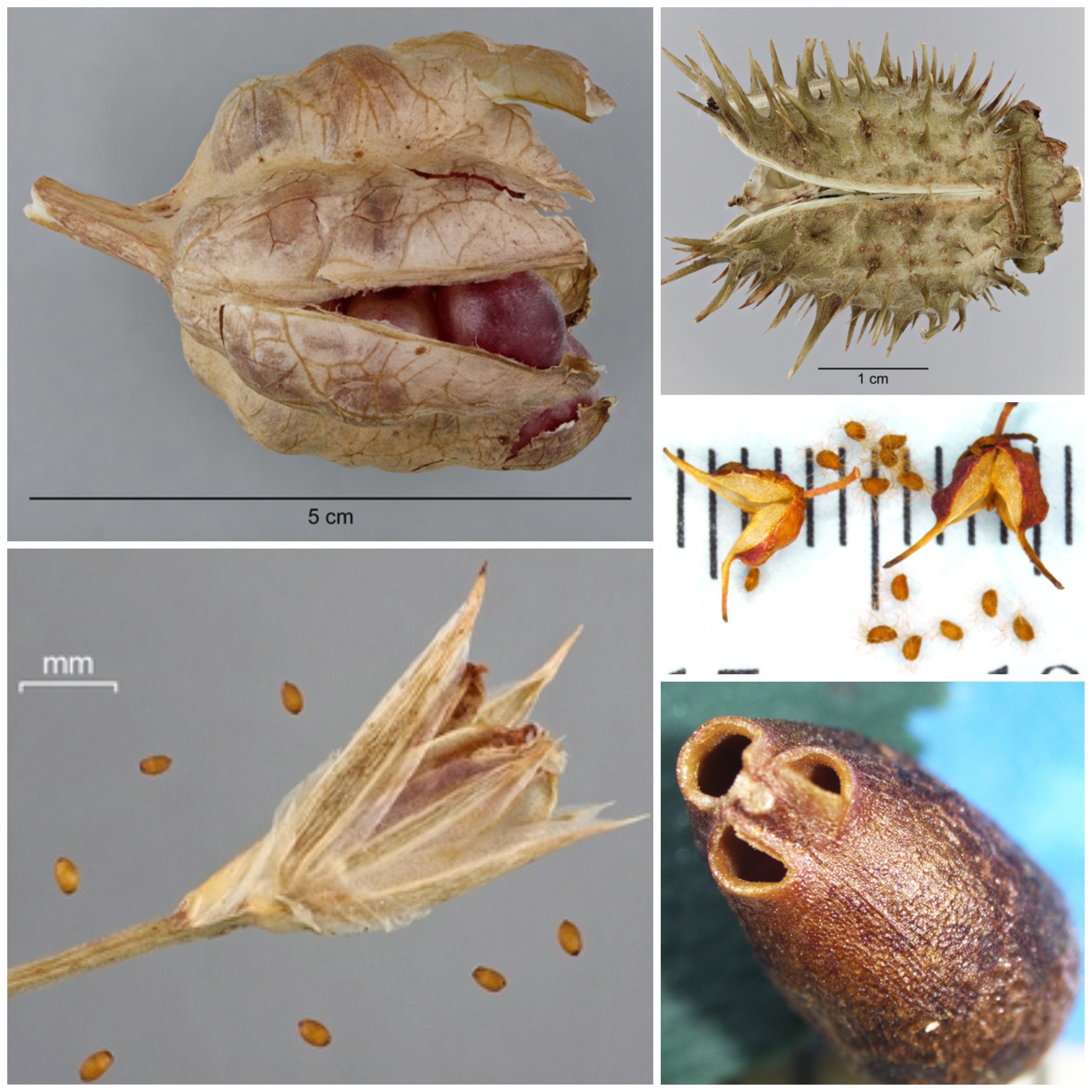
A mature ovary and any associated parts.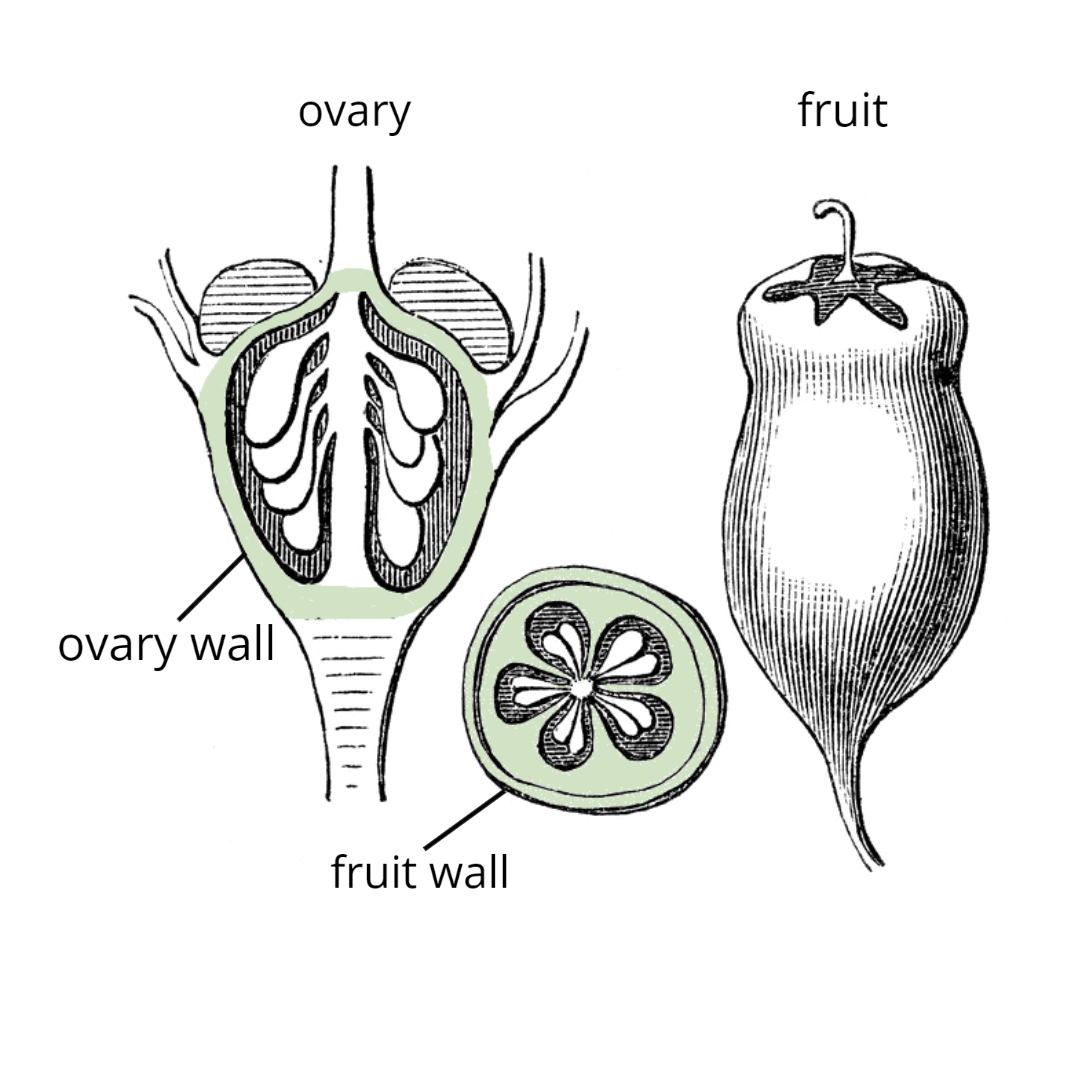 and seeds form both the bulk of agricultural commerce and are common contaminants. Determining if a specimen is a fruitFruit:
A mature ovary and any associated parts. or a seed is not always straightforward, especially if only fragments are found.
In angiospermsAngiosperms:
Vascular plants that produce flowers and have seeds enclosed within the fruit (mature ovary).
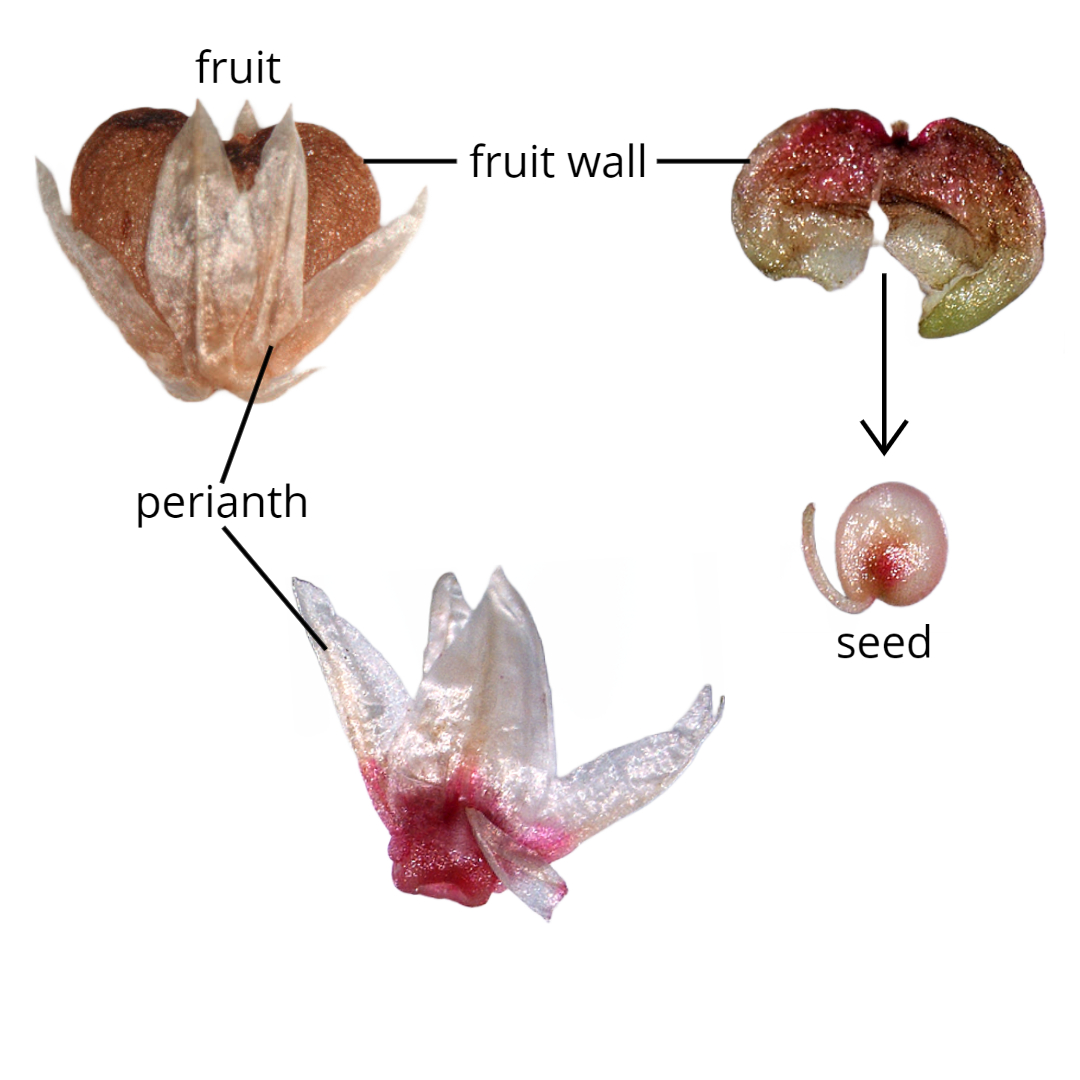
(flowering plants), seeds are enclosed within the fruitFruit:
A mature ovary and any associated parts. wall (pericarpPericarp:
Fruit wall; derived from the ovary wall.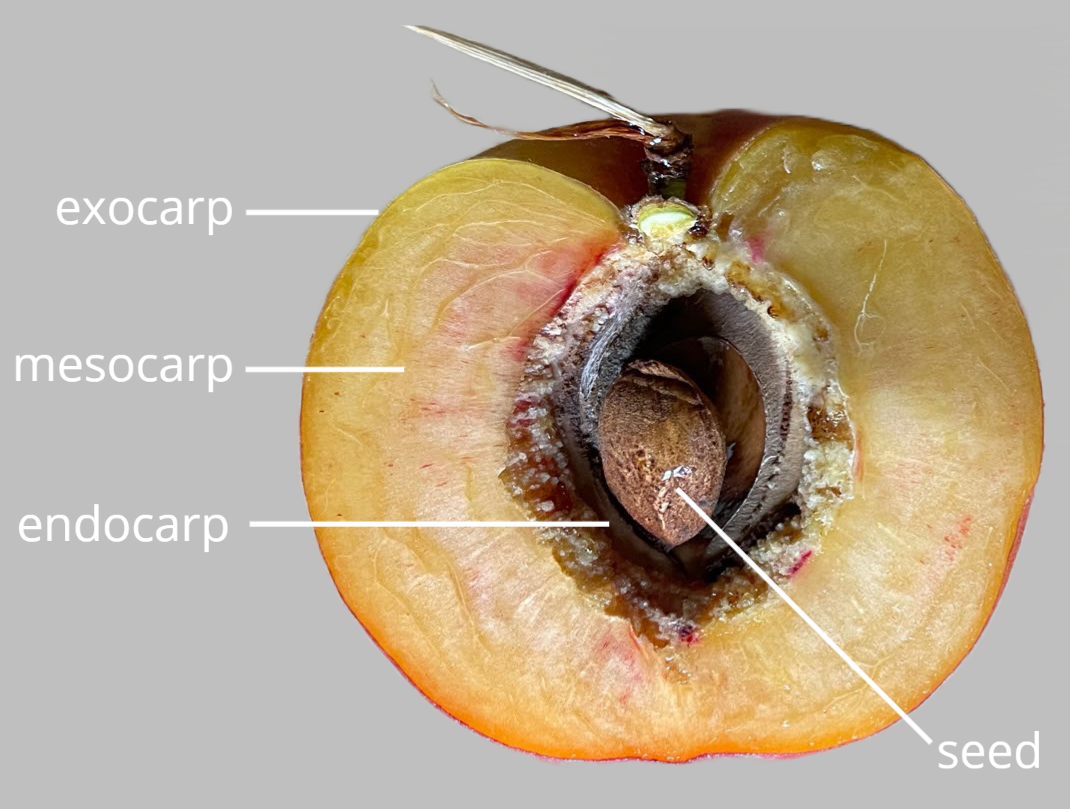 ) derived from the ovary wall. Each seed has an embryoEmbryo:
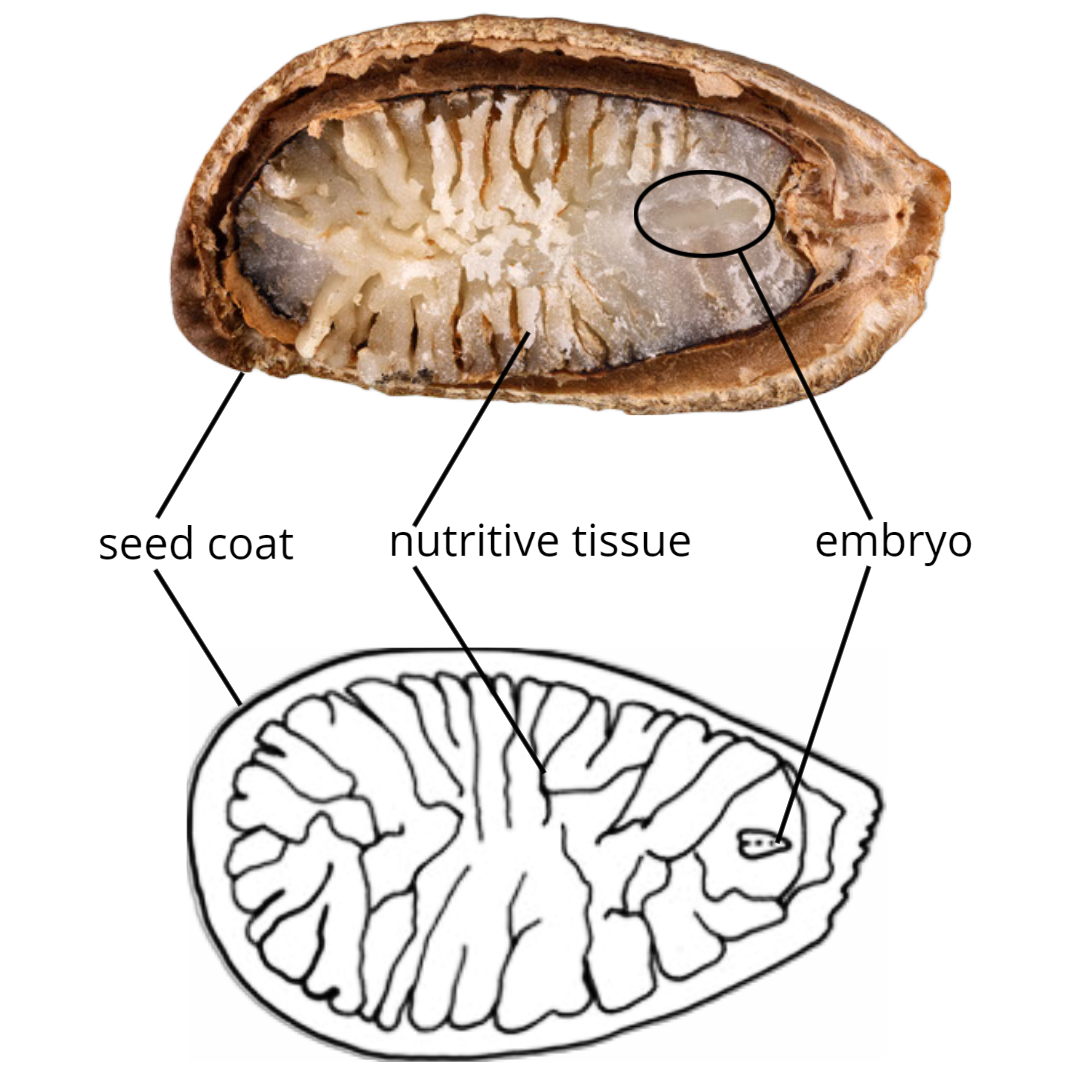
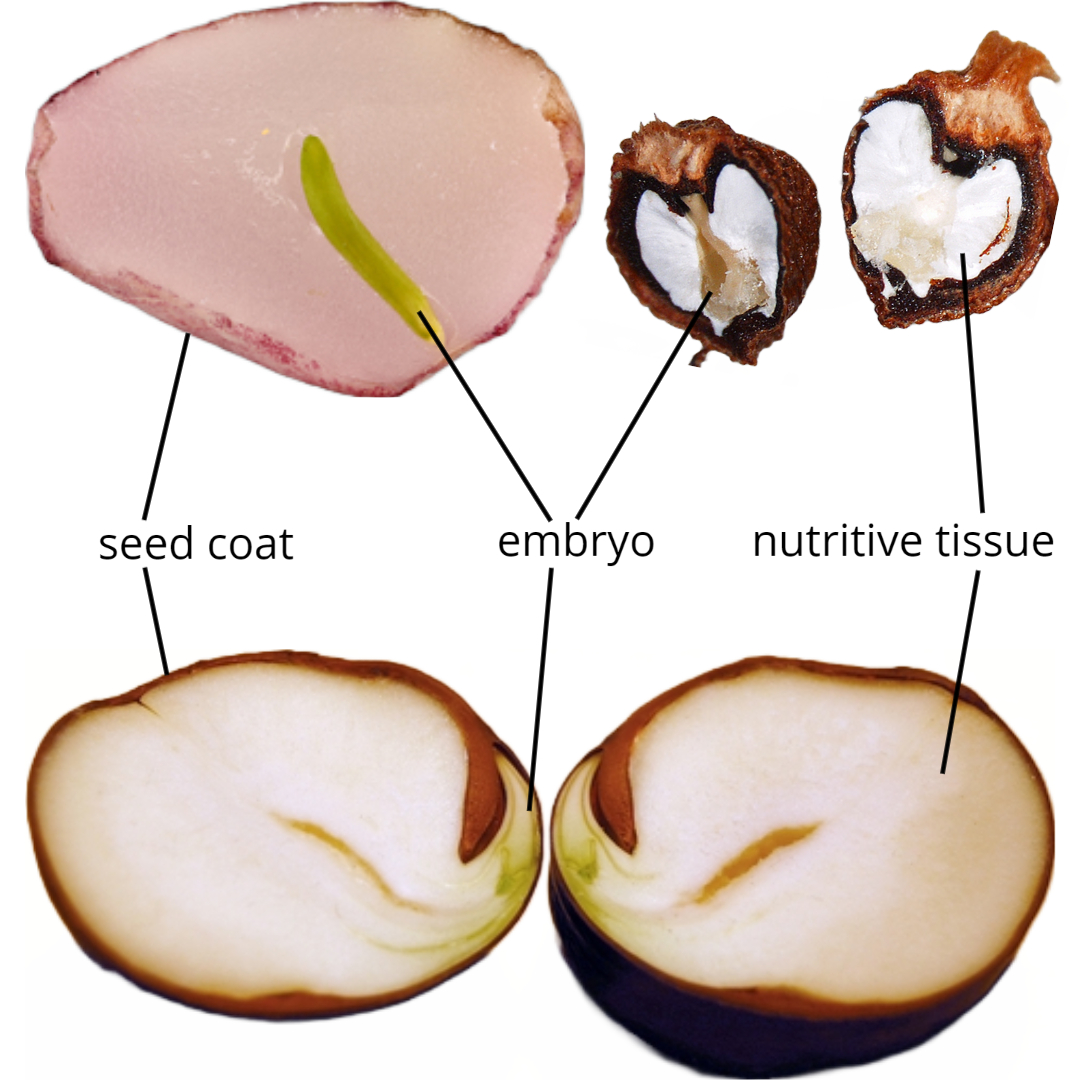
A rudimentary plant contained in a seed, usually consisting of a more or less differentiated axis and attached cotyledon(s).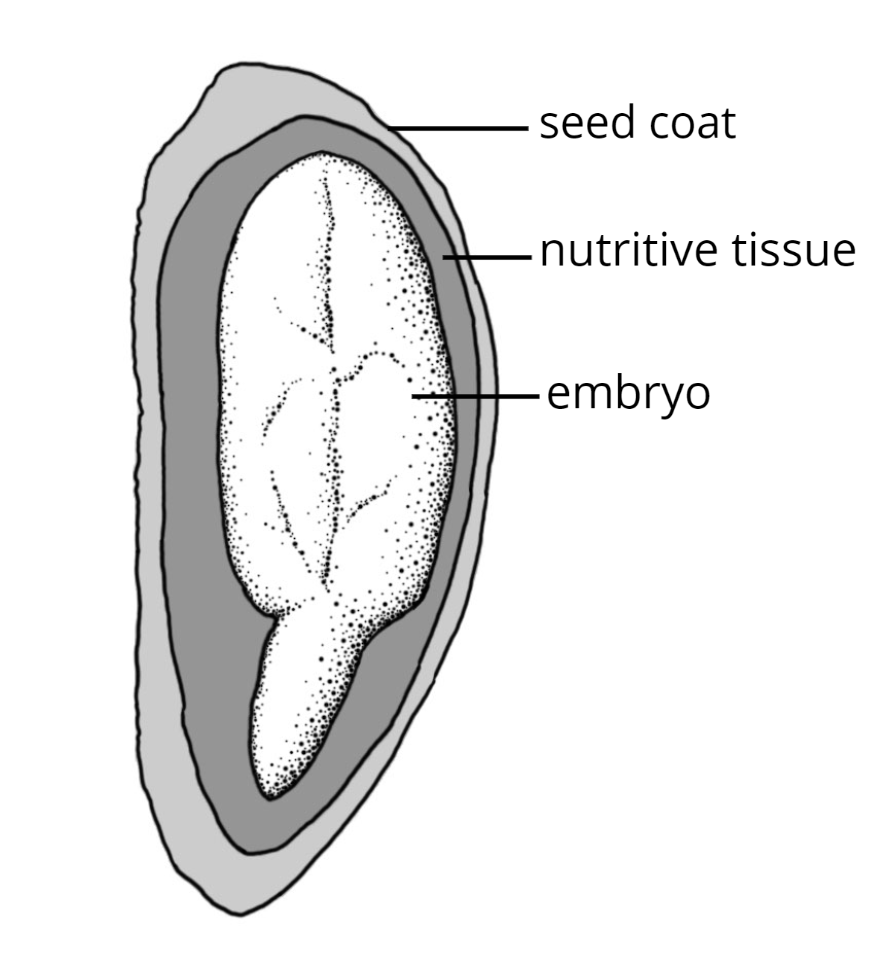 , nutritive tissue, and a protective coat; changes to the seed coatSeed coat:
The protective covering of a seed usually composed of the inner and outer integuments. Also called the testa.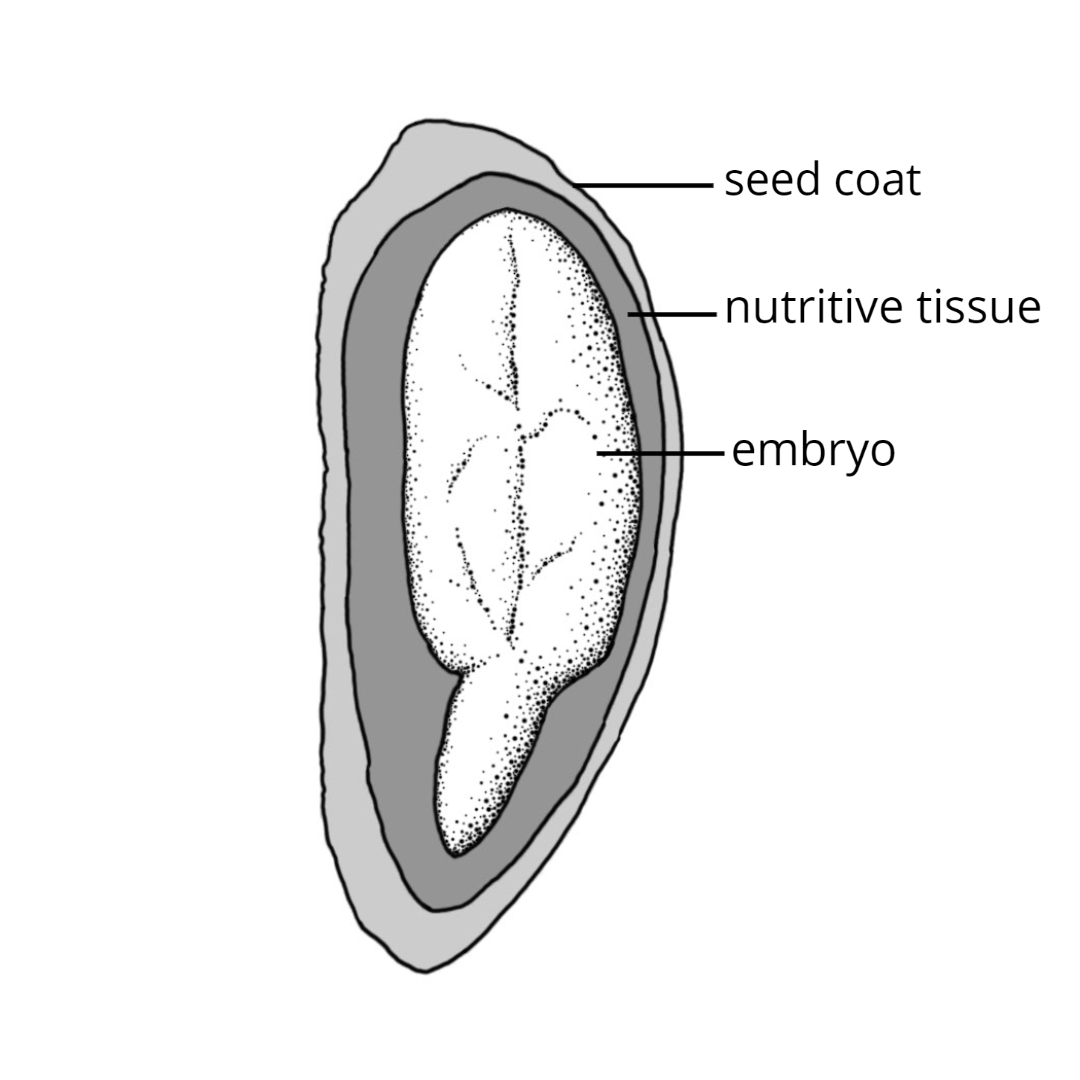 and fruitFruit:
A mature ovary and any associated parts. wall often aid dispersal and help with identification.
FruitsFruit:
A mature ovary and any associated parts. either open at maturity (dehiscent) to release seeds or they do not (indehiscent).
Most dry indehiscent fruitsFruit:
A mature ovary and any associated parts. are single-seeded and can closely resemble seeds, so determining whether a structure is a true seedTrue seed:
A mature ovule containing an embryo, seed coat (testa), and nutritive tissue, without any attached fruit structures.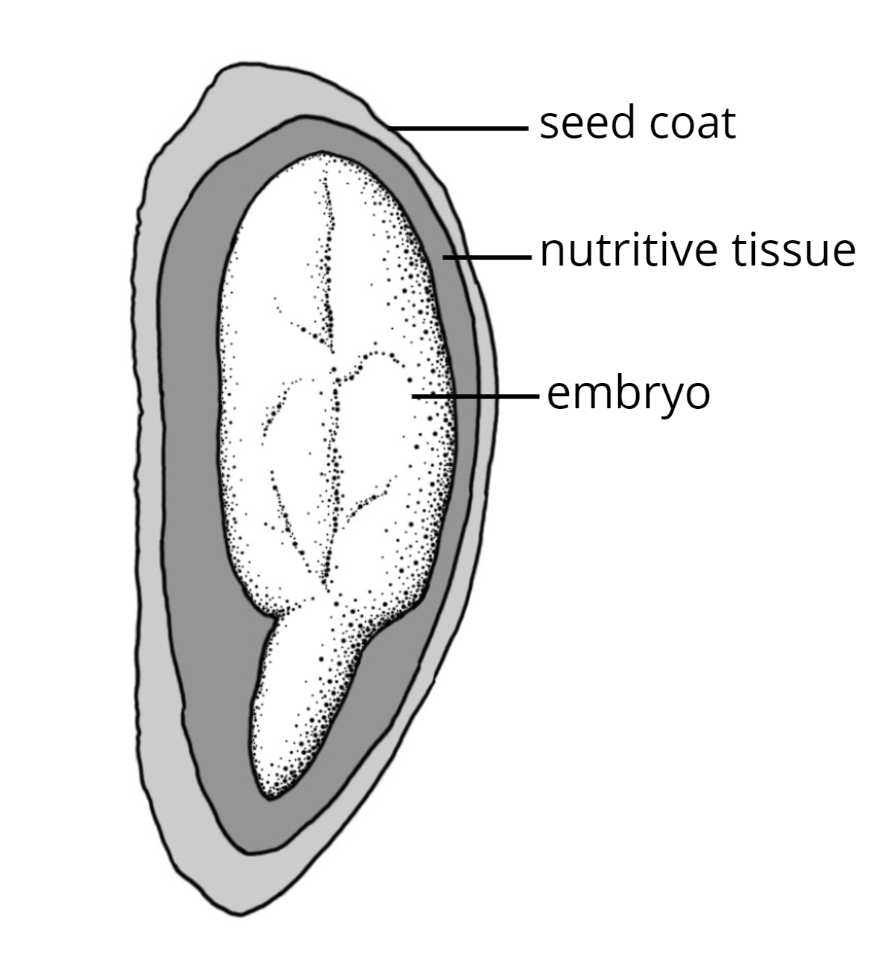 or a fruitFruit:
A mature ovary and any associated parts. is an important first step. The presence of an easily removed fruitFruit:
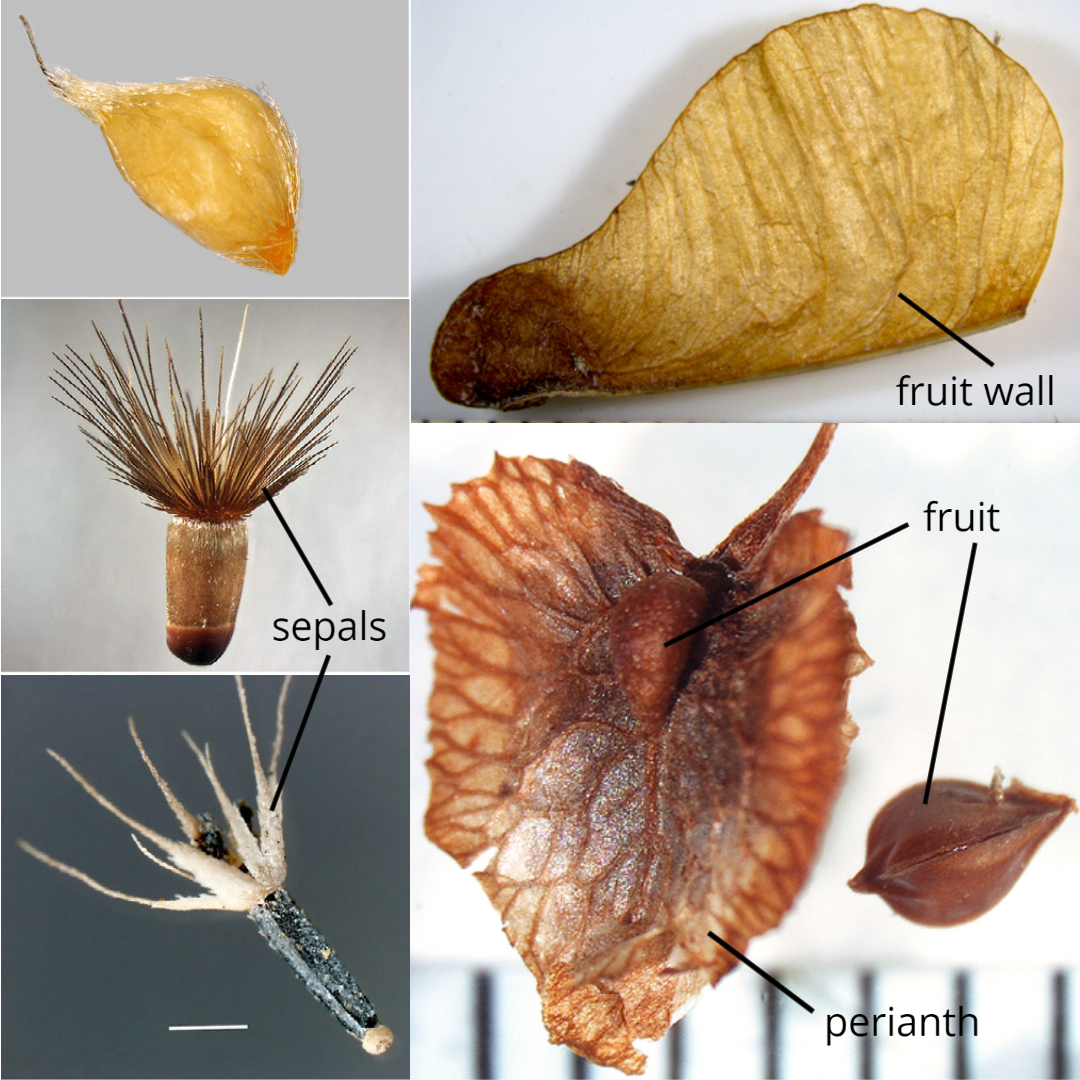
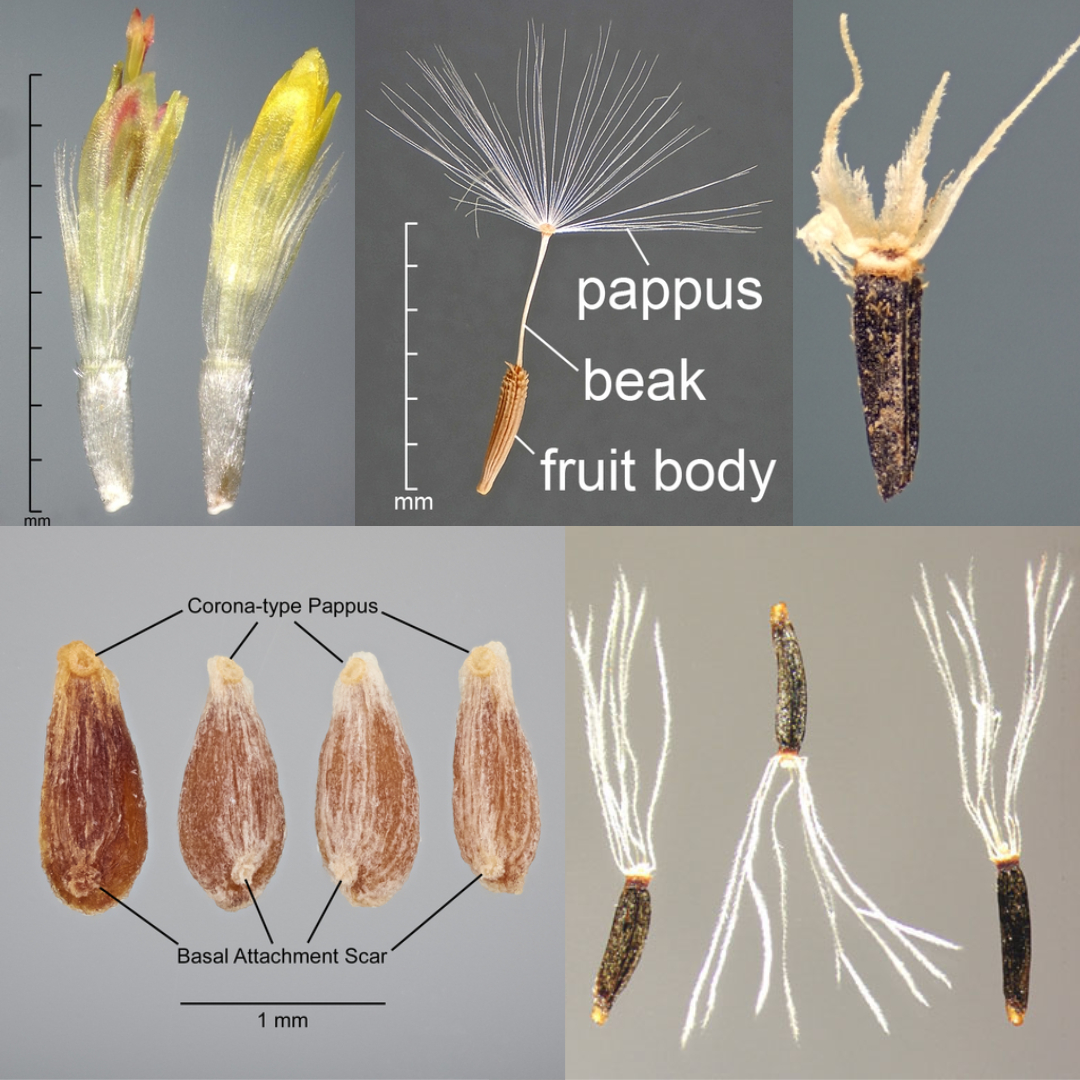
A mature ovary and any associated parts. wall revealing the seed inside or accessory structures, such as persistent bracts, scales, tufts of hairs, or wings, may help distinguish fruitsFruit:
A mature ovary and any associated parts. from seeds. Even though wings and hairs occur on seeds, they are more frequently found on fruitsFruit:
A mature ovary and any associated parts., since accessory structures usually develop from floral parts.
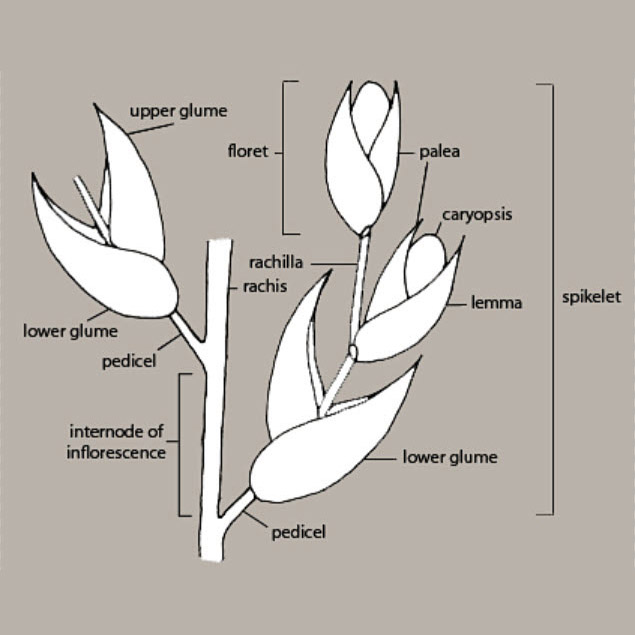
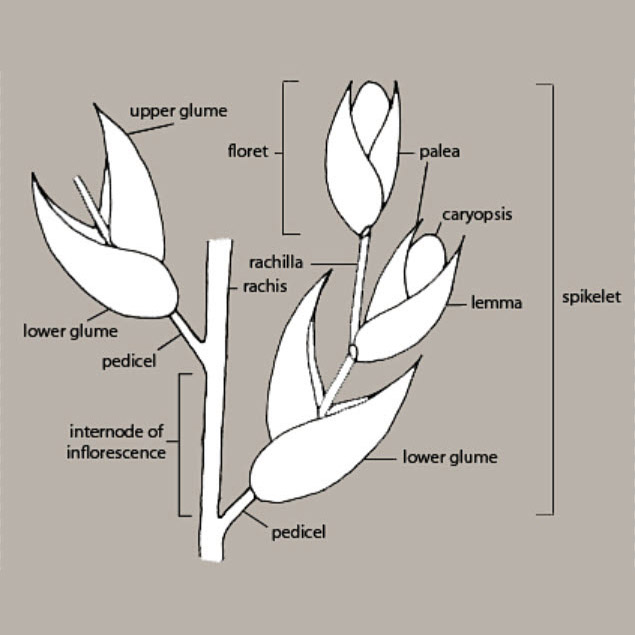
The most frequently intercepted types are caryopsesCaryopsis:
The single-seeded fruit or grain of the grass family (Poaceae); the fruit wall (pericarp) is united with the seed coat (testa).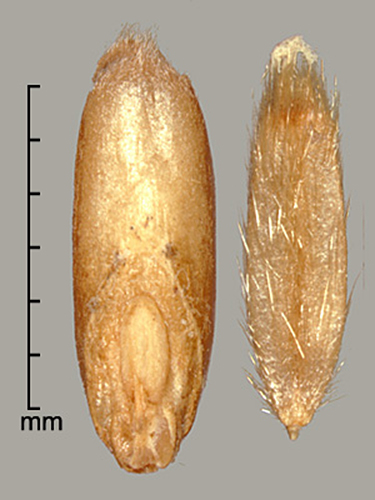 (grains) and achenesAchene:
A dry, hard, one-chambered, one-seeded indehiscent fruit, as in buckwheat (Fagopyrum) or sunflower (Helianthus). The fruit wall is not united with the seed coat.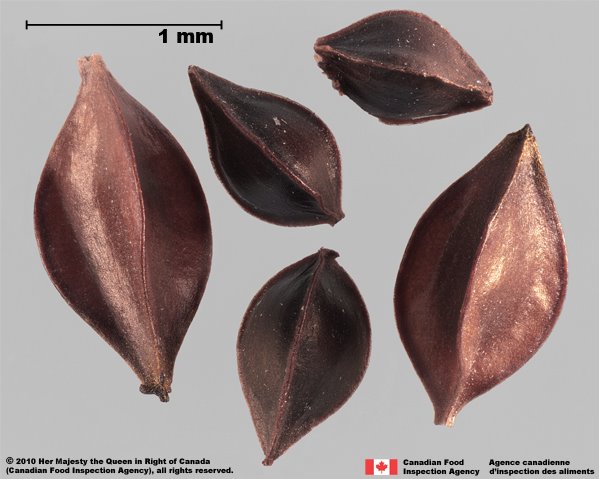 . CaryopsesCaryopsis:
The single-seeded fruit or grain of the grass family (Poaceae); the fruit wall (pericarp) is united with the seed coat (testa). are found only in the grass family (Poaceae), where the thin fruitFruit:
A mature ovary and any associated parts. wall is fully fused to the seed coatSeed coat:
The protective covering of a seed usually composed of the inner and outer integuments. Also called the testa.. In grasses, these fruitsFruit:
A mature ovary and any associated parts. are typically dispersed within modified bracts as floretsFloret:
A small flower in a clustered inflorescence (e.g., sunflower, grasses). In grasses, a floret consists of the lemma, palea, stamens, and pistil.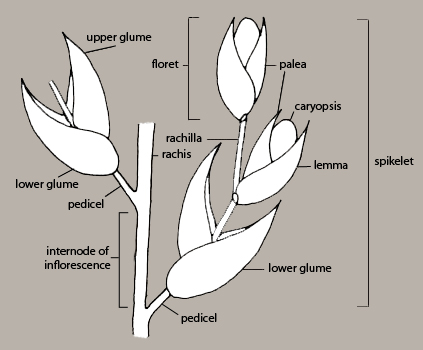 or spikeletsSpikelet:
One or more florets that are subtended by a pair of bracts called glumes. Spikelets are pedicellate if located on a pedicle and sessile if attached directly to the rachis. Often spikelets with single florets have remnants of a second floret, usually a lemma.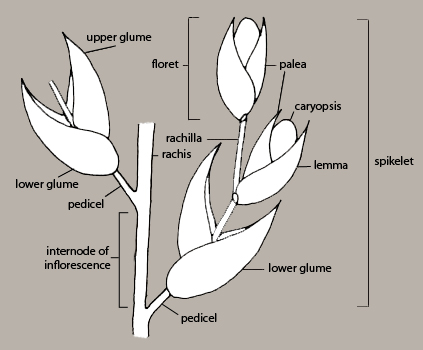 . For more on these dispersal units, see the detailed overview published by the International Seed Morphology Association.
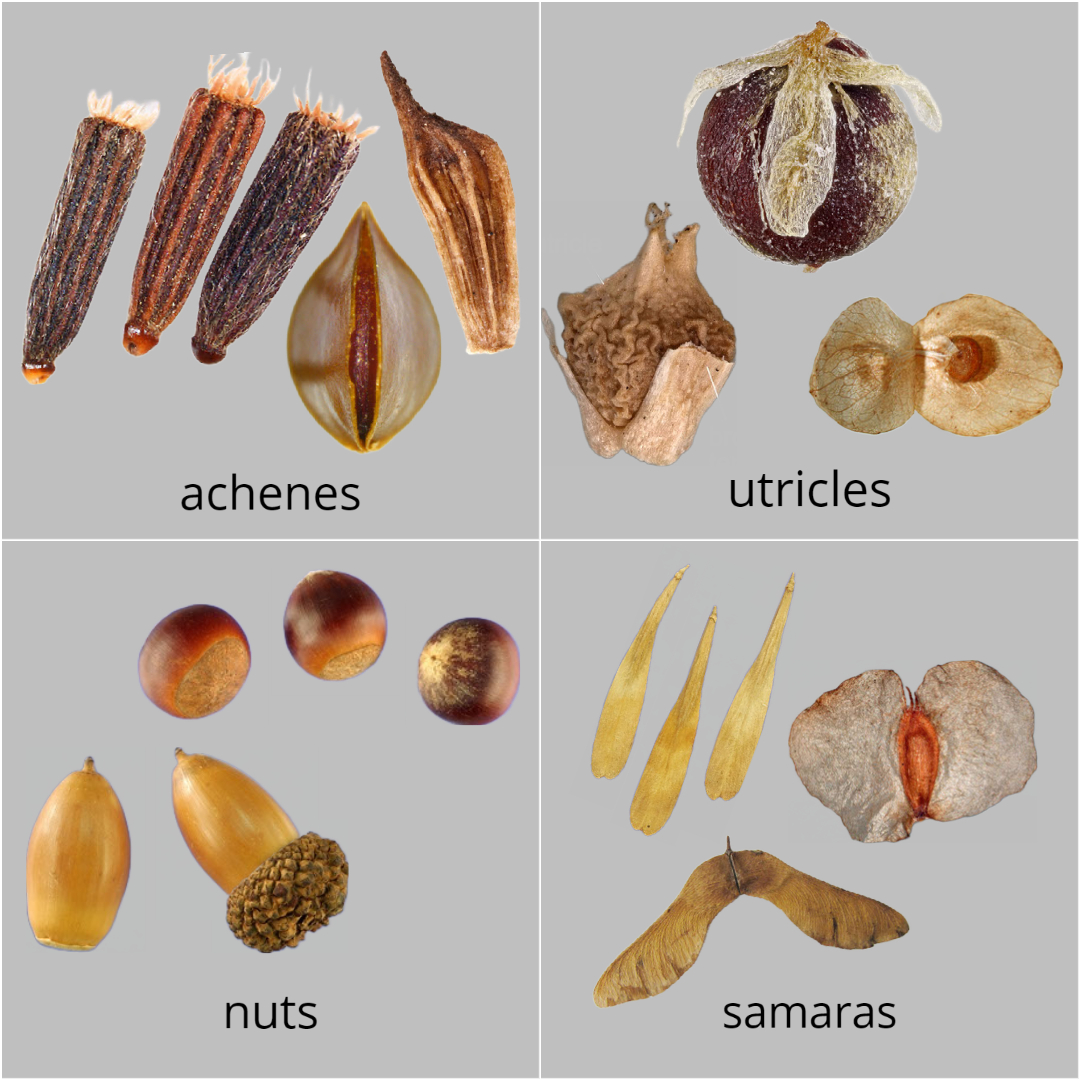
AchenesAchene:
A dry, hard, one-chambered, one-seeded indehiscent fruit, as in buckwheat (Fagopyrum) or sunflower (Helianthus). The fruit wall is not united with the seed coat. are dry, hard, indehiscent fruitsFruit:
A mature ovary and any associated parts. that contain a single seed within a one-chambered ovary, as seen in buckwheat (Fagopyrum) and sunflower (Helianthus). The fruitFruit:
A mature ovary and any associated parts. wall remains separate from the seed coatSeed coat:
The protective covering of a seed usually composed of the inner and outer integuments. Also called the testa., and this fruitFruit:
A mature ovary and any associated parts. type occurs in roughly 30 plant families. Although achene‑like fruitsFruit:
A mature ovary and any associated parts. that develop from an inferior ovary in the Asteraceae family are technically termed cypselae, on this site we follow broad botanical usage and refer to them as achenesAchene:
A dry, hard, one-chambered, one-seeded indehiscent fruit, as in buckwheat (Fagopyrum) or sunflower (Helianthus). The fruit wall is not united with the seed coat..
Other single-seeded indehiscent fruitsFruit:
A mature ovary and any associated parts. such as nuts, utriclesUtricle:
A one-seeded, usually small, bladdery fruit as found in Atriplex.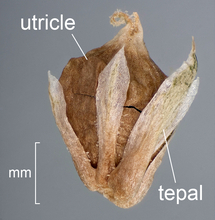 , and winged samarasSamara:
A one-seeded winged fruit. The wing may be on one side as in maples (Acer) or surround the fruit as in elms (Ulmus).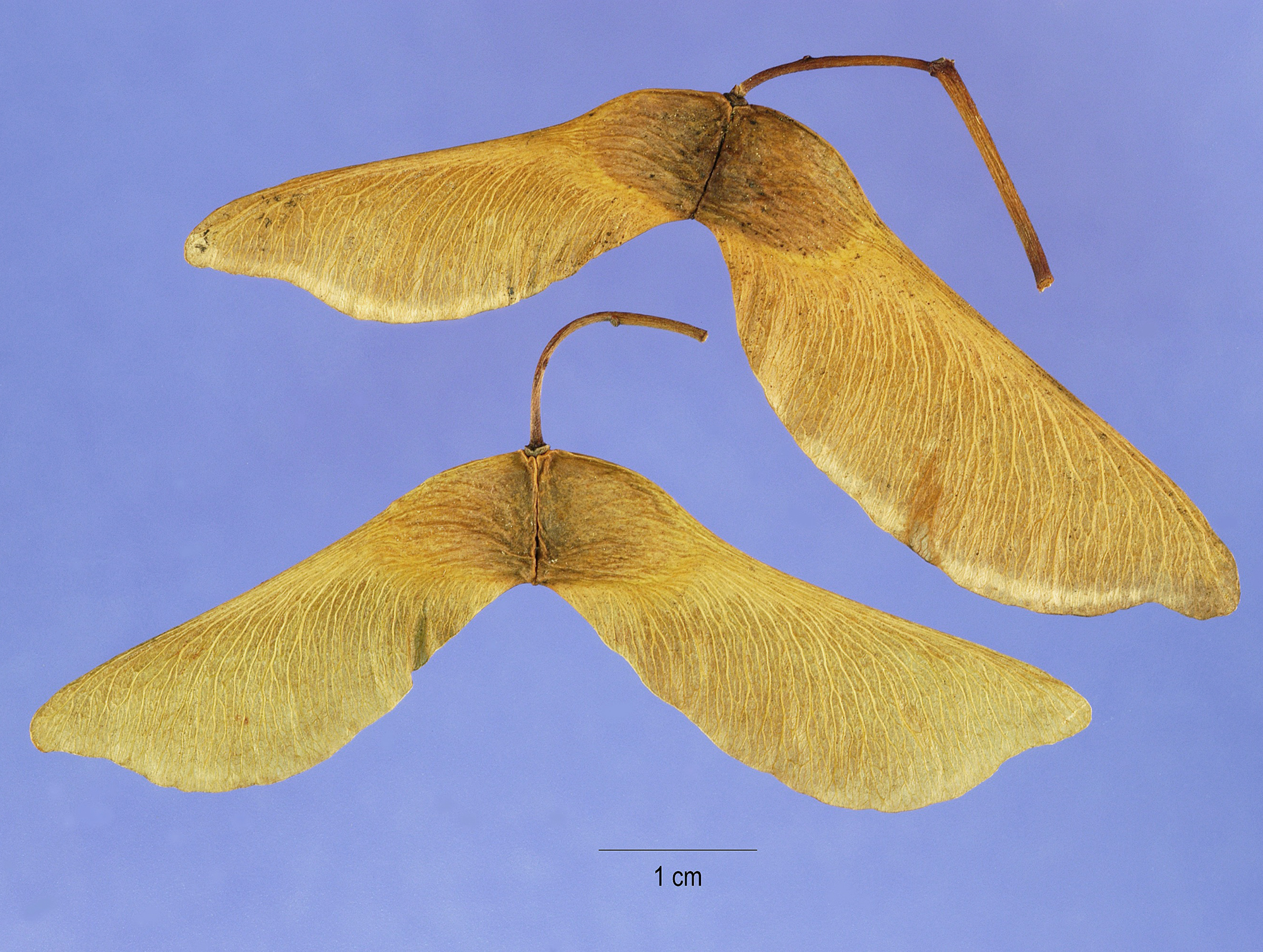 are distinguished mainly by the thickness and attachment of the fruitFruit:
A mature ovary and any associated parts. wall.
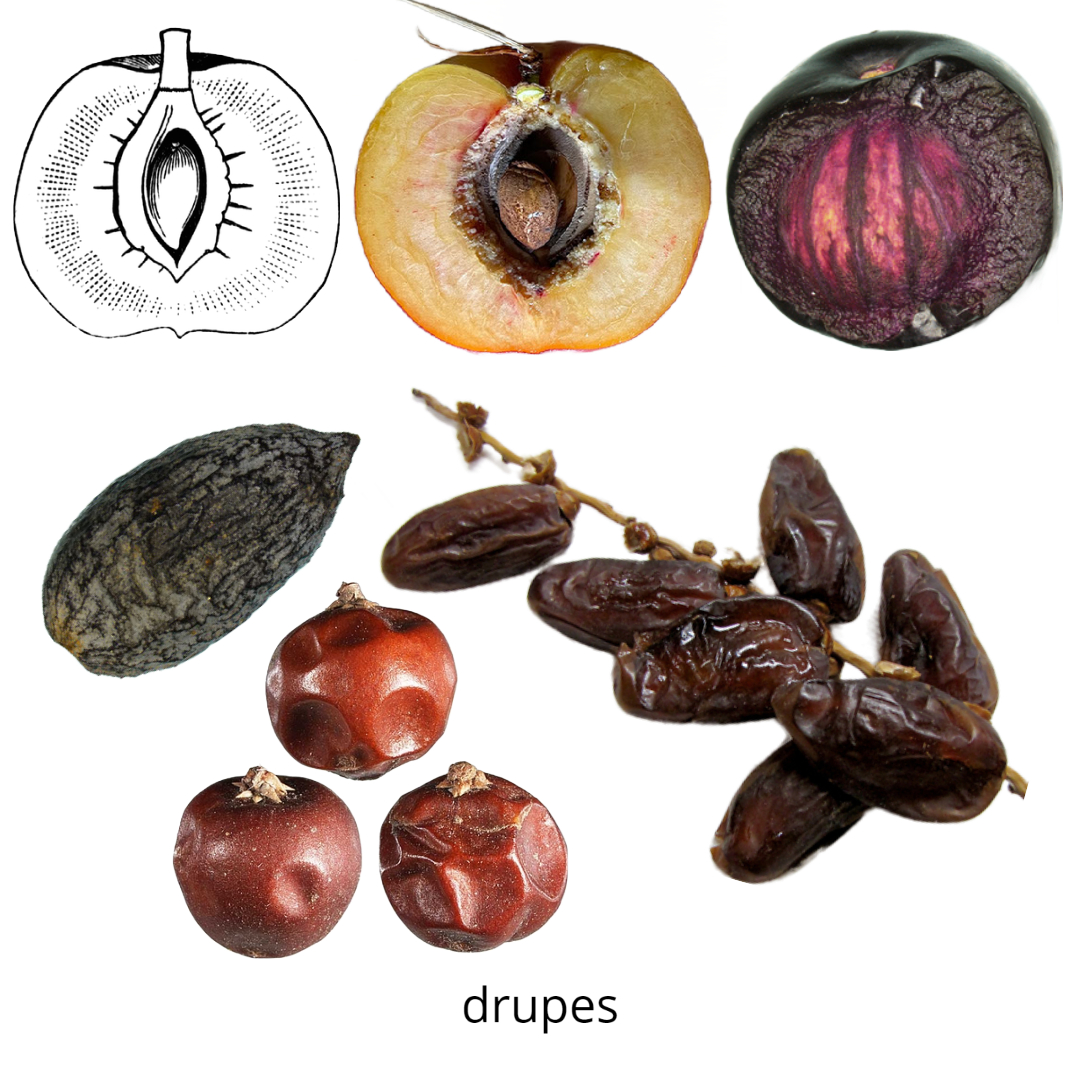
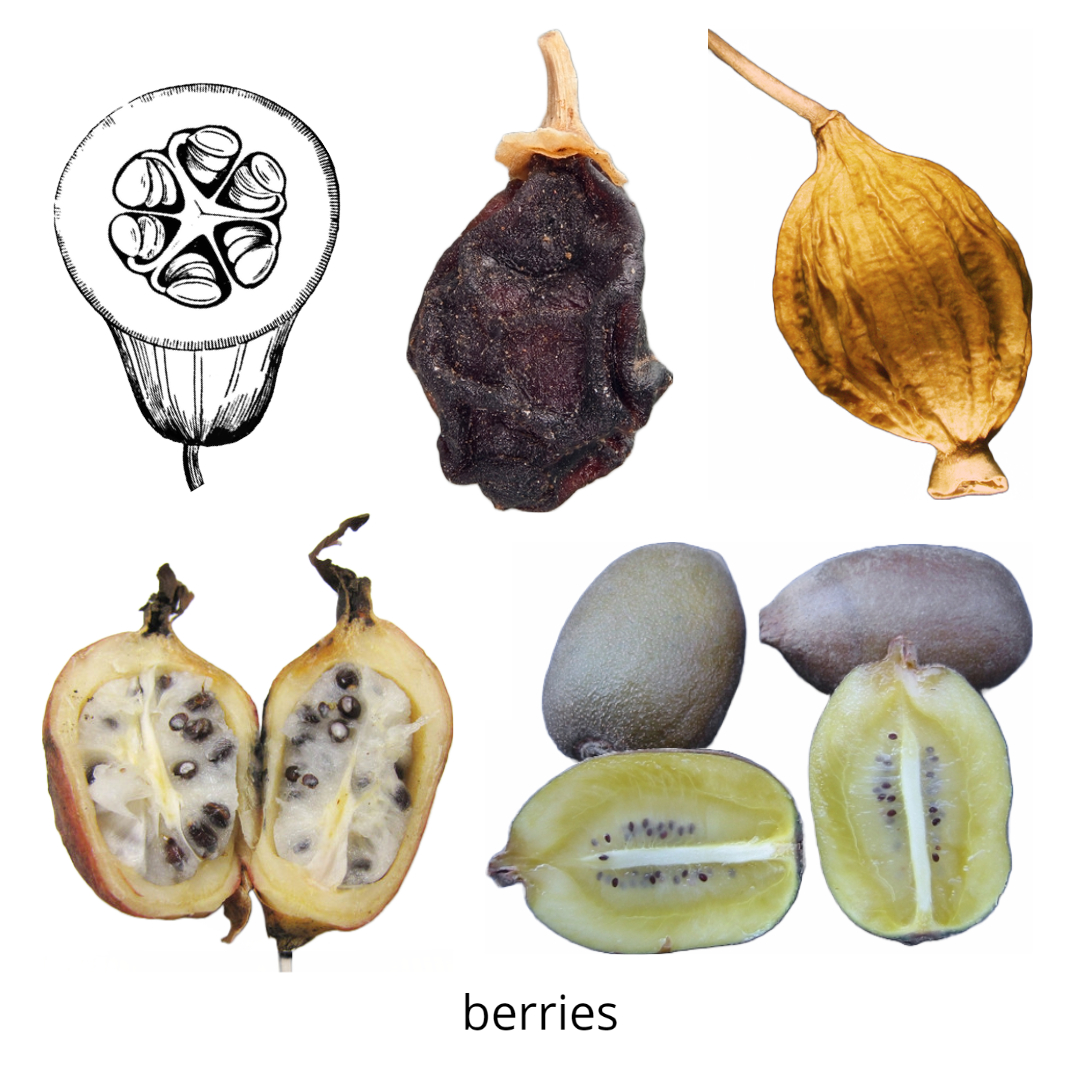
Fleshy, indehiscent fruitsFruit:
A mature ovary and any associated parts., such as berries or drupes, are not usually encountered and are not included as one of the planting types.
Dehiscent fruitsFruit:
A mature ovary and any associated parts. open upon maturity to release seeds. CapsulesCapsule:
A dry, dehiscent fruit derived from a compound ovary.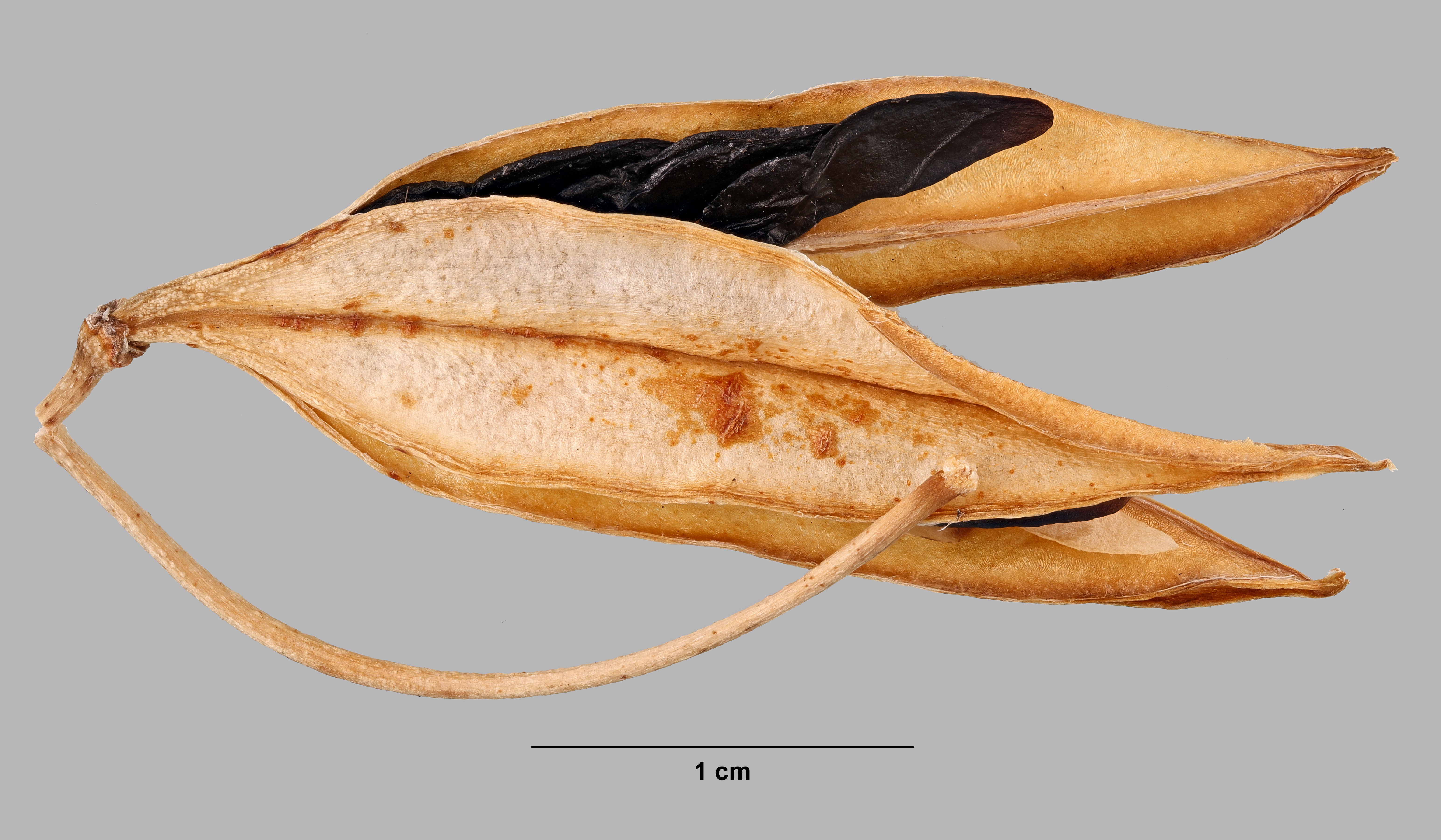 , lomentsLoment:
A usually dry fruit derived from a single carpel that breaks transversely into one-seeded fruit segments, derived from a single, superior, simple ovary.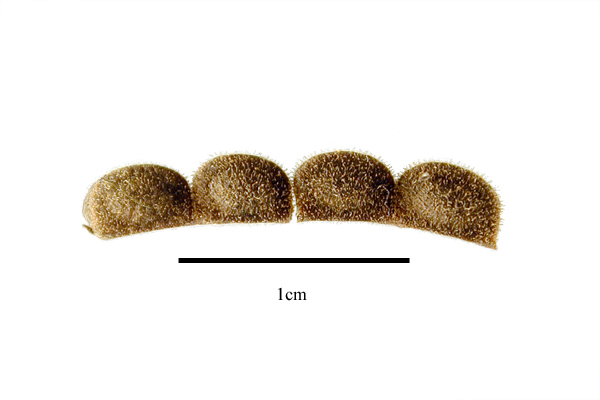 , siliquesSilique:
A fruit usually dehiscing by two lateral valves (having a central septum). The fruits can be long or short in length and round or flat in cross section. Contains more than one seed. Found in Brassicaceae.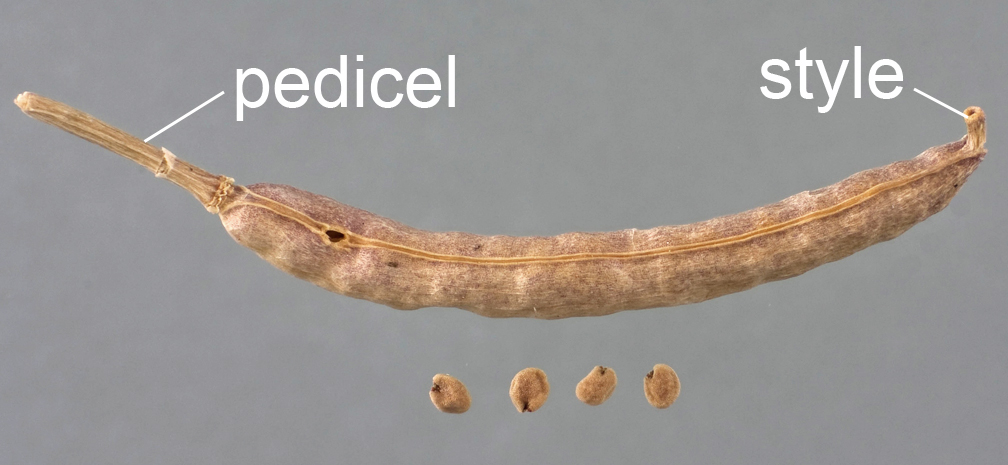 , and siliclesSilicle:
A short silique (fruit) usually containing only one seed. Found in Brassicaceae.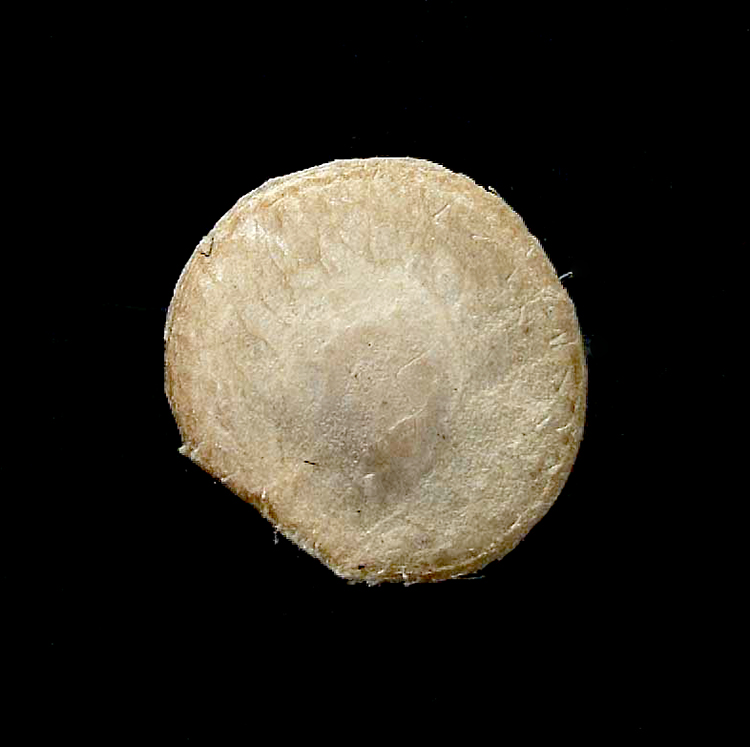 are dehiscent fruitFruit:
A mature ovary and any associated parts. types, which are typically dry (rarely fleshy) and multi-seeded. Less than one percent of the species in this tool have planting units that are dehiscent fruitsFruit:
A mature ovary and any associated parts..
Seed coatSeed coat:
The protective covering of a seed usually composed of the inner and outer integuments. Also called the testa. (testaTesta:
The protective covering of a seed usually composed of the inner and outer integuments. Also called a seed coat.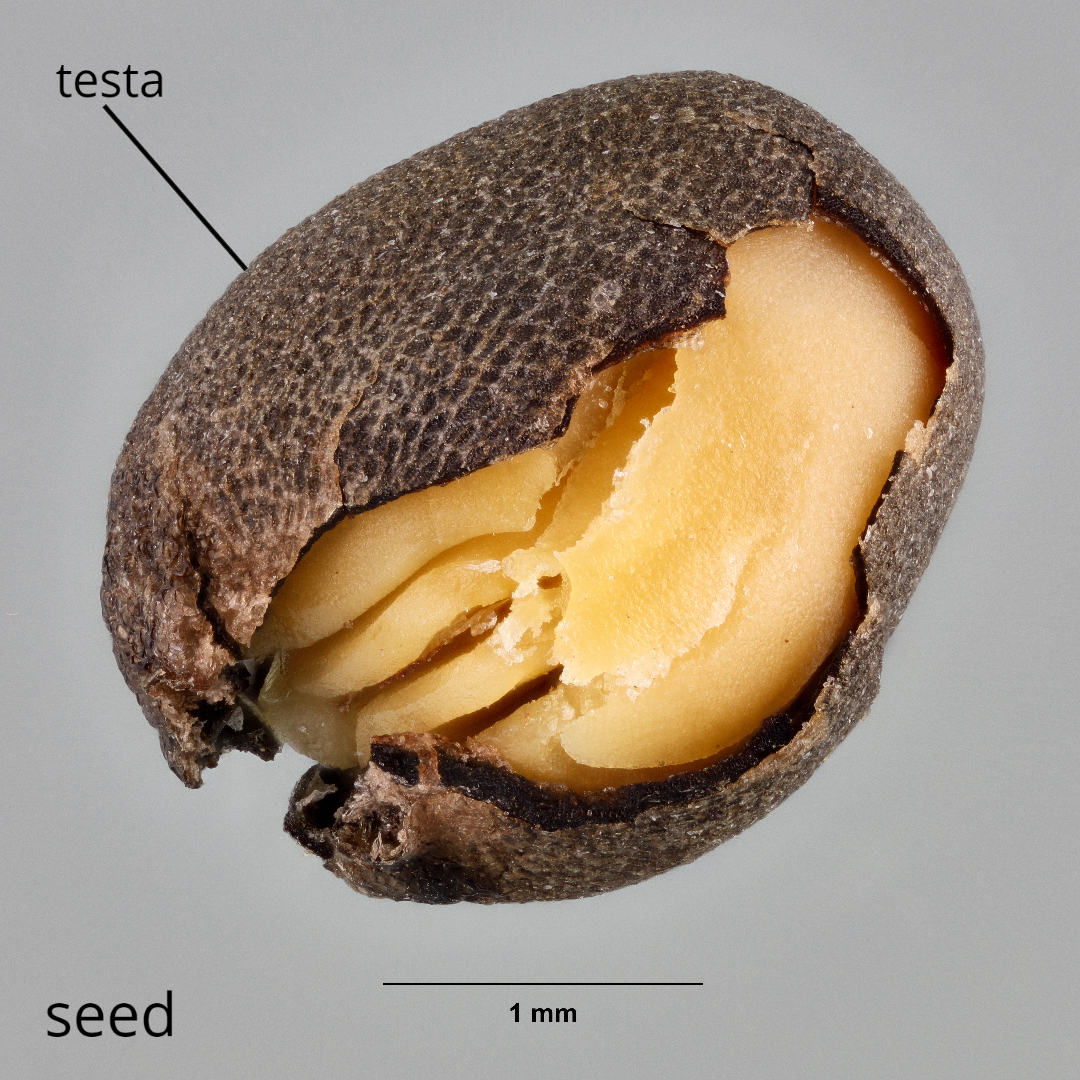 ): The protective outer layer surrounding the seed. Color, surface texture, patterns, and ornamentation of the testaTesta:
The protective covering of a seed usually composed of the inner and outer integuments. Also called a seed coat. are often key diagnostic features.
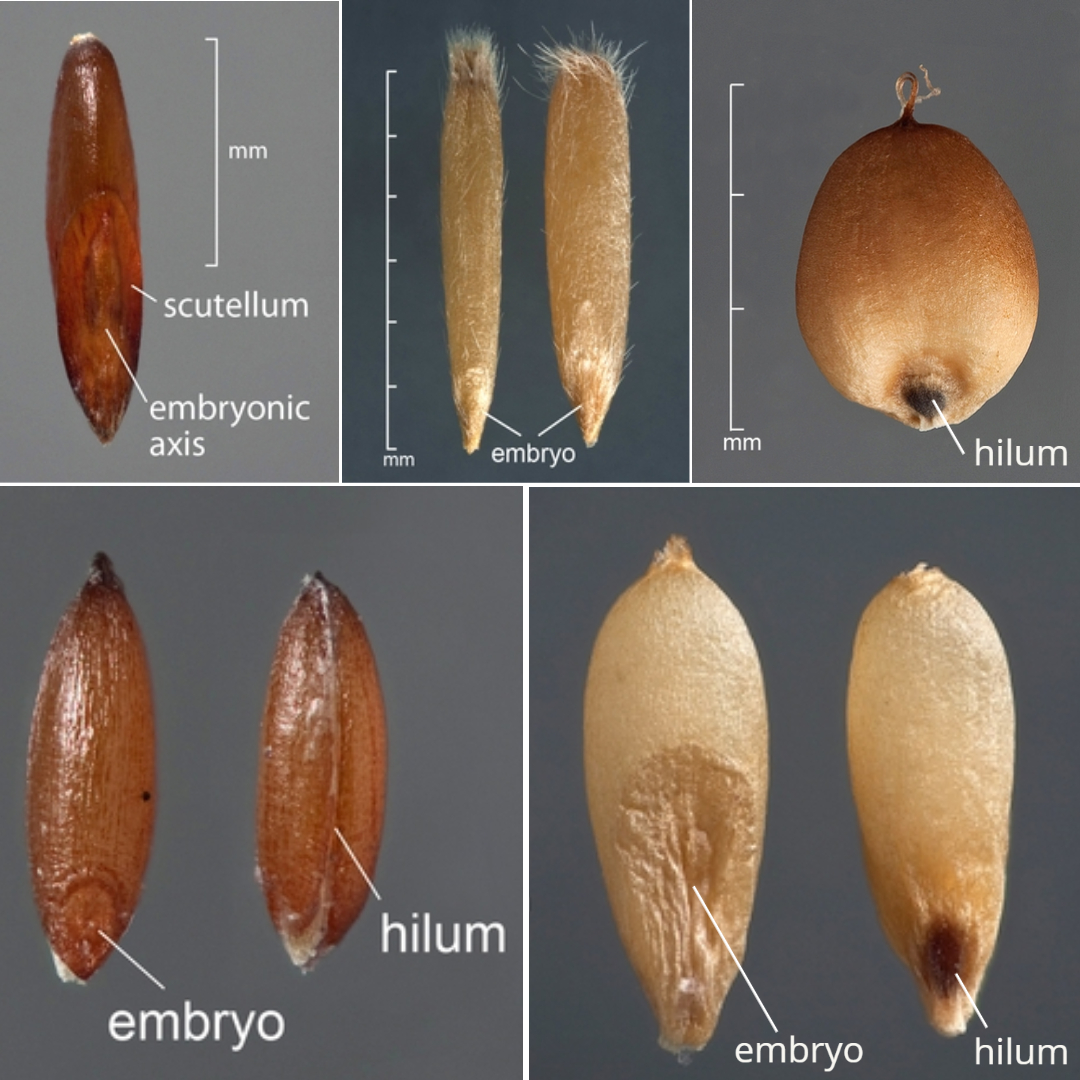
EmbryoEmbryo:
A rudimentary plant contained in a seed, usually consisting of a more or less differentiated axis and attached cotyledon(s).: The young plant inside the seed. Its size, relative position, and shape are critical in some families but are rarely exposed without dissection. For examples of embryoEmbryo:
A rudimentary plant contained in a seed, usually consisting of a more or less differentiated axis and attached cotyledon(s). features helpful in identification, see the guide on the International Seed Morphology Association.
Storage tissue: Depending on the species, seeds contain endospermEndosperm:
Nutritive tissue originating from union of the two polar nuclei with a sperm nucleus.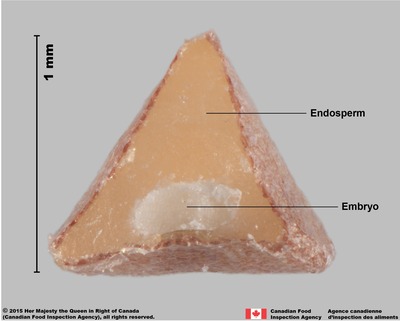 , perispermPerisperm:
Nutritive tissues occurring within certain seeds, derived from the nucellus; similar in function to endosperm.
, or cotyledonsCotyledon:
The modified storage leaf or pair of leaves of an embryo and seedling (see primary leaf).
that store nutrients for germinationGermination:
The resumption of active growth by the embryo culminating in the development of a young plant from seed.
.
These characteristics are commonly cited within the fact sheets.
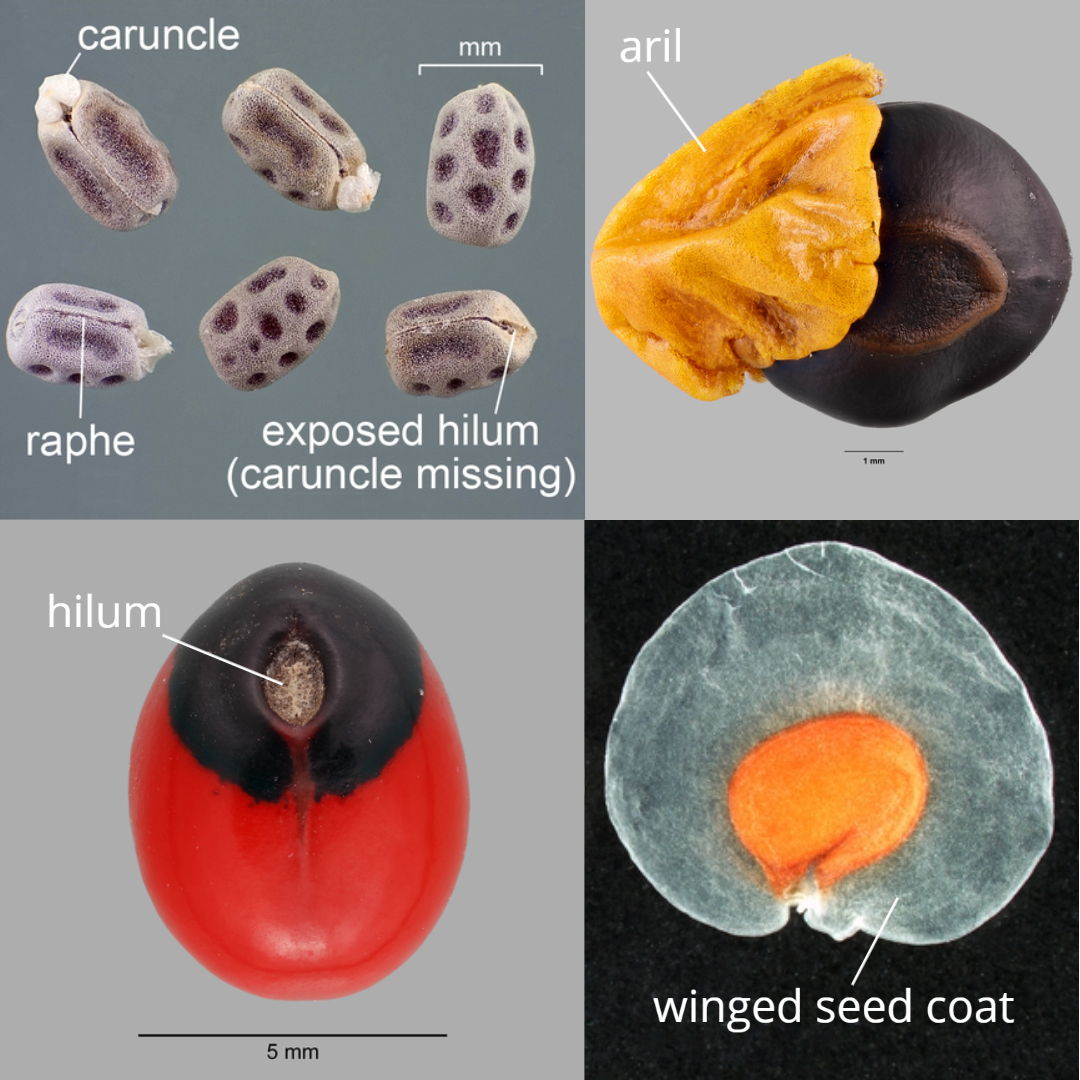
HilumHilum:
The scar on the seed coat at the place of its detachment from the seed stalk (funiculus).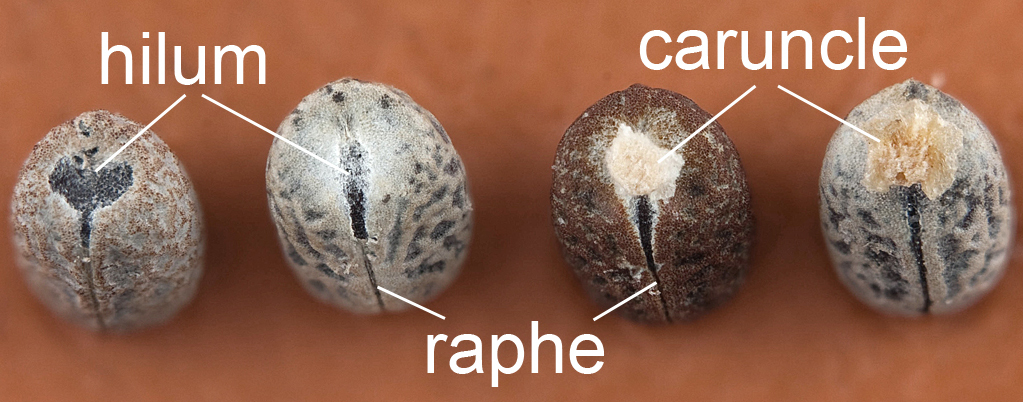 : In seeds, the scar marking the point of attachment to the funiculusFuniculus:
The stalk that connects an ovule (seed) to the placenta of the ovary wall.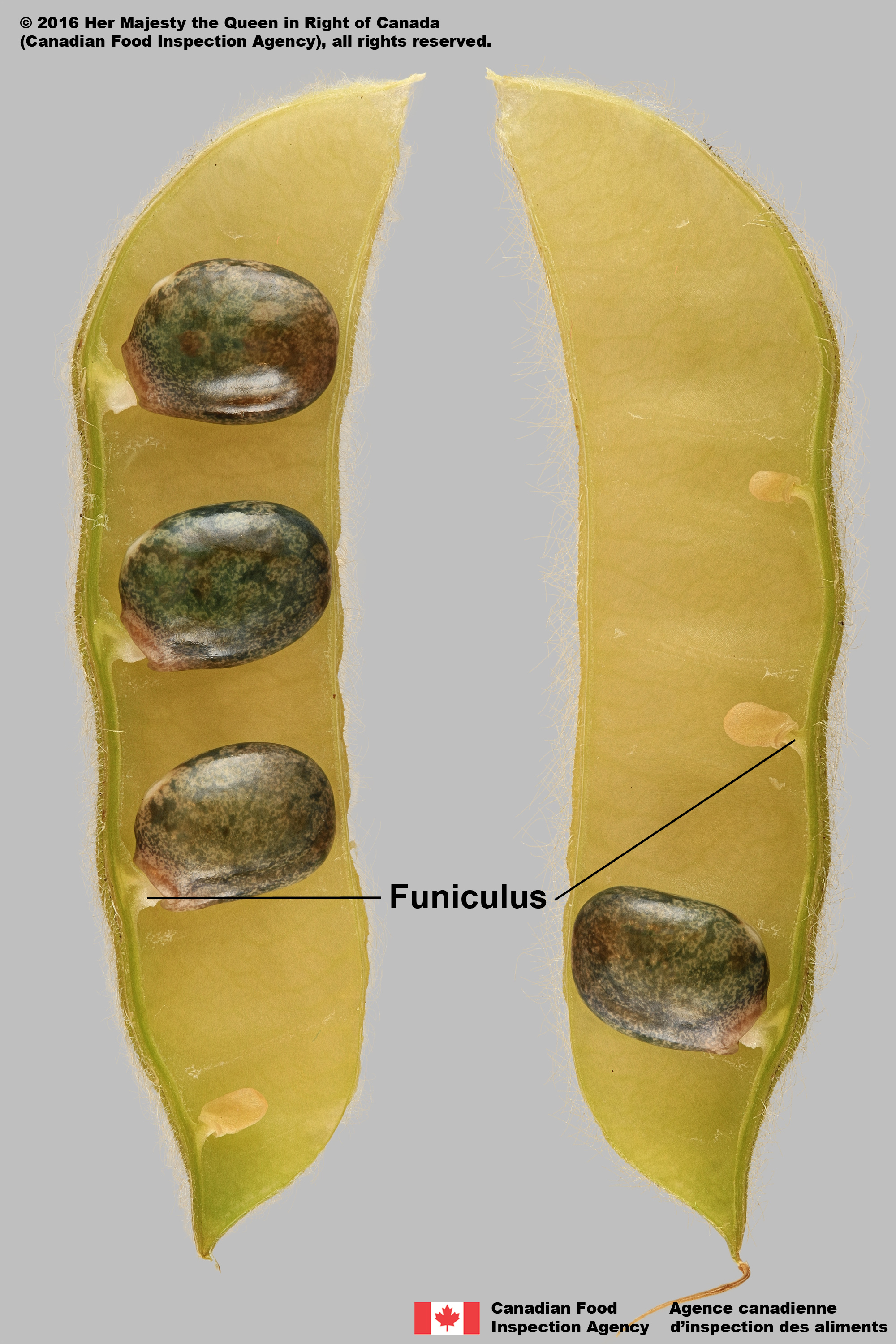 . This term is also used to indicate the abscission scar visible on fruitsFruit:
A mature ovary and any associated parts., usually in Asteraceae. Common forms include linear, ovalOval:
Broadly elliptic.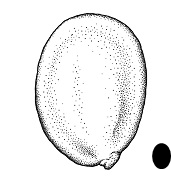 , punctate, or elongated. HilumHilum:
The scar on the seed coat at the place of its detachment from the seed stalk (funiculus). position can help differentiate genera within legumesLegumes:
A member of the pea family (Fabaceae) characterized by having dry, multi-seeded pods that dehisce along two sutures at maturity.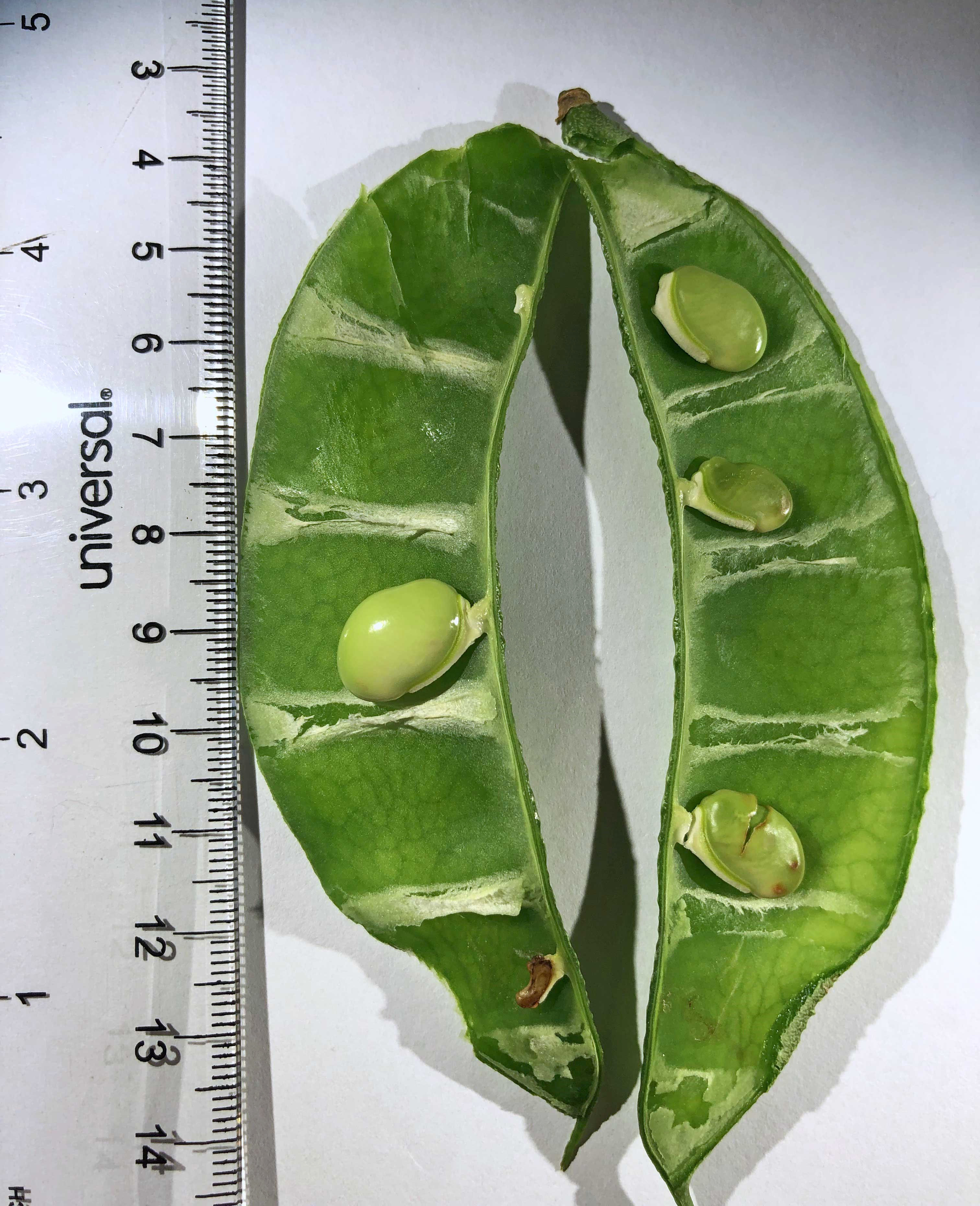 (Fabaceae) and other families.
MicropyleMicropyle:
Opening in the ovule through which the pollen tube penetrates the embryo sac.
: A small opening or pore near the hilumHilum:
The scar on the seed coat at the place of its detachment from the seed stalk (funiculus). representing the former channel for pollen tube entry. It may appear as a tiny pitPit:
The hard, stony inner portion of a fruit formed from a thickened, lignified endocarp that surrounds and protects one or more seeds. Pits occur in certain fleshy or dry indehiscent fruits; when the outer layers of the fruit (such as the mesocarp or a fibrous husk) are removed or break apart, the pit remains as the durable seed‑enclosing unit.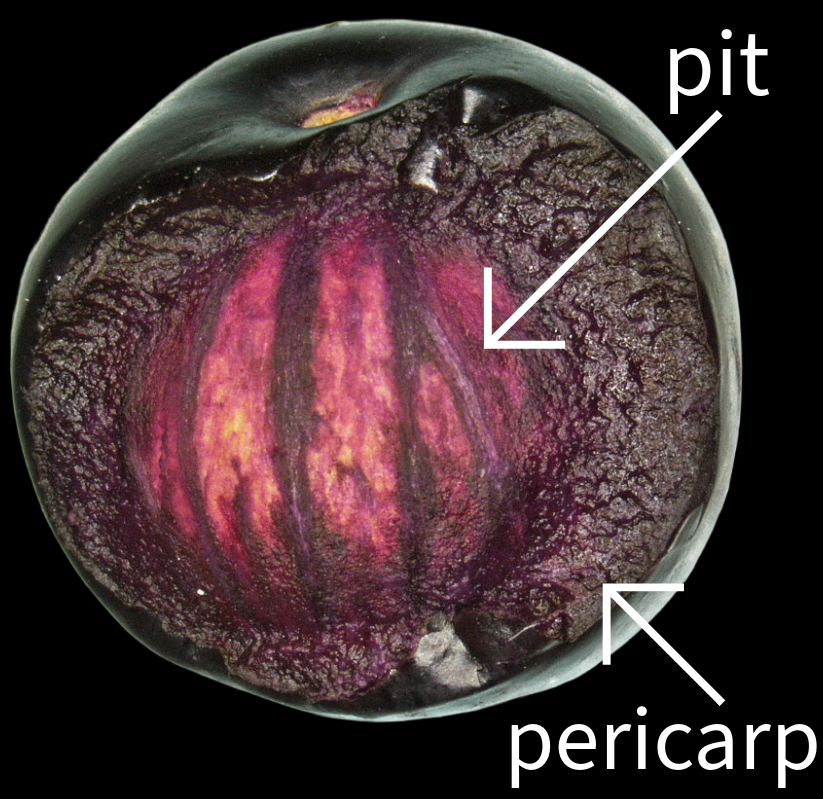 , slit, or pore; often adjacent to the hilumHilum:
The scar on the seed coat at the place of its detachment from the seed stalk (funiculus)..
RapheRaphe:
A seam or ridge found on seeds.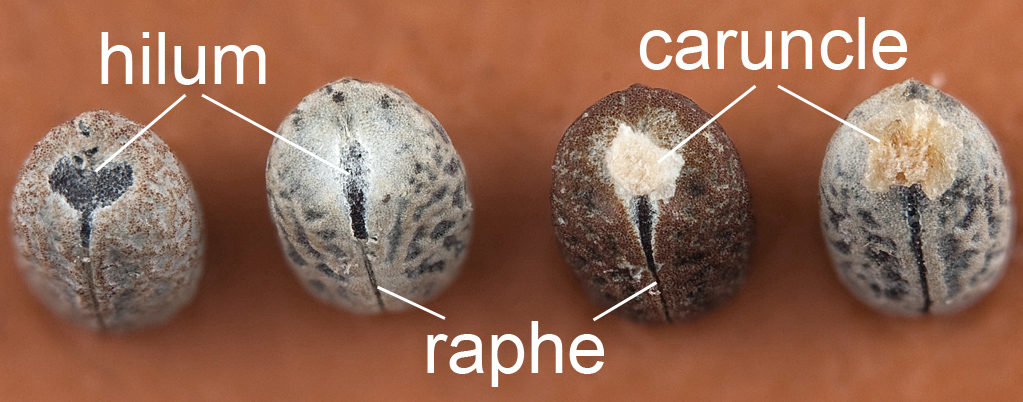 : A ridge created by the fusion of the funiculusFuniculus:
The stalk that connects an ovule (seed) to the placenta of the ovary wall. with the ovuleOvule:
The structure within the ovary of the flower that becomes the seed following fertilization and development.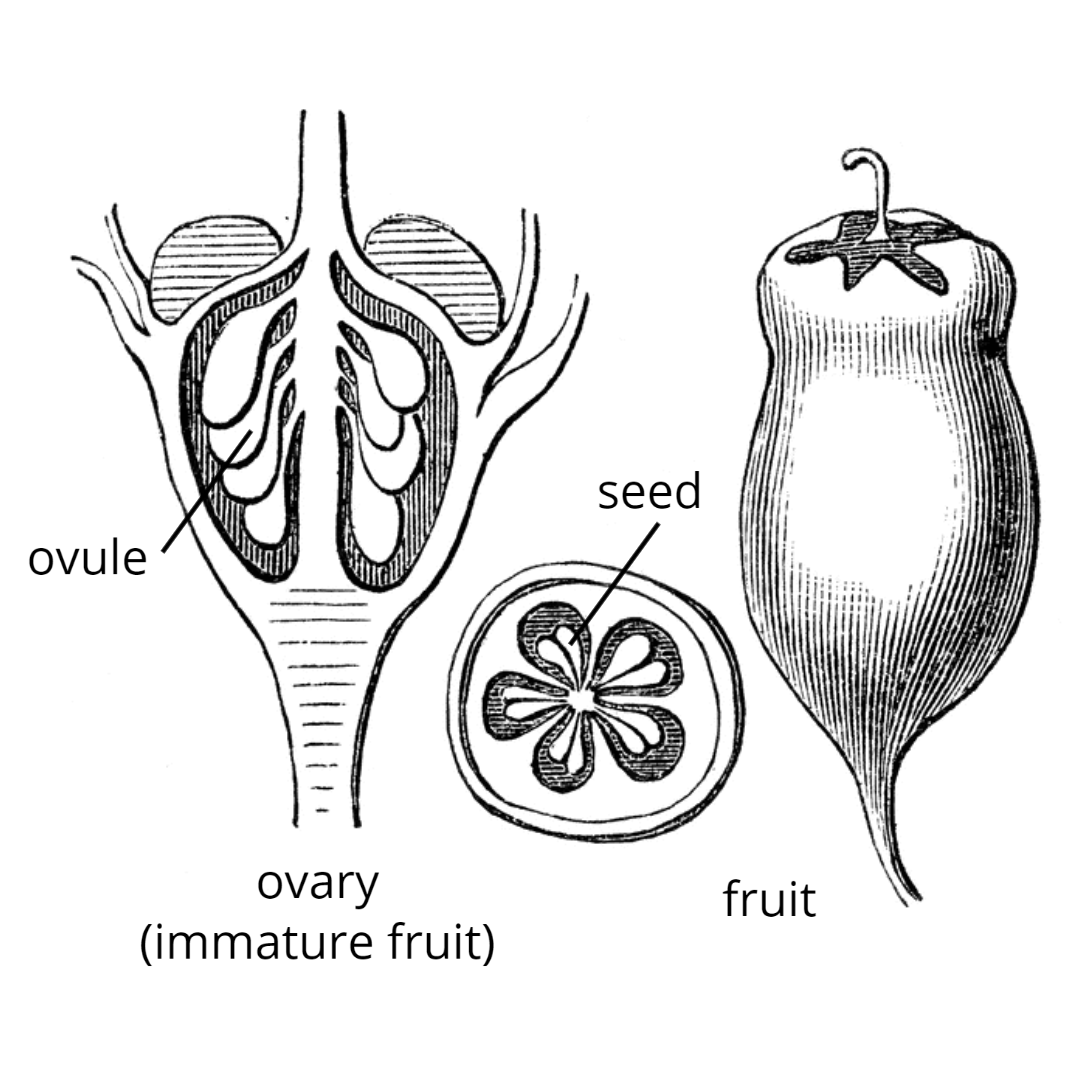 wall in anatropous ovulesOvule:
The structure within the ovary of the flower that becomes the seed following fertilization and development., appearing as a line running from hilumHilum:
The scar on the seed coat at the place of its detachment from the seed stalk (funiculus). toward the seed apexApical:
The distal end of the fruit or seed away from the point of attachment or attachment scar.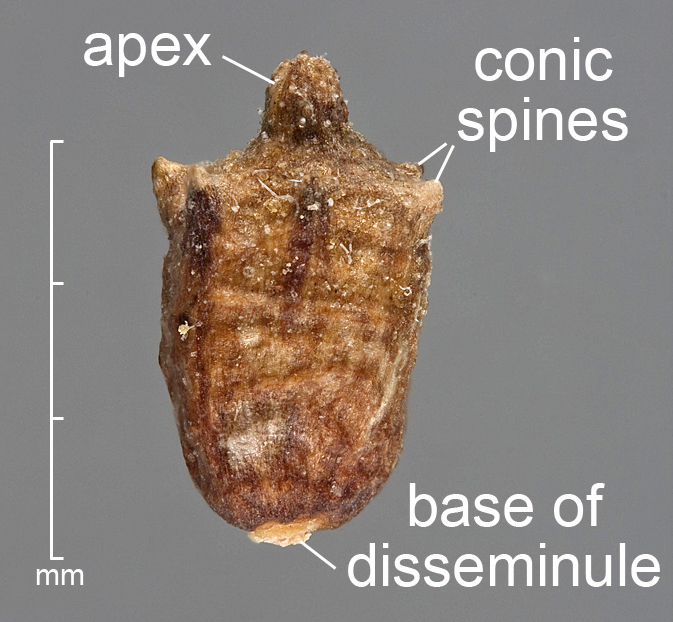 .
.
ChalazaChalaza:
End of seed opposite the micropyle.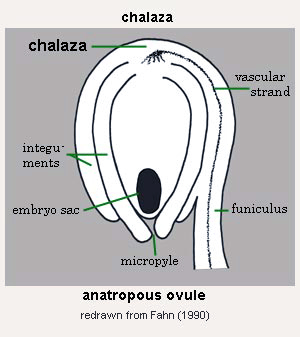 : The region opposite the micropyleMicropyle:
Opening in the ovule through which the pollen tube penetrates the embryo sac.
; often a subtle thickening, ridge, or patch of different texture.
Seed shape is described using overall form and cross-sectional outline. For illustrations and images of different seed shapes, see IDtools FruitFruit:
A mature ovary and any associated parts. and Seed Family ID's page on seed shapes.
Common whole-seed shapes: Shape outline comparison chart
Cross-sectional shapes: Seeds may be circular, flattened, triangular, or lenticularLenticular:
Lens-shaped, circular in outline with convex sides.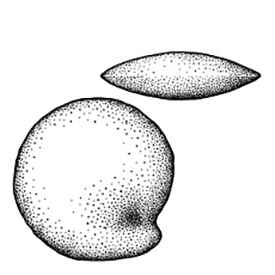 in cross-section.
In this tool, measurements refer to mature seeds and are most informative when combined with shape and surface characteristics. Seed size is fairly consistent within a species but may vary due to position within a plant, maturity, and other abnormalities. For detailed protocol on seed measurement, see ISMA’s Method for Seed Size Measurement.
Always measure:
Describing seed color follows conventional botanical and seed-testing vocabulary:
Color may change as seeds mature or dry; fact sheets always reflect the appearance of cleaned, mature seeds.
Surface features offer highly diagnostic information. For illustrations and images of different seed textures, see IDtools FruitFruit:
A mature ovary and any associated parts. and Seed Family ID's page on seed textures.
Example textures: Texture comparison chart
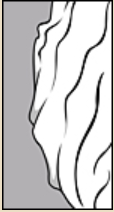 : wrinkled
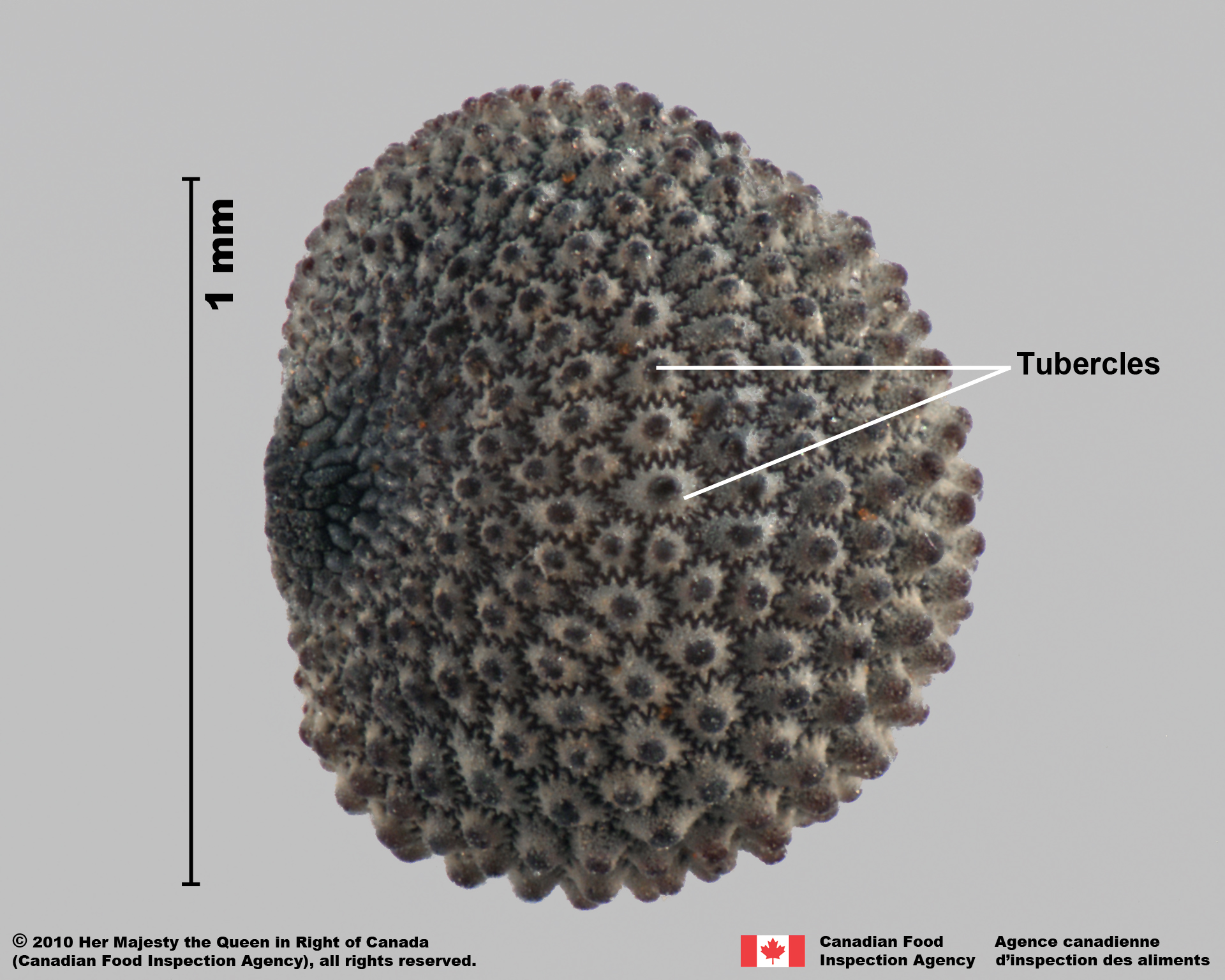 : having small pimple-like protuberances
Luster
Seeds may be lustrous, dull, matte, or glossy.
Ornamentation
Some seeds bear additional structures:
or fruitFruit: wallThough not always visible, some seeds expose internal details that can assist identification:
type: curved, straight, peripheral, spatulateSpatulate: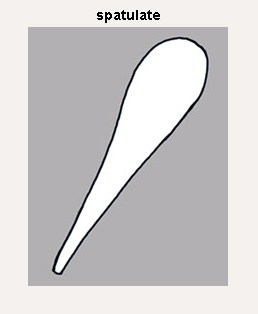 presence: abundant, scant, or absent
Dissection is seldom required in field or regulatory contexts, but these traits may appear in fact sheets where relevant.
For more detailed anatomical treatments, diagrams, or family-level fruit/seed features, users may consult the IDtools Fruit and Seed Family ID or ISMA's Seed ID Guide.