The purpose of a purity analysis is to:
Submitted sampleSubmitted sample:
A representative sample sent to the seed testing laboratory for the purpose of purity or germination testing that will represent the whole seed lot in question.
: first and foremost a representative sample must be sent to the seed testing laboratory. When this is done, a purity test can be worked that will represent the whole lot in question, the most basic function of the purity test.
Working sample: The submitted sampleSubmitted sample:
A representative sample sent to the seed testing laboratory for the purpose of purity or germination testing that will represent the whole seed lot in question.
is mixed and randomly divided into the weight specified in the AOSAAOSA:
The initials of the Association of Official Seed Analysts, the organization of state and federal seed analysts of the United States and Canada.
rules that will provide 2500 seeds for purity examination, and 25,000 seeds for the noxious weed examination.
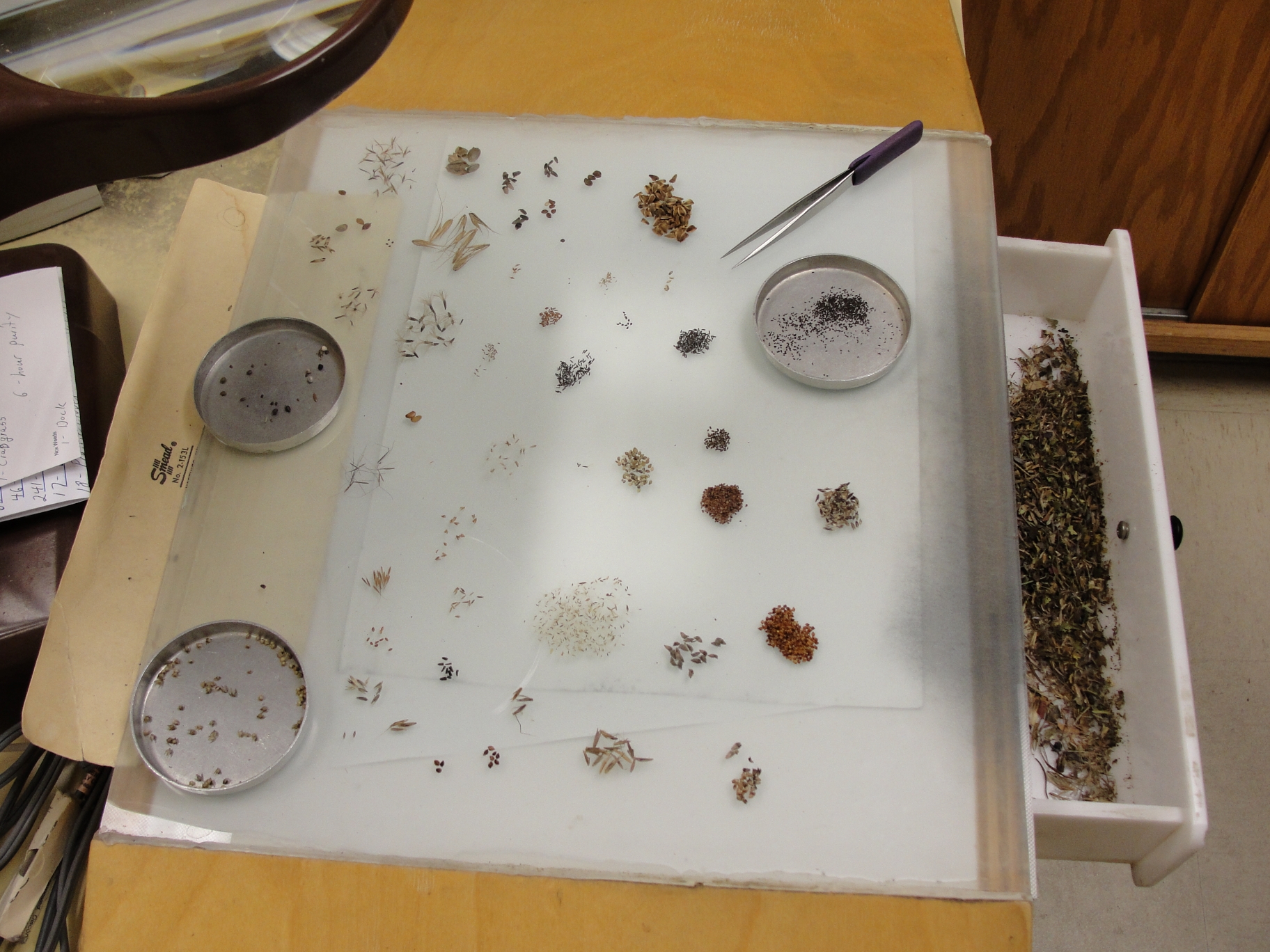
Component parts: The working sample is divided by hand on a purity board under good light, using magnifier light for work with small seeds, tweezers, a seed pushing wedge, and a lot of hand-eye coordination.
The component parts are:
Pure seed: Includes all seeds of each kind and/or cultivator under consideration which are present in excess of 5% of the whole.
Other crop seed: Seed of plants grown as crops (other than the kind or cultivator included in pure) shall be considered other crop seeds, unless recognized as weed seedsWeed seed:
A seed from a plant generally considered undesirable. The total percentage (by weight) of seed lot that is composed of seed of plants considered to be weeds. One of the four components of purity test.
by laws, regulations, or by general usage.
Weed seedWeed seed:
A seed from a plant generally considered undesirable. The total percentage (by weight) of seed lot that is composed of seed of plants considered to be weeds. One of the four components of purity test.
: Seeds, floretsFloret:
A small flower in a clustered inflorescence (e.g., sunflower, grasses). In grasses, a floret consists of the lemma, palea, stamens, and pistil.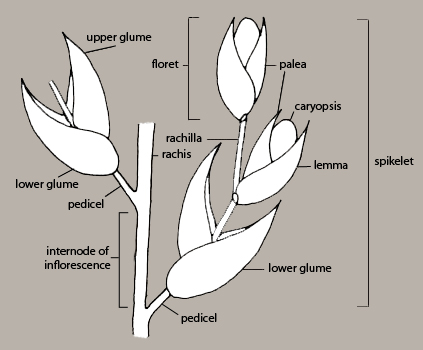 , bulbletsBulblet:
A small, vegetatively-produced bulb that can function reproductively as a seed (e.g., Allium spp. and Poa bulbosa).
, tubers, or sporocarps of plants recognized as weeds by laws, regulation or by general usage shall be considered weed seedsWeed seed:
A seed from a plant generally considered undesirable. The total percentage (by weight) of seed lot that is composed of seed of plants considered to be weeds. One of the four components of purity test.
. Further classification of species is determined with the use of the reference, “Uniform Classification of Weed and Crop Seed”, which is published by the Association of Official Seed Analysts.
Inert matterInert matter:
One of the four components of a purity test; it includes non-seed material and seed material that is classified as inert according to the Rules for Testing Seeds.
: Soil particles, stones, chaff, stems, leaves, flowers, cone scales, pieces of bark, pieces or resin, etc. Pieces of broken and damaged seed unitsSeed unit:
The structure usually regarded as a seed in planting practices and in commercial channels, consisting of a true seed with or without accessory structures, as defined in Section 2.6 of the AOSA Rules. See also true seed.
of crops that are half the original size or less. Damaged weed seedWeed seed:
A seed from a plant generally considered undesirable. The total percentage (by weight) of seed lot that is composed of seed of plants considered to be weeds. One of the four components of purity test.
with over half the embryoEmbryo:
A rudimentary plant contained in a seed, usually consisting of a more or less differentiated axis and attached cotyledon(s).
missing.
Each of the four component parts is weighed and a percentage is calculated from the sum of the four component parts. This purity information is used to tag the seed for sale and is reported on the analyst’s Report of Analysis.
The noxious weed exam is worked on a sample ten times the purity weight. This is equivalent to looking at 25,000 seeds. The analyst becomes proficient at spotting only noxious weeds and ignoring all the other components. Noxious weed exams can be requested for “all states” or with a particular state in mind. (Hawaii’s prohibited noxious weed list includes over 100 species and is not routinely done unless requested.) A Federal Noxious Weed List is included in the Federal Seed Act, otherwise the classification of noxious weeds is left up to individual states and is determined by the agricultural needs of each state. There are two classifications of noxious weeds. Prohibited noxious weeds render the lot not fit for sale. Restricted noxious weeds require the lot to be labeled as to the rate of their occurrence.