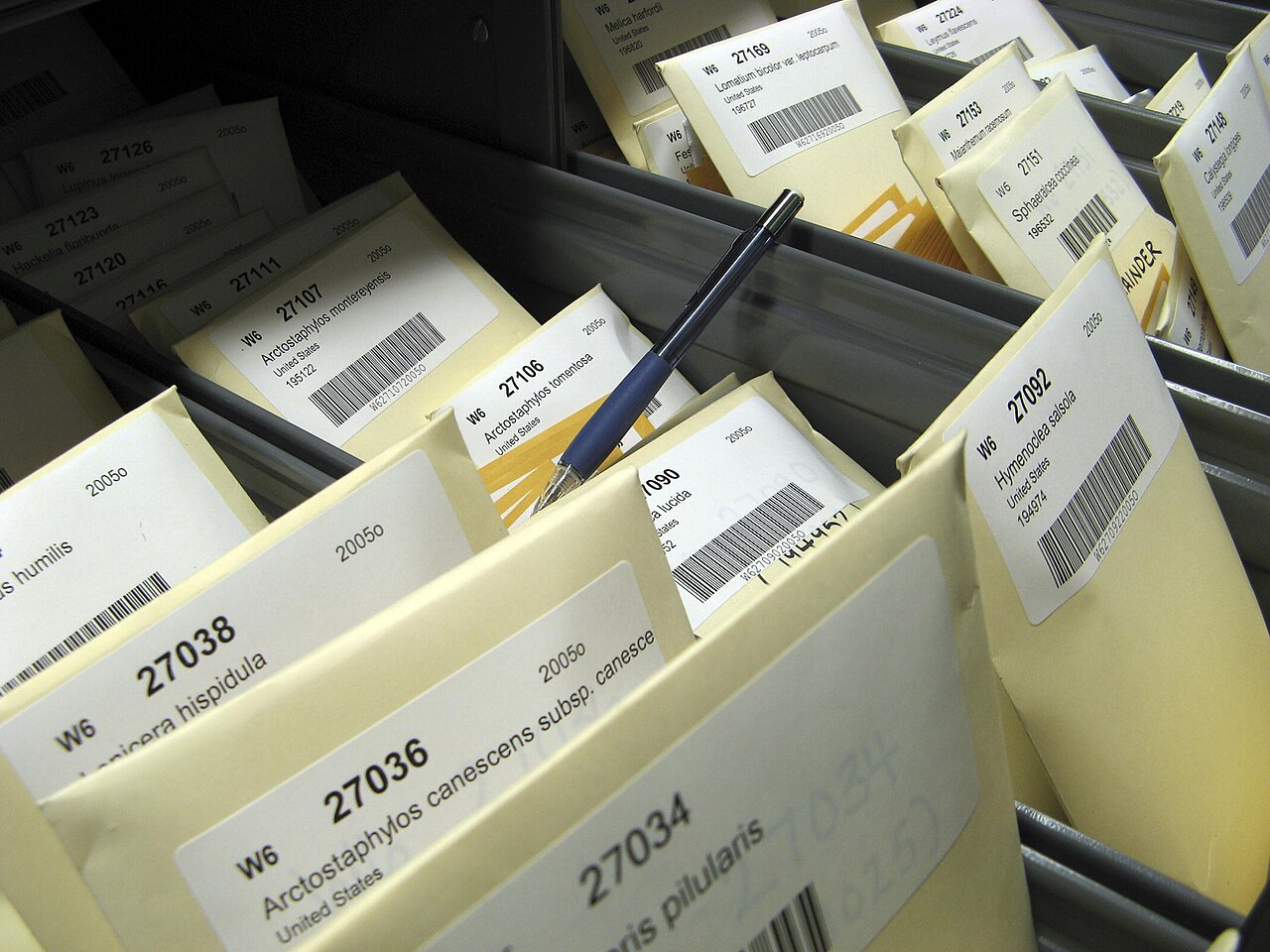
A seed herbarium is a standardized and authenticated collection of seeds used for comparison and identification purposes. It is critical to the seed analysis process that incidental seeds found within the analyzed sample be identified properly and placed as either a weed or another crop.
Weeds further need to be determined as to whether they are noxious or common. Unknown seeds can be identified by "keying" them out using scientific identification keys, a process that requires time and effort.
The seed herbarium comes into play as a visual comparison in this identification process. It may also be the primary, visual method of seed identification. It is critical to the value of the seed herbarium that each specimen is accurately identified with a standardized sample.
The seed herbarium is organized by family based on a phylogenetic classification system to show their evolutionary relationship to each other. This facilitates the ease of finding each specimen and aids in the identification process. Alternately, you can arrange the herbarium alphabetically by family, genera, and species.

Collecting seed specimens is a critical first step in establishing a seed herbarium. Plant identification and collecting seeds off of a positively identified plant is the most reliable means of gaining authenticated herbarium specimens and the most critical element of the process. Knowledge of botany and botanical terms is essential to the collection process.
Seeds are best collected from a positively identified plant. It is easier, and more accurate, to obtain a positive identification of the plant than from the seed itself.
The plant is "keyed out" using various botanical keys and identification texts. Comprehensive identification notes are usually taken and recorded on field data forms. Since most plants are identified through their flowers, often the seed collector needs to identify the plant early in the growing season and tag the identified plant so the seeds can be collected later in the growing season.
When the seeds have reached full maturity and dried down, you return to collect the seeds.
When actually collecting the seed specimens, make positively sure that they are mature. The biggest mistake that many novice seed collectors make is to collect immature, "green" seed. It is important that you ascertain the maturity of the seed before collecting it.
Full maturity can be established by the color of podsPod:
A dehiscent fruit produced by leguminous plants (beans, peas). Also known as a legume.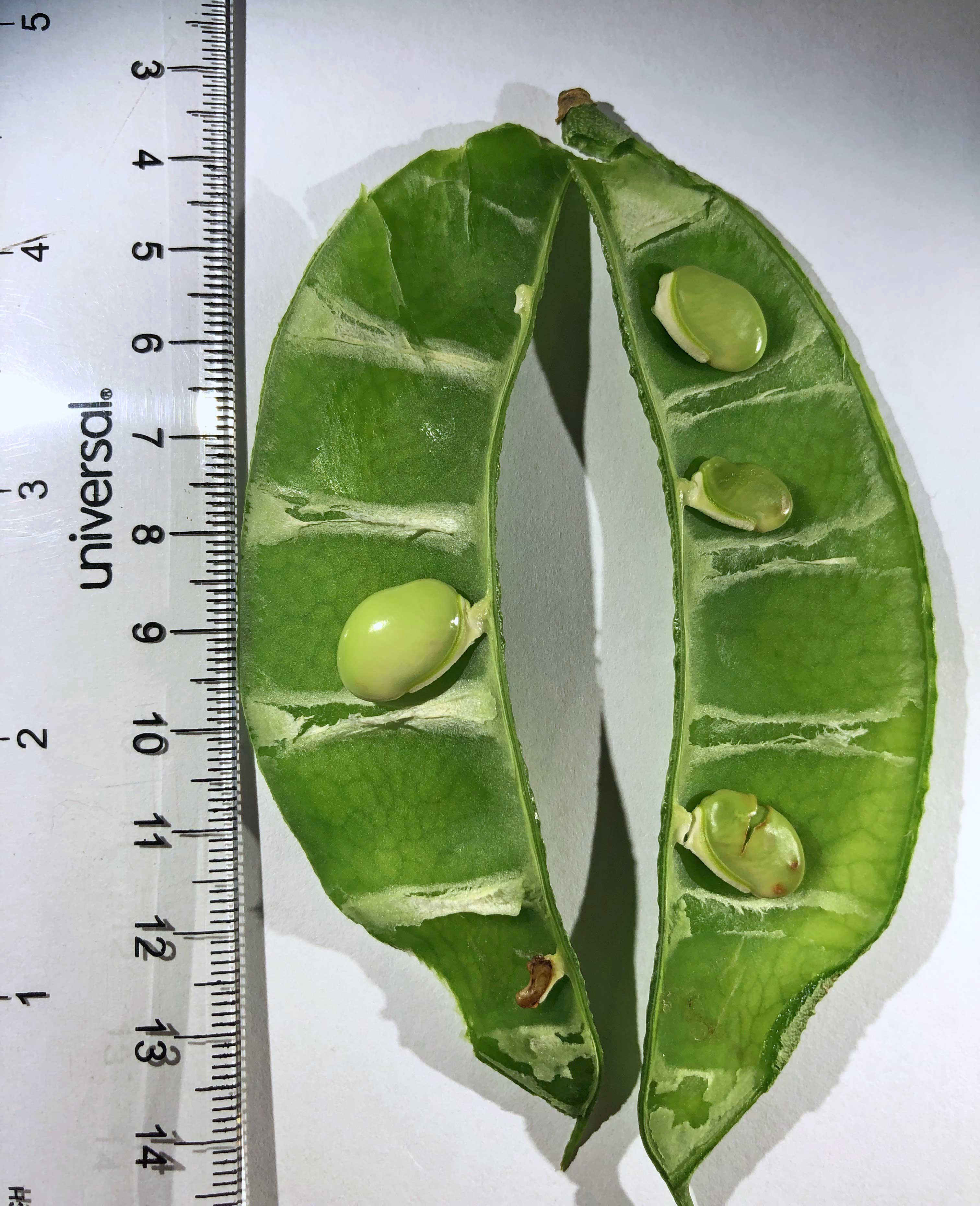 and their dryness, fleshy seedcoats becoming hard, and cutting the seed open to make sure that it's filled fully.
With grasses it is important that the lemmaLemma:
One of two bracts of the grass floret; it is located on the side nearest the embryo and opposite the rachilla.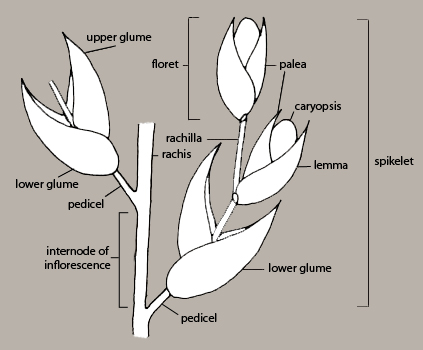 and paleaPalea:
One of the thin bracts of grass floret enclosing the fruit (caryopsis) that is located on the side opposite the embryo.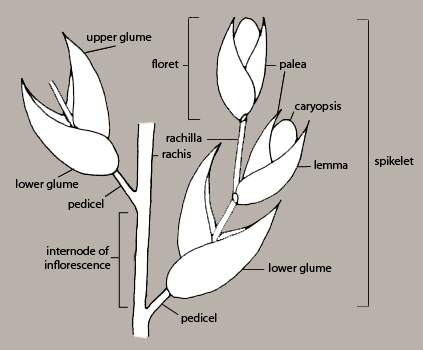 of the seed unitSeed unit:
The structure usually regarded as a seed in planting practices and in commercial channels, consisting of a true seed with or without accessory structures, as defined in Section 2.6 of the AOSA Rules. See also true seed.
contain a caryopsisCaryopsis:
The single-seeded fruit or grain of the grass family (Poaceae); the fruit wall (pericarp) is united with the seed coat (testa).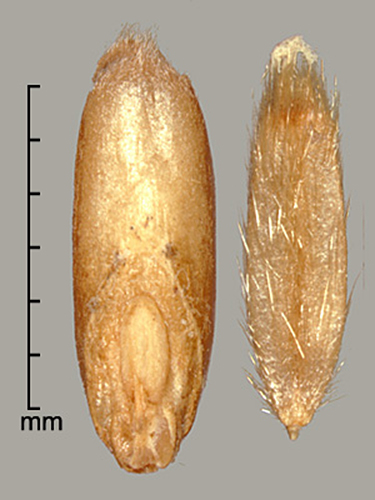 . The lemmaLemma:
One of two bracts of the grass floret; it is located on the side nearest the embryo and opposite the rachilla. and paleaPalea:
One of the thin bracts of grass floret enclosing the fruit (caryopsis) that is located on the side opposite the embryo. may have changed color from green to straw-colored but this does not mean that it contains the caryopsisCaryopsis:
The single-seeded fruit or grain of the grass family (Poaceae); the fruit wall (pericarp) is united with the seed coat (testa)..
Often dried floretsFloret:
A small flower in a clustered inflorescence (e.g., sunflower, grasses). In grasses, a floret consists of the lemma, palea, stamens, and pistil.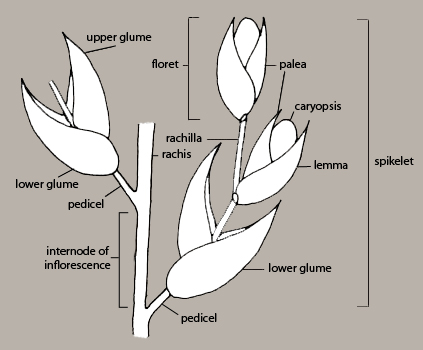 contain only the male stamensStamens:
The male part of the flower, which contains the anthers (with pollen) and filaments. Collectively, all the stamens are called the androecium.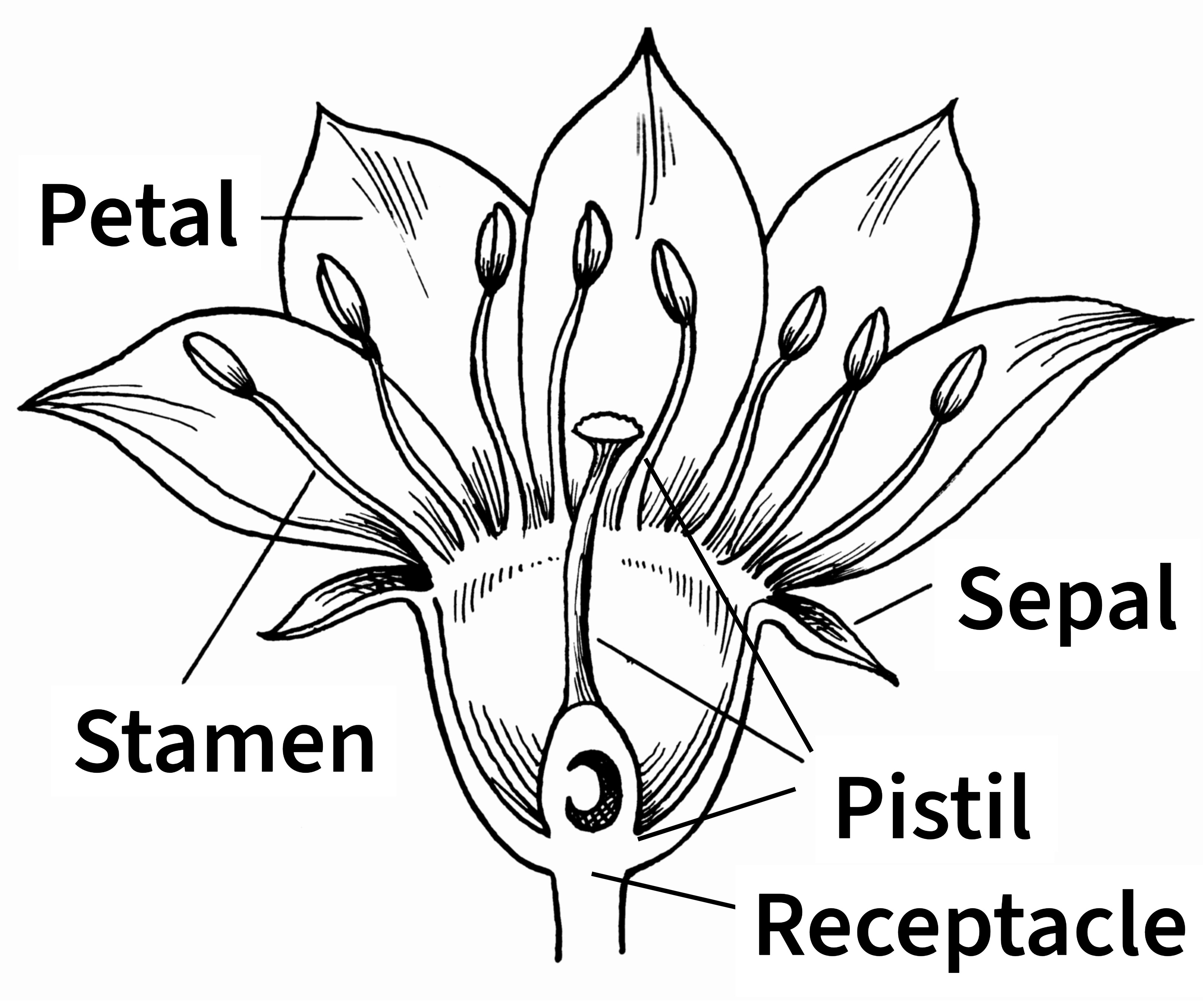 . No seed and fruitFruit:
A mature ovary and any associated parts.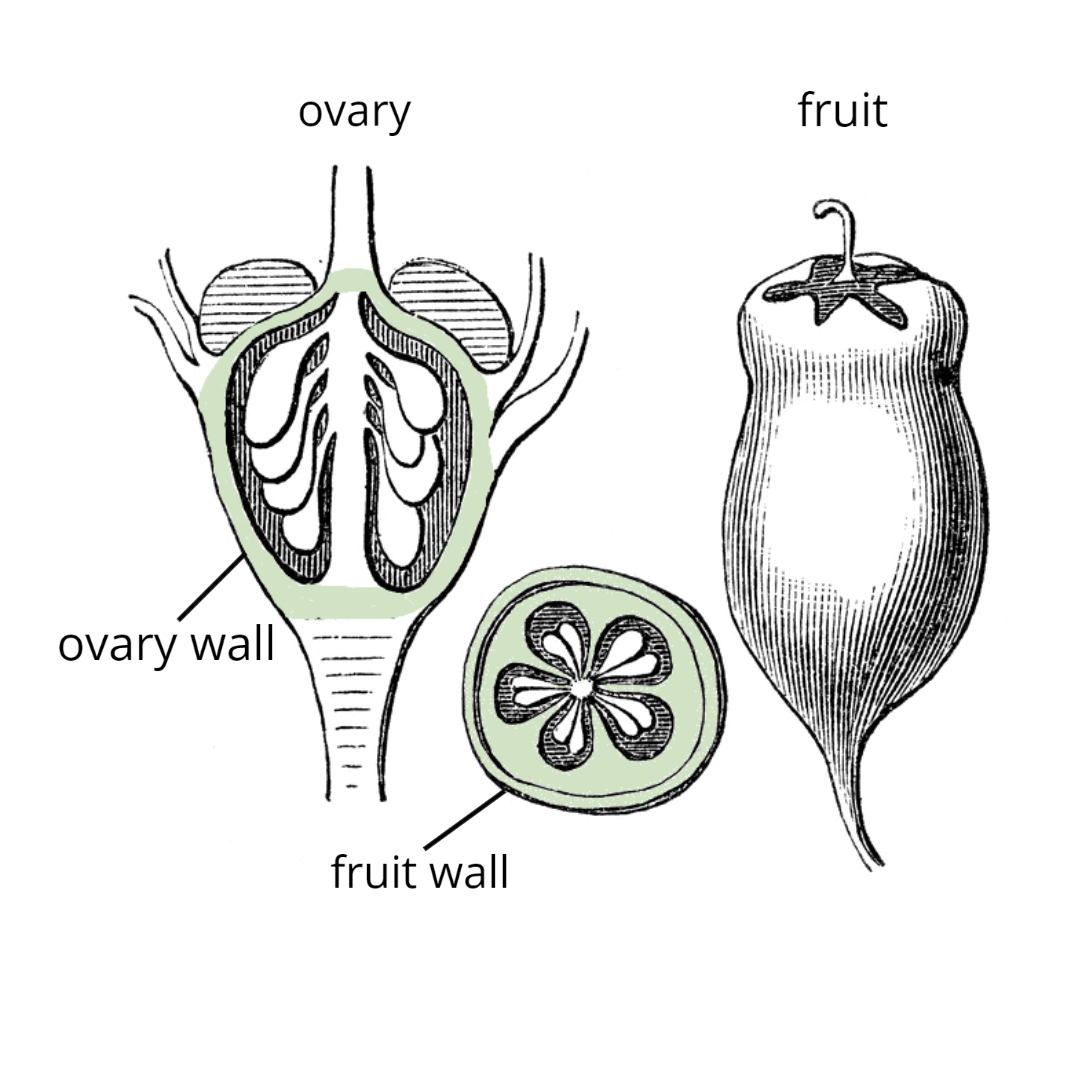 development has occurred with these floretsFloret:
A small flower in a clustered inflorescence (e.g., sunflower, grasses). In grasses, a floret consists of the lemma, palea, stamens, and pistil. because of the poor pollinationPollination:
The process by which pollen is transferred from the anther, where it is produced, to the stigma of a flower.
conditions during the flowering period. Immature seed will distort and change color when thoroughly dried and are then devoid of the characteristics making them useful in identification and comparison with other species.
Five to twenty-five seeds are all you need for your herbarium specimen. Try to get a range of size, maturity, color, and shape (if they vary in shape).
If the fruitsFruit:
A mature ovary and any associated parts. are distinctive, collect them too. Often the analyst finds podPod:
A dehiscent fruit produced by leguminous plants (beans, peas). Also known as a legume. and fruitFruit:
A mature ovary and any associated parts. remnants in the inert portion of the analysis. These give insights to the identity of the species.
Once the samples are collected, they should be brought home and dried thoroughly. Seeds should be placed in paper envelopes or bags until they are completely dried. Small cloth bags work too. I don't suggest that you put them in plastic bags right away as they will mold if they have not reached complete dryness.
Labels as to the identity of the species should be placed with the seed or copies of the field notes used in identification of the plant/seed.
In a dry climate, you can leave them in a dry area for one to two weeks and a complete drying should occur within that time. In a moist climate you may need to dry them over silica gel. Don't dry them in an oven as the heat may change the color or other attributes. Natural drying is the best.
One last statement on collecting specimens: Species vary in appearance (especially color) from year to year and locality to locality. A good herbarium may contain more than one sample from each specimen as each may vary slightly from one another depending on its origin.
Now it's time to assemble your collection of seeds into a true seedTrue seed:
A mature fertilized ovule consisting of an embryo, with or without and external food reserve (e.g., endosperm) enclosed by the testa.
herbarium.

Containers for seed specimens
It's now time to put the herbarium together. We have our identified and collected specimens. The first question is: what are we going to put them in?
We need containers and an arrangement that makes this a working collection that can be used for our identification and comparison purposes. Containers may be as simple as consisting of paper coin envelopes in a shoebox with specimen identity and characteristics on the envelopes and arranged by family, then genera, and species within the shoebox.
A couple of drawbacks to this method is that the seeds must be taken out to be observed, and the paper envelopes can be breached by insects that will eat the seed. An alternate container is a plastic, "ziplock" coin envelope. These allow for observation without removing the seed. A note card, with the identity and features of the seed, is attached or placed within. Both types of envelopes take up minimal space.
On the elaborate side, a seed herbarium may use glass vials for specimens and arranged in drawers by family. Each vial includes a label containing the identity of the species and other information. Vials vary in size and type. Some have cork stoppers, others have screw-caps for enclosures. I prefer the screw-caps.
Labels and pertinent informationWhat information should be included on the specimen label? At minimum, the label should include:
The plant family determines where the specimen will be grouped based on the classification used for the seed herbarium. The genus and species give the specimen its identity. And the authority is who named it. As names change, so will the authority. Having the authority will also make it easier to find synonyms and update nomenclature.
Additional information can be included with the specimen. This information may include:
The easiest means to arrange a seed herbarium is to place it in alphabetical order. Families are arranged alphabetically, genera within the family are then placed in alphabetical order, and finally, the species within each genera are arranged alphabetically. This arrangement makes it easy to retrieve specimens but gives no clue to the relationship between the specimen and other species, genera, or families.
Alternatively, a seed herbarium may be arranged based on a classification system that orders families based on their relationships, for example Engler and Prantl, Cronquist, Thorne, Bentham and Hooker, or Angiosperm Phylogeny Group. This arrangement also places seed families into major groups like gymnospermsGymnosperm:
A vascular plant that produces seeds but no flowers or fruits. The seeds are not borne within an ovary; hence the name from the Greek for "naked seed".
and angiospermsAngiosperms:
Vascular plants that produce flowers and have seeds enclosed within the fruit (mature ovary).
. At first this arrangement may seem harder to navigate, but by becoming familiar with the classification system, navigation through the herbarium becomes as easy as through the alphabetical arrangement. In the process, you become more familiar with the relationships between plant families.
One last thought: A seed herbarium is a standardized collection of seed specimens that has a practical value to the seed analyst in aiding identification and for visual comparison of seeds. It can also be a rewarding past time collecting, identifying, and arranging seed specimens. The seed herbarium is what one makes of it.

Collection of wildland native seed species is increasingly important to help prevent biodiversity loss and support ecosystem conservation and restoration. The Bureau of Land Management estimates (2023) 1.9 billion tons of native seed is needed to restore disturbed lands.
A native species is defined by the Association of Seed Certification Agencies (AOSCAAOSCA:
The initials representing the Association of Seed Certification Agencies, a non-profit organization founded in 1919 (formally known as the International Crop Improvement Association) in an effort to establish credible standards for the production of high-quality seed. Today, AOSCA has member agencies across the U.S. as well as seven member countries including Canada, Chile, Argentina, Brazil, Australia, New Zealand, and South Africa.
) as: “A plant species that has evolved through natural selection to adapt to a geographic area in some geological period. A native population gradually shifts genetically in response to natural environmental conditions but may be more speedily altered by human caused factors. Unaltered native populations, or remnants thereof, can provide known sources for collecting indigenous genetic accessions and genetic selections.”
Collection of native seed may take three or more seasons to complete. It is often not just as simple as finding a plant on a hiking trail and collecting the seed. In fact, collecting seed from a native plant that one happens to find on a hiking trail is not necessarily ethical or even legal in certain circumstances. Before collection of seeds occurs on public lands permits must be obtained. On private land, at the very least written or verbal permission is necessary.
Collection of seed or plant parts from native plant sources can be very stressful on the plant population. Assess the population of the plant in a particular location. If there is only one plant, avoid collection. Always avoid collecting the entire plant when seeds or cuttings may be sufficient.
Collect randomly and evenly so that the genetic diversity of all plants is represented. As a rule of thumb, for restoration and conservation purposes, seed collections should be taken from at least 50 plants so that 95% of alleles are represented.1
Effective seed collection methods will depend upon the type of plant and fruiting characteristics. Timing of collection can also be challenging. Unfortunately, not all seed on a single plant matures at the same time (referred to as indeterminate). Seed can be collected by hand cutting fruiting structures for later seed separation, or by hand stripping or beating seed into a canvas hopper or large bucket or can. Public land permits often limit harvest to non-mechanical methods. Species may be determinate or indeterminate regarding flowering and seed maturation, and different populations of the same species may mature seed at different times when planted in common gardens. A goal, especially for seed populations that will be Certified via the AOSCAAOSCA:
The initials representing the Association of Seed Certification Agencies, a non-profit organization founded in 1919 (formally known as the International Crop Improvement Association) in an effort to establish credible standards for the production of high-quality seed. Today, AOSCA has member agencies across the U.S. as well as seven member countries including Canada, Chile, Argentina, Brazil, Australia, New Zealand, and South Africa.
natural track or source identification system is to obtain seed that represents the entire genetic diversity of the species in the field or wildland stand. A good rule of thumb for many native grasses and forbs is that 10% of mature seed may shatter, 10% is immature, and one harvest will hopefully capture 80% good quality seed. Percentages may vary.
Make sure to keep records of the site and collection details. Record keeping information provides historical, research and location data that may be useful for future needs. Additionally, third party Seed Certification Agencies under the ASOCA Tracks system will provide seed source identification of wild land seed collections to ensure genetic integrity during field seed production increases. These agencies will require proper record keeping to trace back source ID or certified seed to the origin location.
Once harvested, seeds should be transferred to a paper or well-ventilated bag for proper storage. Avoid moisture collection on the seeds to prevent mold growth and never leave the seeds in a hot vehicle. Seeds are living entities and may die in excessive heat. If traveling between collection multiple sites, leave collected seeds in the shade under the vehicle.
Native seed like all agricultural, flower or vegetable seed whether common or Certified, must be labeled with proper identification, germinationGermination:
The resumption of active growth by the embryo culminating in the development of a young plant from seed.
or viabilityViability:
Alive. Seed that has the ability to grow containing structures and substances including enzyme systems that give it germination potential.
information prior to distribution and sale. Whether seed collected from wildland sources is sold directly from collection sites or grown out through cultivated increase to meet the projected 1.9-million-ton demand, all sources of native wildland seed will be essential to support future conservation and restoration efforts on both public and private lands.

1Proper wildland seed collection methods maximize inclusion of the wildland population genetic diversity for unrestricted genetic accessions. Basey et al. suggest collection from a minimum of 50 random plants of cross-pollinated species, more for self-pollinated species; collect from widely separated individuals throughout a population without favoring the most robust or avoiding small stature plants and collect from all microsites including habitat edges (Basey, A.C.; Fant, J.B.; Kramer, A.T. 2015. Producing native plant materials for restoration: 10 rules to collect and maintain genetic diversity. Native Plants Journal. 16(1) 37-53). Additional collection recommendations and guidelines are provided in online manuals (e.g., ENSCONET 2015: USDI BLM SOS 2017). Large scale collections for direct project out planting normally maximize genetic diversity of the population, but bias towards plants having greater seed production should be purposefully avoided.