Weed
saltcedar, tamarix, tamarisk
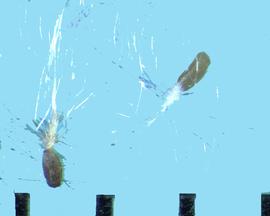
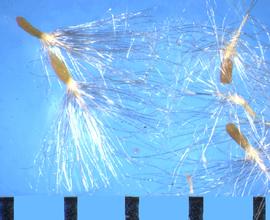
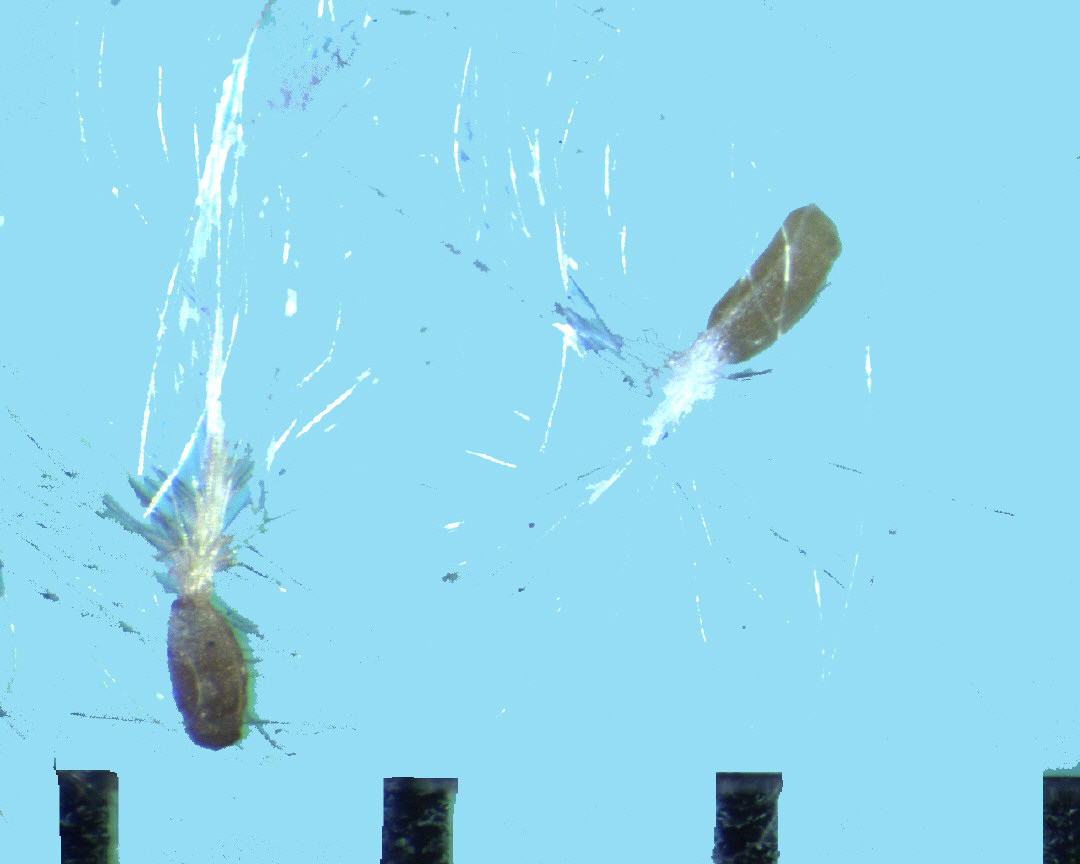
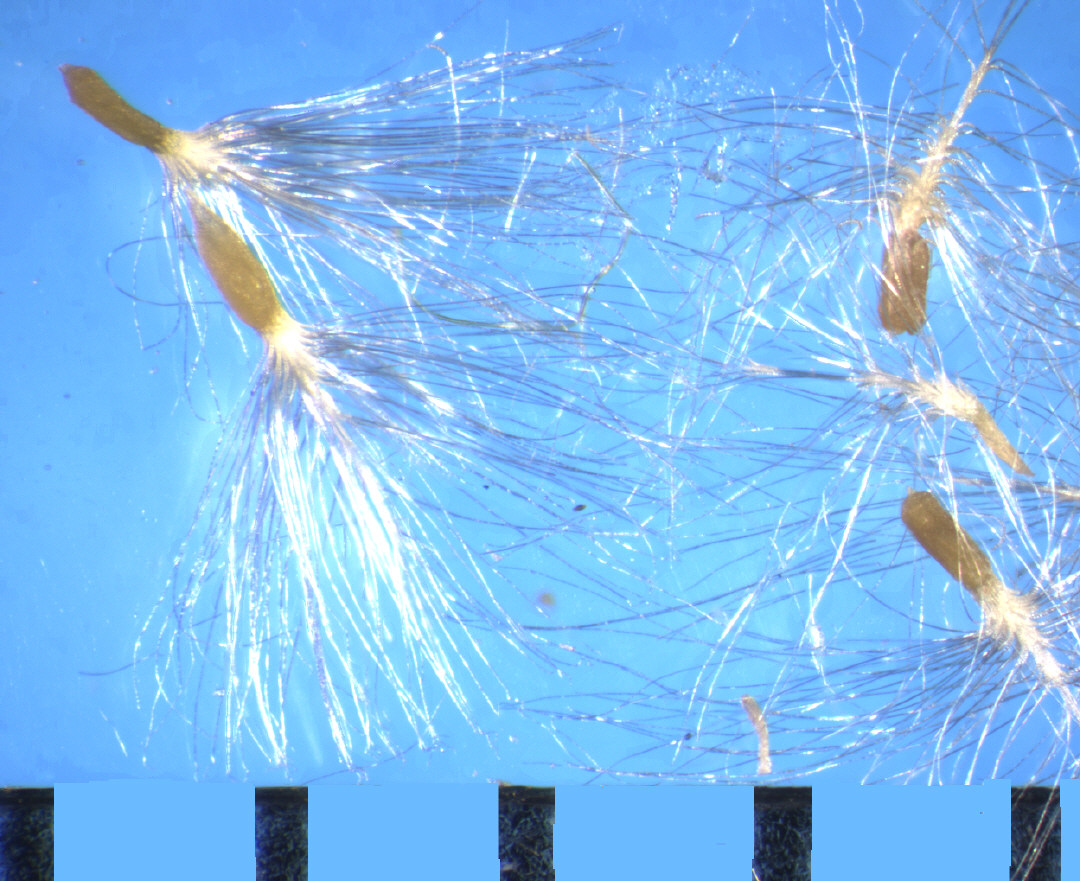
AcheneAchene:
A dry, hard, one-chambered, one-seeded indehiscent fruit, as in buckwheat (Fagopyrum) or sunflower (Helianthus). The fruit wall is not united with the seed coat.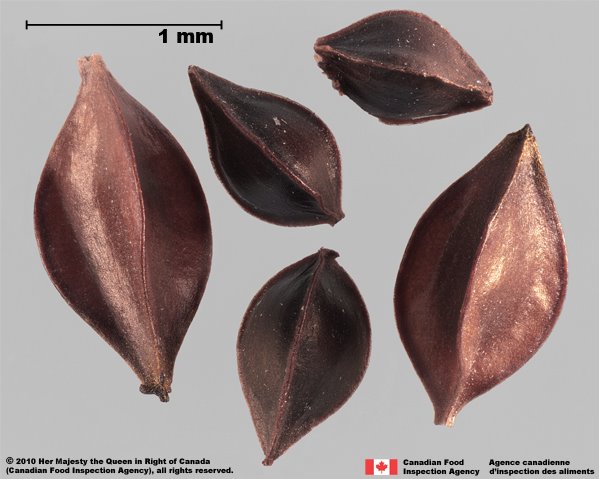
OvalOval:
Broadly elliptic.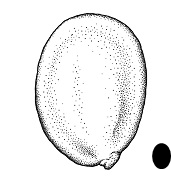
Brown
Smooth
PappusPappus:
Modified calyx in Asteraceae, composed of hairs, bristles, awns, or scales. The pappus-like structure attached to milkweed seeds is termed a coma. 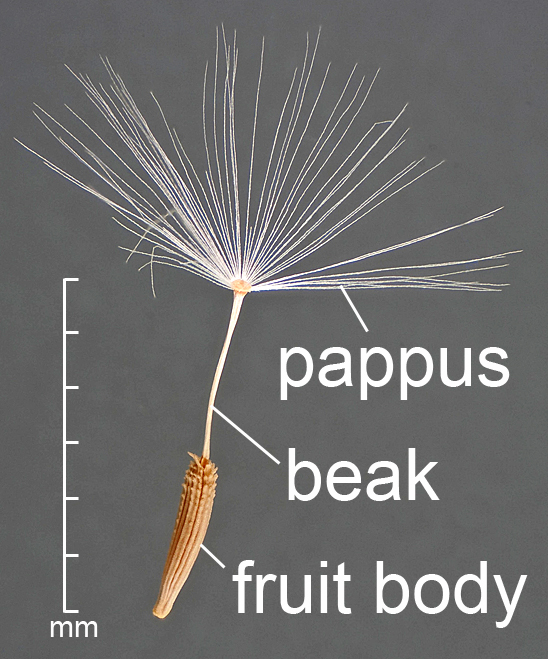 threads may be three to four times longer than the acheneAchene:
A dry, hard, one-chambered, one-seeded indehiscent fruit, as in buckwheat (Fagopyrum) or sunflower (Helianthus). The fruit wall is not united with the seed coat. and are numerous in number.
BasalBasal:
The base of the fruit or seed opposite the apical end.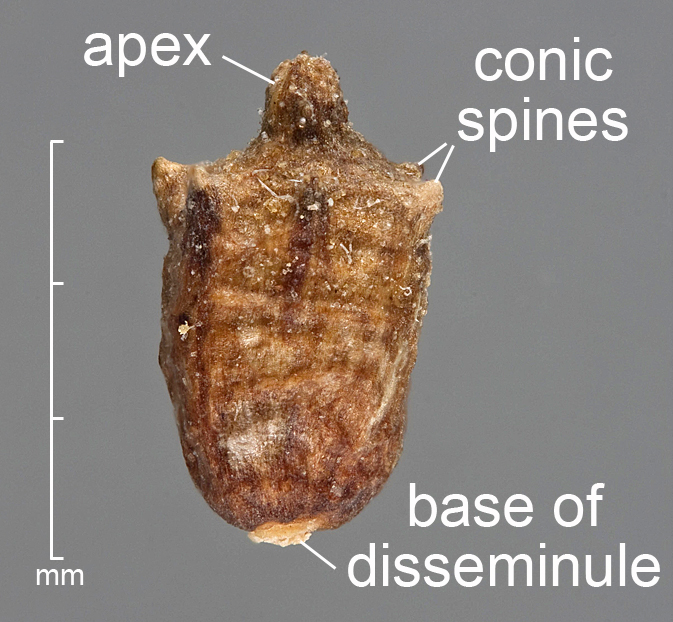 end may be pointed.
State Noxious Weed: Arizona, California, Colorado, Montana, Nebraska, Utah
Not included
Tamaricaceae
Tamarix ramosissima Ledeb.