Revegetation or Rangeland
giant dropseed
FloretFloret:
A small flower in a clustered inflorescence (e.g., sunflower, grasses). In grasses, a floret consists of the lemma, palea, stamens, and pistil.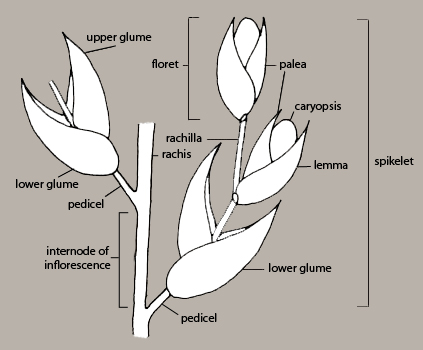
Lanceolate
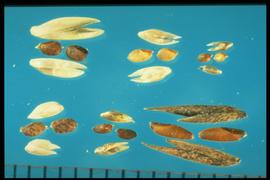
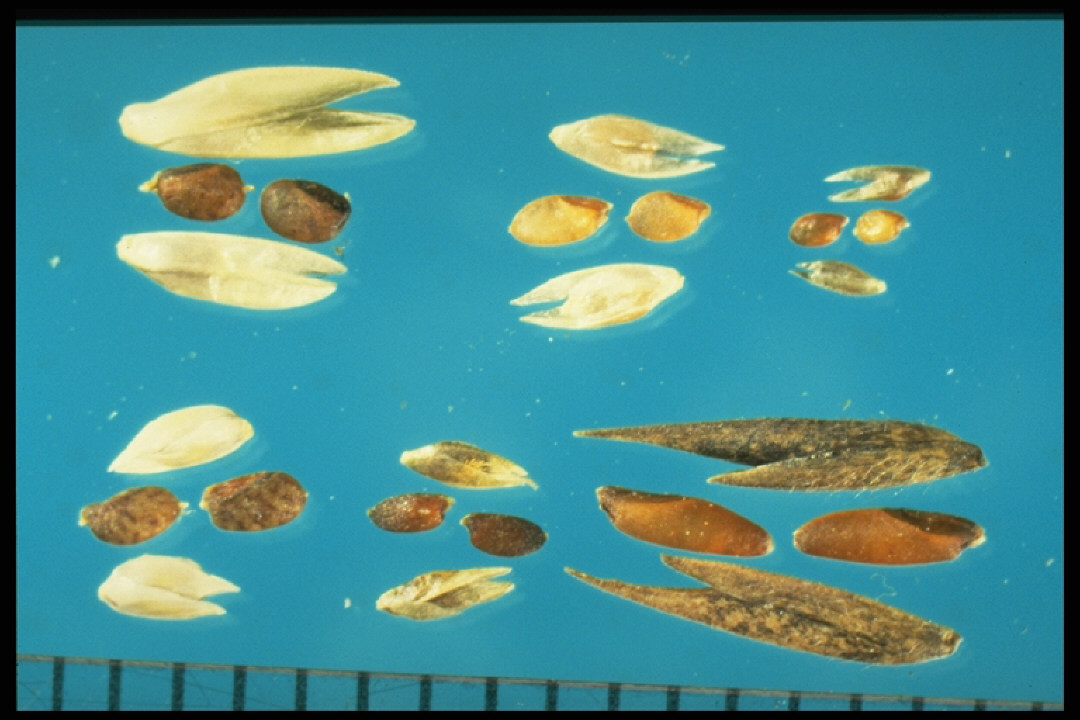
Light brown Caryopsis, lemmaLemma:
One of two bracts of the grass floret; it is located on the side nearest the embryo and opposite the rachilla.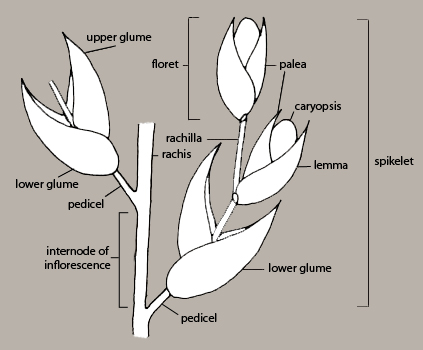 , and paleaPalea:
One of the thin bracts of grass floret enclosing the fruit (caryopsis) that is located on the side opposite the embryo.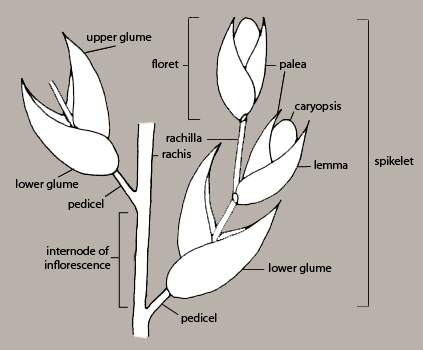 are white
Smooth and translucent
Papery and transparent; about 3.0 mm long
Papery and transparent; about 3.0 mm long
The caryopsis embryoEmbryo:
A rudimentary plant contained in a seed, usually consisting of a more or less differentiated axis and attached cotyledon(s).
is slightly darker.
This species is much like S. cryptandrus but larger. No individual photo has been made of this species at this time.
Not listed
Not included
For more information, see ISMA fact sheet, Sporobolus spp.
Poaceae
Sporobolus giganteus Nash