Rottboellia cochinchinensis

Species category

Weed

Common name

itchgrass

Diagnostic characters

Planting unit

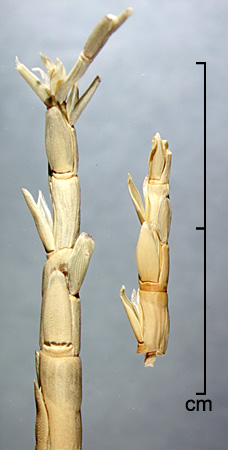
Rachis segmentRachis segment:
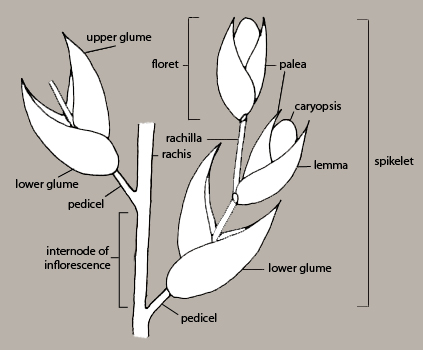
A segment of the central axis of the inflorescence (rachis). In some species (e.g. Andropogon) separation of the sessile spikelets occurs when the rachis disarticulates at the spikelet bases leaving the segment of the rachis between spikelets attached to the lower spikelet.
Shape

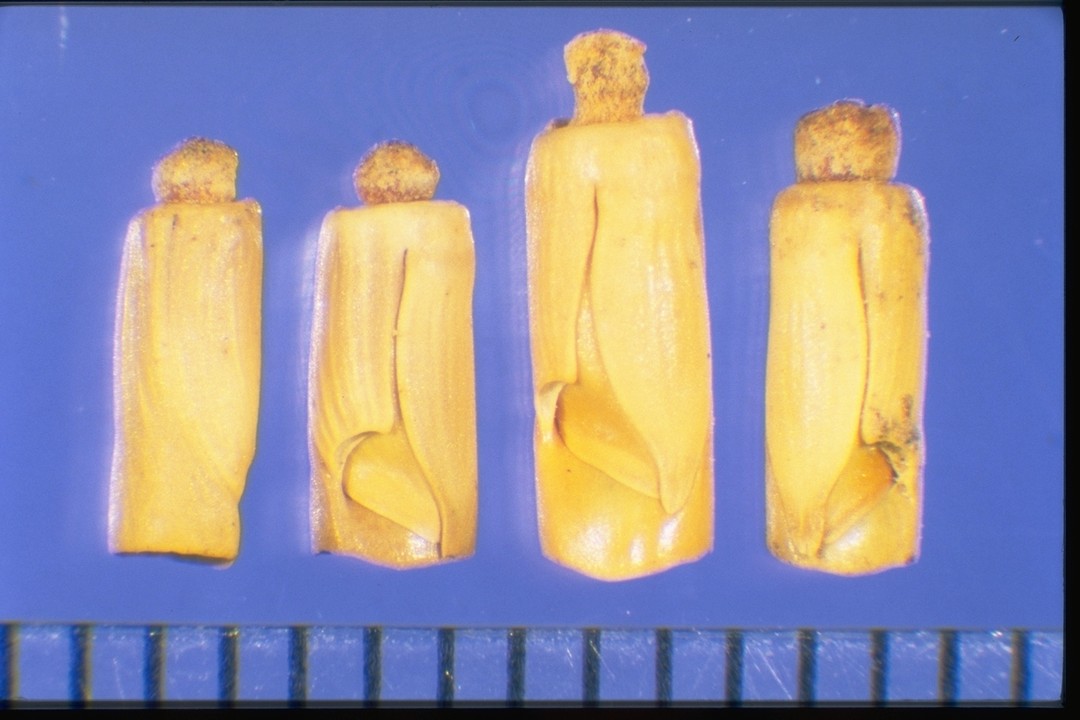
Cylindrical

Size

  • Length 5.5–7.5 mm 
  • Width 2–3 mm 
  • Thickness 2–3 mm 

Color

Yellow

Texture

Smooth

Lemma

Not visible 

Palea

Not visible 

Other structures

Connective knob is between rachisRachis:
The central axis of an inflorescence.
segments, glumesGlume:
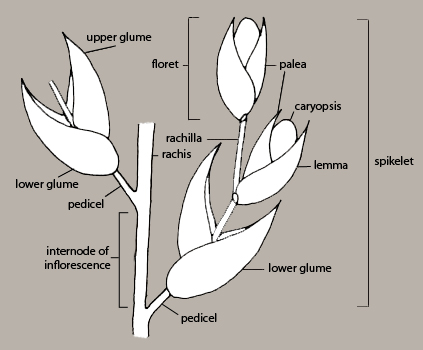
The pair of chaffy bracts that occur at the base of a grass spikelet, often completely enclosing it.
.

Identification notes

RachisRachis:
The central axis of an inflorescence.
disarticulates between each spikeletSpikelet:
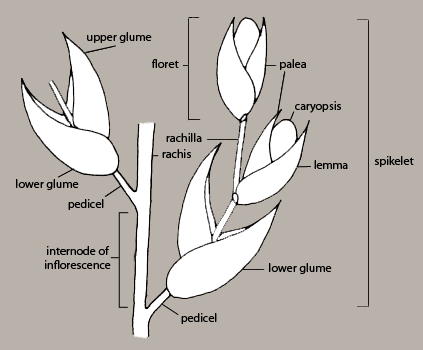
One or more florets that are subtended by a pair of bracts called glumes. Spikelets are pedicellate if located on a pedicle and sessile if attached directly to the rachis. Often spikelets with single florets have remnants of a second floret, usually a lemma.
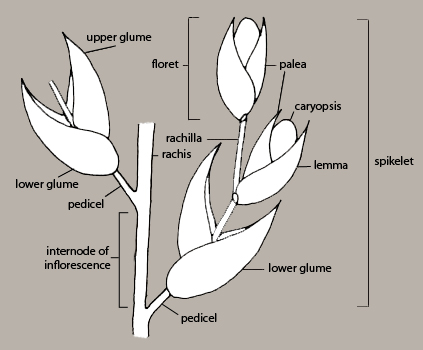
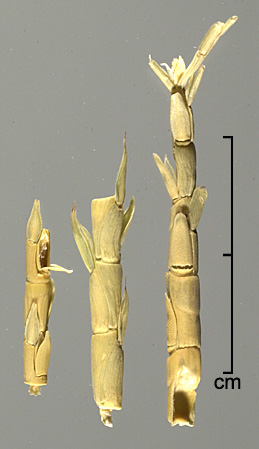
. Entire unit forms a cylinder with a knob on base. FloretFloret:
A small flower in a clustered inflorescence (e.g., sunflower, grasses). In grasses, a floret consists of the lemma, palea, stamens, and pistil.
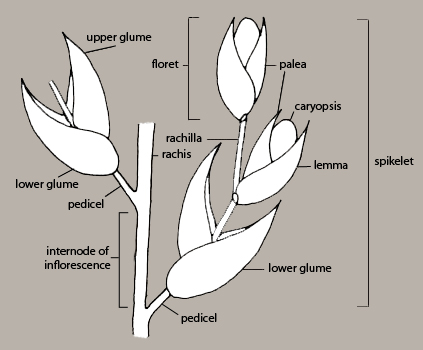
is embedded inside the unit.

Noxious weed seed categories

State Noxious Weed: Arkansas, Louisiana, North Carolina, South Carolina, Tennessee, Texas
Federal

Learn more on ITP's Federal Noxious Weed Disseminules tool.

AOSA examination list

Not included

Nomenclature

Family

Poaceae

Valid name

Rottboellia cochinchinensis (Lour.) Clayton

Synonyms

Aegilops exaltata L.
Manisuris exaltata
(L.) Kuntze
Rottboellia exaltata (L.) L. f.
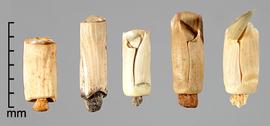
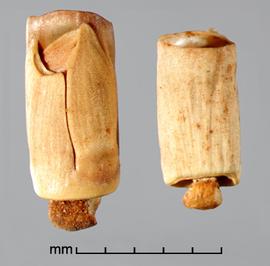
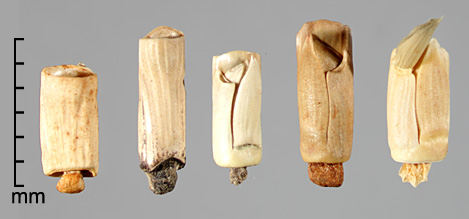
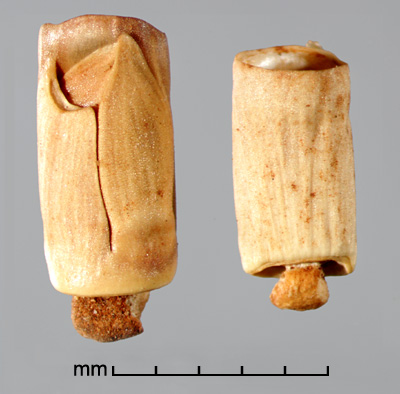
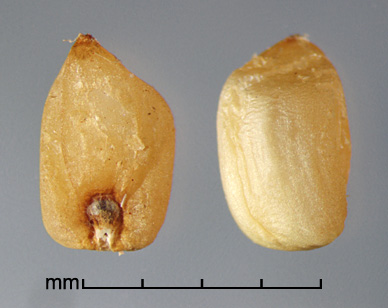
 Rottboellia cochinchinensis.  Rachis segments with a knob on the base. Photo by Julia Scher, USDA-APHIS-PPQ.
Rottboellia cochinchinensis. Rachis segments with a knob on the base. Photo by Julia Scher, USDA-APHIS-PPQ.
 Rottboellia cochinchinensis.  Rachis segments with a knob on the base. Photo by Julia Scher, USDA-APHIS-PPQ.
Rottboellia cochinchinensis. Rachis segments with a knob on the base. Photo by Julia Scher, USDA-APHIS-PPQ.
 Rottboellia cochinchinensis.  Rachis segments with a connective knob between in segments.Photo by Julia Scher, USDA-APHIS-PPQ.
Rottboellia cochinchinensis. Rachis segments with a connective knob between in segments.Photo by Julia Scher, USDA-APHIS-PPQ.
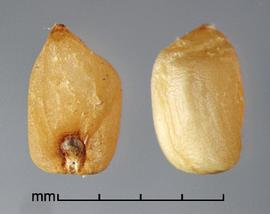
 Rottboellia cochinchinensis.  Rachis segments with a floret embedded in the unit. Photo by Julia Scher, USDA-APHIS-PPQ.
Rottboellia cochinchinensis. Rachis segments with a floret embedded in the unit. Photo by Julia Scher, USDA-APHIS-PPQ.
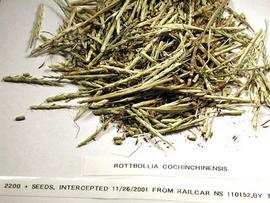
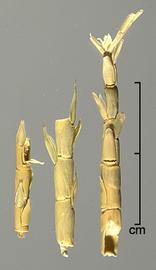
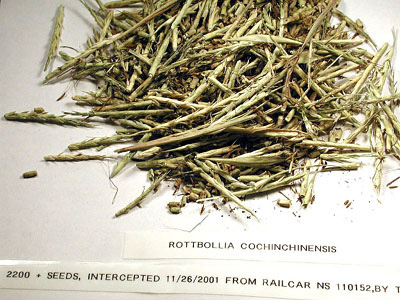
 Rottboellia cochinchinensis.  Rachis segments. Photo by Julia Scher, USDA-APHIS-PPQ.
Rottboellia cochinchinensis. Rachis segments. Photo by Julia Scher, USDA-APHIS-PPQ.
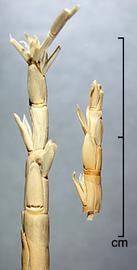
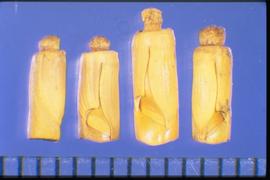
 Rottboellia cochinchinensis.  Rachis segments that disarticulate between each spikelet. Photo by Julia Scher, USDA-APHIS-PPQ.
Rottboellia cochinchinensis. Rachis segments that disarticulate between each spikelet. Photo by Julia Scher, USDA-APHIS-PPQ.
 Rottboellia cochinchinensis.  Rachis segments that form a cylinder with a knob on the base. 
Rottboellia cochinchinensis. Rachis segments that form a cylinder with a knob on the base.