Agricultural
castorbean, agaliya, lama palagi, maskerekur, toto ni vavalagi, uluchula skoki
True seedTrue seed:
A mature fertilized ovule consisting of an embryo, with or without and external food reserve (e.g., endosperm) enclosed by the testa.
OvalOval:
Broadly elliptic.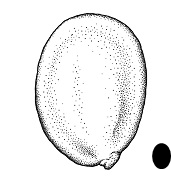
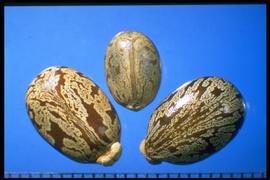
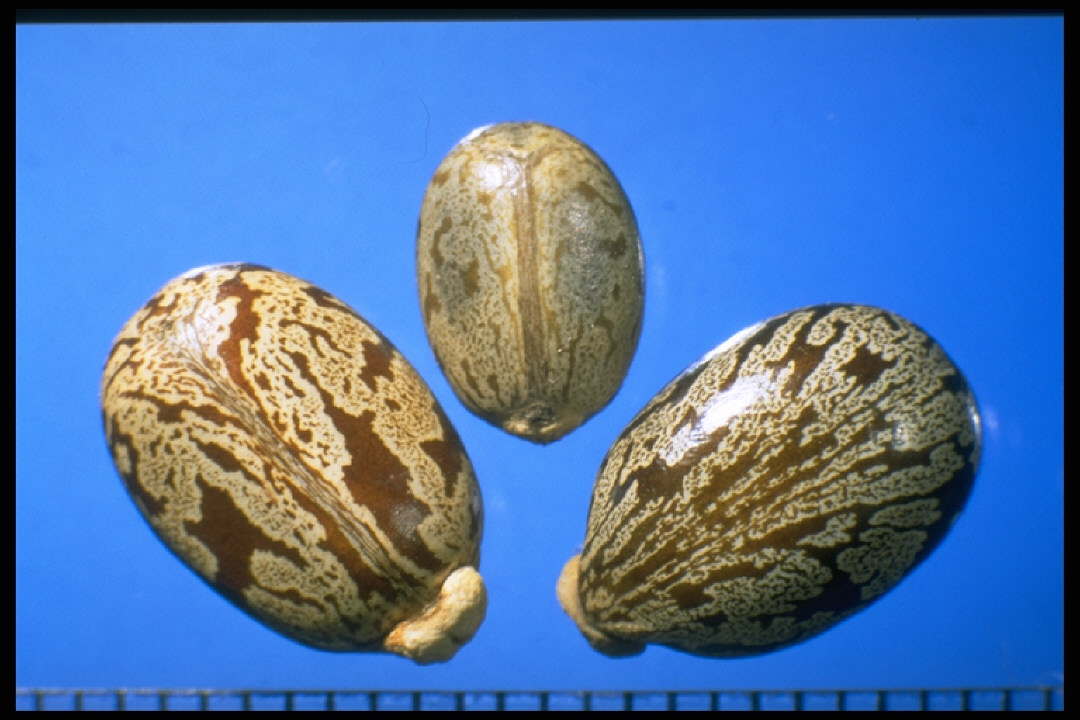
Brown and gray mottled
Smooth
A well developed caruncleCaruncle:
An appendage or outgrowth of the outer integument of the seed, e.g. leafy spurge.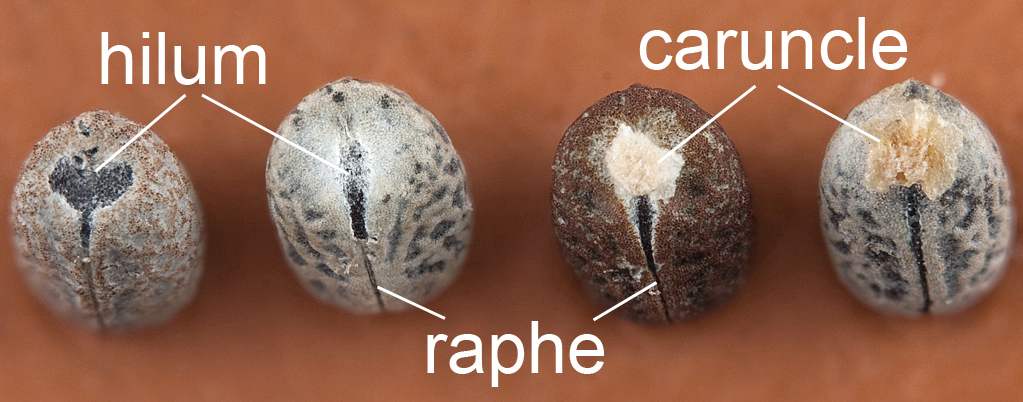 present; a rapheRaphe:
A seam or ridge found on seeds.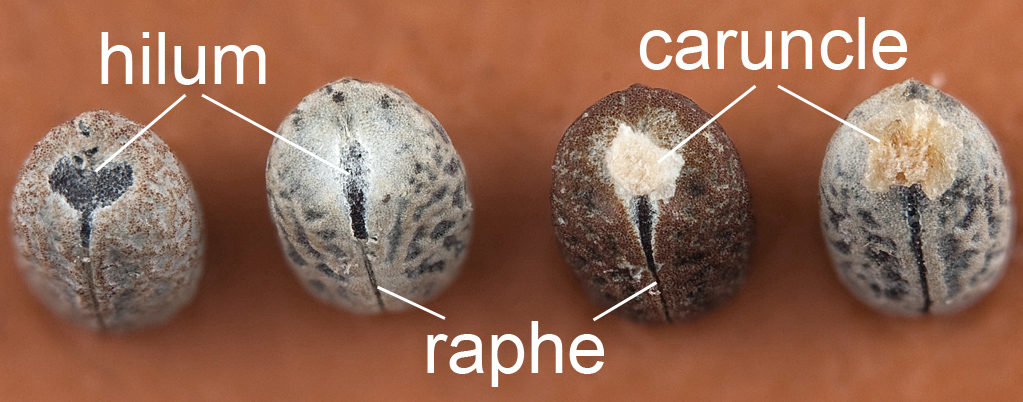 is sometimes not conspicuous.
Seeds of this species comes in a wide variety of sizes. Coloring can vary widely also. Sometimes the rapheRaphe:
A seam or ridge found on seeds. is lost in the mottled seed coloration.
Seed of this species is considered noxious only as a contaminant. Check individual states for interpretations.
State Noxious Weed: Texas
Included
Euphorbiaceae
Ricinus communis L.
Croton spinosus L.