Weed
field pepperweed, cream-anther field pepperwort
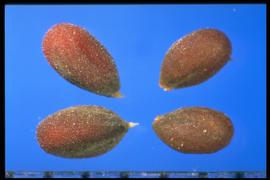
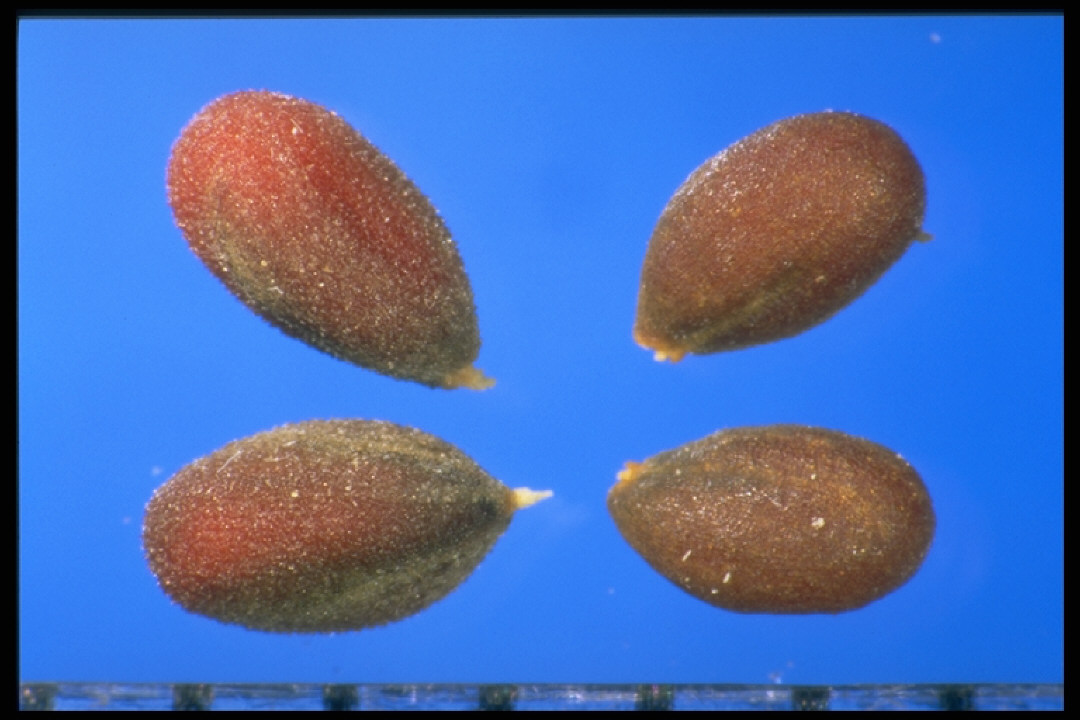
True seedTrue seed:
A mature fertilized ovule consisting of an embryo, with or without and external food reserve (e.g., endosperm) enclosed by the testa.
ObovateObovate:
Inverted egg shaped with apical end the broadest.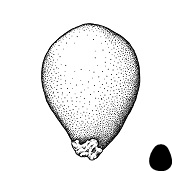
Brown to black, with a white line between lobes
Very rough
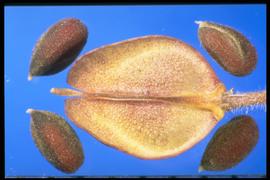
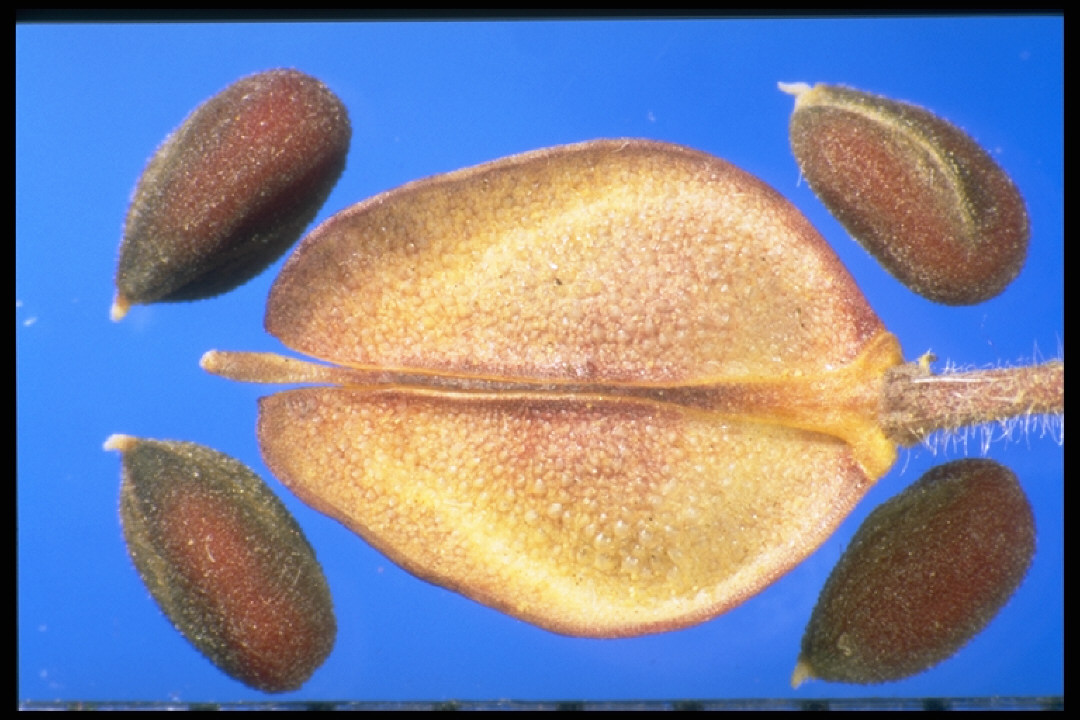
SiliqueSilique:
A fruit usually dehiscing by two lateral valves (having a central septum). The fruits can be long or short in length and round or flat in cross section. Contains more than one seed. Found in Brassicaceae.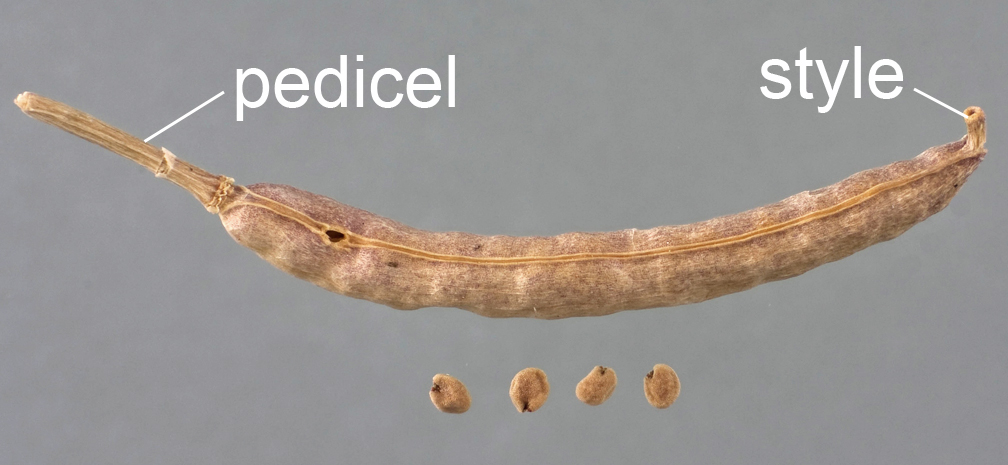 is concave on one side and convex on the other.
Seeds obovateObovate:
Inverted egg shaped with apical end the broadest. and triangular in cross section with a strong indentation on side opposite radicleRadicle:
The rudimentary root of the embryo, developing into the primary root after emergence from the seed coat.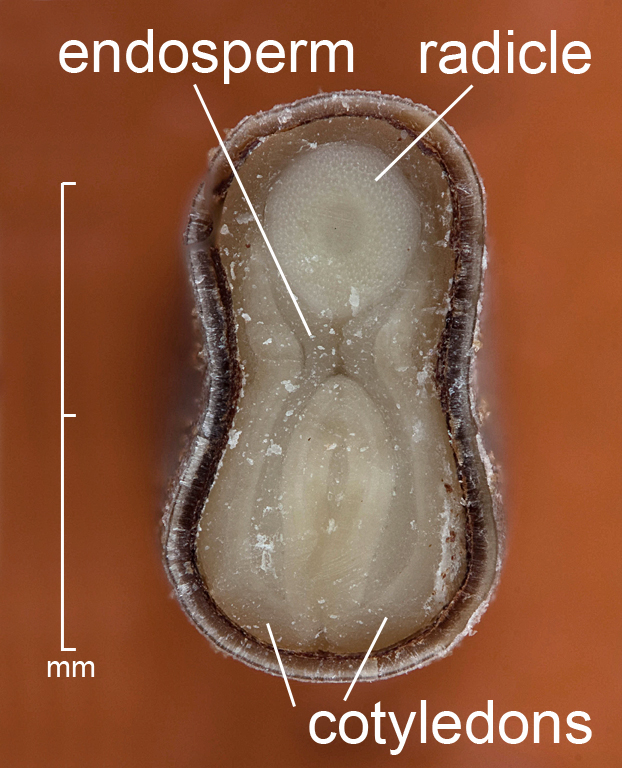 lobe. Surface is rough and almost tuberculateTuberculate:
Having small pimple-like protuberances.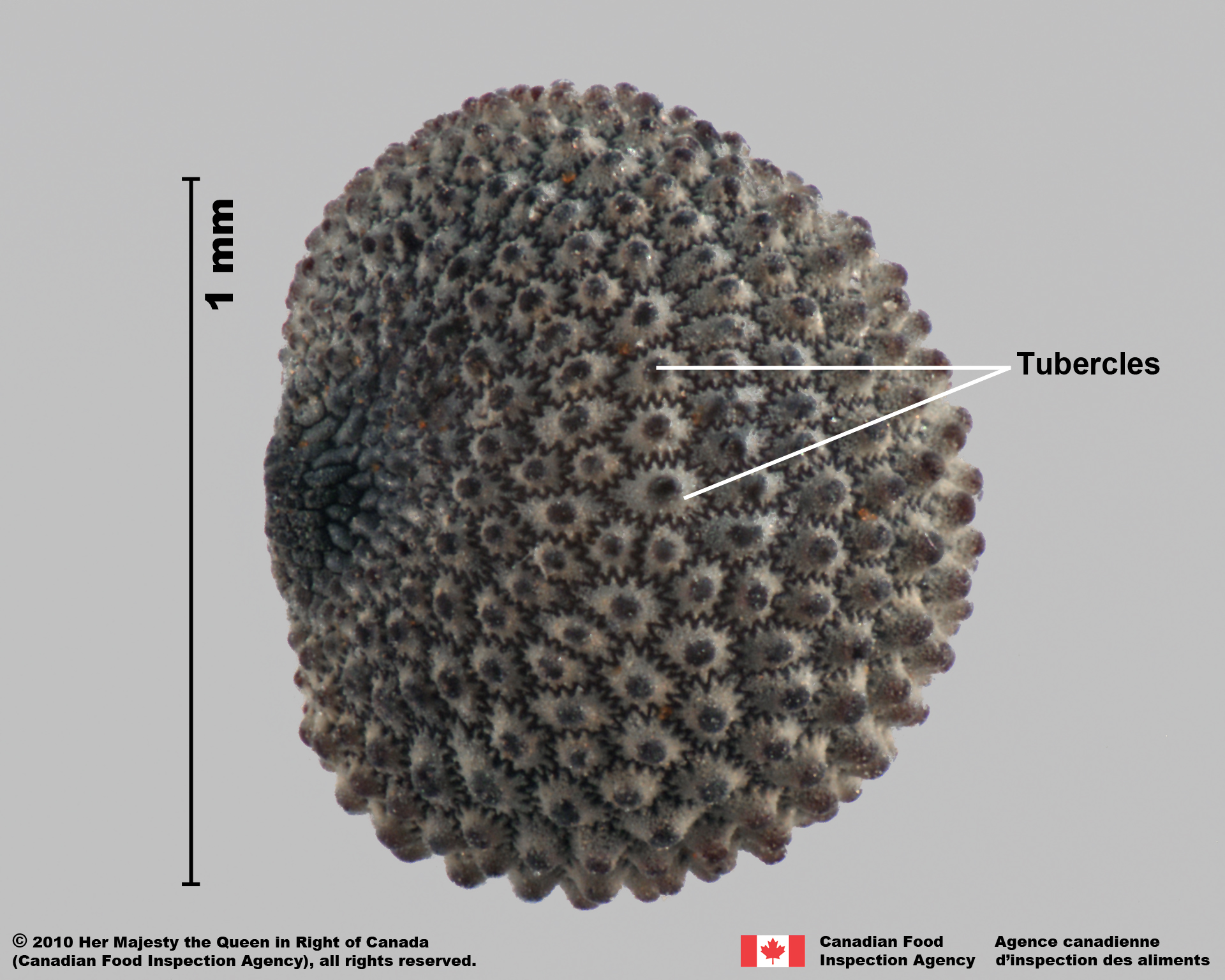 . Color is black.
State Noxious Weed: Arizona, Indiana, West Virginia
Included
For more information, see ISMA fact sheet.
Brassicaceae
Lepidium campestre (L.) W.T. Aiton
Neolepia campestris (L.) W.A. Weber
Thlaspi campestre L.